Vera Clarissa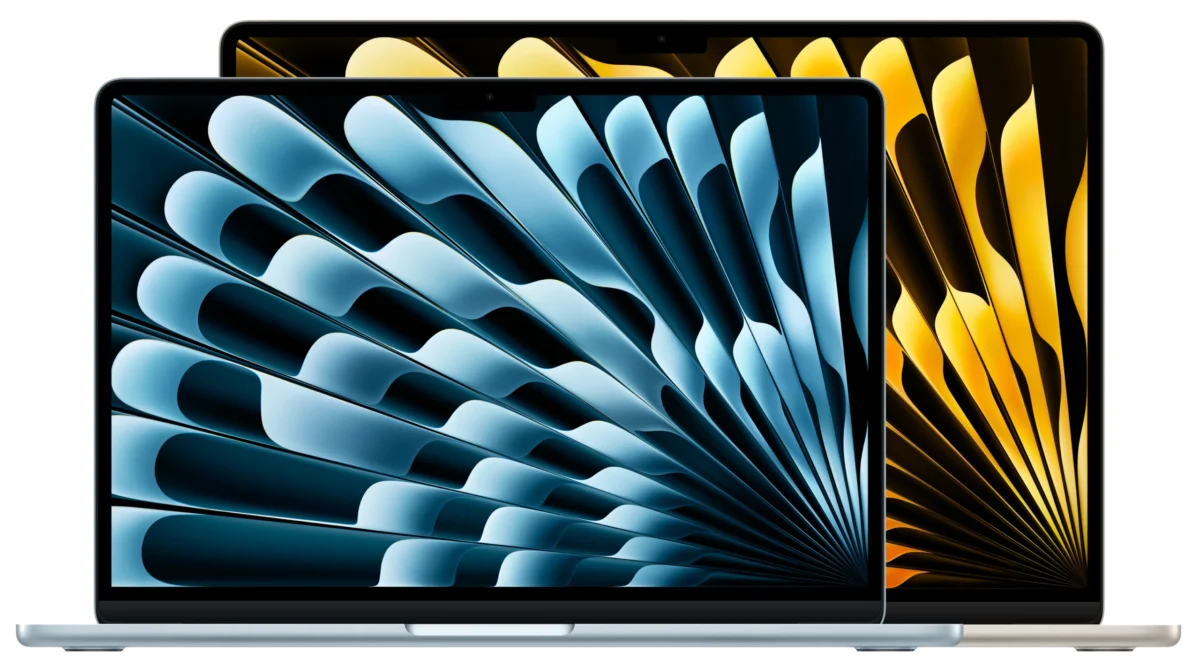
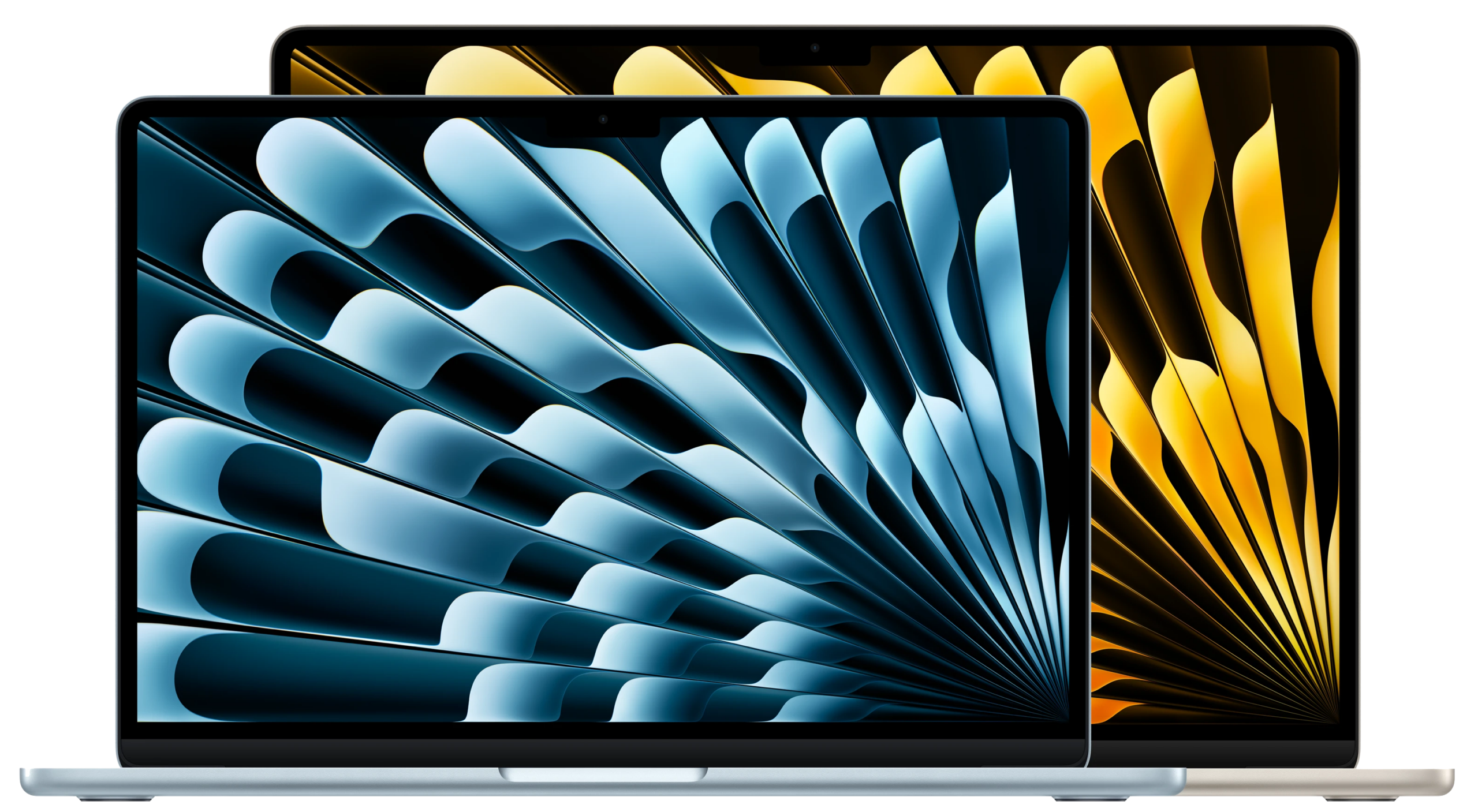
Apple has officially launched the M5 MacBook Air, a significant update to its popular ultraportable laptop line, on March 3rd, 2026. While the exterior design remains largely consistent with its predecessor, the M5 MacBook Air introduces a revolutionary new chip that redefines the capabilities of the MacBook Air, pushing the boundaries of what users can expect from a fanless machine. This latest iteration represents a pivotal moment in Apple Silicon’s evolution, showcasing a dramatic departure from the early days of the MacBook Air, which was once characterized by compromises in processing power and graphical performance.

The M5 Chip: Powering a Paradigm Shift
At the heart of the new M5 MacBook Air lies the eponymous M5 chip, a testament to Apple’s continued innovation in custom silicon. This new processor marks a substantial leap forward, fundamentally altering the workflow possibilities for users who rely on the MacBook Air for both everyday tasks and more demanding applications. Five generations into Apple Silicon, the transformation of the MacBook Air is nothing short of remarkable. The era of underpowered CPUs and graphics chips that struggled with anything beyond basic productivity is a distant memory.
The M5 MacBook Air’s performance, even without active cooling, positions it as a formidable contender, rivaling even its more robust MacBook Pro counterparts. In a recent Cinebench GPU test, the M5 chip within the MacBook Air demonstrated impressive capabilities, achieving approximately 92% of the performance of the M5 MacBook Pro. The M5 Air clocked in at around 22,000 in the benchmark, closely trailing the M5 MacBook Pro’s approximately 24,000. This is a significant achievement, especially considering the Air’s fanless design. While year-over-year chip upgrades often result in incremental improvements, the M5 chip’s GPU architecture represents a substantial advancement over the M4 generation, delivering a noticeable boost in graphical prowess.
Enhanced Storage and Next-Generation Connectivity
Beyond the groundbreaking M5 chip, Apple has also enhanced the MacBook Air’s foundational specifications. The base storage configuration has been upgraded to a generous 512 GB, providing ample space for operating systems, applications, and user data. For users with more extensive storage needs, the M5 MacBook Air can now be configured with up to a massive 4 TB of internal storage, albeit with a significant price premium of +$1200. This expansion of storage options caters to a wider range of professional and creative workflows.
Furthermore, Apple has integrated its proprietary N1 wireless networking chip, ushering in support for Wi-Fi 7, Bluetooth, and Thread. This new chip is engineered to optimize power consumption, particularly when handling location-tracking features, thereby extending battery life. With theoretical speeds reaching up to 46 Gb/s, Wi-Fi 7 has the potential to match or even surpass the performance of Thunderbolt 4 in certain scenarios, offering a glimpse into the future of wireless connectivity for portable devices.

The memory subsystem has also seen a notable upgrade. The M5 chip boasts an increased memory bandwidth of 153 GB/s, leveraging cutting-edge mobile memory technology with 4800 MHz LPDDR5X-9600. This substantial increase in memory bandwidth contributes to the overall responsiveness and performance of the system, enabling smoother multitasking and faster data processing. Complementing these internal upgrades, the M5 MacBook Air is bundled with a new 40-Watt dynamic charger, capable of delivering up to 60W at maximum output. This replaces the previous 35-Watt Dual USB-C compact adapter, offering a more robust charging solution for users on the go.
Performance Benchmarks: A Testament to Apple Silicon’s Progress
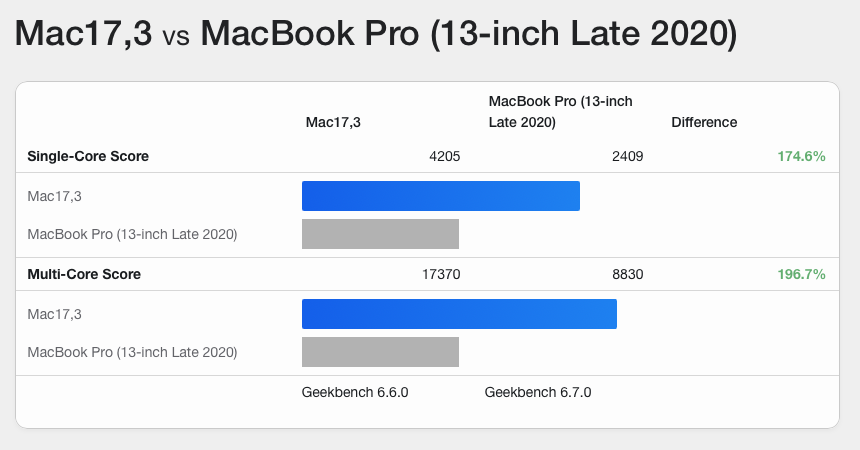
The performance leap delivered by the M5 chip is best illustrated by direct comparisons to previous generations. The M5 MacBook Air offers performance that is roughly equivalent to two M1 chips combined, a remarkable feat considering the compact and fanless design. While the percentage increase might not always hit the 200% mark, the proximity is astounding, highlighting the rapid advancements in Apple Silicon over the past five years.

A direct comparison between the 13-inch M5 MacBook Air and the 13-inch M1 MacBook Pro reveals the extent of this progress. The M5 Air’s performance, when benchmarked against the M1 Pro, demonstrates a substantial uplift. This data underscores Apple’s commitment to pushing the performance envelope with each iteration of its custom silicon, making even the entry-level MacBook Air a powerful tool for a wide array of computing tasks.
Embracing the Era of Apple Intelligence
The M5 MacBook Air fully supports Apple Intelligence, a suite of AI-powered features that are now integrated across Apple’s ecosystem. This functionality is available on any Mac equipped with Apple Silicon. Furthermore, Apple Intelligence is accessible on most iPads featuring an M-chip, as well as iOS devices running iOS 18 and later with an A17 Pro chip or better. This includes the iPhone 15 Pro/Pro Max and all iPhone 16 models and beyond. The seamless integration of AI capabilities promises to enhance user productivity, creativity, and overall computing experience.
Key Features and Specifications of the M5 MacBook Air
The M5 MacBook Air continues to offer a range of features that have made the MacBook Air a beloved device, now enhanced by the latest hardware.
Closed Lid Mode
All MacBook models, including the M5 MacBook Air, support "lid closed" or clamshell mode. This feature allows users to operate their MacBook with the built-in display off, dedicating all unified memory to one or two external displays. To utilize closed lid mode, the MacBook must be connected to AC power and to an external display. Additionally, an external USB or Bluetooth mouse and keyboard are required for input. Upon powering up and seeing the desktop appear on the external display, closing the lid will put the MacBook to sleep. It can be woken by moving the mouse or pressing a key on the keyboard. The internal display will remain inactive, with the external monitor serving as the sole display. To revert to using the internal display, the external display must be disconnected, the MacBook put to sleep, and then the lid opened.

Battery Life
Apple claims an impressive battery life for the M5 MacBook Air, offering up to 15 hours of wireless web browsing and up to 18 hours of video streaming. These figures represent continued improvements in power efficiency, driven by the advancements in Apple Silicon and display technology.
Core System Architecture
The M5 chip, while not detailed in its entirety publicly, adheres to Apple’s sophisticated system-on-a-chip (SoC) design. Key architectural components include:
- Cache Configuration: All M5 chips utilize a consistent memory configuration for their CPU caches, comprising:
- L1 Instruction Cache (L1i)
- L1 Data Cache (L1d)
- System Level Cache (SLC)
Memory and Storage
- Memory Bandwidth: 153 GB/s
- Memory Type: 4800 MHz LPDDR5X-9600
- Base Storage: 512 GB SSD
- Configurable Storage: Up to 4 TB SSD
Connectivity and Expansion
- Wireless Networking: Wi-Fi 7 (up to 46 Gb/s), Bluetooth, Thread (via N1 wireless chip)
- Ports: Thunderbolt 4 (USB-C) ports for charging, data transfer, and display output.
- External Display Support: Capable of driving one or two external displays, particularly in closed lid mode.
Physical Specifications
While specific dimensions and weight are not detailed in the provided information, the M5 MacBook Air is expected to maintain the ultraportable form factor characteristic of the MacBook Air line, prioritizing a thin and light design.
Implications for the Portable Computing Market
The introduction of the M5 MacBook Air with its potent M5 chip and enhanced features has significant implications for the broader portable computing market. Apple’s relentless pursuit of performance and efficiency in its custom silicon continues to set a high bar for competitors. The M5 MacBook Air demonstrates that a fanless laptop can deliver performance previously associated with actively cooled machines, challenging the traditional design paradigms of ultrabooks.

The increased focus on integrated wireless technologies like Wi-Fi 7 and Apple’s own networking chip suggests a future where wireless connectivity is not only faster but also more power-efficient. This is particularly relevant for mobile users who rely heavily on wireless data and connectivity.
The continued evolution of Apple Intelligence, seamlessly integrated into the hardware and operating system, points towards a future where AI is an indispensable part of the everyday computing experience. The ability to perform AI tasks locally on devices enhances privacy and responsiveness, offering a compelling alternative to cloud-based AI processing.

For consumers, the M5 MacBook Air represents an attractive option for those seeking a powerful yet portable laptop that excels in a variety of tasks, from everyday productivity to more demanding creative endeavors. The combination of raw performance, advanced connectivity, and intelligent features positions the M5 MacBook Air as a strong contender in the premium ultrabook segment.
A Look Back and Forward
The journey from the early M1 MacBook Air to the M5 MacBook Air is a narrative of relentless innovation. What began as a device primarily for web browsing and document creation has evolved into a portable powerhouse capable of handling complex tasks, professional video editing, and demanding software development. The M5 chip, in particular, signifies a maturation of Apple’s silicon strategy, delivering exceptional performance without compromising on efficiency or portability. As Apple continues to refine its custom silicon and integrate advanced features like Apple Intelligence, the future of portable computing promises to be even more exciting and capable.