Chalid Lutfie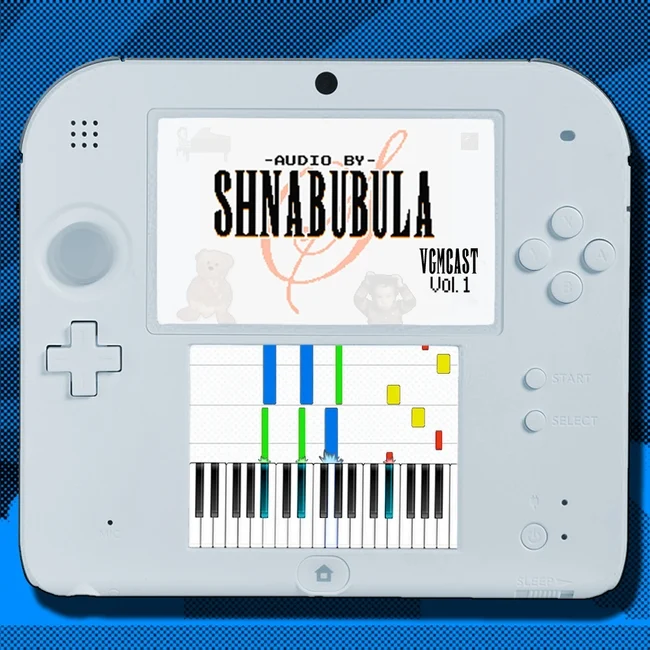
The professional music landscape has witnessed a significant shift toward interactive, real-time content, a trend punctuated by the recent announcement from renowned virtuoso pianist and composer Samuel “Shnabubula” Ascher-Weiss. Ascher-Weiss has officially launched a high-intensity weekly project hosted on the Hitbox streaming platform, designed to test the limits of musical transcription, improvisation, and live performance. The project, which debuted in mid-May 2015, establishes a rigorous two-part schedule every week: an eight-and-a-half-hour "learning marathon" on Fridays followed by a formal "recital" on Sundays. This initiative represents a burgeoning frontier in independent music, where the barrier between the creator’s process and the audience’s consumption is entirely removed.
The Structural Framework of the Request Series
The project is built upon a demanding chronological cycle that prioritizes transparency and rapid skill acquisition. Every Friday, beginning at 12:00 PM EST and concluding at 8:30 PM EST, Ascher-Weiss engages in a live-streamed session on Hitbox. During this window, the artist accepts requests from a global audience, ranging from complex video game soundtracks to contemporary pop and classical compositions. The core of this session is not merely performance but the pedagogical process of "learning live." Ascher-Weiss utilizes his background in ear training and theory to deconstruct requested tracks, transcribe their harmonic structures, and arrange them for solo piano in real-time.
Following a 48-hour period intended for refinement and mental processing, the cycle concludes on Sundays at 4:00 PM EST. During this second broadcast, Ascher-Weiss performs a curated setlist consisting of the material mastered during the previous Friday session. This structured approach provides a unique dual-perspective for the audience: they witness the labor-intensive struggle of acquisition on Friday and the polished aesthetic result on Sunday. The inaugural session of this series resulted in the successful learning and subsequent performance of 14 distinct songs, a feat that highlights the high technical threshold required for such an endeavor.
Historical Context and Artist Background
Samuel Ascher-Weiss, performing under the moniker Shnabubula, has long been a central figure in the video game music (VGM) and "chiptune" communities. Known for his eclectic style that blends ragtime, stride piano, jazz fusion, and 8-bit aesthetics, his career has been defined by a refusal to adhere to traditional genre boundaries. Prior to this Hitbox initiative, Ascher-Weiss gained recognition for his contributions to the OverClocked ReMix community and his solo albums, which often feature complex arrangements of classic game scores from the NES and SNES eras.
The decision to move into live streaming is a logical progression for an artist whose work has always been rooted in technical proficiency and improvisational flair. By 2015, the digital music scene began to move away from static MP3 releases toward "event-based" media. Ascher-Weiss’s project taps into this shift, offering his fanbase a participatory role in the creative output. The choice of Hitbox as a primary platform is also significant. In 2015, Hitbox was positioned as a major competitor to Twitch, marketing itself toward high-level gaming and creative content with a focus on lower latency—a critical technical requirement for real-time musical interaction between a performer and their chat-based audience.
Technical Analysis of the Learning Process
The Friday sessions, spanning 8.5 hours, serve as a case study in musical cognitive load. To learn 14 songs in a single session, a musician must possess an advanced grasp of relative or absolute pitch, as well as a deep library of "muscle memory" patterns. Analysis of the first recorded session reveals a methodology rooted in "chunking"—the process of breaking down a song into its melodic hooks, bass lines, and harmonic progressions.
- Auditory Analysis: The artist listens to the source material provided via link (usually YouTube or SoundCloud).
- Harmonic Mapping: Identifying the key signatures, modulations, and chordal extensions.
- Arrangement: Adapting orchestral or electronic textures to the ten fingers of a pianist.
- Repetition and Internalization: Running difficult passages until they can be performed without external reference.
This "open-kitchen" approach to music allows students and fans to see the errors, the corrections, and the eventual mastery that usually occurs behind closed doors in a practice room. Data from the first session indicates that the 14 songs learned covered a wide spectrum of difficulty, requiring Ascher-Weiss to maintain a high level of concentration for nearly nine hours without significant breaks.
The Debut Setlist and Media Distribution
The results of the first week’s cycle have been consolidated into a digital album and a full-length video recording, documenting the transition from raw request to finished performance. The 14 tracks learned during the premiere session demonstrate the diverse interests of the streaming audience, featuring a heavy emphasis on Japanese RPG soundtracks, indie game scores, and classic arcade themes.
To ensure the longevity of the project, Ascher-Weiss has implemented a multi-platform distribution strategy. While the live "event" occurs on Hitbox, the recorded performances are archived on YouTube to serve as a permanent portfolio. Furthermore, the individual tracks are being made available for download as a cohesive album, allowing the artist to monetize the project beyond the immediate "tip-and-donation" model of the live stream. This multi-tiered approach—live interaction, video archiving, and digital sales—represents a modern blueprint for the independent "solopreneur" in the music industry.
Broader Implications for the Streaming Industry
The "Shnabubula" project arrives at a time when the "Music and Performing Arts" categories on streaming platforms are experiencing exponential growth. Traditionally, these platforms were dominated by eSports and competitive gaming. However, the success of performers like Ascher-Weiss suggests a shifting demographic. The implications of this project extend into several key areas of the digital economy:
The Value of Process over Product
In the traditional recording industry, the "product" (the album) is the sole source of value. In the streaming era, the "process" (the 8.5-hour practice session) becomes a primary source of entertainment and revenue. This project proves that audiences are willing to invest time in watching the development of a skill, not just the final result.
Direct-to-Fan Feedback Loops
The request-based model creates an immediate feedback loop. Fans who see their requests fulfilled are more likely to provide financial support through platform subscriptions or direct donations. This creates a sustainable micro-economy that bypasses traditional record labels and distribution gatekeepers.
Educational Utility
Beyond entertainment, these streams serve as a massive, free educational resource. Aspiring pianists can observe the hand positioning, fingering choices, and theoretical shortcuts used by a professional. The transparency of the Friday sessions demystifies the "genius" trope, showing that virtuosity is the result of systematic labor and high-level pattern recognition.
Community and Critical Response
Initial reactions from the VGM and piano communities have been overwhelmingly positive. Observers on forums such as Reddit and specialized music boards have noted that the sheer stamina required for an 8.5-hour learning session sets a new benchmark for musical content on Hitbox. Fellow musicians have pointed to the project as a "stress test" for musicality, highlighting how the pressure of a live audience can accelerate the learning process.
While some critics of the streaming model argue that the quality of arrangements might suffer under such tight time constraints, the Sunday performances have largely dispelled these concerns. Ascher-Weiss’s ability to inject his signature stylistic flourishes—complex polyrhythms and rapid-fire stride bass—into the requested material suggests that the "speed-learning" format does not necessarily result in a "speed-learning" aesthetic.
Future Outlook and Sustainability
As the project continues, the primary challenge will be the physical and mental sustainability of the schedule. Maintaining a weekly output of 14 or more new arrangements requires not only immense musical talent but also significant physical endurance to avoid repetitive strain injuries, a common risk for high-output pianists.
However, the framework Ascher-Weiss has established is highly scalable. The project could potentially expand to include guest collaborators, themed weeks (e.g., "The Music of Final Fantasy" or "1980s Synth-Pop"), or even interactive "lessons" where the artist explains the theory behind a specific arrangement.
By merging the legacy of the "request-room" piano bar with the global reach of 21st-century digital broadcasting, Samuel Ascher-Weiss is doing more than just learning new songs; he is redefining the role of the performer in the digital age. The Shnabubula Hitbox series stands as a testament to the power of transparency in art, proving that for the modern audience, the journey of creation is just as compelling as the final note of the performance. As the series progresses, it will likely serve as a foundational example for other musicians looking to transition into the world of live-streamed creative content.