Farhan hamdan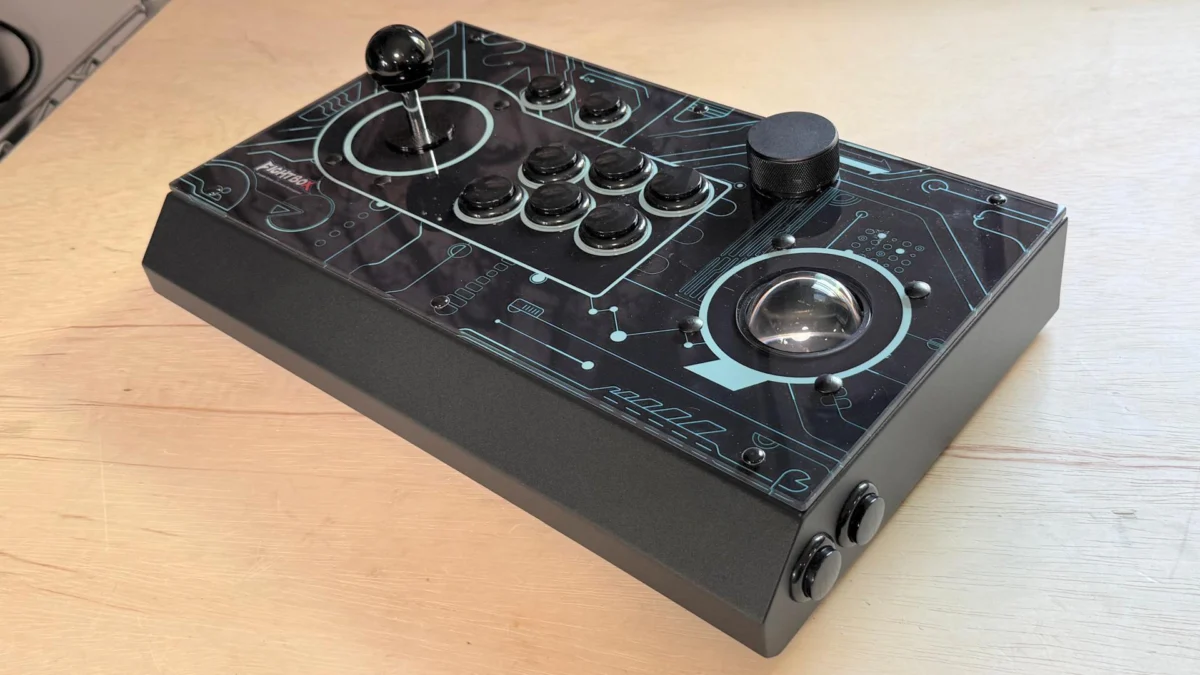
A recent comprehensive review of the Fightbox R10 Pro arcade stick has underscored its position as a formidable contender in the retro gaming peripheral market, particularly for enthusiasts seeking high performance without an exorbitant price tag. Following an initial positive overview, the R10 Pro was subjected to rigorous testing, revealing impressive technical specifications and user-friendly features that position it as a standout option for arcade and fighting game aficionados. The device, which incorporates a joystick, buttons, a spinner, and a trackball, demonstrated sub-1ms input lag over USB, confirming its capability to meet the demands of precision gaming. Retailing for under $200, the R10 Pro is being lauded for delivering substantial value, offering a comprehensive suite of control options typically found in more expensive, specialized setups.
Unpacking the Performance: Lag, Controls, and Compatibility
The core appeal of any high-performance gaming controller lies in its responsiveness, and the Fightbox R10 Pro excels in this critical area. Testing revealed an average input lag of 0.8ms, with peak measurements not exceeding 1.3ms. This level of responsiveness is crucial for competitive fighting games, rhythm games, and any genre where frame-perfect inputs are essential. The device leverages a Raspberry Pi Pico-based FightBox GP2040-CE USB board, running on the advanced GP2040 Community Edition firmware. This open-source firmware is renowned within the enthusiast community for its low-latency performance and broad compatibility across various platforms, including PC, PlayStation, Xbox, and Nintendo Switch (often requiring specific models or adapters for consoles). The integration of this cutting-edge firmware ensures that the R10 Pro is not just a collection of quality hardware but a finely tuned instrument for optimal gaming.
Beyond raw speed, the R10 Pro offers a versatile array of control inputs. The joystick chosen by Fightbox is the Sanwa JLF-TP-8YT, a component widely regarded as an industry standard for arcade cabinets and high-end fight sticks. Its precision, durability, and tactile feedback make it a favorite among professional and amateur players alike. The review highlighted that this particular joystick mirrored the performance of those found in classic arcade setups, providing an authentic and reliable experience. For buttons, the R10 Pro ships with Baolian components. While these are noted to be "very good," the article acknowledges that some users, accustomed to specific tactile responses, might prefer Sanwa OBSF buttons. Fightbox thoughtfully addresses this by offering direct customization options during purchase or allowing for easy user-initiated swaps, demonstrating an understanding of the modding culture prevalent in the arcade stick community. The use of standard plastic rivets for button mounting ensures straightforward replacement, with readily available spare parts from specialized retailers.
A significant differentiator for the R10 Pro is its inclusion of both a spinner and a trackball. These specialized inputs cater to a vast library of classic arcade titles that rely on rotational or precise cursor control, such as Arkanoid, Centipede, or Marble Madness. The review confirmed that both the spinner and trackball performed exceptionally well, offering fluid and accurate input. While acknowledging that a dedicated, larger housing for each might offer marginally superior comfort, the integrated design of the R10 Pro strikes an excellent balance between functionality, practicality, and space efficiency, even enabling dual-stick gameplay configurations for certain titles. This multi-input capability significantly broadens the range of games the R10 Pro can authentically support, making it a comprehensive solution for retro gaming.
MiSTer Compatibility and Power Concerns Addressed
A key area of inquiry for the R10 Pro concerned its compatibility with the MiSTer FPGA project, a popular hardware platform for accurately preserving and emulating classic video game systems. Initial community concerns regarding MiSTer integration and potential power issues were thoroughly investigated. The review definitively stated "zero hardware issues" with MiSTer compatibility. Any reported problems were largely attributed to incorrect MiSTer.ini file configurations, a common user-side oversight. The solution provided involves downloading an updated MiSTer.ini file directly from GitHub and applying appropriate video mode tweaks, a standard procedure for MiSTer users. It was also clarified that while some MiSTer cores might not yet be programmed to fully utilize spinner or mouse inputs, this is a software-side limitation of the core, not a fault of the R10 Pro hardware itself.
Regarding "power issues," the review suggests that previous reports might stem from inadequate power supply units (PSUs) or outdated I/O board/USB hub combinations within users’ MiSTer setups. Extensive testing with various PSUs confirmed that as long as the MiSTer itself received sufficient power, the R10 Pro’s spinner and trackball functioned flawlessly. This finding reinforces a long-standing recommendation within the MiSTer community: investing in a high-quality, vetted PSU (3.5A or higher) is paramount for stable operation, especially when integrating multiple peripherals. This clarification is vital for potential users, distinguishing between genuine hardware flaws and system-level configuration or power delivery issues.
The Fightbox Ecosystem and Market Positioning
Fightbox has rapidly established itself as a notable brand in the specialized gaming controller market, particularly within the retro and fighting game communities. Their "R-Series" line, to which the R10 Pro belongs, is characterized by a focus on modularity, performance, and value. The company’s philosophy appears to center on providing high-quality, customizable controllers that leverage widely respected components while maintaining an accessible price point. This strategy allows them to compete effectively against both premium, higher-priced brands and more budget-oriented options.
In a market populated by established names like Hori, Qanba, and Razer, which often command higher prices for their flagship fight sticks, Fightbox positions the R10 Pro as a compelling alternative. By integrating a Sanwa joystick, offering a choice of buttons, and crucially, including a spinner and trackball, the R10 Pro provides a feature set that often requires purchasing multiple separate peripherals from other manufacturers. This consolidation of functions into a single, well-performing unit at under $200 represents a significant value proposition. It caters to a broad demographic, from casual retro gamers looking for an authentic arcade experience to competitive players who prioritize minimal input lag, and the ever-growing MiSTer community seeking versatile and compatible hardware.

The brand’s commitment to using the open-source GP2040-CE firmware also aligns it with the DIY and modding communities. This firmware allows for extensive customization of button mapping, sensitivity, and LED behavior, empowering users to tailor their experience precisely. This level of flexibility, combined with the ease of swapping physical components, fosters a strong sense of ownership and community engagement around Fightbox products.
Beyond the R10 Pro: Other Offerings and Community Insights
While the R10 Pro was the primary focus, the review also touched upon other Fightbox products and community interactions. A Fightbox wheel controller accessory was tested, though it encountered physical warping issues with its push-on bracket, and its foot pedals did not register correctly on MiSTer or RePlayOS without significant software mapping. The assessment concluded that while it could serve as a "fun addon for casual racing game players," serious driving simulation enthusiasts would be better served by dedicated wheel and pedal sets. This candid assessment provides a balanced view of Fightbox’s product range, acknowledging that while the R10 Pro excels, not every accessory may meet the same high bar.
The article also highlighted the broader community’s positive reception, referencing "Beast’s" independent testing and shared opinion, which mirrored the main reviewer’s findings: "Great stick, just choose the buttons your hands prefer." This consensus from multiple testers reinforces the R10 Pro’s core quality and the general satisfaction with its performance, particularly its joystick and low-latency operation. The ability to easily swap out buttons for personal preference is consistently noted as a significant advantage, catering to the nuanced tactile demands of individual players.
The review also briefly mentioned Fightbox’s Sanwa-based Mortal Kombat controllers, noting their appeal for specific game layouts. This indicates Fightbox’s strategic approach to cater to niche demands within the fighting game community, offering specialized layouts that enhance the experience for particular titles. The preference for Sanwa components over the Cherry versions (more accurate to US arcade machines) highlights the evolving preferences of players, often prioritizing comfort and familiarity over strict historical accuracy in contemporary competitive play.
Broader Implications for Retro Gaming and Emulation
The emergence of products like the Fightbox R10 Pro carries significant implications for the retro gaming and emulation landscape. For years, enthusiasts often had to compromise between authenticity, performance, and cost when seeking arcade-grade controllers for home use. The R10 Pro directly addresses this gap by providing a high-quality, multi-functional controller at a competitive price point.
Firstly, it significantly enhances the MiSTer FPGA experience. MiSTer aims for unparalleled accuracy in hardware emulation, and a controller that can match this precision in input is crucial for a truly authentic retro experience. The R10 Pro, with its low lag and specialized inputs (spinner, trackball), allows MiSTer users to play a wider array of arcade classics with controls that closely mirror the original cabinets, closing the loop on the pursuit of arcade perfection.
Secondly, it democratizes access to high-performance arcade controls. Historically, custom fight sticks or specialized arcade panels could be quite expensive or require significant DIY effort. The R10 Pro offers a ready-to-use solution that delivers professional-grade performance, making advanced retro gaming more accessible to a broader audience without the barrier of prohibitive cost or complex assembly.
Finally, the product’s design, incorporating open-source firmware and easily swappable components, fosters continued growth in the DIY and modding communities. It provides a solid foundation for users to experiment, customize, and personalize their gaming experience, further enriching the hobby. This symbiotic relationship between commercial products and community-driven innovation is a hallmark of the retro gaming scene.
In conclusion, the Fightbox R10 Pro arcade stick stands out as an exemplary product in the current market. Its combination of ultra-low input lag, versatile control options (Sanwa joystick, spinner, trackball), robust MiSTer compatibility, and an attractive price point positions it as an excellent value proposition for anyone serious about arcade and retro gaming. The thorough review and positive community feedback reinforce its status as a highly recommended peripheral, setting a new benchmark for what players can expect from a sub-$200 arcade controller.