Farhan hamdan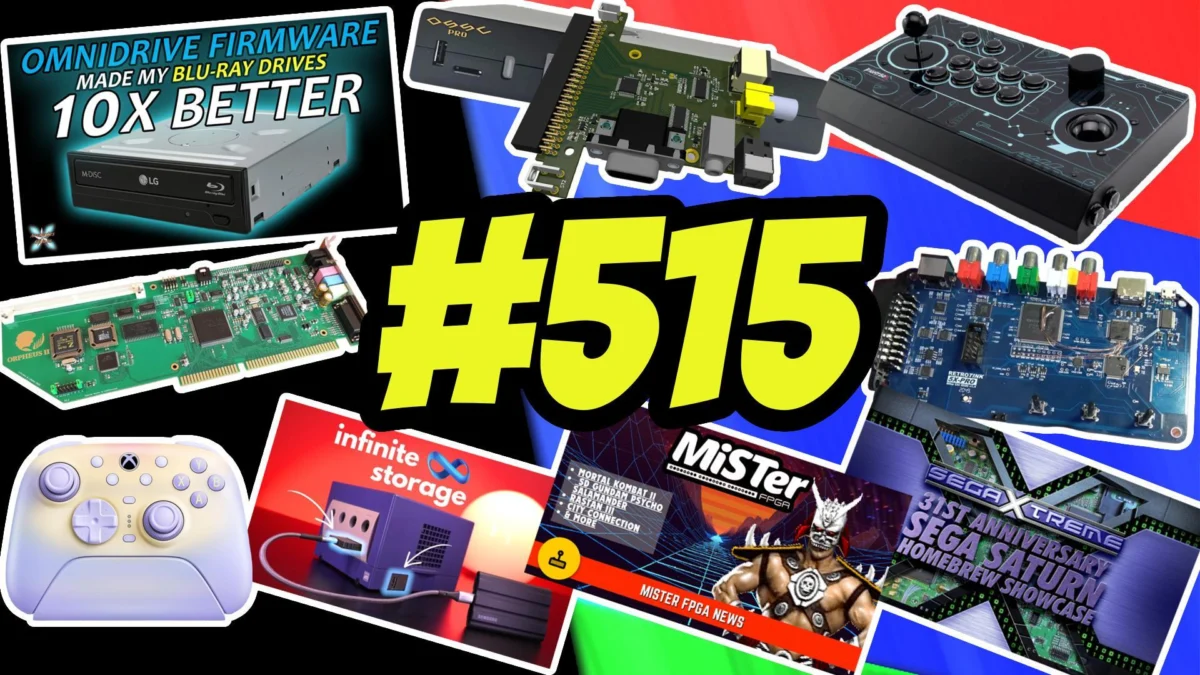
Advancements in Game Preservation and Digital Archiving: The OmniDrive Firmware
A significant announcement featured in the roundup was the release of OmniDrive disc ripping firmware, enabling users to rip Xbox, GameCube, and Wii discs directly on their personal computers. This development marks a pivotal moment for digital game preservation, offering a streamlined method for archiving physical media. Historically, the process of accurately ripping optical discs from these consoles has often involved specialized hardware or complex software configurations, posing barriers to entry for many enthusiasts. The OmniDrive firmware simplifies this procedure, making digital archiving more accessible.
The implications for game preservation are substantial. As physical media degrades over time and console hardware becomes increasingly difficult to maintain, digital backups become essential for ensuring future access to gaming history. The ability to rip these specific console discs directly on a PC not only democratizes the archiving process but also contributes to the broader effort of building comprehensive digital libraries of classic titles. This initiative aligns with the ongoing global efforts by various archival organizations and independent groups to safeguard video game heritage against obsolescence. For instance, institutions like the Library of Congress and The Strong National Museum of Play actively engage in preserving video game artifacts, and community-driven projects like OmniDrive complement these larger endeavors by empowering individual users to contribute to the collective archive. The ease of use promised by this firmware could lead to a surge in accurately preserved game data, reducing the risk of lost games due as physical copies become unplayable.
Pushing Display Boundaries: The 1000Hz 1080p Display
Another notable highlight was the discussion surrounding a 1000Hz 1080p display and its potential implications for retro gaming. While high refresh rates are primarily associated with competitive modern gaming, where milliseconds can dictate outcomes, their application in the retro sphere presents intriguing possibilities. A 1000Hz refresh rate at 1080p resolution offers unprecedented motion clarity, drastically reducing perceived input lag and motion blur.
For retro gaming, particularly when utilizing emulators or FPGA solutions that can output at higher frame rates than original hardware, such a display could provide an exceptionally smooth and responsive experience. Many classic arcade games, for example, were designed with very low input latency in mind, and a 1000Hz display could help recapture that responsiveness even when playing on modern setups. The historical context of display technology shows a steady progression from 60Hz CRT televisions to 120Hz, 144Hz, 240Hz, and now even higher refresh rate LCD/OLED panels. Each leap has aimed to minimize visual artifacts and enhance responsiveness. While some purists prefer the authentic scanline look of CRTs, the availability of ultra-high refresh rate displays opens a new avenue for experiencing retro titles with unparalleled fluidity, especially for games where precise timing and visual feedback are paramount. The analysis suggests that while 1000Hz might be overkill for many static retro experiences, it could revolutionize the feel of fast-paced action games and fighting games when paired with appropriately high-performance emulation or FPGA cores.
Enhanced Control: 8BitDo Ultimate 3 with Adjustable Analog Sticks
The segment on the 8BitDo Ultimate 3 controller, featuring "Force Ring Adjustable TMR Joysticks," underscored the continuous innovation in gaming peripherals. 8BitDo has established itself as a leading manufacturer of high-quality retro-inspired controllers, blending classic aesthetics with modern functionality. The inclusion of adjustable analog sticks with "Force Ring" technology is a significant ergonomic and performance enhancement. This feature allows users to fine-tune the tension and response of the joysticks, catering to individual preferences and the specific demands of different game genres.
Traditional controllers often offer a fixed analog stick feel, which may not be ideal for all players or games. For instance, a fighting game player might prefer a stiffer, more precise stick, while an adventure game player might favor a looser, more fluid response. The ability to customize this crucial input mechanism represents a user-centric design philosophy. This innovation follows a trend seen in high-end PC gaming peripherals, where customization options for switches, weights, and sensitivity are common. Bringing such advanced features to a mainstream retro-focused controller like the 8BitDo Ultimate 3 elevates the play experience, offering a level of precision and comfort previously unavailable in this product category. The gaming community has consistently shown appreciation for products that offer greater control and adaptability, and this feature is expected to be well-received by competitive and casual players alike.
Specialized Arcade Inputs: FightBox Arcade Sticks with Spinner & Trackball
Further diversifying control options, the roundup also showcased FightBox arcade sticks with integrated spinner and trackball options. This addresses a specific niche within the retro gaming community: enthusiasts of classic arcade games that utilized these unique input methods. Many iconic arcade titles, such as Arkanoid (spinner) or Centipede (trackball), are best experienced with their original control schemes. Replicating these experiences accurately at home has often required dedicated arcade cabinets or custom-built controllers.
FightBox’s offering of readily available arcade sticks with these specialized inputs democratizes access to authentic retro arcade gameplay. Prior to such integrated solutions, players often had to resort to separate peripherals, which could be cumbersome, or complex DIY projects. The availability of commercial products that combine standard joystick/button layouts with spinners and trackballs simplifies setup and enhances the overall fidelity of the arcade experience. This move reflects a growing market for specialized peripherals that cater to the nuanced demands of different retro genres, moving beyond generic gamepads to provide more authentic and immersive control options for a wider array of classic titles. The ongoing demand for such niche products highlights the community’s commitment to recreating historical gaming experiences with high fidelity.
Modernizing Console Storage: USB Dolphin HDD Demo
The USB Dolphin USB HDD Demo presented a compelling solution for modernizing storage on classic consoles. While specific details of the "USB Dolphin" project were not fully elaborated in the initial summary, the concept generally points towards enabling USB hard drive connectivity for older systems like the Nintendo GameCube (codenamed "Dolphin" during development). This would allow users to load games and applications from a USB hard drive, bypassing the limitations of optical disc drives and potentially offering faster loading times and larger storage capacities.
The historical context here is critical: older consoles relied on proprietary storage formats or slow optical drives. Modding communities have long sought ways to modernize these systems, extending their lifespan and improving user experience. Solutions like optical drive emulators (ODEs) and internal hard drive modifications have been popular, but external USB HDD support offers a convenient and often less invasive alternative. The implications include improved game accessibility, reduced wear and tear on original disc drives, and the ability to curate vast libraries of games on a single device. Such projects are vital for hardware preservation, as they provide alternatives when original components fail, ensuring that beloved consoles remain playable for decades to come. The community’s reaction to projects that enhance the longevity and usability of classic hardware is consistently positive, viewing them as essential contributions to the retro gaming hobby.
OSSC Pro Firmware and New Extra A/V Module
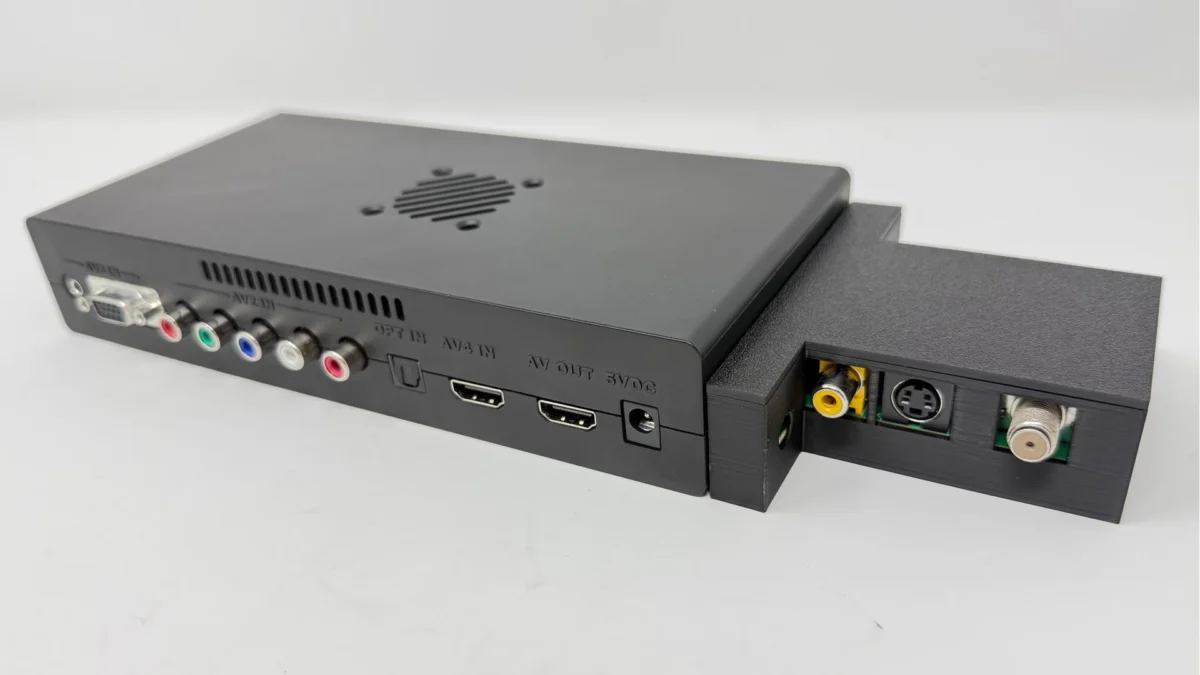
The OSSC Pro Firmware update, coupled with the introduction of a composite and S-video output module, further solidified the Open Source Scan Converter (OSSC) Pro’s position as a premier video processing solution for retro gaming. The OSSC Pro is an advanced upscaler designed to take analog video signals from classic consoles and convert them into modern digital formats (like HDMI) with minimal lag and high image quality. The original OSSC revolutionized how retro gamers connected their consoles to modern displays, and the Pro version built upon that foundation with enhanced features and capabilities.

The new firmware updates typically introduce performance optimizations, bug fixes, and support for additional resolutions or input timings. The addition of a composite and S-video output module is particularly significant. While the OSSC Pro is primarily known for its high-quality digital output, many retro gamers still utilize CRTs or other analog displays for certain experiences. Providing a module that can output composite and S-video signals means the OSSC Pro can now serve as a more versatile hub, offering both digital upscaling for modern screens and high-quality analog output for classic displays. This modular approach caters to a broader segment of the retro community, bridging the gap between cutting-edge digital setups and traditional analog preferences. It showcases a commitment by developers to provide comprehensive solutions that meet diverse user needs, ensuring that whether a gamer prefers pixel-perfect digital or authentic analog, the OSSC Pro can facilitate their chosen experience.
Community Celebration: SegaXtreme Saturn 31st Anniversary Showcase
The SegaXtreme Saturn 31st Anniversary Showcase, featuring 31 entrants, highlighted the vibrant and enduring homebrew and modding community surrounding the Sega Saturn. The Sega Saturn, despite being commercially overshadowed by competitors during its original release, has garnered a dedicated cult following due to its unique hardware architecture and deep game library. The SegaXtreme community is a cornerstone of this resurgence, fostering development of new games, translations, hardware modifications, and tools.
Anniversary showcases like this are crucial for celebrating community achievements, fostering collaboration, and attracting new talent. Featuring 31 entrants for the 31st anniversary is a testament to the sustained creativity and passion within the Saturn scene. These projects often include new game demos, homebrew utilities, technical breakthroughs in hardware understanding, or fan translations of obscure Japanese titles. The implications extend beyond mere entertainment; these community efforts contribute directly to the platform’s longevity, demonstrating that even decades after its commercial lifespan, a console can remain a fertile ground for innovation and artistic expression. Such events also serve as informal timelines, showcasing the evolution of homebrew capabilities and the collective knowledge accumulated over years of dedicated effort.
RetroTINK 5x Launch Edition Mod Testing: 4:4:4 Mod
The RetroTINK 5x Launch Edition 4:4:4 mod testing signifies ongoing efforts to refine video quality in retro gaming upscalers. The RetroTINK 5x is another highly acclaimed video upscaler, known for its superb image quality and ease of use. The "4:4:4 mod" refers to chroma subsampling, a component of digital video encoding. In a 4:4:4 chroma format, every pixel retains its full color information, leading to the highest possible color fidelity. Lower chroma subsampling formats, such as 4:2:2 or 4:2:0, sacrifice some color information to reduce bandwidth, which can lead to subtle color degradation, especially with sharp color transitions or fine details.
For retro gaming, where pixel art is often precise and vibrant, maintaining 4:4:4 chroma is crucial for achieving the most accurate and visually pleasing representation of original graphics. The testing of a 4:4:4 mod for the RetroTINK 5x Launch Edition indicates a commitment to pushing the boundaries of video accuracy and ensuring that every detail, down to the sub-pixel level, is preserved. This level of meticulousness is highly valued by discerning retro gamers and preservationists who strive for the most authentic visual experience possible on modern displays. This development, much like the OSSC Pro updates, illustrates the continuous drive within the retro hardware community to achieve unparalleled visual fidelity, building on years of research and iterative improvements in video processing technology.
Orpheus II ISA Sound Card: New Batch Preorders
The announcement of new batch preorders for the Orpheus II ISA Sound Card brought exciting news for PC retro gaming enthusiasts. The ISA (Industry Standard Architecture) bus was a standard for connecting peripheral cards to IBM PC compatible computers during the 1980s and 1990s. Sound cards like the original Sound Blaster series were essential components for gaming on these platforms. The Orpheus II is a modern reproduction or enhancement of classic ISA sound card technology, designed to provide high-quality audio for vintage PC builds.
The availability of new preorders is significant because acquiring functional original ISA sound cards can be challenging due to their age, scarcity, and potential for failure. Projects like the Orpheus II fill a critical void, allowing enthusiasts to build or restore period-accurate retro PCs without compromising on audio quality. This is vital for experiencing classic DOS games and early Windows titles with their intended soundscapes, which often relied on specific sound card capabilities like AdLib, Sound Blaster, or General MIDI synthesis. The demand for such niche hardware reproductions underscores the depth of the PC retro gaming community’s commitment to authenticity, ensuring that the full sensory experience of historical computing is not lost to time. This initiative contributes to the broader trend of hardware re-creation and modernization that supports all facets of retro computing.
Lu’s MiSTer FPGA Updates: Mortal Kombat 2, Rastan Saga III, Sega Saturn & More
The segment on Lu’s MiSTer FPGA updates demonstrated the relentless pace of development within the MiSTer FPGA project. MiSTer FPGA (Field-Programmable Gate Array) is an open-source hardware project that uses FPGA technology to replicate classic computer and video game hardware at a very low level, often achieving cycle-accurate emulation. Unlike software emulation, which runs on a general-purpose CPU and simulates the original hardware, FPGA recreates the actual logic circuits of the original chips, resulting in unparalleled accuracy and extremely low latency.
The updates, including progress on cores for Mortal Kombat 2, Rastan Saga III, and notably the Sega Saturn, represent significant milestones. Developing complex cores like the Sega Saturn is an arduous undertaking due to the console’s intricate multi-processor architecture. Each new core expands the library of playable systems and games with hardware-level accuracy, providing an experience virtually indistinguishable from the original hardware. The continuous updates from developers like "Lu" are critical for the project’s growth and appeal.
The implications of MiSTer FPGA’s ongoing development are profound for game preservation and accessibility. It offers a future-proof platform for playing classic games, immune to the hardware failures that plague original consoles. The community’s response to these updates is consistently enthusiastic, recognizing the immense technical skill and dedication required to achieve such accurate recreations. The steady stream of new cores and improvements solidifies MiSTer FPGA as a cornerstone of modern retro gaming, offering a benchmark for accuracy and performance that continually pushes the boundaries of what is possible in hardware-level recreation.
Community Support and Future Outlook
The Roundup concluded with a customary segment acknowledging community support, which is the lifeblood of projects like RetroRGB and the broader retro gaming scene. Platforms like Patreon, affiliate links, and direct donations enable content creators and developers to continue their work, funding research, hardware acquisition, and development time. This model of community-driven support is prevalent across the retro gaming landscape, from individual modders to large-scale preservation projects.
The consistent stream of innovations showcased in Weekly Roundup #515 paints a vivid picture of a retro gaming community that is not merely looking backward but actively shaping the future of how classic games are preserved, played, and experienced. From cutting-edge display technology and customizable controllers to sophisticated video upscalers and highly accurate FPGA recreations, the advancements highlighted underscore a collective commitment to enhancing the retro gaming experience for generations to come. The emphasis on both hardware and software solutions, coupled with robust community engagement, ensures that the legacy of video games continues to be celebrated, understood, and enjoyed in ever more refined ways.