Farhan hamdan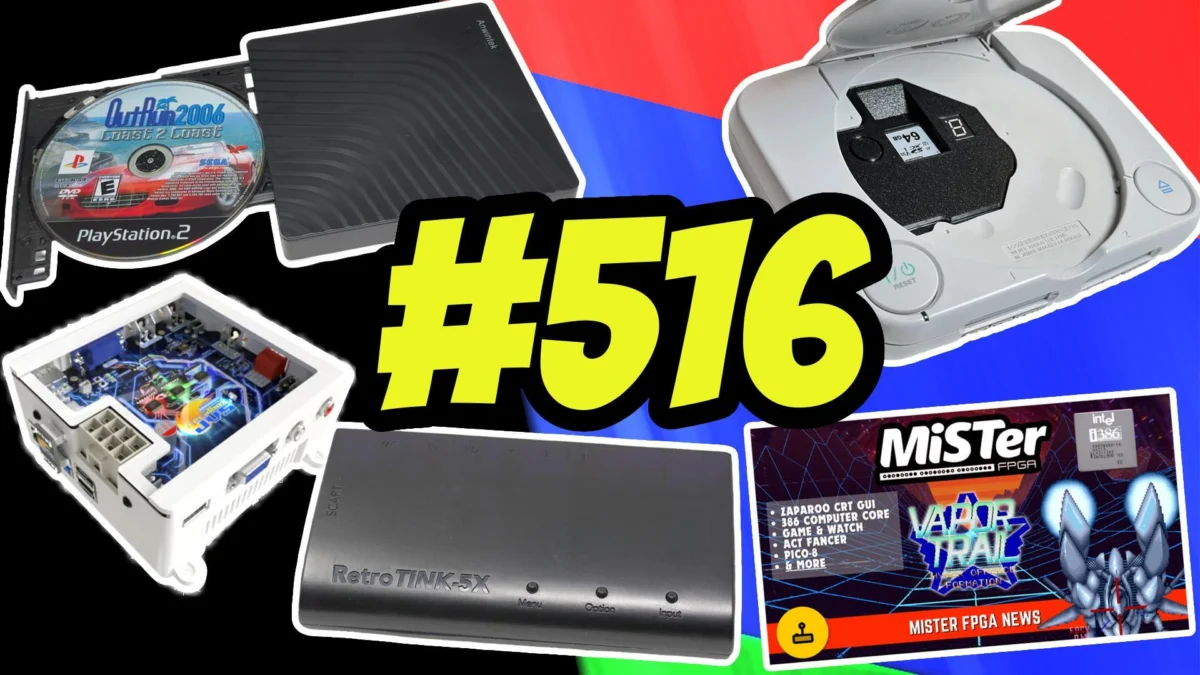
The latest installment of RetroRGB’s "Weekly Roundup," dated June 3rd, 2026, delivered a comprehensive overview of significant developments across the retro gaming landscape, encompassing hardware innovations, software updates, and community-driven preservation efforts. This edition highlighted advancements crucial for the longevity and enhanced enjoyment of classic gaming systems, with a particular focus on optical drive emulation, FPGA development, and advanced video processing. The Roundup, disseminated through both video and various audio-only podcast services including iTunes, Google Podcasts, Stitcher, Spotify, and Amazon Music, serves as a vital informational hub for enthusiasts, developers, and preservationists alike.
Innovations in Optical Drive Emulation for PlayStation 1 Consoles
A primary focus of the June 3rd, 2026, RetroRGB Weekly Roundup was the introduction of the ArcStation PS1 ODE (Optical Drive Emulator). This plug-and-play solution represents a significant advancement in the preservation and usability of the original PlayStation console. Optical disc drives in vintage consoles are prone to mechanical failure and laser degradation over time, posing a substantial threat to the long-term playability of disc-based game libraries. The ArcStation ODE addresses this challenge by allowing users to load game images from modern storage media, such as SD cards, effectively bypassing the aging optical drive mechanism.
The concept of Optical Drive Emulation has gained considerable traction within the retro gaming community over the past decade. Devices like the ArcStation replace the physical disc drive with a modern digital interface, offering benefits such as faster load times, silent operation, and eliminating wear and tear on original hardware. The "plug-and-play" designation of the ArcStation suggests an emphasis on user-friendliness, requiring minimal technical expertise for installation, which is a critical factor for wider adoption among the general retro gaming populace. This ease of installation is often achieved through non-invasive designs that do not require soldering or permanent modifications to the console, thereby preserving its original integrity. The introduction of such accessible ODEs ensures that iconic PlayStation titles remain playable for generations to come, circumventing the increasing scarcity and fragility of original game discs and their corresponding hardware. This development is anticipated to be particularly welcomed by collectors and casual players seeking reliable and convenient access to their digital game backups.
Enhancing Digital Preservation with OmniDrive-Compatible Optical Solutions
Furthering the theme of digital preservation, the Roundup also covered a new OmniDrive-compatible slimline disc ripper. The OmniDrive initiative is a community-driven standard aimed at simplifying and standardizing the process of ripping data from various optical media formats. The challenge of preserving physical media lies not only in the degradation of discs themselves but also in the obsolescence of the drives capable of reading them. Many proprietary game consoles utilized unique disc formats or specialized read mechanisms that are becoming increasingly difficult to support with off-the-shelf PC drives.
A slimline disc ripper that offers OmniDrive compatibility is a crucial tool for both individual collectors and large-scale preservation projects. It facilitates the creation of accurate digital archival copies of games, software, and other data stored on optical discs. The "slimline" aspect suggests portability and ease of integration into various setups, making it more accessible for users who might not have dedicated retro computing workstations. The significance of such a device extends beyond mere convenience; it actively contributes to the digital archiving efforts that safeguard video game history. As physical media continues to age and deteriorate, the ability to reliably and accurately extract data becomes paramount. The OmniDrive standard aims to ensure that these digital copies are as faithful as possible to the original media, capturing nuances that might be lost with less precise ripping methods. This type of hardware development underscores the ongoing commitment within the retro gaming community to document and preserve the digital heritage of interactive entertainment.
Significant Update to Super ZSnes Emulator: Version 0.200b
The software emulation front saw a notable update with the release of Super ZSnes v0.200b. This update brought several key enhancements, most prominently the addition of MSU-1 audio support and new scaling modes. Super ZSnes is a prominent emulator for the Super Nintendo Entertainment System (SNES), a console celebrated for its rich library of titles. Emulators play a critical role in making classic games accessible on modern platforms, and continuous development ensures higher accuracy, better performance, and enhanced features.
MSU-1 (Media Streaming Unit 1) is a custom enhancement chip developed by the retro gaming community that allows for CD-quality audio and full-motion video playback in SNES games. Originally, the SNES was limited by its cartridge-based storage and audio capabilities. MSU-1 technology bypasses these limitations, enabling fans to create "enhanced" versions of classic SNES games with orchestral soundtracks, voice acting, and even video clips, dramatically enriching the gaming experience. The integration of MSU-1 audio support in Super ZSnes v0.200b means that players can now enjoy these fan-made enhancements with greater fidelity and compatibility. This development broadens the appeal of SNES emulation, providing a richer, more immersive experience than was possible on original hardware without modification.
Alongside MSU-1 support, the update also introduced new scaling modes. Modern displays, with their high resolutions and widescreen aspect ratios, present challenges for displaying pixel-art games designed for lower-resolution, 4:3 cathode ray tube (CRT) televisions. Scaling modes are essential for rendering these games attractively and accurately. New modes often include options for pixel-perfect scaling, various aspect ratio corrections, and filters that mimic the scanlines and visual characteristics of CRTs, catering to diverse player preferences. These enhancements collectively improve the visual presentation of SNES titles on contemporary screens, ensuring that the artistic integrity of the original games is preserved while adapting them for a modern viewing environment.
MiSTer FPGA Ecosystem Expands with Luâ’s Latest Updates
The MiSTer FPGA project, a cornerstone of hardware-accurate retro game replication, received significant attention with the latest updates from developer Luâ. MiSTer (Multi-video game System for Reconfigurable dEsign) utilizes Field-Programmable Gate Arrays (FPGAs) to reconfigure hardware to behave identically to original vintage gaming consoles and arcade machines at a transistor level. This approach offers a level of accuracy often superior to software emulation, eliminating common issues such as input lag and timing inaccuracies.
Luâ’s updates highlighted several exciting new cores:

- New PC Core: The development of a new PC core for MiSTer expands its capabilities beyond consoles and arcade machines into the realm of early personal computer gaming. This allows for the faithful recreation of classic DOS and early Windows environments, enabling users to experience foundational PC games with unparalleled hardware accuracy. This is particularly important for games that relied on specific timing or hardware characteristics of vintage PCs, which are notoriously difficult to emulate perfectly in software.
- Atari Star Wars Arcade Core: The addition of a core for the classic Atari Star Wars arcade game is a monumental achievement. This game, known for its vector graphics and unique controls, utilized specialized hardware that presents a considerable challenge for accurate replication. Its successful implementation on MiSTer brings a beloved arcade experience to enthusiasts with unprecedented fidelity.
- Darius 2 Arcade Core: Another notable arcade core, Darius 2, a horizontally scrolling shoot ’em up, adds to MiSTer’s growing library of perfectly preserved arcade titles. The accurate replication of complex arcade systems ensures that future generations can experience these games as they were originally intended, circumventing the practical difficulties and costs associated with maintaining vintage arcade cabinets.
These continuous additions to the MiSTer FPGA library underscore the project’s dynamic nature and the dedicated efforts of its open-source development community. The ability to accurately replicate such a diverse range of systems, from home computers to complex arcade hardware, positions MiSTer FPGA as an indispensable platform for both retro gaming and digital preservation. The implications are profound, offering a future where the authentic experience of historical gaming hardware is accessible and sustainable.
RetroTINK 5x Firmware Update: Version 3.98
Video upscaling technology, crucial for integrating vintage consoles with modern displays, received an update with the release of RetroTINK 5x firmware version 3.98. The RetroTINK 5x Pro, developed by Mike Chi, is widely regarded as a leading solution for converting analog video signals from classic game consoles into digital HDMI signals with minimal latency and superior image quality. Its role is to take the low-resolution, often interlaced, and varied analog outputs (like composite, S-video, component, RGB) from retro consoles and upscale them to high-definition progressive scan formats suitable for HDTVs, monitors, and projectors.
While specific details of the v3.98 firmware update were not exhaustively detailed in the Roundup, such updates typically involve a range of improvements. These often include bug fixes, enhanced compatibility with specific consoles or game modes, new scaling algorithms, improved deinterlacing, color correction adjustments, and performance optimizations. Firmware updates are vital for these devices as they allow for continuous refinement of image processing, ensuring that the RetroTINK 5x remains at the forefront of video upscaling technology. For instance, new game releases on older hardware (such as homebrew or fan translations) might present unique video timing challenges that a firmware update can address. The ongoing commitment to updating the RetroTINK 5x firmware reflects the dynamic needs of the retro gaming community, which constantly seeks the best possible visual fidelity for their classic systems on contemporary displays. This commitment ensures that users can expect continued high performance and adaptability from their upscaling hardware, safeguarding their investment and enhancing their gaming experience.
Recalbox and Raspberry Pi 5 Unveil JVS Arcade Kit
The world of DIY arcade machines and emulation frontends also saw a significant development with the announcement of the Recalbox Raspberry Pi 5 JVS Arcade Kit. Recalbox is a popular, open-source emulation operating system designed for single-board computers like the Raspberry Pi, providing a user-friendly interface for playing a vast library of retro games. The Raspberry Pi 5, with its substantially increased processing power over previous iterations, has opened new possibilities for more demanding emulation and complex projects.
The key innovation here is the integration with JVS (Jamma Video Standard), a modern arcade industry standard for communication between arcade mainboards and input/output peripherals (joysticks, buttons, coin mechanisms, etc.). By providing a JVS Arcade Kit for the Raspberry Pi 5, Recalbox is bridging the gap between powerful, affordable single-board computing and authentic arcade hardware. This kit allows enthusiasts to construct highly capable arcade cabinets that can run a multitude of emulated systems through Recalbox, while still leveraging genuine arcade controls and potentially even original arcade monitors if properly configured.
Historically, interfacing modern computers with classic arcade hardware could be complex, requiring specialized adapters and drivers. The Recalbox JVS Arcade Kit simplifies this process, making it more accessible for hobbyists to build sophisticated arcade setups. This development has broad implications for the arcade community, enabling the creation of versatile "supergun" type systems or full arcade cabinets that offer a vast game library without sacrificing the authentic tactile experience of traditional arcade gaming. It represents a powerful synergy between the open-source emulation movement and the enduring appeal of dedicated arcade hardware, empowering users to customize their retro gaming experiences to an unprecedented degree.
Community Engagement and the Path Forward for RetroRGB
Beyond the technical announcements, the Weekly Roundup #516 also touched upon aspects of community engagement and the vital role of viewer support. A segment titled "Am I wrong about this coffee maker?" served as a lighter, more personal interlude, demonstrating the diverse interests of the RetroRGB host and fostering a connection with the audience beyond purely technical discussions. Such moments of casual interaction often serve to humanize content creators and build a stronger, more engaged community.
Crucially, the Roundup reiterated the importance of community support for the continued operation and growth of RetroRGB. The platform, which provides invaluable news, reviews, and technical guides for the retro gaming and preservation community, relies on various forms of support. This includes monthly contributions via services like Patreon, direct tips, and the use of affiliate links for purchases that viewers might already be making. This financial backing directly fuels the extensive research, development, and content creation necessary to deliver high-quality, up-to-date information on a rapidly evolving niche. The symbiotic relationship between content creators like RetroRGB and their dedicated audience highlights a model where community investment directly translates into the proliferation of knowledge and the advancement of retro gaming technology and preservation efforts.
In conclusion, the RetroRGB Weekly Roundup #516 for June 3rd, 2026, underscored a vibrant and continuously innovating retro gaming scene. From the critical advancements in console preservation through ODEs and disc ripping, to the expanded capabilities of emulation platforms like Super ZSnes and MiSTer FPGA, and the refinement of video output with RetroTINK, the developments signal a strong future for classic gaming. The integration of modern computing with arcade hardware via Recalbox further exemplifies the community’s ingenuity. These ongoing efforts, supported by an active and engaged audience, ensure that the rich history of video games remains accessible, playable, and continually enhanced for generations to come.