Farhan hamdan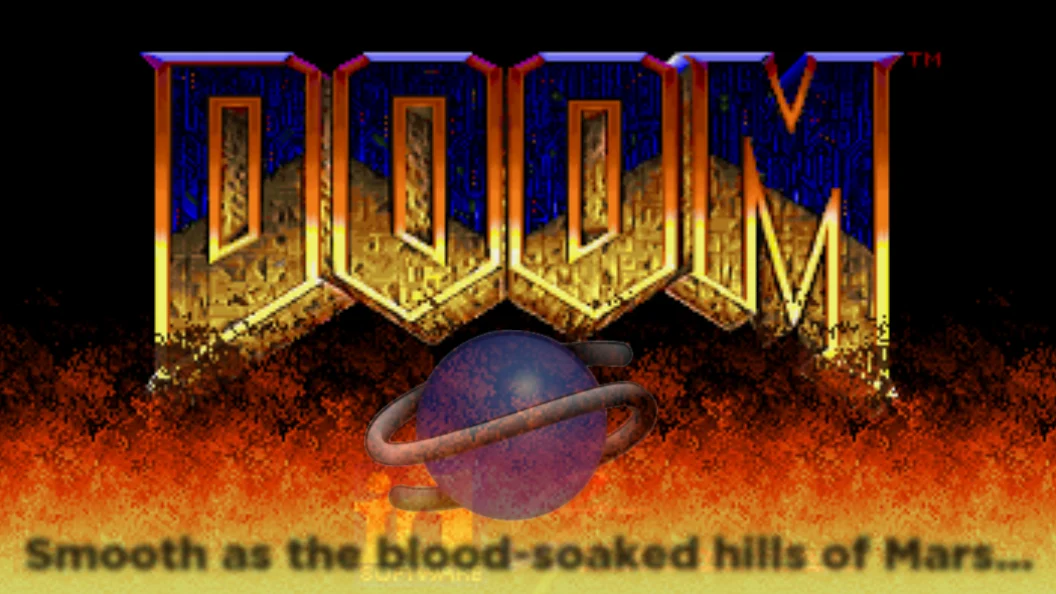
Homebrew developer Fafling has released version 0.3 of his optimization patch for the Sega Saturn port of Doom, achieving a remarkable performance boost that sees some levels running at a frame rate two-and-a-half times faster than the notoriously sluggish retail release. This latest iteration significantly enhances the playability of a port long considered one of the console’s most disappointing titles, pushing its performance closer to that of its contemporaries on other platforms.
The patch, uploaded last Monday to the Resources area at SegaXtreme, represents a substantial leap in the ongoing effort by the retro gaming community to refine and improve classic software. Fafling’s work utilizes the Sega Saturn Patcher version 1.95, which is included within the patch’s ZIP file for ease of application. The developer specifically targeted the Japanese version of Doom for this patch, citing its later release date compared to the North American and European versions, which potentially incorporated earlier bug fixes. Crucially, the Japanese version retains English language text, making it accessible to a broader audience without language barriers.
"I will only patch one region in order to reduce complexity of a release," Fafling stated in the SegaXtreme Discord server, outlining his pragmatic approach to development. He also hinted at potential future developments, noting, "I may however switch from the Japanese version to the US one to take advantage of the additional CD track," suggesting that audio enhancements could be a consideration for subsequent updates.
The Genesis of a Fix: Addressing Saturn Doom’s Legacy
The Sega Saturn’s 1997 port of Doom, developed by Rage Software on behalf of id Software, has historically been a point of contention among retro gaming enthusiasts. Unlike the PlayStation, which boasted a dedicated 3D graphics chip (the Geometry Transformation Engine), the Saturn’s architecture was characterized by its dual Hitachi SH-2 CPUs and multiple specialized processors (VDP1 for sprites and polygons, VDP2 for backgrounds and scrolling). While powerful for 2D and sprite-based 3D games, this complex architecture proved challenging for developers to master, particularly for highly polygonal, texture-mapped 3D environments like those found in Doom.
Rage Software’s port, despite their best efforts, suffered from significant compromises. Players experienced a reduced resolution, a smaller viewport window, and persistent frame rate instability that frequently dipped into single digits, making the fast-paced action of Doom feel sluggish and unresponsive. Missing levels, a lack of music in certain areas, and an overall lower visual fidelity further cemented its reputation as an inferior version when compared to the PC original or the more fluid PlayStation port. This historical context underscores the magnitude of Fafling’s achievement; his work directly addresses the fundamental technical limitations that plagued the original release and left a generation of Saturn owners yearning for a better Doom experience. The homebrew scene, driven by passionate developers like Fafling, has become crucial in rectifying these historical shortcomings, breathing new life into games that were once considered lost causes.
A Chronology of Optimization: Fafling’s Journey
Fafling’s work on Saturn Doom is not a sudden breakthrough but the culmination of iterative improvements and dedicated reverse-engineering. Prior to his current efforts, the retro community had seen various attempts to mitigate the performance issues of Saturn Doom, often through minor hacks or unofficial patches. However, Fafling’s systematic approach began to gain significant traction with his earlier releases.

His previous major update, version 0.2, released in April 2025, marked a pivotal moment. That patch was lauded for its "dramatic improvements to gameplay," showcasing a tangible boost in frame rates from the original’s approximately 11 frames per second (FPS) to around 25 FPS on many levels. This earlier success earned Fafling’s patch second place in the hacks, patches, and translations category at the SegaXtreme Saturn 31st Anniversary Homebrew Showcase, highlighting its impact and the community’s recognition of his skill.
The latest version, 0.3, builds upon this foundation, pushing performance even further. A video uploaded by Fafling to YouTube vividly demonstrates this progression through a side-by-side-by-side comparison of the original game, version 0.2, and the new 0.3 patch running Doom’s three demo sequences. While the original often languished at around 11 FPS, version 0.2 consistently hit approximately 25 FPS, and the new 0.3 patch now achieves just shy of 30 FPS. This continuous improvement underscores Fafling’s deep understanding of the Saturn’s intricate hardware and his meticulous approach to code optimization.
Technical Deep Dive: The Mechanics of Performance Enhancement
The significant performance gains in version 0.3 are the result of a comprehensive array of optimizations targeting the game’s core rendering and processing routines. Fafling delved into the game’s assembly code, identifying and refining numerous bottlenecks that hindered the Saturn’s ability to render Doom’s environments efficiently. The full list of fixes detailed in the patch notes reveals the depth of his work:
- Rendering Function Optimizations: Critical functions like
DrawSubSector,DrawSeg,DrawBlock, andVDP1_DrawScaledSprite_Flathave been meticulously optimized. These functions are responsible for drawing the fundamental elements of Doom’s world – sectors, segments, entire blocks of the map, and scaled sprites (enemies, pickups). By streamlining these, Fafling has reduced the computational overhead for drawing each frame. - Memory Access and VDP1 Control: Improvements such as
VDP1_SetFB_SetClipoptimization indicate a focus on how the game interacts with the Saturn’s Video Display Processor 1 (VDP1), which handles sprite and polygon rendering. Efficiently managing the frame buffer and clipping operations is crucial for minimizing wasted cycles. - CPU Scheduling and Task Management: Optimizations to
Task_Draw_BG_LowResandTask_Draw_BG_HighRessuggest improvements in how the game manages background rendering tasks across the Saturn’s dual SH-2 CPUs. Better load balancing and task prioritization can lead to smoother overall performance. - Bug Fixes and Stability Enhancements: Specific fixes like
Fix_VDP1_DrawingOrder_BugandFix_TextureCache_Clearaddress graphical glitches and potential memory management issues. Another video posted by Fafling specifically showcases fixes made to how walls are rendered, eliminating visual artifacts and improving graphical integrity. These corrections not only enhance performance but also contribute to a more visually consistent and polished experience. - General Code Refinements: Numerous other entries, such as
General_Code_OptimisationsandRemove_Unused_Code_Or_Data, indicate a systematic cleanup of the game’s codebase, removing redundant instructions and streamlining execution pathways. This type of optimization, while less glamorous, often yields cumulative performance benefits.
These technical adjustments collectively allow the Saturn’s hardware to process Doom’s visual information much more effectively. By reducing the number of instructions per frame and optimizing how data is moved and processed, Fafling has managed to unlock latent performance within the Saturn, proving that many of the original port’s issues stemmed from sub-optimal code rather than insurmountable hardware limitations.
Beyond Performance: Quality of Life Improvements
Fafling’s patch doesn’t merely focus on raw performance; it also introduces a suite of quality-of-life features designed to modernize the gameplay experience and align it with contemporary first-person shooter controls. According to the readme file accompanying the patch, these enhancements significantly improve player interaction:
- Analog Stick Support for Movement: This is a crucial addition, as the original Saturn controller only featured a D-pad. Implementing analog control allows for much finer and more fluid movement, a staple of modern FPS games.
- Remappable Controls for Shoulder Buttons: Players can now assign strafing actions to the L and R shoulder buttons. This configuration is widely adopted in modern shooters, offering intuitive lateral movement that was cumbersome or absent in many early console FPS titles.
- DualShock/DualSense Controller Support (via adapters): This forward-thinking feature acknowledges the prevalence of modern controllers. By supporting DualShock/DualSense controllers through adapters, Fafling ensures that players can use their preferred, more ergonomic hardware, further enhancing comfort and precision.
- Invert Y-axis Option: A fundamental accessibility and preference setting for many FPS players, the inclusion of an invert Y-axis option allows for personalized aiming controls.
- Controller Configuration Menu: The provision of an in-game menu for control configuration empowers players to customize their setup, making the game more adaptable to individual playstyles and preferences.
These control enhancements collectively transform the playability of Saturn Doom. The original game’s controls were often cited as a significant barrier to enjoyment, feeling archaic and imprecise by modern standards. With analog movement and customizable, modern button layouts, Fafling’s patch makes Doom on the Saturn feel far more responsive and engaging, significantly lowering the barrier to entry for new players and offering a refreshed experience for veterans.
Comparative Performance and Remaining Challenges

With version 0.3, Fafling has elevated Saturn Doom to a competitive standing against its console peers. He notes that the patched Saturn version now "runs better than the Atari Jaguar port and close to PlayStation port — ‘sometimes slightly better, but still sometimes worse.’" This statement is particularly significant given the historical context. The Atari Jaguar port of Doom, while often praised for its inclusion of all PC levels, also suffered from noticeable frame rate drops and a smaller screen window, making Fafling’s achievement of surpassing it a clear victory. The PlayStation port, widely considered the superior console version before Fafling’s work, set a high bar for performance and visual fidelity. Bringing the Saturn version into close contention, and even surpassing it in certain scenarios, is a testament to the depth of optimization achieved.
Despite these monumental improvements, Fafling acknowledges that the inherent complexities of certain levels still pose challenges. "Some of the more complex of the non-Jaguar levels can still have sub-10 FPS drops, like Sever the Wicked if you stand at a corner of the big open area," he explained. This indicates that while general performance has drastically improved, specific, highly detailed or open-ended areas can still strain the Saturn’s hardware to its limits, even with optimized code. However, the overall picture is overwhelmingly positive: "The Jaguar levels and the less complex non-Jaguar ones are regularly hitting the 30 FPS mark now." This means that a significant portion of the game, including levels originally designed with hardware limitations in mind, now performs at a consistently smooth frame rate, delivering the fast-paced action Doom is known for.
Community Engagement and Future Prospects
The release of Fafling’s patch on SegaXtreme, a hub for Sega Saturn enthusiasts and homebrew developers, highlights the vital role of community platforms in fostering such projects. The SegaXtreme Discord server serves as a direct channel for developers like Fafling to communicate progress, gather feedback, and announce releases, creating a dynamic ecosystem for retro gaming preservation and enhancement. The enthusiastic reception from the retro gaming community is palpable; a patch of this caliber breathes new life into a historically maligned port, allowing players to experience Doom on the Saturn in a way that was never truly possible during its original commercial run.
The broader implications for retro gaming are significant. Projects like Fafling’s contribute immensely to the preservation of gaming history, ensuring that classic titles, even those with problematic original releases, can be experienced in their best possible form. This work also challenges long-held narratives about the capabilities of certain hardware, demonstrating that with enough dedication and technical prowess, even consoles with challenging architectures can be pushed to perform beyond their initial perceived limits. It can inspire other developers to tackle similar optimization projects for other struggling ports on the Saturn or other retro consoles, fostering a continuous cycle of improvement within the homebrew community.
While version 0.3 was not an entry in this year’s SegaXtreme Saturn 31st Anniversary Homebrew Showcase, unlike its predecessor, the ongoing nature of Fafling’s work suggests a continued commitment to refining the Saturn Doom experience. His consideration of switching to the US version to leverage an "additional CD track" indicates that future updates could focus on enhancing the game’s audio experience, potentially addressing the lack of music in certain areas of the original port. This forward-looking perspective underscores the dedication of homebrew developers to deliver the definitive retro gaming experience.
Conclusion
Fafling’s version 0.3 patch for Sega Saturn Doom stands as a monumental achievement in the realm of retro gaming preservation and enhancement. By meticulously optimizing the game’s codebase, he has transformed a notoriously sluggish and compromised port into a remarkably fluid and enjoyable experience, achieving a 250% speed increase on some levels and pushing performance close to, and sometimes even beyond, that of the PlayStation version. Coupled with modern quality-of-life control features, this patch revitalizes Doom on the Saturn, allowing a new generation of players and long-time fans alike to appreciate the game on a console where it was once a source of disappointment. This ongoing dedication from the homebrew community not only preserves gaming history but also redefines the legacy of classic hardware, proving that with passion and technical expertise, even the most challenging ports can be redeemed.