Farhan hamdan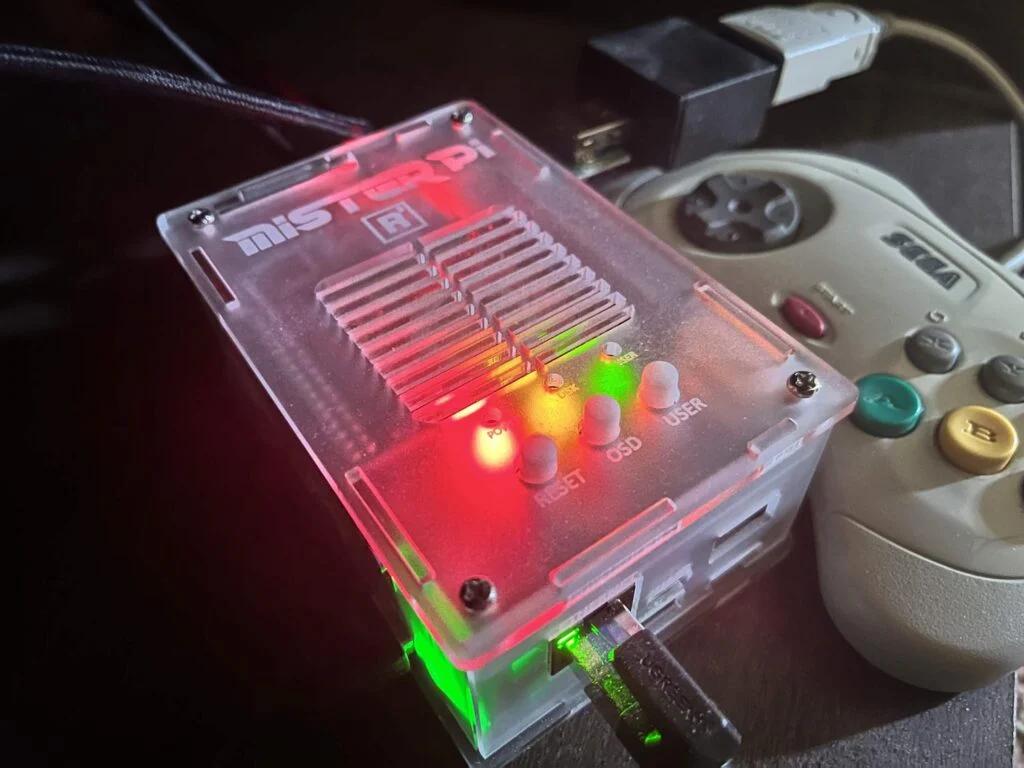
The MiSTer FPGA’s highly anticipated Saturn core has received a critical suite of updates, addressing severe compilation difficulties that plagued its development for over a month and introducing new features, including a fan-requested aesthetic touch: the FPGA device’s LEDs now authentically mimic an actual Sega Saturn’s power and disc read lights. While the LED feature adds a charming layer of retro authenticity, the core’s optimization for easier compilation is the more significant technical achievement, ensuring continued progress for one of the most resource-intensive cores on the MiSTer platform. These latest improvements, uploaded to the project’s GitHub repository on Thursday, mark a crucial turning point after weeks of developer struggle and community concern over the core’s stability and future expansion capabilities.
Aesthetic Enhancement and Community-Driven Features
Among the recent updates, the most visually appealing is the integration of LED functionality, allowing the MiSTer’s onboard indicator lights to reflect the operational status of the emulated Sega Saturn. Specifically, the MiSTer’s red LED now acts as a power indicator, while the yellow LED simulates the classic disc read light, flickering to signal data access. An additional green LED has been programmed to indicate when game data is being saved, providing clear, real-time feedback to users. This seemingly minor addition, though humorously noted by the development team as perhaps "not the most requested feature," originated from a casual inquiry by a MiSTer Discord user named Kanel.
Kanel’s off-hand question regarding LED parity with other cores, like the PlayStation, sparked an unexpected development path. "In the PlayStation core, when accessing disk (SD or pendrive at least) the yellow led lights up. It isn’t happening with the Saturn core, right? Any plans for implementing it @srg320?" Kanel posted. Despite initial skepticism from some community members who felt the core was already too resource-constrained for such cosmetic additions, the query caught the attention of lead developer Sergiy Dvodnenko, known as "SRG320." Dvodnenko, admitting he had "never paid attention to LEDs in all the years I’ve been using MiSTer," quickly investigated. Remarkably, within a week, the functionality was implemented, mirroring a Model 1 Saturn’s lights. MiSTer Discord member Zakk highlighted the practical benefit, stating, "Sometimes it’s nice to know if the thing is accessing data, or is it just frozen." Kanel, in a playful jab at initial detractors, vowed to "charge you with one coin" if anyone later found themselves relying on the new LED indicators for troubleshooting.
These new updates are not yet available on the main branch of the MiSTer, which is accessible to users running the "update_all" script and was last updated in October. Instead, they are housed in "unstable nightlies" cores, which can be downloaded from the dedicated unstable nightlies channel on the MiSTer Discord server, catering to enthusiasts eager for the latest, albeit potentially less stable, builds.

Overcoming the Compilation Crisis: A Deep Dive into Optimization
Far more critical than the aesthetic enhancements are the underlying optimizations that have made the Saturn core significantly easier to compile into usable builds. The previous month witnessed unprecedented difficulties, with the core’s sheer size pushing the MiSTer’s hardware platform, the DE-10 Nano, to its absolute limits. Compiling the Saturn core, which involves converting its complex Verilog code into an FPGA-specific RBF (Raw Binary File) using sophisticated tools like Intel Quartus Prime, became a Herculean task, often failing or requiring numerous attempts.
The compilation struggles reached a critical juncture following an update on March 20, which aimed to improve 3D fighter performance on single RAM MiSTer setups. This update inadvertently caused the single RAM core to exceed the DE-10 Nano’s Adaptive Logic Module (ALM) capacity, rendering successful compilation nearly impossible for many users. ALMs are the fundamental programmable logic blocks within an FPGA, serving as the building blocks for digital circuits. Hitting near 100% utilization indicates a severe resource constraint, making it incredibly difficult for the Quartus software to efficiently "place and route" the complex logic required by the Saturn core.
Over the subsequent two weeks, the situation deteriorated. On March 26, MiSTer user TheJesusFish vividly illustrated the problem, reporting, "The Saturn core is not well. I did 100 compilations. These are the builds that succeeded." He posted a screenshot showing a staggering number of failed attempts, humorously noting that "seed 6 is, in fact, the winner" for a successful build. This indicated that compilation had become a matter of sheer luck and repeated attempts, rather than a stable process, severely hindering iterative development and wider accessibility.
The gravity of the situation was underscored when Dvodnenko addressed a user’s request for analog shoulder button support. His stark assessment: "There isn’t any free space. Rather, I need to free up some space to improve the compilation. If I can’t find a way to free up space, I’ll have to remove some features." This sent ripples of concern through the community, with another user lamenting the fate of cheat support, to which Dvodnenko reiterated, "It seems like you don’t realize how serious the situation is. It may even be necessary to remove features that have already been added." Zet-sensei, a close collaborator and tester for the Saturn core, grimly confirmed, "We are in a dire situation."
By April 1, the resource usage was at a breaking point. Zet-sensei reported that the single RAM core was consuming an astonishing 99% of the DE-10 Nano’s ALMs, with the dual RAM core close behind at 98%. These figures were independently verified by birdybro, another community member, who posted a screenshot showing similar statistics, commenting, "This is honestly really shocking that this even compiles, simply stunning." The situation escalated further with the April 3 update, which proved to be insurmountable for automated nightly builds. Zakk reported widespread failures for both dual and single RAM builds, forcing community members to attempt manual compilations. Even then, success was elusive. Zet-sensei, after his own efforts, declared, "I give up for the single RAM one."

The MiSTer FPGA and the Demands of the Sega Saturn
To fully appreciate the scale of these compilation challenges, it’s essential to understand the MiSTer FPGA platform and the inherent complexity of the Sega Saturn. The MiSTer is a Field-Programmable Gate Array (FPGA) based system, primarily using the Terasic DE-10 Nano development board. Unlike software emulators that simulate a console’s behavior on a general-purpose CPU, an FPGA is a reconfigurable silicon chip that can be programmed to physically reconfigure its internal logic gates to precisely replicate the original hardware of a retro console. This "hardware emulation" offers unparalleled accuracy, minimal input lag, and a genuine retro experience, making MiSTer highly popular among enthusiasts.
"Cores" are the specific programming files that instruct the FPGA chip how to configure itself to become a particular console. Developing these cores, especially for complex systems, is an arduous task, requiring deep understanding of the original hardware’s architecture at a low level. The Sega Saturn, released in 1994, is notoriously complex. It features a formidable array of custom chips and a challenging dual-CPU architecture (two Hitachi SH-2 microprocessors running in parallel), along with multiple dedicated processors for graphics (VDP1 for sprites and polygons, VDP2 for backgrounds and scaling) and sound. Replicating this intricate design on a fixed-resource FPGA like the DE-10 Nano (which contains an Intel Cyclone V SE FPGA with 110,880 ALMs) is a monumental feat of engineering.
The ALM utilization figures illustrate the tightrope developers like SRG320 walk. Each feature, each optimization, each minor improvement consumes precious ALMs. When ALM usage approaches 100%, the Quartus software struggles to "place and route" the logic within the FPGA, leading to excessively long compilation times, unstable builds, or outright failures. This is particularly true for single RAM MiSTer setups, as dual RAM configurations offer additional memory that can offload some functions, thereby freeing up onboard FPGA resources. The existence of separate builds for single and dual RAM setups is a direct consequence of this resource scarcity and the developer’s innovative solutions to maximize compatibility.
Developer’s Tireless Efforts and Community Collaboration
The recent breakthrough in compilation stability is a testament to the tireless efforts of Sergiy Dvodnenko. As Zet-sensei articulated, "In short, SRG320 worked tirelessly on it; it was exhausting for him." His dedication is evident in the rapid succession of updates and optimizations he pushed to address the critical compilation issues. The MiSTer development model thrives on such individual brilliance, often supported by a passionate community that assists with testing, bug reporting, and feedback.

The "unstable nightlies" channel on the MiSTer Discord server serves as a crucial testing ground where these bleeding-edge updates are first made available. Unlike the "main branch" of the MiSTer, which is updated less frequently and typically contains more stable builds (the Saturn core was last updated on the main branch in October, fixing save issues), the nightlies offer immediate access to the latest changes, allowing the community to stress-test the core and provide vital data back to the developer. This collaborative ecosystem is vital for the iterative process of FPGA core development. Dvodnenko first released a playable public build of the Saturn core in May 2022, and its inclusion in the main MiSTer branch in October 2023 signified its maturity and stability for a broader user base. However, the recent challenges demonstrate that even mature cores continue to require significant ongoing development and optimization.
Navigating Feature Prioritization: The Dual Light Gun Dilemma
The intense pressure on ALM resources also led to a significant discussion about potentially cutting existing features. One such feature that came under review was the support for two virtual light guns. Dvodnenko candidly posed the question, "How necessary is support of two virtual light guns?" This sparked considerable "consternation" among users who cherished the ability to play two-player light gun classics like Virtua Cop 1 & 2 and House of the Dead, titles that are cornerstones of the Saturn’s arcade legacy.
Dvodnenko quickly clarified that no features were being deleted outright, but rather the light gun code itself needed optimization to reduce its ALM footprint. ElectronAsh, the original developer of the MiSTer’s light gun code, weighed in, noting that while the code was relatively small, "133 ALMs (roughly 351 Logic Elements in old-skool Cyclone speak) is still a fair bit, for what it’s doing." He suggested that more efficient ways to generate the crosshair might exist. Dvodnenko’s primary idea for optimization was to combine two identical light gun modules into one, thereby sharing resources like horizontal/vertical counters and calculations, a clever approach to consolidate logic and save ALMs.
After intensive work, the dual light gun functionality has been retained in the core, thanks to targeted optimizations. The code was specifically updated to "reset the registers to prevent using BRAM as a shift register," a technical change aimed at reducing ALM usage by preventing inefficient memory allocation. This incident highlights the delicate balance developers must maintain between feature richness and hardware constraints, often requiring difficult decisions about what can be included or, potentially, sacrificed. The retention of dual light gun support is a testament to Dvodnenko’s ingenuity and the community’s desire for a comprehensive Saturn experience.
Broader Implications and the Road Ahead

The recent compilation crisis and its resolution carry significant implications for the future of the Saturn MiSTer core and FPGA development on the DE-10 Nano. It underscores that even with a powerful FPGA board, the complexity of later 32-bit consoles like the Saturn pushes the hardware to its absolute limits. This near-saturation of ALMs means that future feature additions will likely require even more meticulous optimization or, in some cases, might be entirely impossible without sacrificing existing functionality. The developer’s success in resolving these issues without removing features is a critical step forward, ensuring the core’s continued evolution.
The successful optimization efforts demonstrate SRG320’s deep expertise and unwavering commitment to the Saturn core. His ability to navigate these severe resource constraints, not only fixing the compilation issues but also adding new features like the LEDs and optimizing others like the light gun code, is a remarkable achievement. It reassures the MiSTer community that the Saturn core, despite its inherent challenges, remains a vibrant and actively developed project. However, it also sets a precedent for the intense technical hurdles that developers face when aiming for high-fidelity emulation of complex systems on consumer-grade FPGA hardware. The ongoing quest for perfect accuracy and full feature sets will continue to be a tightrope walk, demanding innovative solutions and a keen eye for resource management.
For those interested in supporting Sergiy Dvodnenko’s ongoing work, contributions can be made via his Patreon page. Such community support is crucial for sustaining the arduous and often thankless task of developing and maintaining these intricate FPGA cores, ensuring that the legacy of consoles like the Sega Saturn lives on with unparalleled accuracy on platforms like the MiSTer FPGA.
The MiSTer FPGA continues to redefine retro gaming, offering a bridge between classic hardware and modern displays with uncompromising authenticity. The journey of the Saturn core, from its initial release to its recent triumph over compilation difficulties, exemplifies the cutting edge of this exciting technological frontier, proving that dedication and ingenuity can overcome even the most daunting technical obstacles.