Farhan hamdan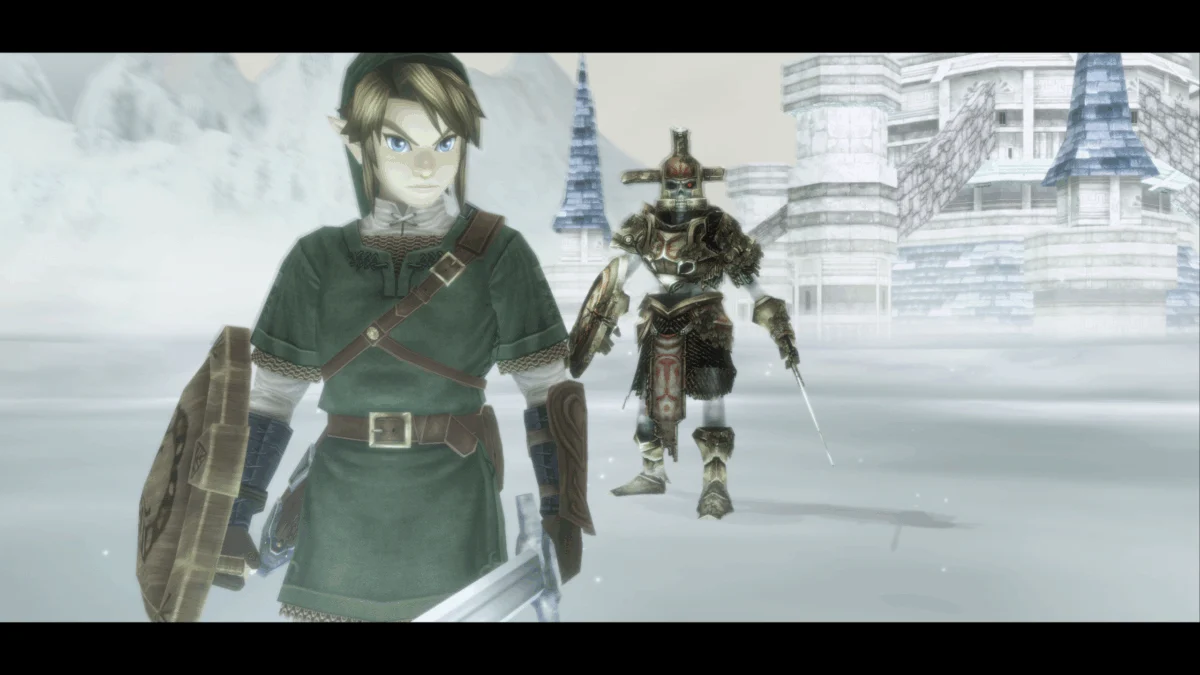
The gaming community is abuzz following the recent release of "Dusk," an ambitious fan-made PC port of The Legend of Zelda: Twilight Princess. Launched last Friday, this meticulously crafted decompilation project has garnered significant attention for its exceptional quality and unprecedented multi-platform availability, spanning Windows, Mac, Linux, Android, and iOS simultaneously. This feat is not merely a technical achievement but a testament to the dedication and skill of the independent development team behind the project, marking a new benchmark for fan-driven game preservation and enhancement.
The Dawn of "Dusk": A Technical Marvel
"Dusk" emerges from the intricate process of decompiling the original GameCube version of The Legend of Zelda: Twilight Princess. Decompilation involves reverse-engineering compiled software to reconstruct its source code, a monumental task that allows developers to understand, modify, and port games to new platforms without relying on emulation. Unlike traditional emulators, which simulate the original hardware, a native port like "Dusk" runs directly on the target system, often leading to superior performance, stability, and the potential for extensive modern enhancements.
Upon its release, "Dusk" impressed with its streamlined setup. Users are simply required to direct the application to their legally obtained GameCube Twilight Princess .iso file, and the game is ready for play. This user-friendly approach minimizes barriers to entry, a common hurdle in many community-driven projects. The initial impressions from early adopters and streamers, such as Try from My Life in Gaming, have been overwhelmingly positive, highlighting the port’s robust and polished state right out of the gate. For instance, the Linux version, tested on Bazzite, is distributed as a self-contained AppImage, simplifying deployment and execution for a broad user base.

Elevating a Classic: Gameplay Enhancements and Visual Fidelity
One of the most striking aspects of "Dusk" is its commitment to modernizing the Twilight Princess experience without compromising its original artistic vision. The port introduces a host of quality-of-life improvements and graphical enhancements that significantly elevate the gameplay.
Enhanced Performance and Frame Rates: While the underlying game logic, crucial for preventing game-breaking bugs, continues to operate at the original 30 frames per second (fps), "Dusk" skillfully adapts polygon motion to match higher display refresh rates. This allows players to experience the game at 60Hz or even 120Hz, providing a noticeably smoother visual experience. Although minor temporal incongruities in some animated effects, originally designed for 30fps, may occasionally be observed, the overall benefit of higher frame rates is substantial and widely lauded by players.
Graphical Upgrades and Scalability: The port offers extensive control over internal rendering resolution, allowing players to scale from the game’s native resolution to any integer multiplier. Anti-aliasing is effectively achieved through downsampling from a rendering resolution exceeding the output resolution, resulting in a cleaner, sharper image. While the settings menu is commendably designed for both controller and mouse navigation – a notable improvement over many decompilation ports – a minor critique points to its relatively small size on 2160p displays, particularly in fullscreen mode. Future updates are anticipated to address this, improving usability for players on large televisions.
Texture Overhauls and Modding Potential: Recognizing the inherent low-resolution of original GameCube textures when rendered at HD or 4K, "Dusk" integrates support for fan-made high-resolution texture packs. The process is straightforward: users can drop compatible texture pack folders, originally designed for emulators like Dolphin, into the game’s texture replacement directory. This immediate and automatic integration allows for a significant visual upgrade that enhances the game’s aesthetics while respecting its intended art direction. While current implementation offers automatic detection, future iterations are expected to provide more explicit controls for managing multiple texture packs. The developers have also indicated plans to enable compatibility with Wii and Wii U versions of the game, which would unlock access to their potentially higher-fidelity assets and further broaden modding possibilities.

User Interface and Quality of Life Improvements: "Dusk" includes several thoughtful additions aimed at enhancing player comfort and customization. The in-game settings menu, accessible with a simple R+Start command, allows for real-time observation of setting changes. Beyond graphical tweaks, the port incorporates quality-of-life options inspired by the Wii U version, alongside built-in cheats for those seeking a different experience. A particular area of ongoing development concerns the in-game text, which currently does not benefit from high-resolution texture packs, appearing noticeably pixelated in modern resolutions. Developers have reportedly acknowledged this and are working towards implementing high-resolution font support. Furthermore, community efforts are underway to develop features, such as mapping items to a wider range of buttons beyond the original X and Y, offering greater control customization.
The Undertaking of Decompilation: A Legacy Preserved
The "Dusk" project is situated within a broader movement of game preservation and enhancement driven by passionate communities. Understanding its context requires a brief look into the history of The Legend of Zelda: Twilight Princess and the nature of game decompilation.
Understanding Decompilation: Game decompilation is a highly specialized and time-consuming process. It involves analyzing the compiled machine code of a game to reverse-engineer its original high-level source code. This differs fundamentally from emulation, which simulates the original hardware environment. A successful decompilation allows for native ports, bug fixes, and feature additions that were not possible with the original game or through emulation alone. Projects like "Dusk" for Twilight Princess or Ocarina of Time and Majora’s Mask on PC represent years of collaborative effort by hundreds of contributors, meticulously dissecting every line of code. The legality of such projects often resides in a grey area, as they typically require users to possess a legitimate copy of the original game to supply necessary assets (like the .iso file), thereby avoiding direct distribution of copyrighted material.
A History of Twilight Princess: The Legend of Zelda: Twilight Princess first launched in 2006, simultaneously on the Nintendo GameCube and as a launch title for the Nintendo Wii. It received critical acclaim for its mature narrative, expansive world, and innovative gameplay mechanics, particularly its "wolf Link" transformation. The GameCube version featured a standard control scheme and a non-mirrored world map, while the Wii version incorporated motion controls and a mirrored world map to accommodate Link’s right-handed sword-swinging. A high-definition remaster, The Legend of Zelda: Twilight Princess HD, was later released for the Wii U in 2016, offering updated visuals and some quality-of-life improvements. "Dusk" currently builds upon the GameCube version, though it offers the option to play with either the GameCube’s original world layout or the mirrored Wii layout, catering to player preference.

The Precedent of Fan Projects: The gaming landscape is rich with examples of fan-driven projects that aim to preserve, enhance, or modernize classic titles. These range from simple texture packs and translation patches to full-scale decompilation efforts like "Dusk." These projects are often fueled by a desire to make beloved games accessible on modern hardware, to fix long-standing bugs, or to implement features that were technically unfeasible at the time of the original release. The success of projects like "Dusk" highlights the potential for community collaboration to extend the life and reach of classic games, ensuring they remain playable and enjoyable for future generations.
Multi-Platform Mastery: Accessibility and Outreach
The simultaneous launch of "Dusk" across five distinct operating systems – Windows, Mac, Linux, Android, and iOS – represents a monumental achievement in cross-platform development. This wide accessibility significantly broadens the potential player base, making Twilight Princess available on devices ranging from high-end gaming PCs to everyday smartphones and tablets.
This multi-platform strategy is particularly noteworthy given the technical complexities involved in optimizing a game for such diverse architectures and input methods. The availability of an AppImage for Linux, a standard executable for Windows and Mac, and tailored versions for mobile operating systems, underscores the developers’ commitment to broad compatibility and ease of use. This approach contrasts sharply with many fan projects that often focus on a single platform, making "Dusk" a trailblazer in democratizing access to enhanced classic gaming experiences.
Community Collaboration and Future Prospects

The development of "Dusk" is a testament to the power of community collaboration. The open-source nature of decompilation projects fosters a vibrant ecosystem where developers, testers, and enthusiasts contribute to ongoing improvements.
Developer Engagement: The developers have maintained an active presence within the community, engaging with players and responding to feedback. Their discussions have hinted at future updates, including the aforementioned high-resolution font support and the ability to integrate assets from the Wii and Wii U versions of Twilight Princess. This direct line of communication between developers and players ensures that "Dusk" will continue to evolve based on user needs and desires, fostering a sense of shared ownership and progression.
Modding and Customization Potential: The foundation laid by "Dusk" opens up immense possibilities for future modding and customization. Beyond texture packs and asset integration, the reconstructed source code allows for deeper modifications to gameplay mechanics, character models, and even new content. The early discussions about implementing more flexible item mapping indicate a strong inclination towards empowering players to tailor their Twilight Princess experience to an unprecedented degree. This could lead to a thriving modding scene, further extending the game’s longevity and replayability.
Legal Landscape and Ethical Considerations
While "Dusk" represents a triumph of fan-driven development, it operates within the often-contentious legal framework surrounding intellectual property and game preservation.

Nintendo’s Stance: Nintendo, as the copyright holder of The Legend of Zelda franchise, has a well-documented history of vigorously protecting its intellectual property. The company has frequently issued cease-and-desist orders against fan projects, ROM sites, and emulation efforts that it perceives as infringing on its rights. Projects like "Dusk," which rely on users providing their own legally obtained game files, typically aim to navigate this legal landscape by not directly distributing copyrighted material. However, the line between preservation, enhancement, and infringement can be blurry, and the long-term legal status of such projects often remains uncertain.
Preservation vs. Copyright: The existence of "Dusk" highlights the ongoing tension between copyright holders’ rights and the community’s desire for game preservation and modernization. Many argue that fan projects like "Dusk" fill a void left by official channels, ensuring that classic games remain playable and accessible on modern hardware, often with enhancements that copyright holders may not pursue. These efforts are seen by many as crucial for digital archiving and cultural heritage, particularly as older hardware and software become obsolete. The discussion around "Dusk" therefore contributes to the broader dialogue about who controls the legacy of video games and how best to ensure their enduring availability.
Conclusion: A New Chapter for a Hyrulean Epic
The release of "Dusk" is more than just another fan port; it is a landmark achievement that redefines what is possible in community-driven game enhancement. By offering a robust, feature-rich, and remarkably accessible version of The Legend of Zelda: Twilight Princess across an unprecedented range of platforms, the developers have not only breathed new life into a beloved classic but also set a new standard for future decompilation projects.
From its seamless installation and impressive graphical enhancements to its thoughtful quality-of-life improvements and open-ended modding potential, "Dusk" stands as a testament to the passion and technical prowess of its creators. While legal considerations remain an inherent aspect of such projects, the immediate impact of "Dusk" on the retro gaming community and its contribution to game preservation are undeniable. As future updates and community contributions continue to unfold, "Dusk" is poised to become the definitive and most accessible way to experience the iconic adventure of Link in the twilight-shrouded lands of Hyrule, solidifying its place as a pivotal moment in the ongoing narrative of video game history.