Jia Lissa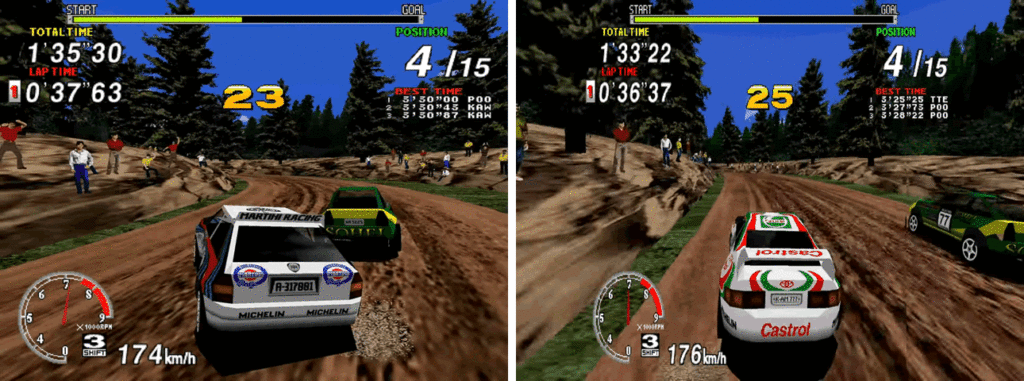
The 1990s represented a transformative era for the interactive entertainment industry, defined largely by the high-stakes rivalry between Sega and Nintendo. However, while the "console wars" dominated consumer headlines, a parallel and equally fierce conflict was unfolding in the world of coin-operated amusement. Sega and Namco were locked in a technological arms race to define the future of the arcade racing genre. This competition pushed both companies to the limits of hardware engineering and creative design, resulting in a golden age of 3D gaming. While Namco’s Ridge Racer and Sega’s Daytona USA had already established the viability of texture-mapped 3D environments, it was the 1995 release of Sega Rally Championship that fundamentally redefined the physics and environmental immersion of racing simulations. Developed by a young, inexperienced team under the leadership of Tetsuya Mizuguchi, the project transcended the limitations of contemporary hardware to create a franchise that remains a benchmark for the genre nearly three decades later.
The Technological Genesis of 3D Racing
To understand the impact of Sega Rally Championship, one must examine the state of arcade technology in the early 1990s. The industry was transitioning from the "Super Scaler" 2D technology of the 1980s—which used sprite-scaling to simulate depth—to true polygonal 3D. Sega’s Model 1 arcade board, which powered Virtua Racing in 1992, had proven that flat-shaded polygons could provide a compelling sense of speed and space. However, the visuals remained clinical and abstract.
The arrival of the Model 2 board, a joint venture between Sega and GE Aerospace, changed the landscape. The hardware was a massive leap forward, capable of pushing approximately 500,000 polygons per second, a significant increase over the 180,000 polygons of its predecessor. More importantly, it introduced advanced graphical features such as texture filtering, anti-aliasing, and trilinear filtering. These tools allowed developers to wrap polygons in realistic textures, effectively removing the "plastic" look of early 3D games. Sega’s AM2 division utilized this power for Daytona USA, but the company’s leadership felt there was room for a different kind of racing experience—one that emphasized terrain and handling over the high-speed oval drafting of NASCAR.
The Rise of the Emotion Design Lab
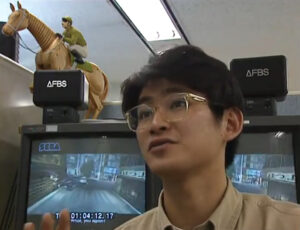
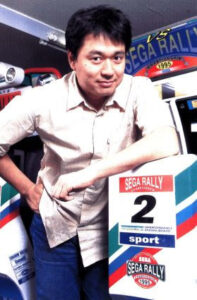
The task of creating this new experience fell to a newly formed unit within Sega’s AM3 division. At the helm was Tetsuya Mizuguchi, a producer who had joined Sega in 1989 with a background not in computer science, but in media and aesthetics. Mizuguchi’s entry into the company was unconventional; he famously pitched Hisashi Suzuki, the head of Sega R&D, on a 40-page manifesto about the "future of entertainment," focusing on virtual reality and sensory immersion rather than traditional game mechanics.
Mizuguchi’s initial work at Sega involved the AS-1 Simulator, a high-end motion cabinet used in theme parks. This experience solidified his belief that games should evoke an emotional response—a philosophy that led to the creation of the "Emotion Design Lab." To bring his vision to life, Mizuguchi recruited Kenji Sasaki, a director who had recently departed Namco. Sasaki brought invaluable experience, having served as a primary graphic designer on the original Ridge Racer. The team was rounded out by lead programmer Sohei Yamamoto, a veteran of mechanical design and large-scale arcade hits. This leadership trio represented a blend of Namco’s aesthetic precision and Sega’s engineering might, yet the majority of their 12-person staff were in their twenties and had never developed a 3D racing game.
From "Rally California" to a Global Stage
The project’s initial concept was vastly different from the final product. Tentatively titled "Rally California," the game was envisioned as a coast-to-coast trek across the United States, inspired by the film The Cannonball Run. However, the team’s ambitions were checked by two major factors: hardware limitations and market competition.
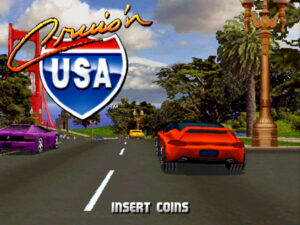
In 1994, Midway Games announced Cruis’n USA, a cross-country racer that mirrored Sega’s "Rally California" concept. To avoid direct comparison and technical overreach, the team pivoted. They realized that rendering a continuous, thousands-of-miles-long environment was impossible given the storage and memory constraints of the Model 2. Instead, they decided to focus on the World Rally Championship (WRC) format, which emphasized diverse, rugged terrains and technical driving.
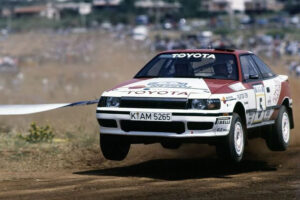
To ensure authenticity, Mizuguchi, Sasaki, and three other designers embarked on a 1,200-mile research trip through the American West and Mexico. Driving from Mexico City to Yosemite National Park, the team captured over 4,000 photographs and hours of video footage. This trip was instrumental in moving the game’s aesthetic away from "Japanese-styled" interpretations of Western landscapes. The designers observed the specific way sunlight hit the desert sand and the density of the Redwood forests, translating these observations into the game’s textures.
Engineering Handling and Licensed Authenticity
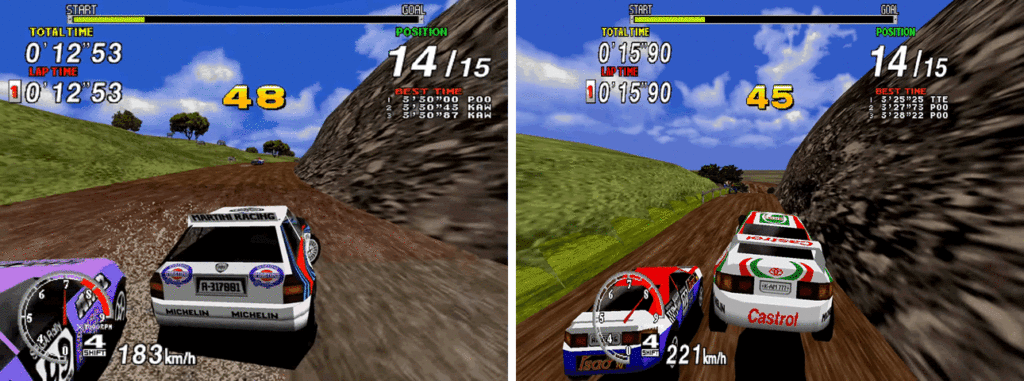
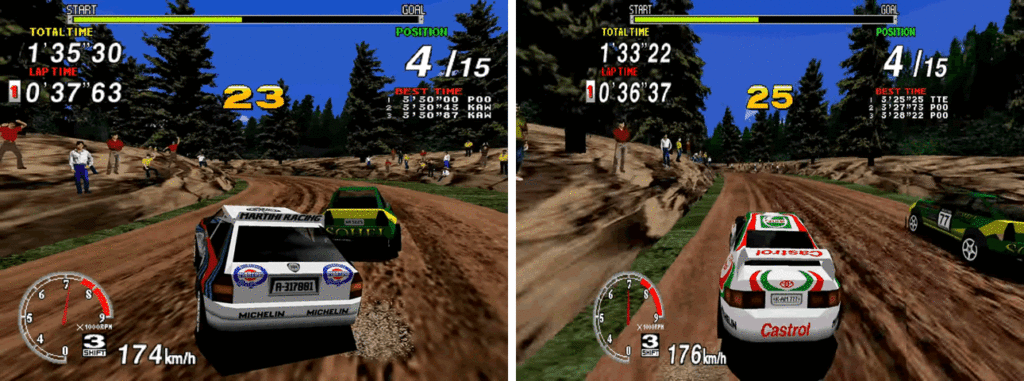
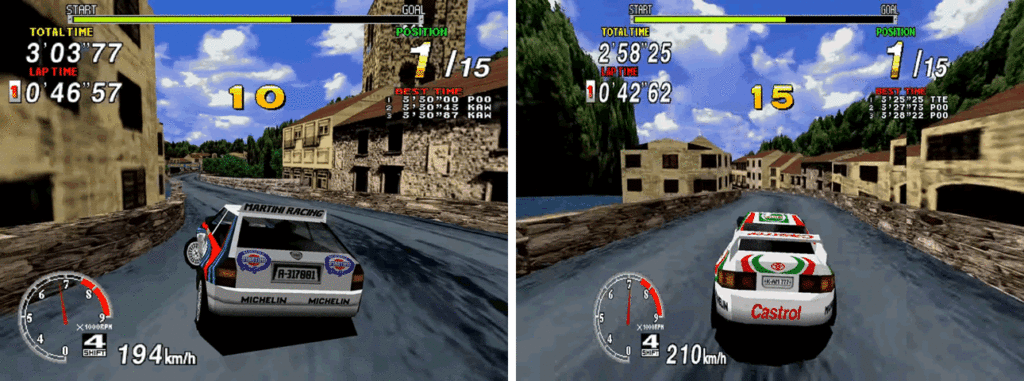
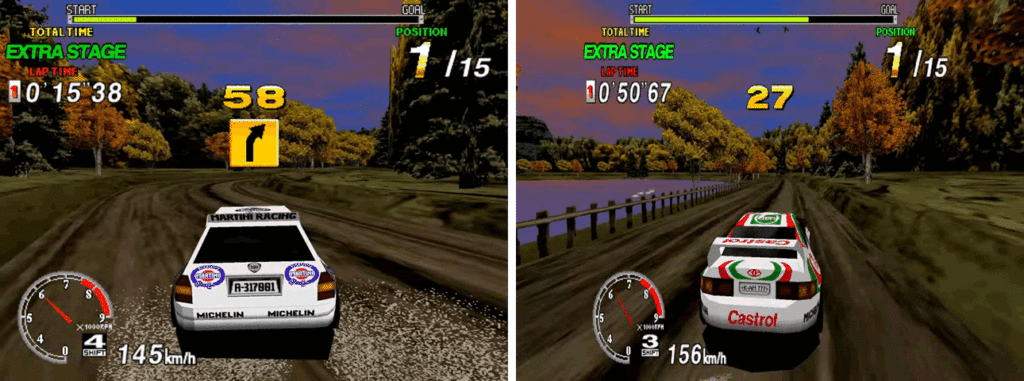
One of the most significant contributions of Sega Rally Championship to the genre was its handling model. Unlike Ridge Racer, where drifting was an automated, almost binary mechanic, Sega Rally introduced physics influenced by the road surface. This was the first game to meaningfully differentiate the feel of driving on asphalt, gravel, and mud.
Sasaki and Yamamoto spent months refining the "slip" ratios of the cars. They wanted to simulate the sensation of a car losing grip on loose dirt while remaining accessible to arcade players. This necessitated a focus on analog controls and force-feedback steering wheels, which were becoming standard in high-end cabinets. To further the sense of realism, Mizuguchi insisted on using licensed vehicles—a rarity at the time.
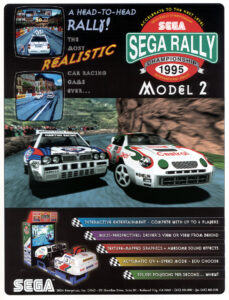
Securing these licenses was a diplomatic challenge. Toyota was initially skeptical, arguing that video games were not a viable advertising medium. Mizuguchi traveled to Toyota’s headquarters and then to Fiat’s offices in Turin, Italy, to pitch the inclusion of the Toyota Celica ST205 and the Lancia Delta HF Integrale. He reportedly used a bit of creative "bluffing," telling each company the other had already signed on. Ultimately, both manufacturers were so impressed by the 3D renderings of their cars that they granted the licenses for free, allowing Sega to use official logos and sponsor decals.
The Auditory Experience and "Game Over, YEAH!"
The sensory immersion of Sega Rally was completed by its audio design. Takenobu Mitsuyoshi, the composer behind Daytona USA, was tasked with creating a high-energy soundtrack. Mitsuyoshi, who had transitioned from an economics degree to sound design after hearing Sega’s in-house S.S.T. Band, utilized the Model 2’s improved sampling capabilities. This allowed for the inclusion of the now-iconic "Game Over, YEAH!" jingle, which Mitsuyoshi sang himself.
Beyond the music, the team sought to capture the mechanical violence of rally racing. Designer Tomoyuki Kawamura recorded engine noises, gravel splashes, and brake squeals at the Maruwa Autoland Nasu dirt track in Japan. The team even rode in professional rally cars driven by Masayuki Ishida of Team C-One Sport to understand the physical toll of the sport. These recordings were integrated into the Active Shock Generator (ASG) system, a dual-motor setup in the Deluxe cabinets that vibrated the seat in sync with the car’s movements and collisions.
Launch, Impact, and the Saturn Port
Sega Rally Championship debuted in Japanese arcades in February 1995. It was an immediate success, selling approximately 12,000 units—a strong figure for a niche racing sub-genre. The game was offered in three cabinet styles: a standard upright, a twin-linkable unit, and a high-end Deluxe cabinet that featured a motion-simulating seat. A fourth, ultra-rare "Special Stage" version was created exclusively for Sega’s Shinjuku Joypolis theme park, utilizing full-sized Toyota Celica bodies mounted on six-axis motion platforms.
The game’s influence extended rapidly to the home console market. In 1996, a port was released for the Sega Saturn. Despite the Saturn’s hardware being significantly less powerful than the Model 2 board, the port was hailed as a technical masterpiece. It maintained the arcade’s complex handling physics and added a "Time Attack" mode, split-screen multiplayer, and the unlockable Lancia Stratos. This version became a "killer app" for the Saturn, demonstrating that the console could handle sophisticated 3D environments despite its reputation for being difficult to program.
Historical Chronology and Milestones
- 1989: Tetsuya Mizuguchi joins Sega and proposes the "virtual environment display system."
- 1992: Sega launches the Model 1 board; Kenji Sasaki begins work on Ridge Racer at Namco.
- 1993: Mizuguchi begins research into 3D graphics for the AS-1 Simulator.
- Early 1994: Mizuguchi and Sasaki form the core of the Sega Rally team within AM3.
- Summer 1994: The team conducts its 1,200-mile research trip across North America.
- Late 1994: Negotiations with Toyota and Fiat result in the first major licensed car deals in racing games.
- February 1995: Sega Rally Championship launches in Japanese arcades.
- December 1995: The Sega Saturn port is released in Japan, followed by a global launch in 1996.
- 1997: The PC version is released, featuring enhanced resolutions and LAN play.
Analysis of Implications and Legacy
The legacy of Sega Rally Championship is twofold: it established the "handling over speed" philosophy in racing games and served as a career-defining project for Tetsuya Mizuguchi. Mizuguchi’s focus on "synesthesia"—the blending of sight, sound, and touch—would later define his work on cult classics like Rez and Tetris Effect.
Furthermore, the game’s realistic terrain physics paved the way for future rally simulations. Guy Wilday, the producer of the Colin McRae Rally series at Codemasters, cited Sega Rally as the primary inspiration for his team’s handling models. By proving that players would embrace the challenge of technical, off-road driving, Sega expanded the racing genre beyond the limits of traditional circuit racing.
Today, Sega Rally Championship is remembered as a rare moment where technological innovation, creative risk-taking, and licensed branding aligned perfectly. It remains a testament to the era when arcade developers were the undisputed pioneers of the medium, pushing the boundaries of what was possible one polygon at a time. The game’s enduring popularity, evidenced by its presence in retro collections and continued play on original hardware, underscores its status as a foundational pillar of 3D gaming history.