Jia Lissa
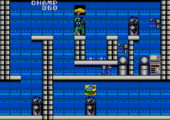
In the late 1980s, the video game industry was undergoing a massive structural transformation, moving from the arcade-centric models of the early decade to the home console dominance defined by Nintendo and Sega. Amidst this shift, the 1987 release of Zillion for the Sega Master System stands as a critical intersection of Japanese animation culture and emergent game design. Developed and published by Sega Enterprises, the title was an adaptation of the Tatsunoko Productions anime of the same name, which had premiered in Japan earlier that year. While often overshadowed by contemporary platformers and action titles, Zillion represented an ambitious attempt to integrate complex, non-linear navigation with narrative-driven mission objectives, setting a precedent for the "Metroidvania" genre that would later flourish in the industry.
Chronology and Development Context
The development of Zillion occurred during a period of high cross-pollination between Japanese media sectors. Tatsunoko Productions, known for high-concept science fiction and action animation, sought to capitalize on the growing domestic market for home gaming. The Zillion anime debuted in April 1987, and Sega’s game adaptation hit shelves shortly thereafter, marking one of the earliest instances of a synchronized multimedia marketing push.
The production was led by designer Kotaro Hayashida, whose work on the project demonstrated a clear interest in bridging the gap between fast-paced arcade action and the methodical, puzzle-heavy gameplay seen in titles like Epyx’s 1984 classic, Impossible Mission. By the time the game reached international markets, including a modest release in the United States, its identity was largely detached from its anime source material. For most Western players, the game was consumed as a standalone science-fiction action title, lacking the cultural context of the original series—a trend that would define the era of international game localization for years to come.
Mechanics and Strategic Design
The core gameplay loop of Zillion revolves around the infiltration of the Norsa Empire’s underground base. The player controls JJ, a member of the elite White Knights peacekeeping force, tasked with recovering five encrypted floppy disks and neutralizing the facility’s central computer. This mission structure was structurally significant; rather than a simple left-to-right progression, the game utilized a non-linear, multi-room environment consisting of nearly 50 interconnected chambers.
Key to the progression system is the ability to rescue two secondary characters, Apple and Champ. Once liberated from captivity within the base, these characters become playable, each possessing distinct physical attributes that alter the gameplay experience. Apple serves as a high-mobility character, capable of superior jumping maneuvers, while Champ provides a defensive advantage with increased durability. This character-switching mechanic introduced a rudimentary form of strategic management, as players were required to match the character’s specific skill set to the challenges presented by different sectors of the Norsa base.
The Zillion laser, the player’s primary tool, functions as both a weapon and a utility device. It is used to interact with computer terminals, which serve as the game’s primary mechanism for environmental control. By entering codes at these terminals, players can systematically disable security grids, electrified barriers, and automated turrets. This design choice shifted the focus from pure combat to environmental manipulation, a hallmark of more complex action-adventure titles.
Comparative Analysis: The Metroid Influence
When evaluating Zillion within the context of 1987, comparisons to Nintendo’s Metroid are inevitable. Both titles utilized side-scrolling exploration, power-up acquisition, and a focus on backtracking through a labyrinthine map. However, the internal mechanics of both titles reveal distinct design philosophies.
While Metroid emphasized isolation and a sense of discovery on a hostile, alien planet, Zillion was grounded in a high-tech, man-made environment. The "solitary explorer" theme of Metroid is absent in Zillion, as the rescue and inclusion of teammates actively breaks the isolation narrative. Furthermore, the reliance on human-computer interaction through terminal-based puzzle solving aligns Zillion more closely with the espionage-thriller aesthetic of the era than the survival-horror atmosphere of its Nintendo counterpart. In terms of scope, Zillion is contained within a singular installation, whereas Metroid encouraged a wider exploration of its world, highlighting the fundamental differences in their intended player experience.
Technical Limitations and Challenges
The most significant technical hurdle for Zillion players in 1987 was the absence of a save function or password system. In an era where long-form gameplay was becoming the standard, the lack of a persistence mechanism forced a complete playthrough in a single session. This was a common cost-cutting measure, as battery-backed RAM chips significantly increased production costs—a factor that pushed titles like Phantasy Star into the $100 price bracket, a luxury that many mid-tier titles could not justify.
The implications of this limitation were twofold. First, it artificially extended the "playtime" of the game by forcing players to repeat early segments upon failure. Second, it encouraged the manual creation of maps, a practice that became a cultural staple of 8-bit gaming. Players were required to act as archivists, mapping out room layouts, elevator routes, and terminal codes on graph paper to ensure efficiency in subsequent runs. This forced reliance on external documentation remains a testament to the high-difficulty curve that defined the 8-bit generation.
Legacy and Industrial Impact
The conclusion of Zillion—which features a climactic, yet somewhat detached, confrontation with a mechanical creature rather than the primary antagonist, Baron Ricks—has often been cited by critics as a narrative weak point. The lack of a direct encounter with the primary villain of the series highlights a disconnect between the game’s mission-based objectives and its overarching story.
Despite these narrative shortcomings, Zillion remains a significant artifact in the history of Sega’s hardware development. The game’s technical performance, including its sharp graphics and responsive control scheme, showcased the capabilities of the Master System. Its failure to evolve into a long-standing, 16-bit franchise during the subsequent Genesis era is often viewed by industry analysts as a missed opportunity for Sega to capitalize on a unique, action-oriented intellectual property.
Ultimately, the 7 out of 10 score historically attributed to the title reflects a balance between its innovative design and its punishing, unassisted difficulty. For modern audiences, the game exists as a bridge between the arcade games of the early 80s and the sophisticated, non-linear adventures of the 90s. While the lack of a save feature remains a significant barrier to entry, the mechanical depth and atmospheric consistency of Zillion continue to be studied as an early, successful attempt at creating a cohesive, mission-driven action environment. As the industry moved forward, the lessons learned from Zillion regarding non-linear level design and character utility would eventually find their way into the standard design language of the platforming genre.