Jia Lissa
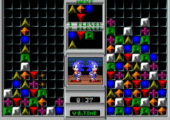
Sonic Eraser, a 1991 puzzle game developed by Sega CS1, serves as a significant historical artifact in the evolution of both the Sonic the Hedgehog franchise and the broader landscape of digital video game distribution. Released during an era when the industry was heavily reliant on physical cartridges, the title was an early experiment in network-based delivery, specifically for the Japanese Mega Drive’s Game Toshokan streaming service. While the game itself is a modest block-matching puzzle title, its existence marks a pivotal moment when Sega began leveraging its burgeoning mascot to pioneer infrastructure that would eventually define the modern gaming ecosystem.
The Genesis of Online Gaming: The Game Toshokan Context
In the early 1990s, the concept of home console online connectivity was in its infancy. The Mega Modem, a peripheral released by Sega in Japan, was designed to connect the Mega Drive to the Game Toshokan (Game Library) service. This platform allowed users to stream simple, low-data titles directly to their consoles via telephone lines. Unlike the modern digital storefronts that offer massive software libraries, the Game Toshokan provided a rotating selection of titles, including text-heavy adventures and simple puzzle games.
Sonic Eraser was released onto this platform in 1991, functioning as a "thin client" experience. Because the hardware limitations of the era required games to be lightweight to facilitate transmission over dial-up speeds, the title was designed with a minimal footprint. This necessity explains the game’s sparse graphical assets, recycled character animations, and limited sound design. For Sega, the objective was not to produce a landmark Sonic entry, but rather to populate the Game Toshokan service with recognizable intellectual property to incentivize the adoption of the Mega Modem peripheral.
Chronology of an Obscure Release
The lifecycle of Sonic Eraser is characterized by long periods of digital isolation.
- 1991: Official release on the Game Toshokan service in Japan. It becomes one of the earliest examples of a major gaming franchise utilizing digital distribution.
- 1992: The Game Toshokan service is discontinued due to low subscription numbers and the technical limitations of the era, effectively removing Sonic Eraser from the public market.
- 2004: Following over a decade of obscurity, Sega of Japan briefly revives the title via the "B-Club" service, allowing users to download select Mega Drive titles from the company’s official website.
- 2005: A planned inclusion in the Sonic Gems Collection for the PlayStation 2 and GameCube is abandoned, leaving the game absent from official international release lists.
- Post-2005: The title enters the domain of community-led archival, with fan-made English translations and ROM preservation efforts becoming the primary means for the public to access the game.
Mechanics and Design Philosophy
From a technical perspective, Sonic Eraser operates as a variant of the falling-block puzzle genre, similar to Columns or Tetris. Players manage clusters of four blocks, attempting to match identical colors to clear the board. Unlike Columns, which requires a three-block match, Sonic Eraser allows for two-block matches, resulting in a faster, more volatile gameplay loop.
The game features four distinct modes:
- Round Mode: A 40-stage progression-based mode that emphasizes score optimization and the removal of specific "spiral ring" obstacles.
- Normal Mode: A traditional endless survival mode where difficulty scales based on performance.
- Doubt Mode: An adaptive challenge where blocks transform into neutral white squares upon landing, requiring players to recalibrate their strategies in real-time.
- Block Mode: A high-risk environment designed to encourage large-scale chain reactions, where the potential for catastrophic failure is significantly heightened.
The competitive component—the game’s most robust feature—pits two players (or a player and the CPU) against each other. In this mode, clearing blocks triggers offensive maneuvers, such as spin dashes or shield-based attacks, which paralyze the opponent’s ability to manipulate their own grid. This mechanic creates a "snowball effect," where a minor disadvantage can quickly lead to an insurmountable loss, a design choice that deviates from the more balanced competitive play of other puzzle titles of the era.
Analysis of Institutional Limitations
The lack of polish in Sonic Eraser is a direct result of its intended delivery method. By today’s standards, the game is lean, utilizing a singular background track and recycled sprite work from previous Sonic titles. The absence of iconic music or high-fidelity assets was a strategic choice to minimize the data transfer time for the Game Toshokan service.
Industry analysts often cite Sonic Eraser as an example of "brand exploitation" during the 16-bit era. By affixing the Sonic brand to a generic puzzle framework, Sega sought to generate traffic for its experimental network. However, because the technology was ahead of its time, the game failed to gain the necessary traction to warrant a wider release. It was never ported to home consoles in North America or Europe, nor did it receive a sequel or a modern re-release on digital storefronts like the PlayStation Network or Xbox Live Arcade, despite the success of other Sega classics.
The Broader Implications for Digital Distribution
The failure of Sonic Eraser to achieve mainstream recognition underscores the challenges faced by early digital pioneers. The game was essentially a victim of its own infrastructure. In 1991, the user base for the Mega Modem was limited to a niche demographic of early adopters. When the service ceased operations in 1992, the software was effectively "sunset," a common practice today but a jarring concept for physical media collectors at the time.
The legacy of Sonic Eraser is twofold. First, it serves as a case study for the risks of service-dependent software. Without a physical medium or a sustainable digital ecosystem, titles can vanish from history, necessitating the work of fan-led preservationists to keep the software accessible. Second, it highlights the transition of the Sonic brand from a single-genre platforming icon to a versatile mascot capable of appearing in peripheral genres, a strategy that would later define the franchise’s expansion into sports, racing, and social gaming.
Conclusion and Historical Standing
Ultimately, Sonic Eraser is a footnote in the history of Sega. While it possesses a functional puzzle engine and a unique, albeit rudimentary, competitive mode, it lacks the depth and production value associated with the flagship Sonic titles. Its primary value is not as a standalone experience, but as a testament to the early ambition of a company attempting to navigate the future of digital connectivity.
For the contemporary player, Sonic Eraser represents a curiosity of the 16-bit era. It remains a historical curiosity rather than a genre-defining entry. Those seeking a high-quality puzzle experience within the Sega library are generally advised to look toward Dr. Robotnik’s Mean Bean Machine or the original Columns, both of which offered more refined mechanics and a broader appeal. Nevertheless, Sonic Eraser occupies a unique space in the annals of gaming, serving as a reminder of the experimental, sometimes disjointed, path toward the interconnected digital gaming world we occupy today.
Score: 5.0/10