 Retno Hari Mulyono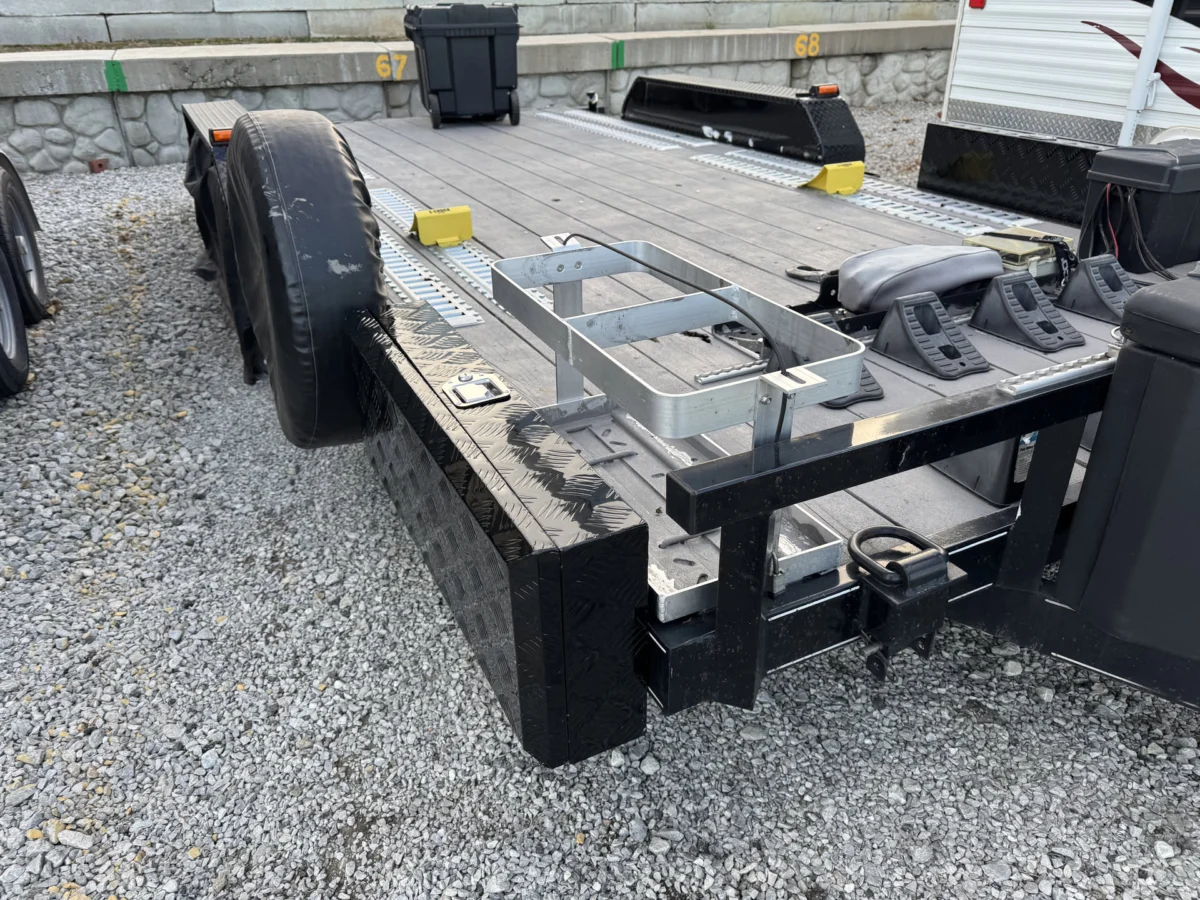
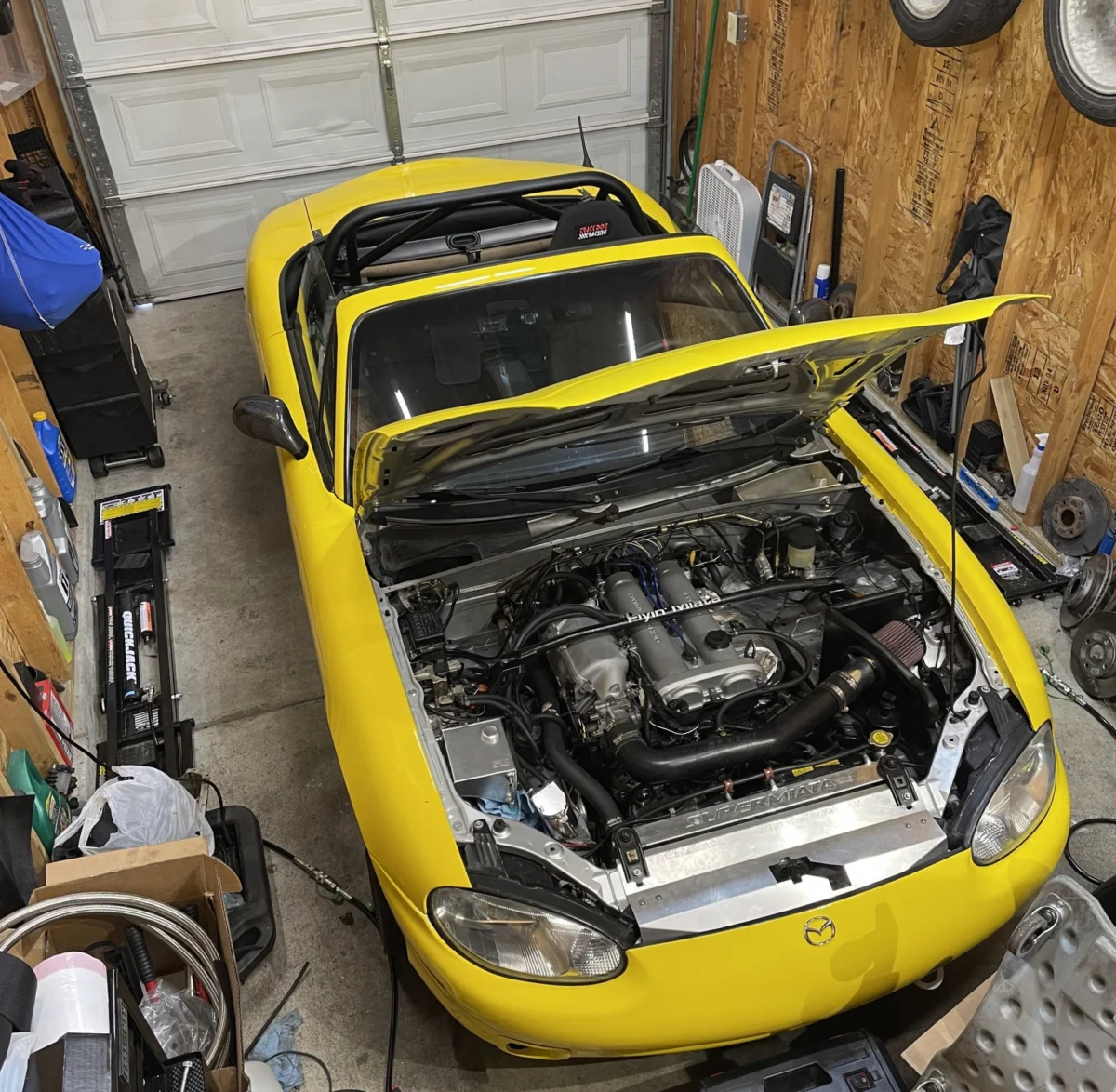
The automotive enthusiast community often romanticizes the journey of project car ownership, yet few document the trials, tribulations, and mechanical evolutions with the systematic precision of long-term reviews. Marking the completion of five full years of ownership, automotive journalist and track-day enthusiast Quade has released a retrospective breakdown of the fifth consecutive year with his modified 2000 Mazda NB Miata. What began as a standard gray street car has over half a decade transformed into a highly competitive yellow track machine, registering substantial performance milestones alongside critical mechanical hurdles. Analyzing the twelve-month span from March 2025 through February 2026 offers an illuminating look into the financial, logistical, and engineering realities of amateur motorsports engagement.
The Fifth Year in Review: Chronological Breakdown and Track Integration
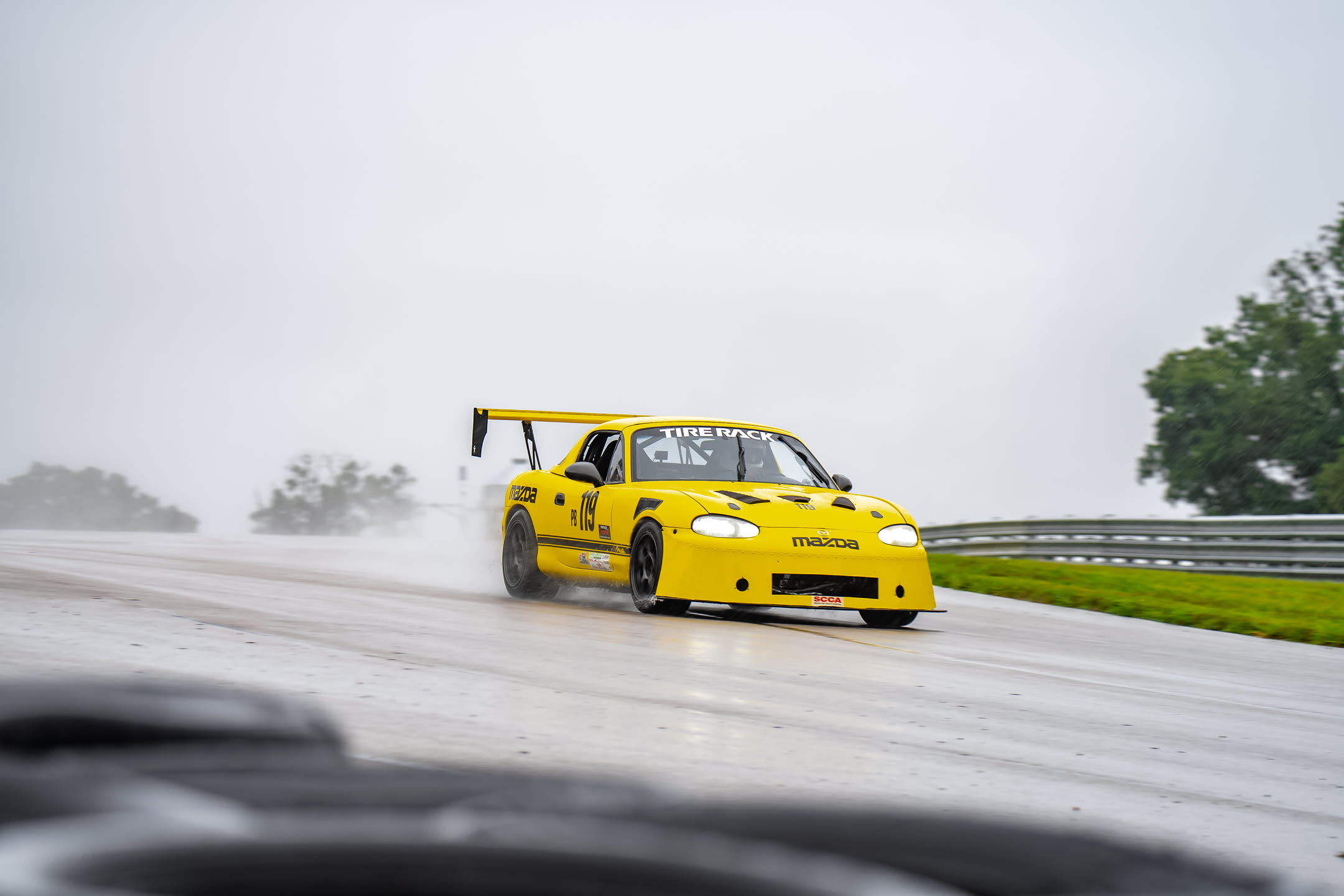
The scope of year five covers a grueling schedule of competitive track driving, preventative re-engineering, and strategic garage upgrades. Throughout the 2025 calendar year, the vehicle participated in 14 distinct track days, accumulating 357 laps and amounting to 10.9 hours of pure on-track driving time. According to historical metrics tracked via onboard telemetry systems such as the Garmin Catalyst, the chassis has amassed a cumulative total of approximately 1,380 laps and 43.8 hours of high-performance driving since its transformation began. While personal best lap times plateaued during this period—largely attributed to adverse weather conditions and variable track grip at primary venues—the engineering trajectory of the vehicle accelerated dramatically.
March 2025: Baseline Dyno Verification and Intake Adjustments
The retrospective opens in March 2025 with annual dynamometer testing conducted to satisfy SCCA MiDiv time trials classification requirements. Seeking a more cost-effective testing facility, the vehicle was brought to a new Dynojet center to ensure cross-comparability with previous logs. The primary mechanical modification since the prior year’s assessment was the transition from a square-top intake manifold to a Skunk2 intake manifold.
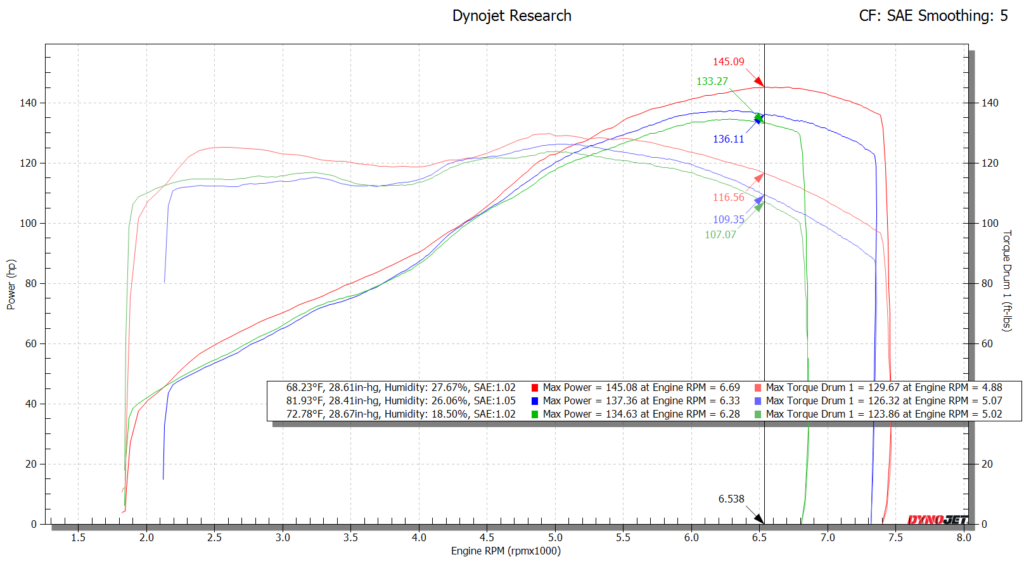
The testing yielded 145.09 horsepower and 129.67 foot-pounds of torque at the wheels. This represented a notable shift from the 133.27 wheel horsepower and 136.11 wheel torque recorded during the preceding two years on an alternate dynamometer, and stood in stark contrast to the factory baseline of 115 wheel horsepower realized on the stock Electronic Control Unit (ECU). While minor variations between dyno cells suggested the new facility might read slightly optimistic, the power delivery remained robust and met competitive class expectations.
April and July 2025: Circuit Testing under Adverse Meteorological Conditions
The spring and summer months tested the driver’s adaptability across regional Midwestern circuits, beginning with an April excursion to the Hallett Motor Racing Circuit. Track management had resurfaced several key corners during the off-season, altering the friction coefficients of the asphalt. Persistent wet conditions throughout the event precluded the setting of competitive lap times, yet the session provided invaluable telemetry and sensory data regarding extended wet braking zones where vehicles transitioned mid-braking from aged asphalt to newly laid surfaces.
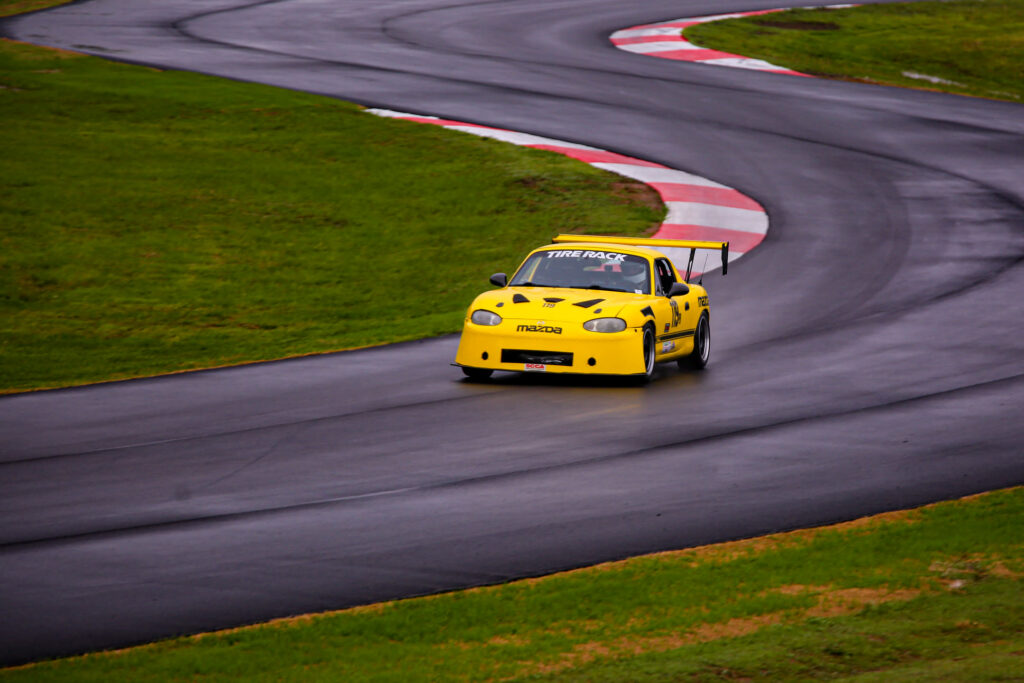
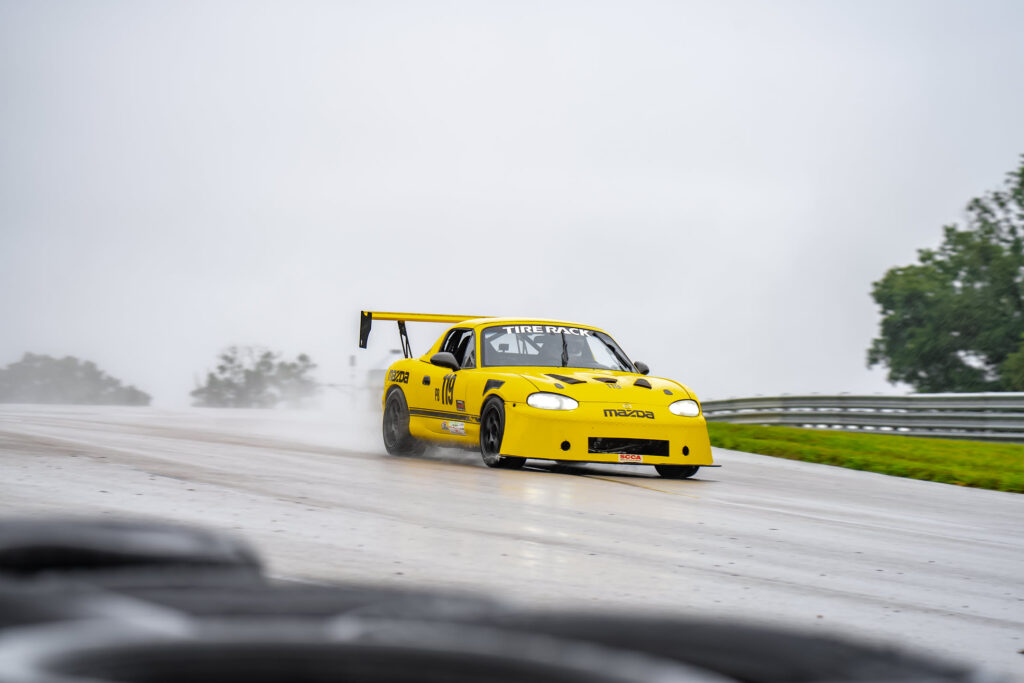
A similar meteorological challenge presented itself in July 2025 at the Ozarks International Raceway. Renowned as a technically demanding circuit in dry conditions, the track presented compounded complexities during wet sessions due to unpredictable water accumulation and drainage patterns. Navigating these slippery environments underscored the critical balance between suspension setup, tire compound performance, and driver input modulation.
May and August 2025: Component Failure Analysis of Induction Hardware
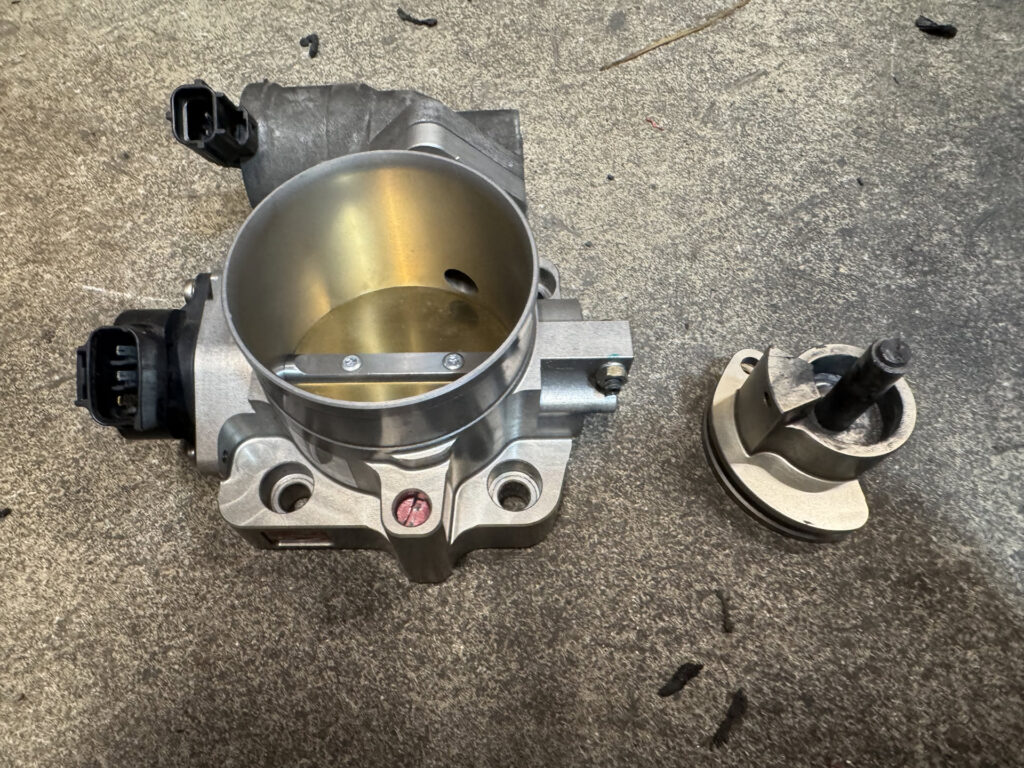
The most acute challenges of the 2025 season centered on mechanical reliability regarding induction control components. In May, during a test day at I29 Speedway, the throttle return spring on the newly installed Skunk2 throttle body fractured unexpectedly. Operating the vehicle without a functional return spring highlighted the extreme challenge of out-braking an engine when the throttle plate refuses to close completely. A temporary trackside repair—manually bending the remaining fragment of the spring—permitted the completion of the test day and a safe drive home, prompting the immediate purchase of a replacement Skunk2 unit.
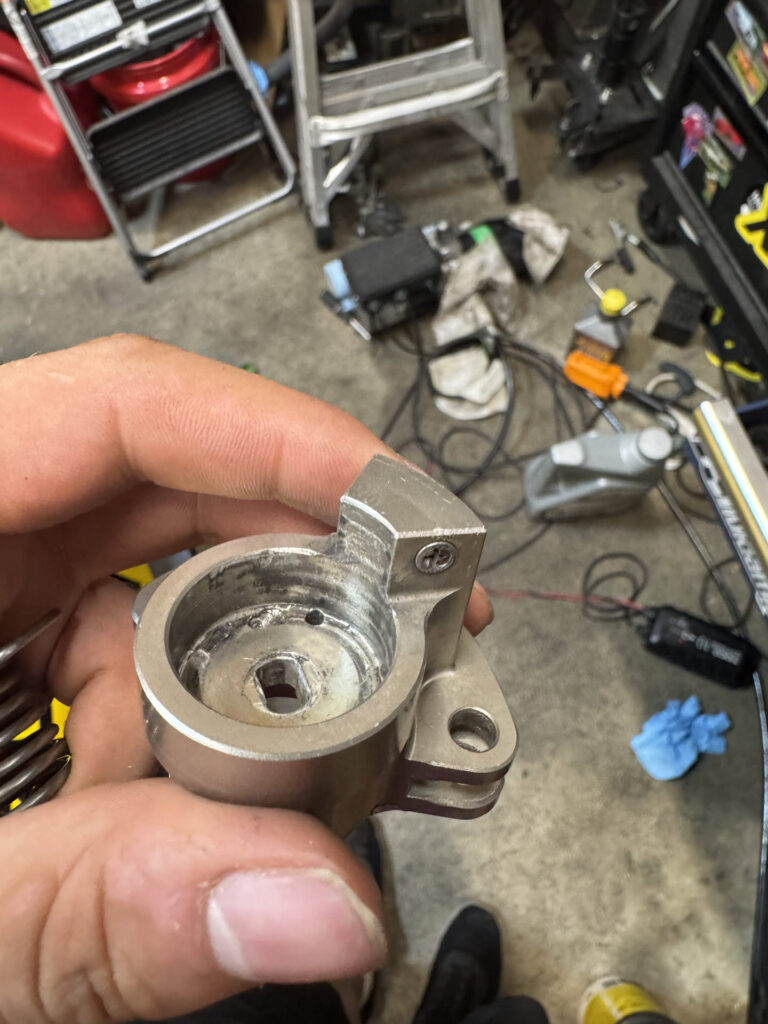
However, lightning struck twice in August 2025 during the final session of a weekend event at High Plains Raceway. Accelerating down the main straight on the first timed lap, the throttle body shaft sheared completely off. Fortunately, the structural failure occurred on the external linkage side, preventing the internal engine components from ingesting metal debris. Requiring a tow off the track, the recurring failure of two high-end aftermarket throttle bodies within a single competitive season served as a catalyst for a radical redesign of the vehicle’s intake and electrical architecture during the ensuing off-season.
June 2025: Implementation of Independent Garage Infrastructure
Amidst track events and mechanical repairs, June 2025 marked a significant shift in garage logistics. Escalating labor rates at commercial tire service shops prompted a re-evaluation of routine maintenance overhead. Investing in a Harbor Freight manual tire changer equipped with a duckhead attachment and a DIY bubble balancer, the owner brought tire mounting and balancing operations in-house.
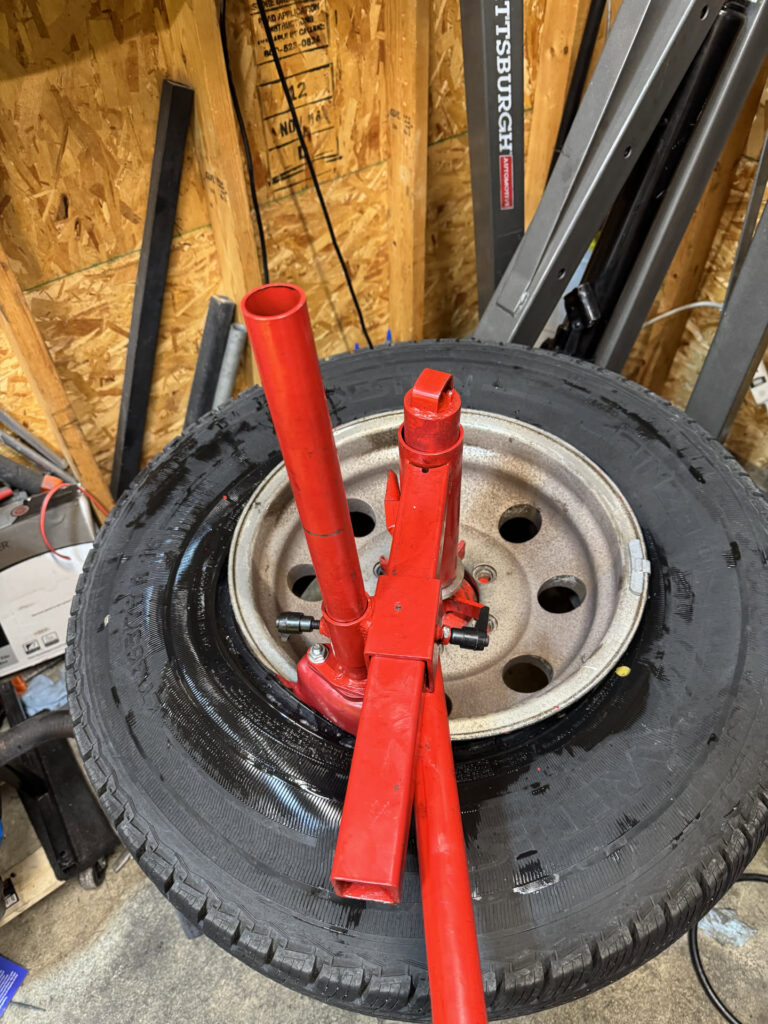
Despite an initial learning curve, the manual apparatus proved highly effective. Over the course of processing more than 20 tires—including aggressive 200-treadwear (200TW) track compounds—the process became routine. Furthermore, empirical testing revealed that the manual bubble balancer produced wheel assemblies with dynamic tolerances equal to or exceeding those of commercial machinery, permanently reducing operational expenditure for amateur racing.
September through December 2025: Comprehensive Off-Season Engineering Overhaul
Faced with recurring electrical and mechanical vulnerabilities, the late-summer and autumn months were dedicated to an extensive preventative engineering program.
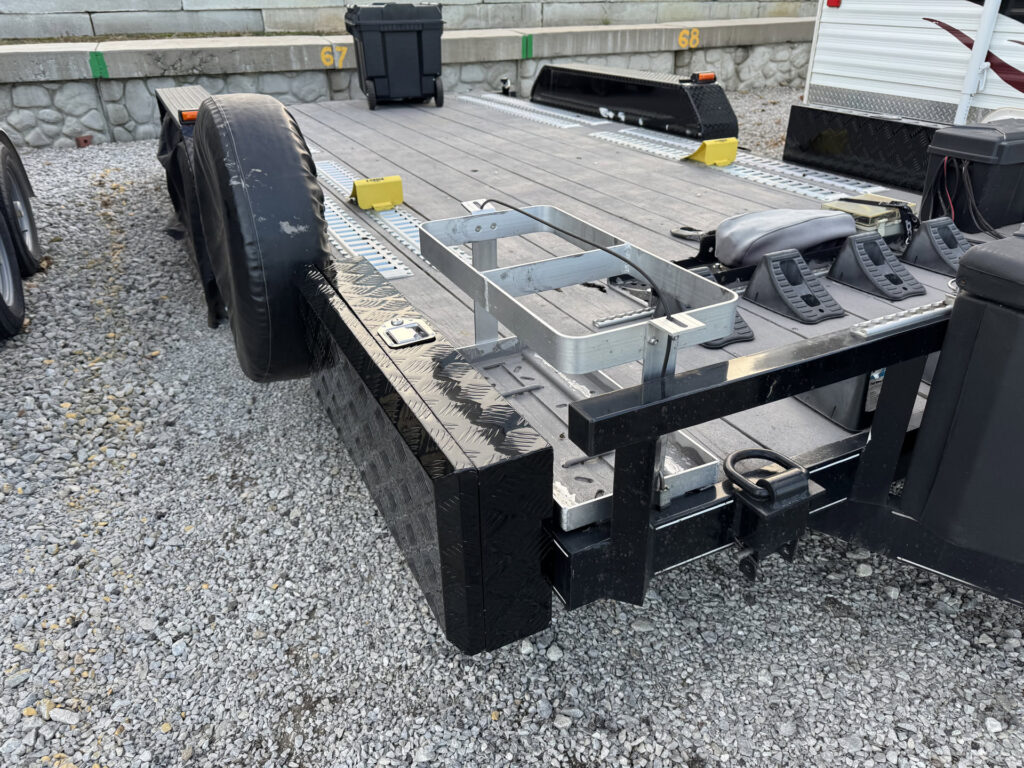
Trailer Enhancements (September 2025): Attention turned toward logistics with upgrades implemented on the open car hauler trailer. The integration of E-track tie-down systems eliminated the stretching and loosening phenomena common during the initial 50 miles of transit when utilizing traditional wheel-net or axle-strap configurations, substantially improving transit safety.
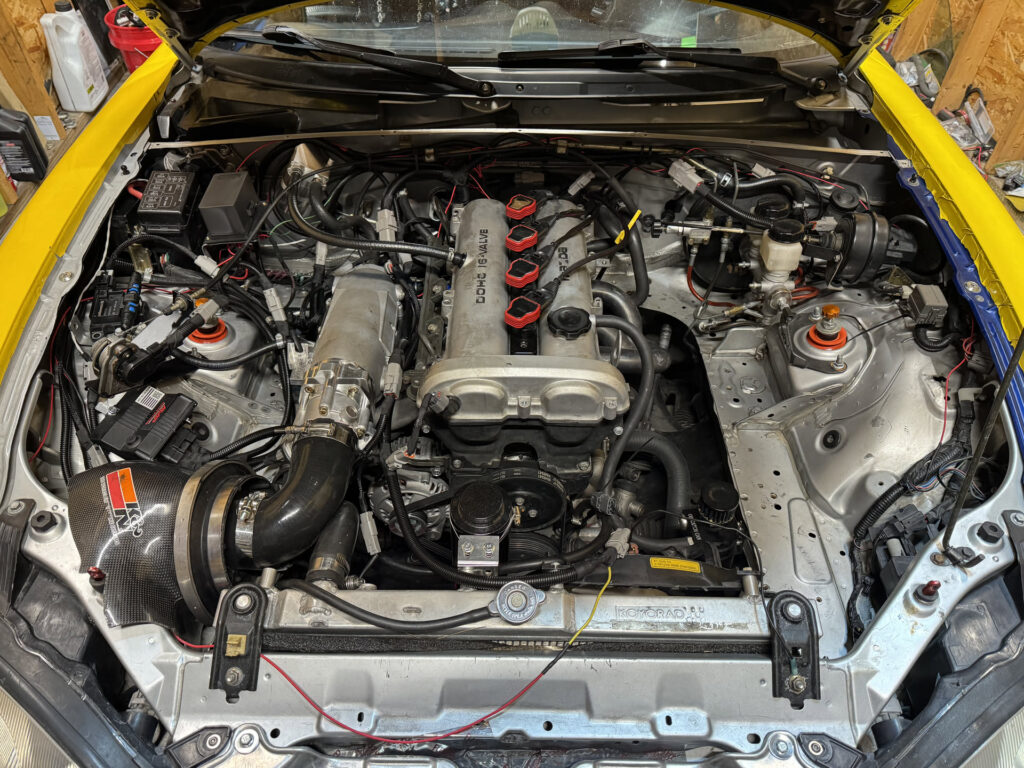
Custom Wiring Harness and Drive-By-Wire Conversion (October 2025): To eradicate root causes of unreliability, the owner completely discarded the 25-year-old factory engine wiring harness and its associated adapter patch connecting to the MS3Pro Evo ECU. A bespoke, scratch-built engine harness was fabricated utilizing weather-sealed Deutsch connectors, an integrated auxiliary fuse/relay block, and a dedicated ground bus bar. Simultaneously, the mechanical cable-actuated throttle system was replaced with a modern drive-by-wire (DBW) setup comprising a Bosch 60mm throttle body, a Honda accelerator pedal position sensor, and an AMP EFI drive-by-wire controller.
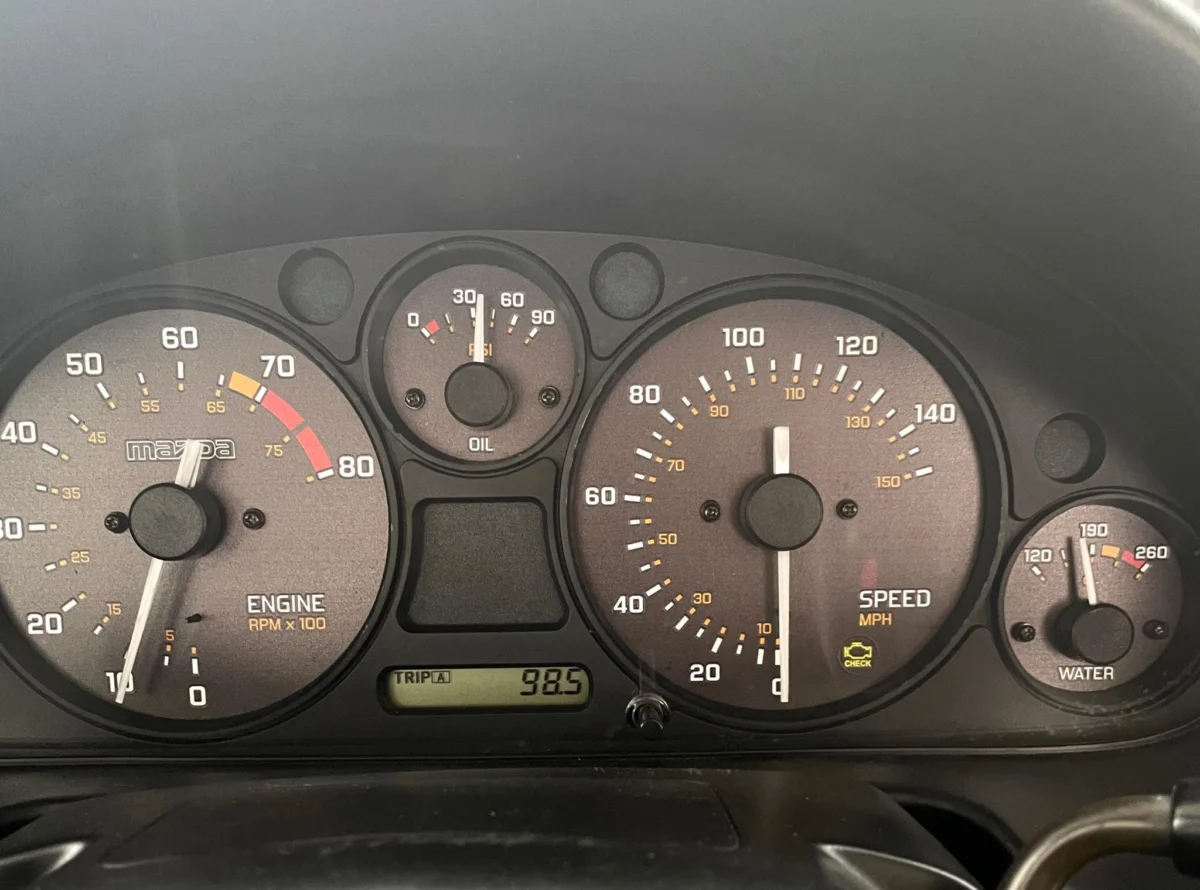
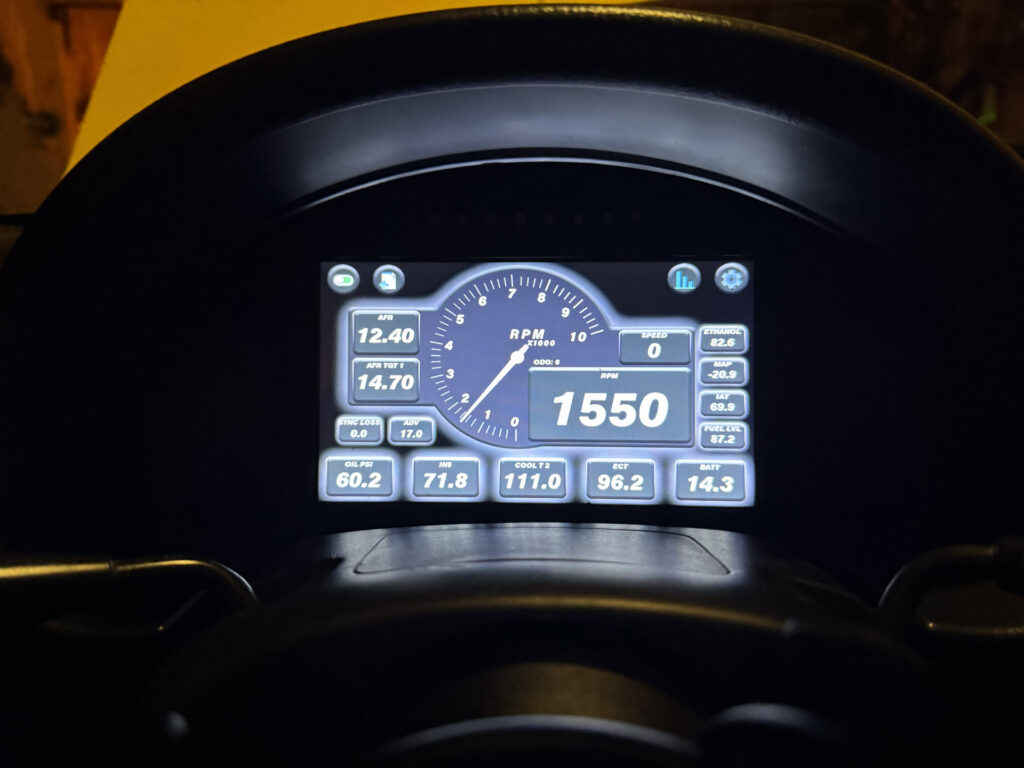
Digital Instrumentation Integration (November 2025): Minor integration errors during the custom harness installation temporarily disabled the factory speedometer. Rather than troubleshooting the analog interface, the owner installed a Tinker Electronics digital dashboard. Interfacing directly with the Megasquirt ECU via the Controller Area Network (CAN) bus, the display aggregates vital telemetry, featuring programmable warning colors for critical parameters, integrated shift lights, and turn signals. Additionally, the Megasquirt was programmed to process the vehicle speed sensor data and output a compatible signal, preserving the functionality of the factory cruise control system.
Transmission Shifter Upgrade (December 2025): To combat frustrating and potentially destructive missed shifts on track, the previous tall-angled short-throw shifter was replaced with a rigid Coolerworx short-throw assembly. Featuring a stiff external centering spring, adjustable gate-position set screws, and an integrated reverse gear lockout, the new shifter engineered out the ambiguity inherent in high-speed, aggressive gear changes.
January 2026: Differential Upgrades for Enhanced Cornering Dynamics
Entering the final month before the five-year anniversary mark, attention shifted to power transfer efficiency. Having utilized a 4.30 Torsen Type II differential for years, telemetry data indicated performance deficiencies during sharp, low-speed corners where the inner rear wheel frequently became unloaded.
To resolve this limitation, a Supermiata-tuned OS Giken mechanical limited-slip differential was installed into a secondary 4.30-ratio open housing. Retaining the 4.30 final drive ratio—which optimized power delivery for the six-speed transmission mated to a naturally aspirated engine—the OS Giken unit promised vastly superior lock-up characteristics under demanding track conditions.
February 2026: Expansion of the Fleet with a Second NB Miata
The fifth year concluded with an unexpected expansion of the garage. Recognizing the severe track-oriented evolution of his primary 2000 model, the owner sought a secondary vehicle to serve as a street cruiser and experimental testbed. Sourcing a neglected 2001 Mazda Miata via Facebook Marketplace for $1,800, the project presented a compelling value proposition despite its rough exterior condition, which included faded clear coat, body damage, a torn soft top, a missing window, and a welded differential.
Within a month of intensive labor, the chassis was rejuvenated through the installation of a new soft top, refreshed interior components, replacement wheels and tires, standard suspension dampers, and the surplus 4.30 Torsen differential removed from the primary car. Featuring a factory Variable Valve Timing (VVT) motor and a six-speed transmission within a rust-free structural shell, the acquisition demonstrated the enduring viability and economic accessibility of the NB-generation Mazda platform for dedicated enthusiasts.
Broader Industry Implications and Outlook
The documented progression of this Mazda NB Miata highlights several key trends within contemporary amateur motorsports. As labor costs, commercial service fees, and specialized parts inflation continue to rise, enthusiasts are increasingly adopting professional-grade fabrication techniques—such as custom MIL-spec style wiring harnesses, digital dash integrations, and DIY tire servicing—traditionally reserved for professional racing teams. Furthermore, the transition toward modern engine management strategies, including drive-by-wire conversions on older internal combustion platforms, illustrates a growing emphasis on electronic reliability to combat the mechanical fatigue associated with aging OEM components.
As the vehicle enters its sixth year of ownership, the combination of a fully rebuilt electrical architecture, advanced telemetry, enhanced transmission hardware, and a sophisticated mechanical limited-slip differential positions the chassis for renewed performance benchmarks. The comprehensive documentation provided by this multi-year review serves as both an operational roadmap for fellow builders and a testament to the enduring engineering adaptability of Mazda’s iconic lightweight sports car.