 Jia Lissa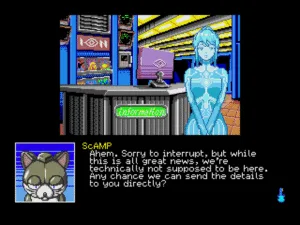
The Sega Genesis, while iconic for its library of high-speed platformers and arcade-style shooters, has historically lacked the depth of the narrative-driven graphic adventure genre that defined the Sega CD era. Titles such as Snatcher and Rise of the Dragon leveraged the expansive storage capacity of CD-ROM media to deliver cinematic, story-heavy experiences that were previously considered impossible on standard cartridge-based hardware. However, a significant shift in homebrew development is underway as indie studio Pixel Pusher Games prepares to launch Chords, a graphic adventure designed specifically to run on the original Genesis hardware, effectively bridging the gap between cartridge limitations and the sophisticated storytelling of the 16-bit era.
A New Chapter in Genesis Development
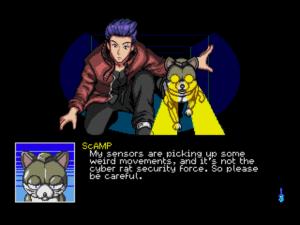
The development of Chords represents a departure from the typical action-oriented titles that populate the current Sega Genesis homebrew market. Lead developer Matt, the creative force behind Pixel Pusher Games, has publicly cited Hideo Kojima’s seminal work, Snatcher, as a primary creative catalyst. While the influence of the cyberpunk classic is evident in the game’s menu-driven interface and cinematic pacing, Chords distinguishes itself by eschewing the well-trodden path of sci-fi dystopia in favor of a narrative centered on the competitive world of professional music.
The game follows the protagonist, Akio, an aspiring musician navigating a high-stakes global battle-of-the-bands competition. The plot is structured as a three-part odyssey, with the narrative exploring themes of corruption, corporate manipulation, and personal artistic integrity. Unlike simple point-and-click titles, Chords utilizes a complex interaction system that requires players to synthesize information gleaned from environmental observations, dialogue trees, and logical deduction.
Technical Foundation and Artistry
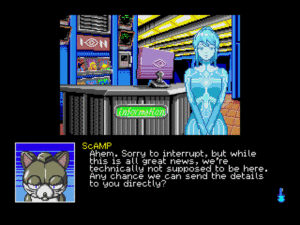
The project benefits from a collaborative effort involving industry-recognized talent within the retro gaming scene. The visual identity of Chords is being crafted by Daniel "108 Stars" H., a developer noted for his work on the expansive RPG Pier Solar. By utilizing advanced pixel art techniques, the team has managed to capture a level of detail typically reserved for 32-bit titles, proving that the Genesis hardware is capable of rendering sophisticated, atmospheric environments when pushed to its limits.
Complementing the visuals is an original chiptune score composed by SuperJet Spade. The soundtrack is designed to be as integral to the experience as the script, reinforcing the game’s musical theme. From a technical standpoint, the game is being optimized for global distribution, with the developers confirming support for English, French, German, Spanish, and Portuguese, ensuring that the title remains accessible to the international Sega enthusiast community.
Analyzing the Narrative Scope
Industry observers have noted that the "meat" of the game’s narrative sets a new benchmark for cartridge-based adventures. During a recent internal speed-run assessment, the first chapter alone required 45 minutes of sustained gameplay. Extrapolating from this, the full three-part story is projected to offer several hours of gameplay, rivaling the content density of early 90s PC graphic adventures.
This design philosophy marks a pivot toward "interactive storytelling" rather than twitch-reflex gaming. By focusing on narrative pacing and character development, Pixel Pusher Games is challenging the misconception that the Genesis is strictly an action-heavy console. This structural shift is significant; it suggests that as developers continue to refine their assembly-level programming and memory management techniques, the ceiling for what the hardware can achieve is being raised, potentially opening the door for more complex genres to find a home on the platform.
Broader Implications for the Retro Ecosystem
The emergence of high-quality narrative titles like Chords signals a maturation within the homebrew sector. Over the past five years, the Sega Genesis homebrew market has transitioned from simple arcade ports and "ROM hacks" to full-scale, original software productions.
- Hardware Viability: The successful implementation of sophisticated graphic adventure mechanics on a standard cartridge demonstrates that developers have mastered the nuances of the Genesis’s Motorola 68000 processor and its memory bank switching capabilities.
- Genre Diversification: For a console defined by games like Sonic the Hedgehog and Streets of Rage, the introduction of narrative-heavy, text-rich adventures provides a necessary evolution for the library, increasing the console’s longevity and appeal to a broader demographic of players.
- Market Longevity: With the ongoing trend of physical re-releases and boutique publishing, titles like Chords contribute to a sustainable ecosystem where independent studios can recoup development costs through both digital sales and limited-edition physical cartridges.
Future Development and Related Projects
While the development of Chords remains in its active phase, with both physical and digital releases still some time away, the project serves as a cornerstone for Pixel Pusher Games’ broader strategy. The studio is simultaneously developing a dungeon crawler titled Crypt of Dracula, which further underscores their commitment to exploring genre-specific gameplay on the Genesis.
The development team has been transparent about their progress, utilizing platforms like BlueSky and their official website to share development logs and technical insights. This level of engagement provides fans with a behind-the-scenes look at the logistical challenges of porting a modern narrative design philosophy into a vintage coding environment.
Conclusion: A Legacy Reimagined
As the release window for Chords approaches, the gaming community is closely watching the project’s trajectory. By honoring the design tenets of classic graphic adventures while simultaneously establishing an original setting and tone, the game avoids the pitfall of becoming a mere homage. Instead, it positions itself as a contemporary successor to the games that once defined the Sega CD experience.
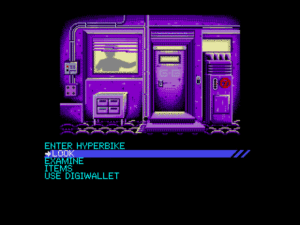
Whether it succeeds in its mission to redefine the expectations for Genesis software remains to be seen upon its final release. However, the existing demo has already demonstrated that the narrative design is smooth, the pacing is deliberate, and the technical execution is sound. In a market currently saturated with action titles, the arrival of a cerebral, story-driven adventure will likely be welcomed as a significant addition to the 16-bit canon. For now, Pixel Pusher Games continues to refine the experience, promising that when Chords finally reaches the hands of collectors and players, it will stand as a testament to the enduring creative potential of the Sega Genesis platform.