 Jia Lissa
The mid-1990s represented a pivotal epoch in interactive entertainment, characterized by a seismic shift from two-dimensional sprite-based imagery to the emerging frontier of polygonal 3D environments. During this period, developers grappled with new physics, camera systems, and player control conventions. Among the titles that defined this experimental era was Croc: Legend of the Gobbos, a platforming title released in 1997 by Argonaut Software and published by Fox Interactive. Originally conceived as a collaborative project with Nintendo, the game eventually found its own identity on the Sony PlayStation and Sega Saturn, leaving a lasting legacy as a quintessential example of the industry’s early 3D growing pains.
The Genesis of a Project: From Nintendo to Argonaut
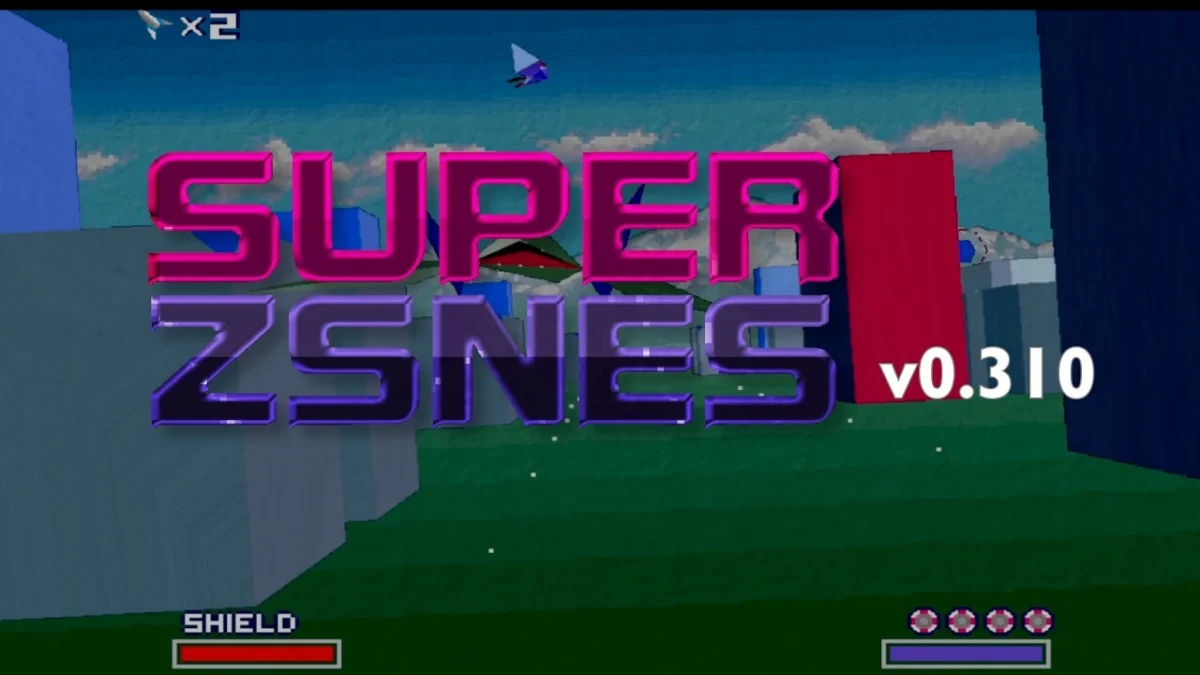
The historical trajectory of Croc is inextricably linked to the collaborative history between Argonaut Software and Nintendo. In the early 1990s, Argonaut, led by Jez San, was instrumental in developing the Super FX chip for the Super Nintendo Entertainment System, which powered the landmark title Star Fox. Given this technical rapport, Argonaut pitched a concept for a 3D platforming and racing hybrid to Nintendo that prominently featured Yoshi, the company’s iconic reptilian mascot.
Internal documents and subsequent statements from Argonaut’s leadership indicate that Nintendo, then deep in the development of its own paradigm-shifting 3D title, Super Mario 64, was hesitant to allow an external studio to handle its intellectual property. Nintendo’s refusal to delegate its characters to third-party developers was a longstanding policy, and by 1995, the company had committed its resources exclusively to internal teams to ensure the success of the Nintendo 64 hardware. The rejection forced Argonaut to pivot, leading to the creation of the original character Croc, a crocodile who retained the core movement mechanics of the pitch while moving away from the Nintendo ecosystem.
Technical Architecture and Control Philosophy
The development of Croc coincided with the industry’s adoption of "tank controls"—a system where the player rotates the character relative to their forward-facing direction, rather than the camera’s perspective. While this control scheme was standard in titles like Resident Evil and Tomb Raider, it posed unique challenges for a platformer. By 1997, the release of Super Mario 64 had established a new standard for 3D movement, utilizing the analog stick to provide fluid, multi-directional control.
Croc’s reliance on digital input and tank-style turning created a distinct gameplay experience that prioritized precision in movement over the kinetic fluidity seen in its competitors. While some contemporary critics noted that this made navigation feel rigid, particularly when paired with the optional 3D Control Pad, the design choice reflected a broader lack of consensus on how 3D movement should function. Argonaut’s decision to build the game as a series of contained, room-based environments served as a clever mitigation strategy for the technical limitations of 32-bit hardware, allowing for more detailed assets within smaller, manageable rendering spaces.
Chronology of Development and Release
- 1993: Argonaut Software collaborates with Nintendo on Star Fox (SNES), establishing a technical partnership.
- 1994-1995: Argonaut pitches a 3D platforming project featuring Nintendo’s Yoshi; Nintendo declines, opting to pursue in-house 3D development.
- 1996: Argonaut pivots to original intellectual property, focusing on the character Croc and a multi-platform strategy.
- 1997: Croc: Legend of the Gobbos is released for the Sony PlayStation, followed by ports to the Sega Saturn and PC.
- 2025: A high-definition remaster is released, integrating modern control schemes to address the original’s historical rigidity.
Analysis of Gameplay Design and World Building
The structural design of Croc: Legend of the Gobbos is categorized by its deliberate pacing. The primary objective in each stage is the collection of six Gobbos, one of which is hidden behind an optional challenge requiring specific colored gems. This "collect-a-thon" loop incentivized thorough exploration of the game’s four distinct worlds: a forest, an ice region, a desert, and a castle.
From a design perspective, the game is notable for its lack of ambiguity. The developers implemented a "signpost" philosophy, where the intended path is clearly telegraphed to the player. This design choice effectively minimized the frustration associated with early 3D titles, where players often struggled with spatial awareness. However, the game’s environment suffered from a lack of visual cohesion. The presence of floating industrial objects, such as large gears or rafts, in otherwise natural settings often felt disconnected from the whimsical narrative tone.
The audio design, conversely, remains one of the game’s most celebrated elements. The menu music, characterized by upbeat mariachi-style brass, is frequently cited as a standout feature of the 1997 gaming landscape. The absence of traditional dialogue, replaced by expressive, high-pitched vocalizations, allowed the game to transcend language barriers and establish a consistent, albeit abstract, identity.
Platform Disparity: PlayStation vs. Saturn
When analyzing the performance of the game across platforms, it is evident that the hardware architecture played a significant role in the end-user experience. The PlayStation version was the lead platform and generally offered a more stable visual performance. The Sega Saturn version, while technologically capable, suffered from issues common to third-party ports on the system.
Reports from the time highlighted a recurring graphical glitch where character geometry, specifically the protagonist’s snout, would disappear if the game was left in the console during startup. This issue, caused by how the Saturn handled memory initialization, highlighted the challenges developers faced in optimizing code for the Saturn’s complex dual-processor architecture. Despite these hurdles, the Saturn version provided a necessary addition to the console’s library, which famously lacked a 3D platformer featuring its own mascot, Sonic the Hedgehog, during the 32-bit era.
Broader Industry Implications
The release of Croc in 1997 serves as a case study for the risks and rewards of early 3D development. Argonaut Software’s attempt to break into the platforming genre occurred at a time when industry giants like Sega and Nintendo were redefining the rules of the medium. The game’s 7/10 reception at the time reflected a balanced view: while the game succeeded in offering an engaging, well-designed adventure, it was undeniably overshadowed by the massive technological leap of Super Mario 64.
The subsequent remaster in 2025 underscores the enduring interest in this era of gaming. By providing modern control options, the remaster addresses the primary criticism leveled against the original—its reliance on antiquated tank controls. This demonstrates a shift in how the industry preserves its history, prioritizing the accessibility of original design concepts while updating the interface for a contemporary audience.
In conclusion, Croc: Legend of the Gobbos remains a vital relic of the mid-nineties. It illustrates the transition from the experimental, "trial-by-fire" development cycles of the early 3D era to the more refined, player-focused experiences that would follow. As a standalone title, it may not have reached the heights of its competitors, but as a technical achievement of a smaller studio attempting to carve out a niche in a rapidly evolving market, its significance remains intact. The game serves as a testament to the period’s creative spirit, where developers frequently took leaps of faith, often resulting in experiences that were as flawed as they were memorable.