 Hartono Sudibyo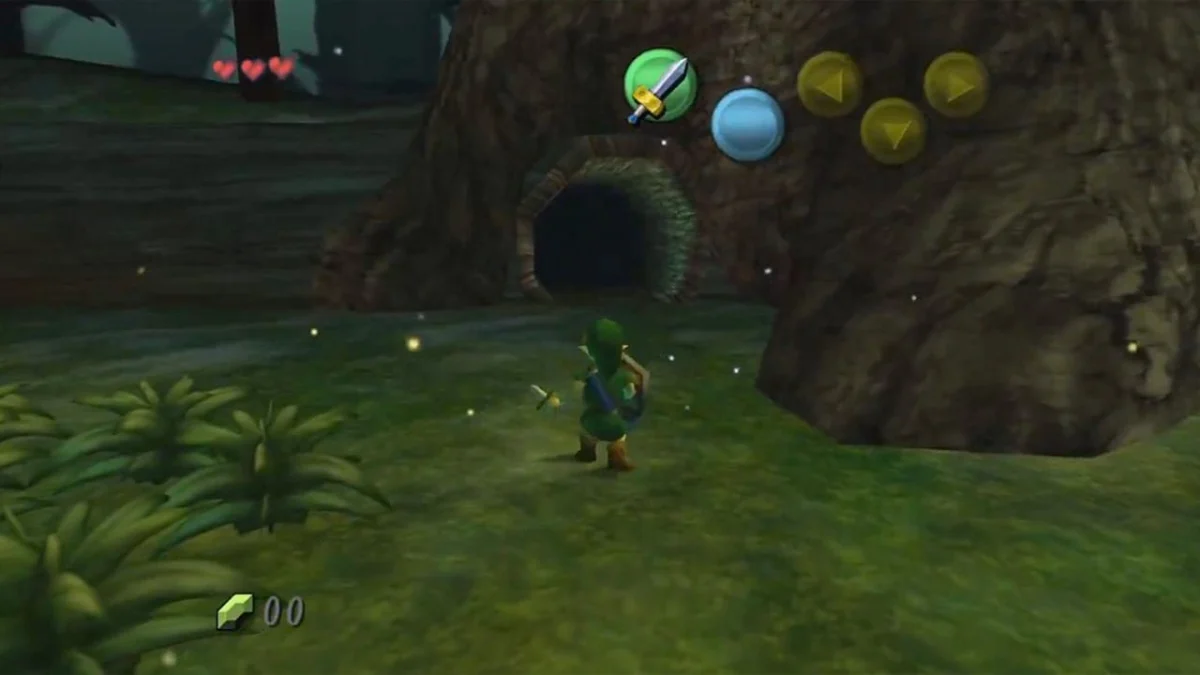
The landscape of video game preservation and hardware utilization has reached a fascinating new milestone as classic titles continue to transcend their original console exclusivity. In a remarkable demonstration of reverse engineering and homebrew capabilities, Nintendo’s iconic 2000 masterpiece, The Legend of Zelda: Majora’s Mask, can now be executed natively on Sony’s flagship PlayStation 5 console. Operating at a pristine 4K resolution and a fluid 60 frames per second, this unauthorized yet technically impressive port represents a significant achievement for software modification enthusiasts, breathing unprecedented visual clarity into a quarter-century-old title.
This technical feat is the direct result of independent developer Shivam Mishra, who utilized existing open-source preservation frameworks to build upon previous decompilation successes. Mishra’s work serves as a companion project to his earlier native PlayStation 5 port of The Legend of Zelda: Ocarina of Time, further cementing a growing trend of bringing classic Nintendo intellectual property onto contemporary, non-Nintendo hardware through community-driven native compilation.
Background Context and the Decompilation Movement
To understand the magnitude of running Majora’s Mask natively on a PlayStation 5, one must examine the evolution of video game emulation and source-porting over the past decade. Traditional emulation involves a piece of software running on modern hardware that simulates the architecture of a retro console, often introducing input latency, graphical inaccuracies, or performance stutters. In contrast, native porting—exemplified by projects like Ship of Harkinian for Ocarina of Time and its companion 2 Ship 2 Harkinian for Majora’s Mask—relies on community-led decompilation.
Decompilation is the painstaking process of analyzing binary code from an original ROM and reconstructing it into high-level, human-readable programming languages like C or C++. Once a game’s source code is fully recovered and reverse-engineered, developers can recompile it for completely different hardware architectures. This allows the game to run "natively"—meaning it executes instructions designed specifically for the target processor rather than translating them through an emulator layer. The resulting software can natively support modern display resolutions, ultra-wide aspect ratios, custom frame rate caps, and extensive modding support.
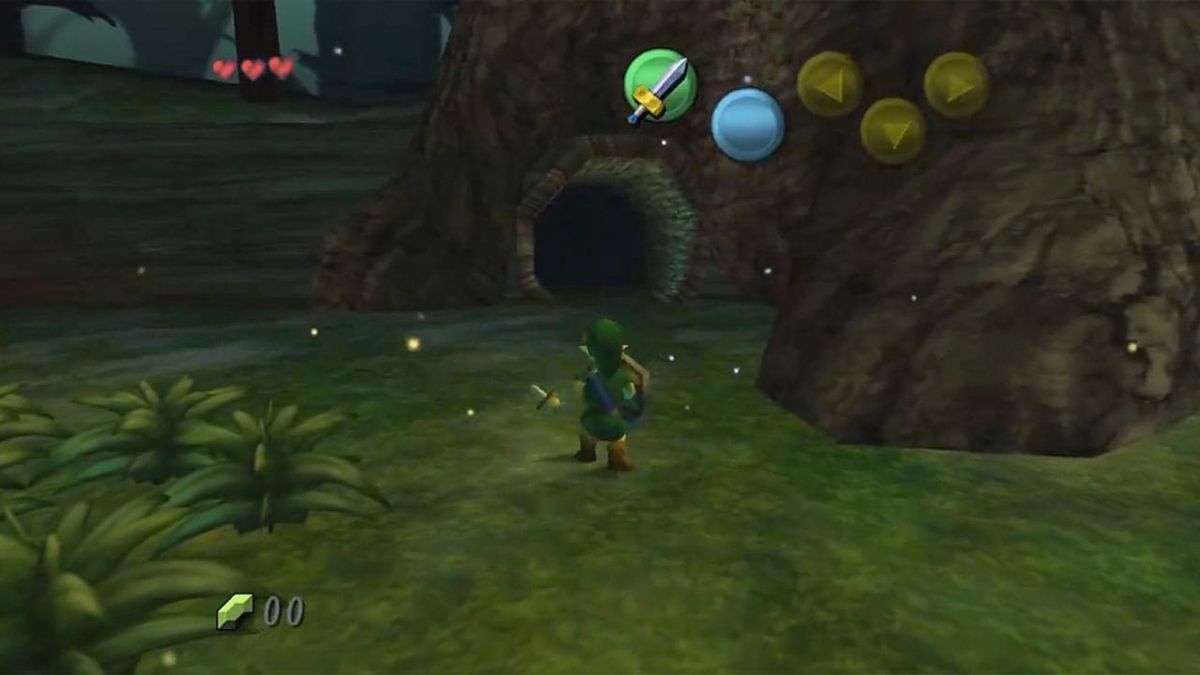
Harbour Masters, the developer collective behind the core 2 Ship 2 Harkinian engine, laid the foundational groundwork that made Mishra’s PlayStation 5 port possible. By ensuring the PC-based port was modular and adaptable, they opened the door for independent programmers to port the compiled output to alternative operating systems and closed hardware environments, provided the end-user supplies their own legally dumped game assets.
Technical Requirements and Installation Parameters
While the prospect of experiencing Termina’s looming three-day doom cycle in crisp 4K fidelity on a Sony DualSense controller is alluring, the implementation is currently restricted to advanced users with access to modified hardware. The installation process demands technical proficiency and specific prerequisites:
- Game Assets: Users must possess a legally acquired, original ROM of The Legend of Zelda: Majora’s Mask, which must be properly extracted using version 5.0.1 of the 2 Ship 2 Harkinian toolchain on a personal computer.
- Hardware Environment: The target PlayStation 5 must be running a homebrew-capable firmware version and equipped with essential system modifications, including the
kstuffkernel exploit,ShadowMountPlusfor mounting custom application directories, and an active FTP (File Transfer Protocol) server configuration. - Storage Allocation: The base native application requires approximately 200 megabytes of free storage space on the console’s internal solid-state drive. However, users wishing to install community graphics enhancement packages—such as the Majora’s Mask Reloaded HD asset pack, which modernizes character models, textures, and lighting—must allocate an additional 3 gigabytes of storage.
- Transfer Utilities: According to developer documentation provided by Mishra, the deployment workflow requires Windows PowerShell equipped with
curl.exe, or a Linux-based environment running Bash andcurl, to facilitate the optional upload helper script. Any standard FTP client can alternatively be utilized to manually transfer the compiled payload.
Rather than requiring end-users to compile complex source code from scratch through specialized toolchains, pre-compiled releases are hosted publicly via GitHub repositories, streamlining the deployment for those who meet the necessary software environment criteria.
Chronology of Development and Community Reaction
The progression from Nintendo 64 cartridge to Sony PlayStation 5 silicon reflects a steady timeline of reverse-engineering milestones:
- November 2021: The Ocarina of Time decompilation project reaches 100% completion, marking a historic turning point for N64 software preservation.
- April 2022: Harbour Masters release early iterations of Ship of Harkinian, proving that natively ported N64 Zelda games are viable on desktop operating systems.
- Late 2024 to 2025: Work intensifies on 2 Ship 2 Harkinian, bringing the more complex scheduling and graphical engine of Majora’s Mask to PC platforms with advanced modding tools.
- September 30, 2026: Developer Shivam Mishra publishes video evidence via social media platforms demonstrating The Legend of Zelda: Majora’s Mask running seamlessly at 4K/60fps directly on a PlayStation 5 console.
- October 2026: Public documentation and repository releases become widely available to the homebrew community, outlining the precise steps required to install and run the companion project.
Reaction within the retro gaming and homebrew communities has been overwhelmingly enthusiastic. Social media engagement surrounding Mishra’s demonstration video highlighted widespread public fascination with seeing Nintendo’s distinct art direction rendered cleanly on Sony hardware. Observers and enthusiasts noted the historical irony of running a first-party Nintendo title on a direct competitor’s console at a technical standard—ultra-high-definition resolution and high refresh rates—that official Nintendo hardware retro-releases have historically struggled to match or consistently maintain.

Industry Implications and Intellectual Property Landscape
The emergence of native console ports of retro titles raises complex questions regarding software preservation, copyright law, and intellectual property management. Major entertainment conglomerates, particularly Nintendo, maintain aggressive stances regarding the distribution of unauthorized ports, derivative works, and tools that interact with proprietary codebases.
While decompilation projects generally operate in legal gray areas by relying on clean-room design principles or requiring the end-user to supply their own legally obtained ROM files to reconstruct the game, the distribution of compiled binaries targeting proprietary consoles like the PlayStation 5 often violates platform Terms of Service and digital rights management protocols. Sony and platform security researchers continuously patch kernel exploits to prevent unauthorized code execution, making homebrew development a constant cat-and-mouse game of system updates versus security bypasses.
From an analytical standpoint, projects like the PS5 port of Majora’s Mask underscore a persistent consumer demand for high-fidelity preservation that outpaces official corporate offerings. While subscription services such as Nintendo Switch Online provide access to a curated library of emulation-based retro games, they frequently lack advanced graphical options, custom aspect ratio controls, comprehensive mod support, or the performance headroom offered by modern native compilation.
As long as gaps remain between official preservation efforts and the technical capabilities of modern hardware, the independent homebrew community will likely continue to push the boundaries of software engineering. Whether through enhanced PC engines, handheld Linux devices, or unexpected native ports to rival consoles, passionate developers ensure that gaming history remains adaptable, scalable, and visually revitalized for future generations.