Ganda Hendra Perkasa
The landscape of interactive entertainment was forever altered in the mid-1990s, an era defined by rapid technological leaps, fierce console wars, and intense cultural scrutiny over the societal impact of digital media. In a special installment of the Video Game History Hour, host Phil Salvador welcomed two pivotal figures from the foundational era of the modern gaming industry: Doug Lowenstein, founder and former president of the Entertainment Software Association (ESA), and Carolyn Rauch, the former senior vice president who managed the Electronic Entertainment Expo (E3) for approximately two decades. Together, the panel unpacked the complex socio-political pressures that birthed the convention, the logistical hurdles of mounting an unprecedented trade show, and the enduring legacy of an event that once dictated the rhythm of the global technology sector.
The conversation offers a rare, behind-the-scenes look at how a fractured industry united to protect its economic interests, deflect legislative threats, and carve out an independent cultural identity. Through detailed retrospective analysis, the episode illuminates the mechanics of how E3 evolved from a trade-exclusive sanctuary into a massive global spectacle, before ultimately buckling under the weight of digital transformation and shifting corporate strategies.
Genesis of an Industry: The Regulatory Panic of the Early 1990s
To understand the necessity of E3, one must examine the precarious political and cultural climate surrounding video games between 1993 and 1994. During this period, the medium transitioned from pixelated sprites to increasingly realistic digitized graphics and full-motion video, epitomized by controversial titles such as Mortal Kombat and Night Trap. This technological advancement triggered a massive moral panic among parents, consumer advocacy groups, and federal lawmakers.
The crisis culminated in a series of high-profile United States Senate hearings led by Senators Joseph Lieberman and Herb Kohl in late 1993 and mid-1994. Legislators threatened severe federal censorship and heavy taxation on mature-rated software if the industry failed to regulate itself. Facing an existential threat to creative freedom and profitability, major publishers realized they could no longer operate as disparate entities.
Out of this crucible, the Interactive Digital Software Association (IDSA)—which later became the ESA—was founded in 1994 under the leadership of Doug Lowenstein. Tasked with presenting a unified front to Washington, the organization quickly instituted the Entertainment Software Rating Board (ESRB) in 1994 to preempt government intervention through standardized age ratings. However, protecting the industry required more than just establishing content guidelines; it demanded a dedicated platform to showcase the economic power, technological sophistication, and cultural legitimacy of video games to the media, investors, and the public.
The Breaking Point at the Consumer Electronics Show
Prior to the establishment of E3, interactive entertainment publishers relied primarily on the Consumer Electronics Show (CES) to debut their upcoming hardware and software libraries. Held annually in Las Vegas and Chicago, CES was a massive convention for consumer technology, spanning televisions, audio equipment, household appliances, and computing gear.
However, by the mid-1990s, video game publishers had grown increasingly dissatisfied with their treatment at CES. Software and console manufacturers were frequently relegated to peripheral exhibition spaces, such as isolated tents in parking lots, poorly ventilated auxiliary halls, or distant annexes far removed from the main convention floors dominated by consumer electronics giants. These subpar placements diminished the visibility of multi-million-dollar titles and signaled a fundamental misunderstanding of the medium’s commercial scale by CES organizers.
The tipping point arrived when industry leadership realized that interactive entertainment had outgrown its status as a mere subset of consumer electronics. Recognizing the need for an exclusive showcase that commanded the undivided attention of the global press and retail buyers, Lowenstein and key industry executives spearheaded the bold initiative to sever ties with CES and construct an entirely new, dedicated trade exhibition from the ground up.
The 1995 Inaugural Expo and Logistical Hurdles
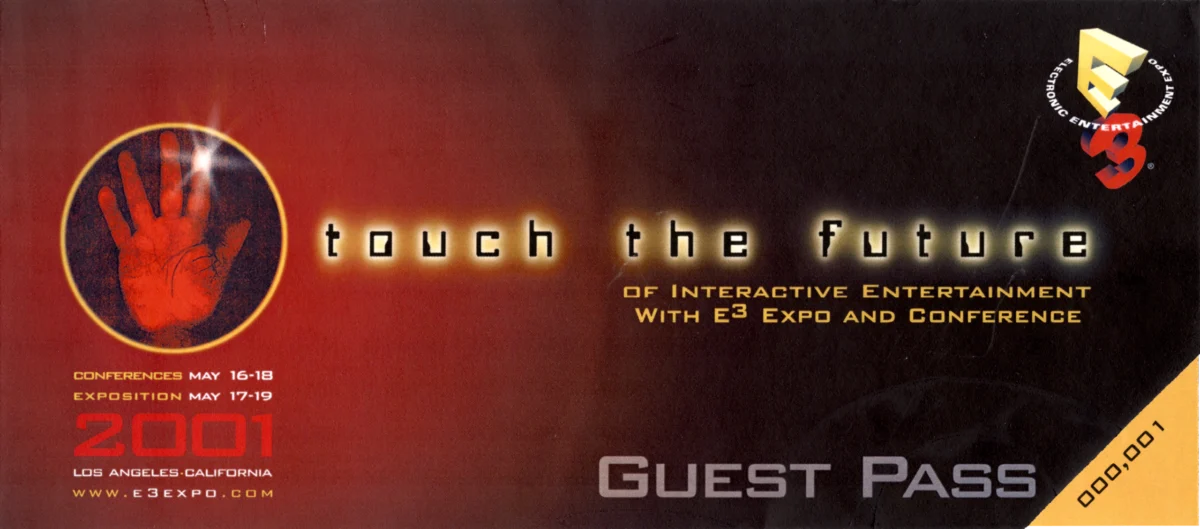
Organizing the inaugural Electronic Entertainment Expo, held in May 1995 at the Los Angeles Convention Center, was an immense gamble fraught with monumental operational challenges. With no prior blueprint for a standalone video game convention of this magnitude, organizers had to convince skeptical corporate boards, wary retailers, and recalcitrant hardware manufacturers to invest time and capital into an unproven venture.
Securing the participation of industry titans Nintendo and Sega was critical to the viability of the 1995 expo. At the time, both companies were locked in a ferocious, high-stakes sixteen-bit console war and maintained immense leverage over the retail market. Convincing these competing giants—alongside a rising Sony, which was preparing to launch the original PlayStation in North America—to exhibit under one unified banner required delicate diplomatic maneuvering and assurances that their respective investments would yield substantial returns.
Despite profound skepticism from mainstream media outlets that initially viewed video games as a passing fad for children, the first E3 exceeded all expectations. It attracted tens of thousands of industry professionals, international journalists, and retail executives, instantly establishing Los Angeles as the epicenter of the gaming world. The success of the 1995 event validated the economic maturity of the medium and proved that the interactive entertainment sector possessed the organizational capacity to govern and promote itself on a global scale.
Chronology and Evolution: From B2B Sanctuary to Consumer Spectacle
Over its nearly three-decade lifespan, E3 underwent continuous structural transformations to adapt to the shifting paradigms of technology, media consumption, and corporate marketing strategies:
- 1994: The IDSA (later ESA) is founded in response to congressional hearings on video game violence, laying the groundwork for industry self-regulation and unified advocacy.
- May 1995: The inaugural E3 opens at the Los Angeles Convention Center, drawing massive attendance and cementing its status as the premier B2B event for the gaming industry.
- 1998–2006: The convention experiences steady growth, frequently alternating locations between Los Angeles and Atlanta, before permanently settling back in Los Angeles as the undisputed focal point of the gaming calendar.
- 2007: Seeking a more intimate, business-focused environment away from the overwhelming noise and spectacle, the ESA scales down the event into a restricted, invitation-only conference named E3 Media and Business Summit, significantly reducing attendance.
- 2009–2019: Recognizing the alienation of fans and the rise of digital media, E3 pivots back toward a large-scale exhibition format, eventually opening its doors to the general public with tens of thousands of consumer tickets sold annually.
- 2020–2023: The COVID-19 pandemic forces the outright cancellation of the 2020 physical event, followed by unsuccessful attempts to transition to digital-only showcases (E3 Digital). Amidst shifting industry practices where major publishers successfully host independent digital broadcasts (such as Nintendo Direct and PlayStation State of Play), the ESA officially announces the permanent retirement of E3 in December 2023.
Economic Impact on Los Angeles and Legal Complexities
Throughout its peak operating years, E3 was not merely a cultural touchstone; it was a powerful economic engine for the city of Los Angeles. According to economic impact studies commissioned during the convention’s heyday, E3 consistently generated tens of millions of dollars in direct and indirect revenue for the local hospitality, tourism, and service industries. Hotels, restaurants, transportation networks, and convention center staff relied heavily on the massive influx of international travelers during what was typically a shoulder season for tourism in Southern California.
Behind the glittering show floor displays and blockbuster announcement trailers, however, the management of E3 faced unexpected operational and legal trials. As Carolyn Rauch details in the podcast episode, navigating the bureaucratic complexities of large-scale event production required continuous crisis management. Beyond managing labor unions, floor space allocations, and safety regulations, the ESA occasionally encountered unexpected legal hurdles—including complex trademark and copyright disputes surrounding the iconic E3 logo and branding assets as the exposition’s global recognition skyrocketed.
Industry Implications and the Post-E3 Landscape
The definitive cancellation of E3 marks the end of an era defined by centralized industry synchronization. For decades, the convention served as the singular heartbeat of the gaming calendar, dictating product development cycles, media coverage schedules, and consumer anticipation. Publishers spent millions of dollars constructing elaborate, cinematic booths designed to capture headlines for a fleeting three-day window in June.
However, the proliferation of high-speed broadband internet and the maturation of social media fundamentally altered corporate marketing strategies. Companies realized they no longer required a physical trade show to reach their target audiences. By bypassing traditional media gatekeepers and utilizing direct-to-consumer digital broadcasts, publishers could command global attention on their own terms, at a fraction of the cost, and without the immense logistical liabilities of a physical convention.
The retrospective insights provided by Doug Lowenstein and Carolyn Rauch on the Video Game History Hour underscore the fragility and resilience of an industry that built its own infrastructure from scratch. While the physical halls of the Los Angeles Convention Center will no longer host the iconic expo, the foundational framework established by the ESA in the 1990s permanently legitimized interactive entertainment as a dominant cultural and economic force in modern society.