Chalid Lutfie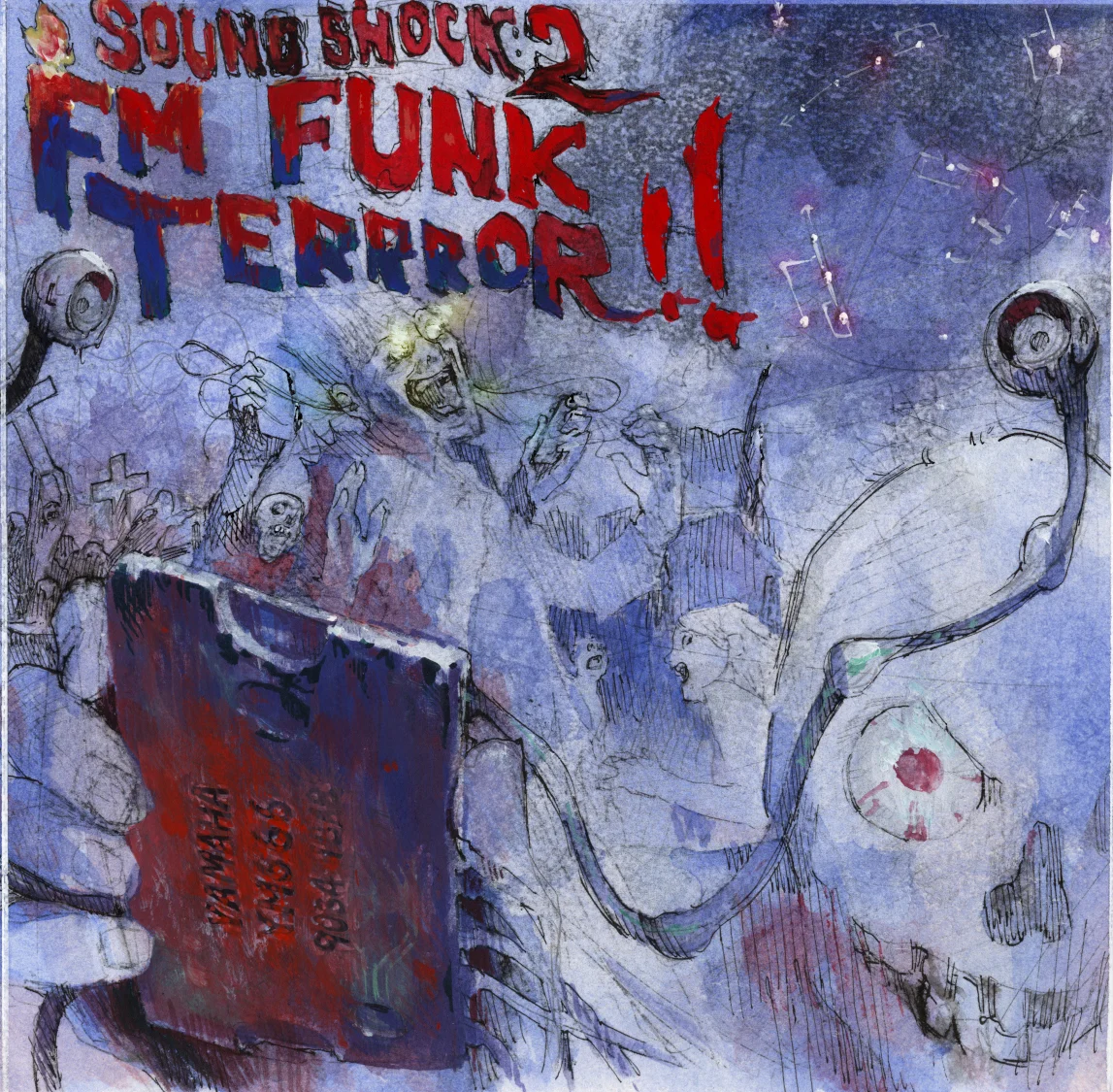
On April 15, 2017, the creators of the SOUNDSHOCK electronic music series released a comprehensive retrospective detailing the visual identity behind their trilogy of albums. The series, which gained a cult following for its fusion of FM synthesis, funk, and high-energy electronic soundscapes, was defined as much by its distinctive hand-painted album covers as by its music. These illustrations, crafted by manga artist and illustrator Tsuyoshi Shimokura, serve as a narrative bridge between the technical complexity of FM synthesis and the cultural aesthetics of 1980s and 90s gaming and horror media.
The Origins of a Creative Partnership
The collaboration began during the production of the first volume, FM FUNK MADDNESS!!. Project lead and curator "zinger" initiated contact with Shimokura, initially seeking musical contributions for the album. Upon reviewing Shimokura’s portfolio, zinger discovered a repository of original artwork that displayed a deep proficiency in visual storytelling and a profound appreciation for computer technology and FM sound hardware.
Shimokura, whose professional background includes extensive work within the manga industry, was recruited to translate the auditory intensity of the SOUNDSHOCK series into a visual language. This partnership spanned the entirety of the trilogy, resulting in three distinct visual chapters that evolved in thematic complexity alongside the music.
Chronology of the SOUNDSHOCK Trilogy
The progression of the series is marked by three distinct thematic pillars, each corresponding to a specific release cycle:
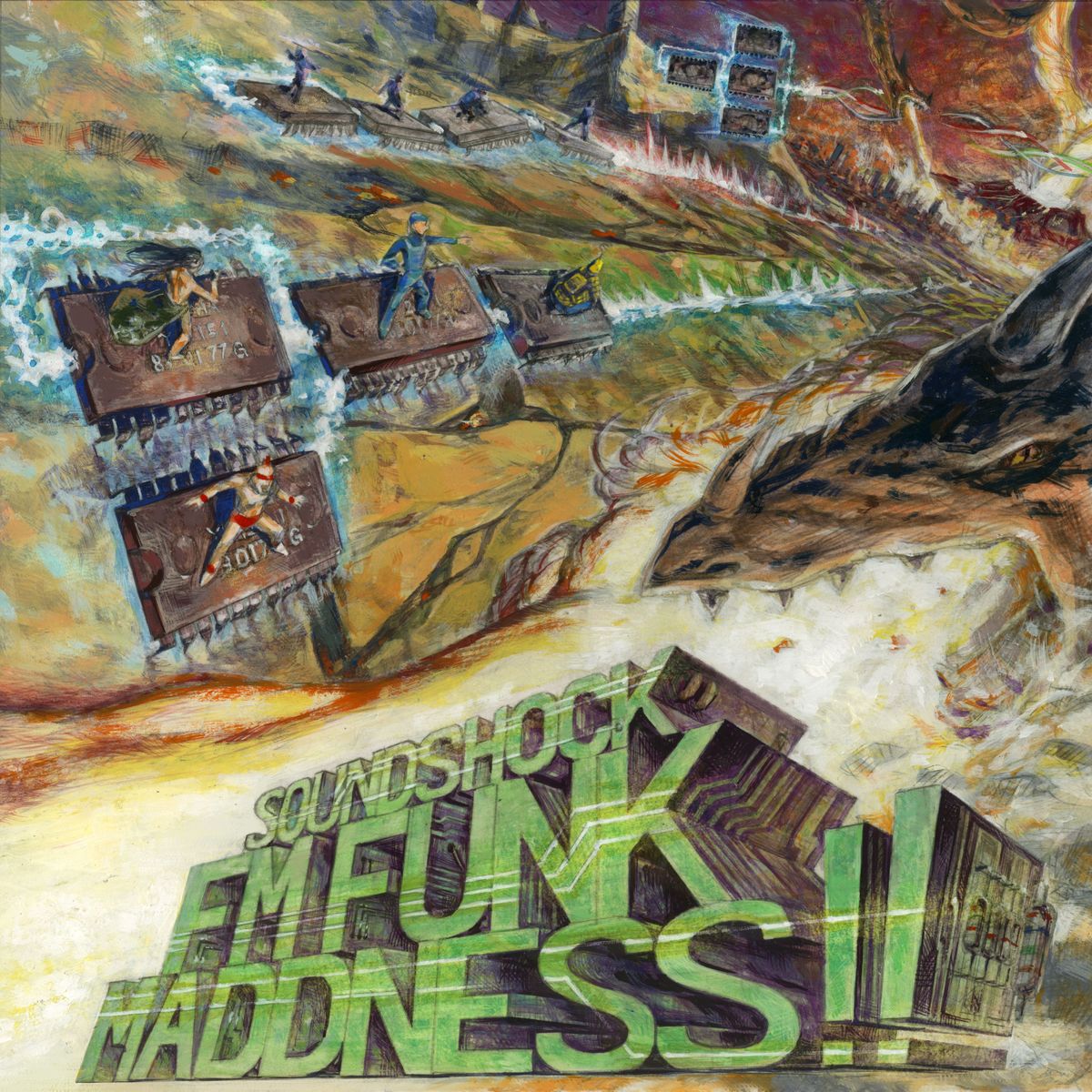
- FM FUNK MADDNESS!! (2013): The debut album focused on the heroic and mechanical aspects of sound synthesis. Influenced by the aesthetic of late 80s arcade shooters such as Metal Black and Darius II, the cover art features a narrative where musicians utilize the power of FM chips to combat digital adversaries.
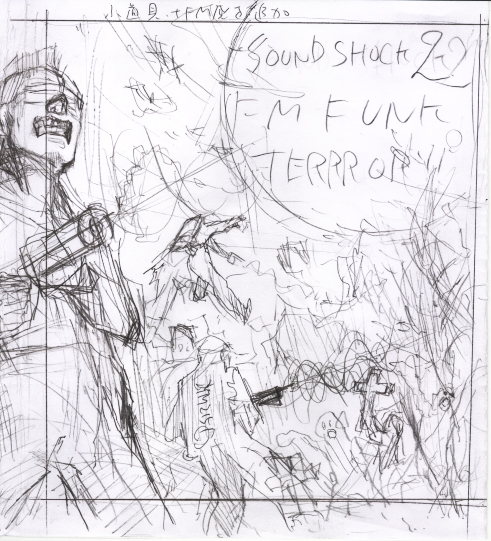
- FM FUNK TERRROR!! (2014): The second installment shifted toward the genre of 1980s horror cinema and cult gaming. Drawing inspiration from the Splatterhouse series and classic slasher films, the artwork introduced a darker, more macabre aesthetic.
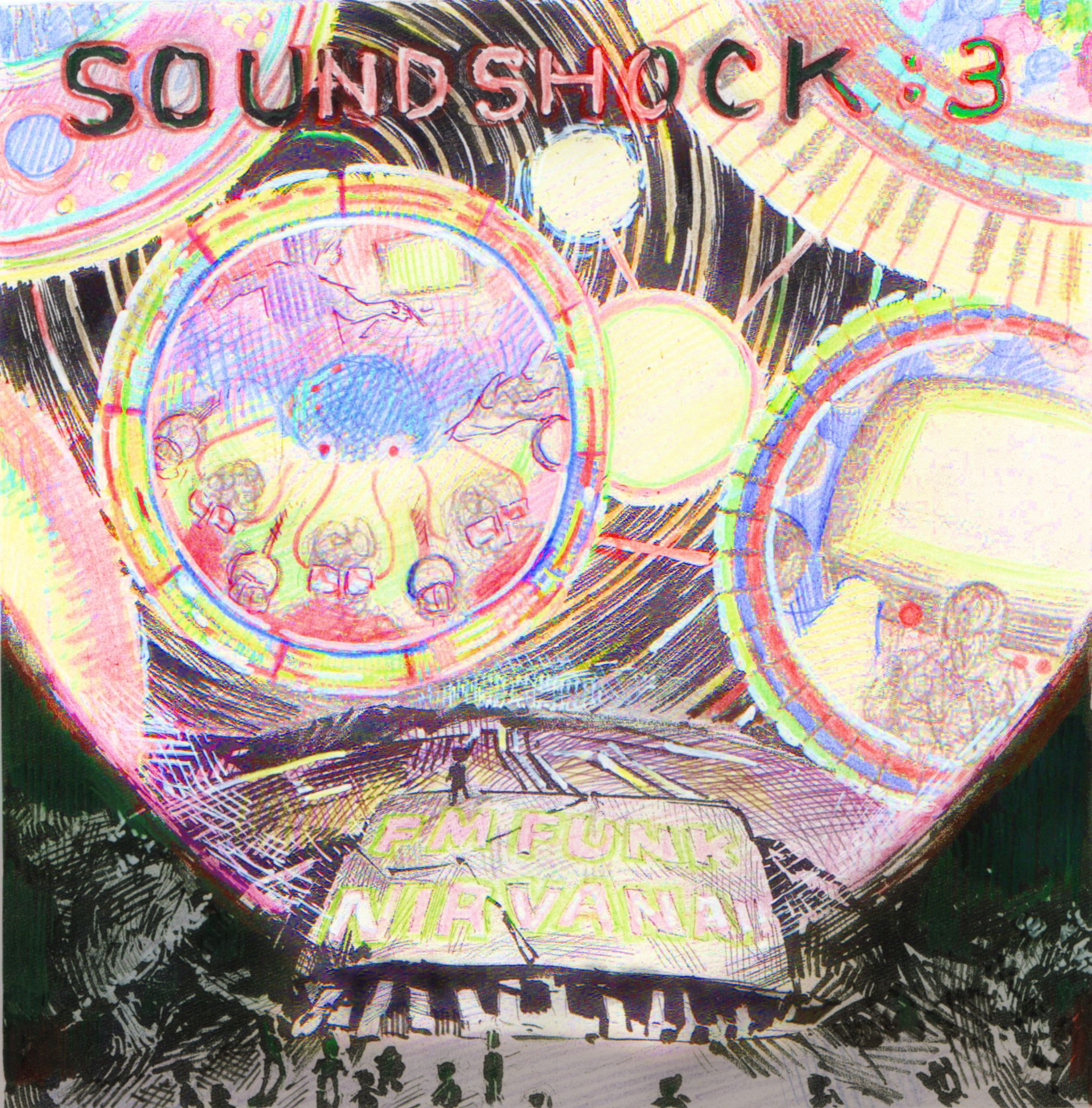
- FM FUNK NIRVANA!! (2017): The final entry moved toward a conceptual, almost spiritual conclusion. Utilizing Buddhist iconography and the concept of the mandala, the cover art served as a visual representation of the series’ culmination.
Technical and Thematic Analysis
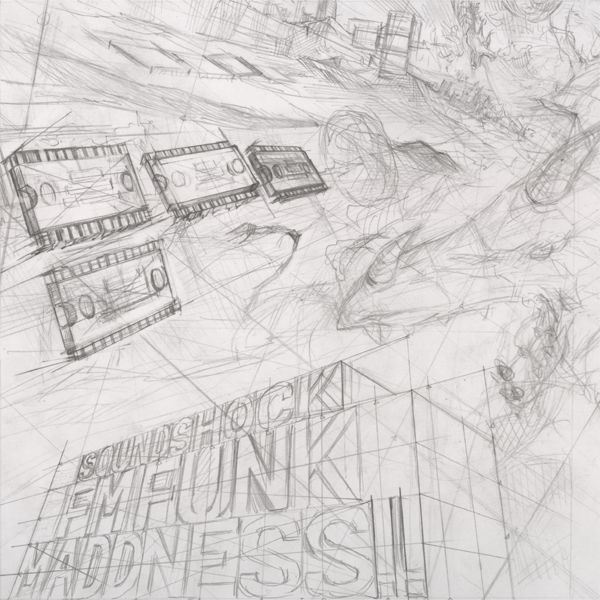
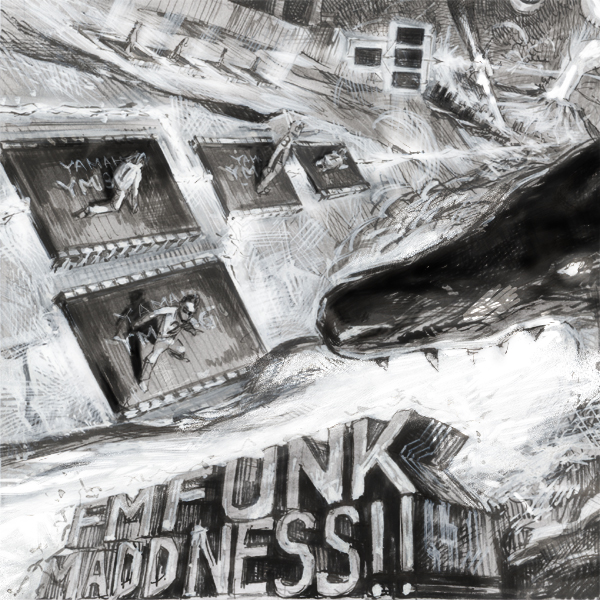
The artistic process behind these covers was rooted in deep research. For FM FUNK MADDNESS!!, Shimokura produced numerous concept sketches and short narratives to ensure the visual output matched the musical intent. The final product highlighted the mechanical nature of FM chips, depicted with biological, caterpillar-like appendages, symbolizing the "living" nature of the hardware.
For FM FUNK TERRROR!!, the collaboration involved a multi-week conceptual phase. Reference materials included a wide array of horror film posters and obscure genre ephemera. The resulting imagery—featuring a ghoul holding an modified YM666-style music player—served as a metaphor for the "infection" of the listener with the sound of the FM chip. The inclusion of stars arranged to resemble FM algorithm charts demonstrated a commitment to integrating technical audio theory with thematic horror elements.
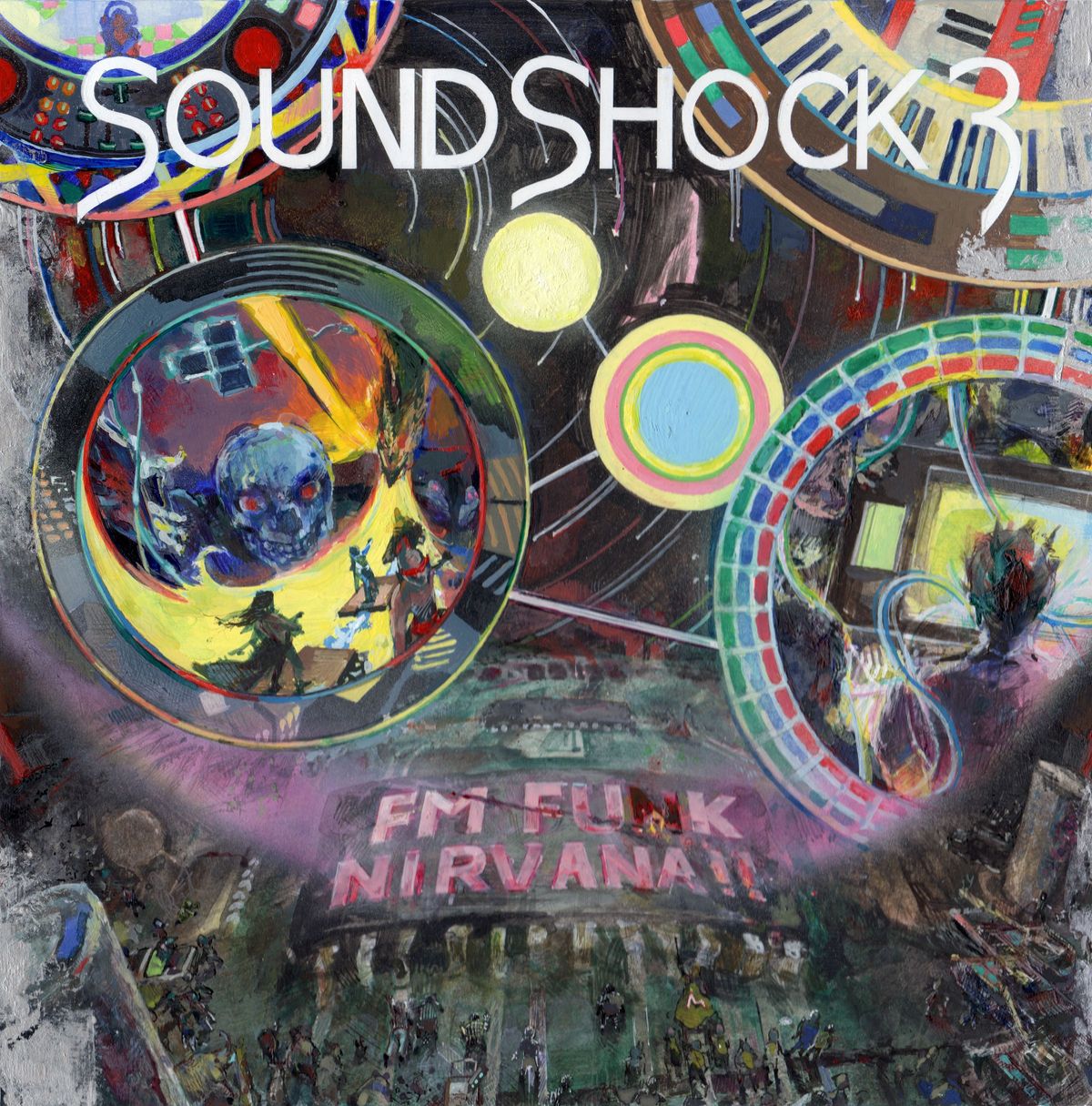
The final volume, FM FUNK NIRVANA!!, represented the most abstract shift in the series. The title was suggested by a fan during the release of the second volume, and while zinger initially intended to continue the trend of adding "extra letters" to emphasize the intensity of the music, he determined that the word "Nirvana" was already conceptually "maxed out." The cover art for this final installment features a complex arrangement of spheres within a mandala-like structure, serving as a spiritual guidance tool for the disciples depicted at the base of the image. These figures are shown worshipping a massive FM chip, effectively grounding the abstract concept of enlightenment in the series’ core subject: the hardware of the past.
The Philosophy of FM Synthesis
Central to the project’s identity is the belief that the FM sound—a synthesis method that dominated the arcade and computer gaming landscape in the 1980s—possesses a unique, enduring legacy. In a final message to the community, Shimokura framed the conclusion of the SOUNDSHOCK series not as an end, but as a transitional phase.
"SOUNDSHOCK has come to an end," Shimokura wrote. "That, however, is not a sad thing. Supposing SOUNDSHOCK really has struck a chord in its listeners’ hearts, then our work could be thought of as a seed for future stars that have yet to be born."
This sentiment underscores a broader trend in the electronic music community: the preservation and modernization of legacy synthesis techniques. By framing the project as a lineage of "spiritual offshoots," the creators position their work as a continuation of the efforts of the hardware pioneers who originally developed FM technology.
Broader Implications and Cultural Impact
The integration of specialized, hand-painted artwork into the digital release of the SOUNDSHOCK albums provided a significant value-add for the project. In an era where digital distribution often lacks the tactile experience of physical media, the elaborate visual lore created by Shimokura allowed the project to maintain a cohesive "world-building" exercise.
The success of the SOUNDSHOCK series serves as a case study for how independent music projects can leverage visual arts to cultivate a dedicated community. By treating the cover art as a primary component of the album’s narrative—rather than a secondary marketing tool—the team was able to sustain interest over several years.
Furthermore, the meticulous attention to detail, such as the representation of FM algorithm charts within the art, appealed to a niche demographic of audio engineers and retro-computing enthusiasts. This bridge between technical accuracy and artistic expression likely contributed to the longevity of the series.
Conclusion
As the SOUNDSHOCK project concludes, its legacy remains tied to the intersection of sound design and visual storytelling. The contribution of Tsuyoshi Shimokura was instrumental in defining this identity, transforming the technical specifications of FM synthesis into a vibrant, multi-layered mythology. Whether through the heroic battles of MADDNESS!!, the chilling narratives of TERRROR!!, or the final, meditative state of NIRVANA!!, the series stands as a testament to the potential of interdisciplinary collaboration within the independent music sphere. As the creators have noted, the true impact of their work lies in its capacity to inspire a new generation of creators to explore the vast, sonic landscapes of the past, ensuring that the "FM sound" remains a living, evolving element of modern music culture.