Vera Clarissa
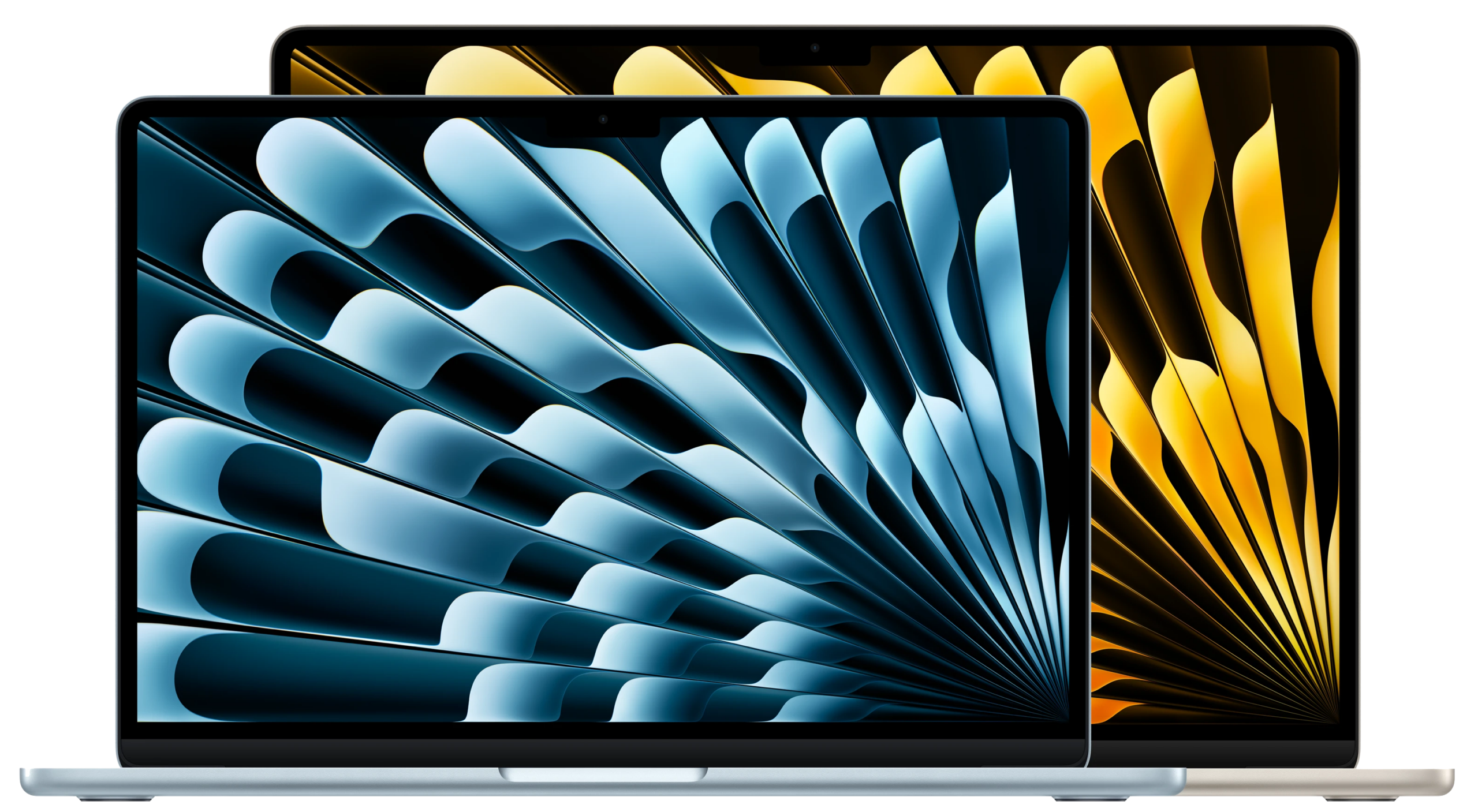
Apple has officially launched the M5 MacBook Air, a significant update to its ultra-portable laptop lineup, introduced on March 3rd, 2026. While the external design retains the familiar, sleek aesthetic of its predecessors, the true revolution lies within, powered by the all-new M5 chip. This fifth generation of Apple Silicon represents a paradigm shift in performance and efficiency for the MacBook Air, transforming it from a capable everyday machine into a powerhouse that challenges the boundaries of what a fanless laptop can achieve.

The evolution of the MacBook Air, particularly with the advent of Apple Silicon, has been nothing short of remarkable. Gone are the days when the Air was characterized by underpowered CPUs and graphics chips that struggled with demanding tasks. The M5 chip marks a monumental leap forward, delivering performance that not only rivals but, in some aspects, surpasses established benchmarks, even without active cooling.
M5 Chip: A Quantum Leap in Integrated Graphics and CPU Power
At the heart of the new M5 MacBook Air is the M5 chip, a testament to Apple’s continued innovation in custom silicon. While specific architectural details are closely guarded by Apple, early benchmarks and performance analyses reveal a substantial upgrade over the previous M4 generation. The most striking improvement appears to be in the integrated GPU. In a direct comparison via a Cinebench GPU test, the M5 MacBook Air demonstrated a performance level approximately 92% that of the M5 MacBook Pro. The M5 Air clocked in at around 22,000 points, while the M5 Pro achieved approximately 24,000 points. This near parity in graphics performance between a fanless Air and a Pro model is an extraordinary achievement, highlighting the immense gains in the M5’s GPU capabilities compared to the M4. This suggests that users can now expect a significantly more robust graphical experience, from creative applications to casual gaming, all within the thin and light form factor of the MacBook Air.
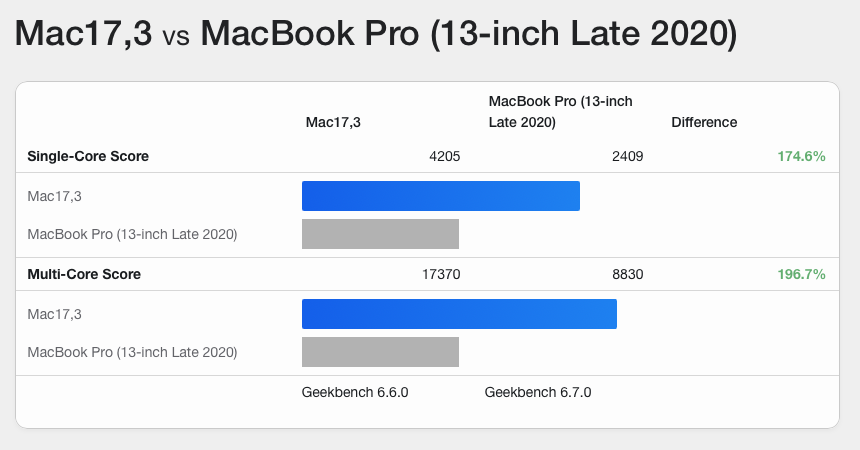
The CPU performance also sees a considerable uplift, though the exact figures are still being fully benchmarked across a wider range of applications. However, the claim of performance roughly equivalent to two M1 chips combined is a powerful indicator of the M5’s raw processing power. To put this into perspective, the M1 chip, when introduced in 2020, was hailed for its revolutionary performance-per-watt and its ability to handle tasks previously exclusive to more powerful Intel-based Macs. Comparing a 13-inch M5 MacBook Air to a 13-inch M1 MacBook Pro, the new model reportedly offers a 174% performance increase. While this doesn’t quite double the performance, the proximity to that milestone underscores the rapid and significant advancements Apple has made in its silicon development over the past five years. This generational leap means that everyday tasks will feel even more instantaneous, while more demanding workloads, such as video editing, code compilation, and complex simulations, will be handled with unprecedented speed and fluidity on a MacBook Air.
Enhanced Storage and Next-Generation Connectivity
Beyond the core processing power, the M5 MacBook Air sees significant upgrades in its storage and connectivity options. The base storage configuration has been bumped to a generous 512GB SSD, a welcome increase that addresses the needs of users who require ample space for their operating system, applications, and media files. For those who need even more capacity, the storage can be configured all the way up to a massive 4TB, albeit with a substantial price increase of $1200. This expanded storage capability ensures that the M5 Air can cater to a wider range of professional and creative users who often deal with large datasets and high-resolution media.

A notable addition is Apple’s proprietary N1 wireless networking chip, which integrates Wi-Fi 7, Bluetooth, and Thread capabilities. This new chip is engineered to significantly reduce battery consumption, particularly when handling location tracking services. Wi-Fi 7, with theoretical speeds of up to 46 Gb/s, promises a dramatic increase in wireless network performance, potentially matching or even exceeding the speeds of Thunderbolt 4 in certain scenarios. This translates to faster downloads, smoother streaming of high-bandwidth content, and more responsive cloud-based applications. The inclusion of advanced Bluetooth and Thread protocols also positions the M5 Air as a more capable hub for smart home devices and future connectivity standards.
Memory Bandwidth and Power Delivery Innovations
The M5 chip also benefits from an increased memory bandwidth, now reaching 153 GB/s. This is achieved through the utilization of cutting-edge mobile memory technology, specifically 4800 MHz LPDDR5X-9600. Enhanced memory bandwidth is crucial for overall system performance, allowing the CPU and GPU to access data more rapidly. This directly impacts the responsiveness of applications, the smoothness of multitasking, and the efficiency of graphics-intensive operations. For users pushing the limits of their machines, this increased memory bandwidth will be a tangible performance improvement.

Complementing these internal upgrades is a new 40-Watt dynamic charger, with a maximum output of 60W. This replaces the previous 35-Watt Dual USB-C compact adapter, offering a slight increase in charging speed and potentially more efficient power delivery. While not a revolutionary change, it indicates Apple’s continued focus on optimizing the power ecosystem for its devices.
The Dawn of Apple Intelligence on the Go
The introduction of the M5 chip also solidifies the MacBook Air’s position as a device capable of fully leveraging Apple Intelligence. Apple’s suite of AI-powered features, designed to enhance productivity and creativity, is now supported on any Mac equipped with Apple Silicon. This includes features such as advanced writing tools, sophisticated image generation, and more personalized Siri interactions. The M5 MacBook Air, with its powerful chip and efficient architecture, is perfectly positioned to deliver these advanced AI capabilities seamlessly, making it an even more compelling tool for professionals and creatives alike. The broader support for Apple Intelligence across M-series iPads and A17 Pro-equipped iPhones further solidifies Apple’s commitment to an integrated AI experience across its ecosystem.
Practical Considerations: Closed Lid Mode and Battery Life
For users who prefer a desktop-like experience with an external display, the M5 MacBook Air continues to support "closed lid" or "clamshell" mode. This feature allows the built-in display to be turned off, dedicating all unified memory and processing power to one or two external displays. To utilize this mode, the MacBook Air must be connected to AC power and paired with an external display, along with a USB or Bluetooth keyboard and mouse. Upon waking the system and then closing the lid, the MacBook Air will operate solely through the external setup. This functionality makes the MacBook Air a versatile option for users who need both portability and a capable desktop workstation.
Apple continues to tout impressive battery life for the MacBook Air. The M5 model is rated for up to 15 hours of wireless web browsing and an extended 18 hours of video streaming. These figures, while subject to real-world usage variations, suggest that the M5 chip’s efficiency optimizations are paying dividends, allowing users to work or play for extended periods without needing to reach for a charger. This enduring battery life remains a cornerstone of the MacBook Air’s appeal, ensuring it can keep up with demanding schedules.

Technical Specifications and Cache Architecture
Delving deeper into the technical specifications, the M5 chip features a sophisticated cache architecture designed to maximize performance and minimize latency. The L1 Instruction Cache (L1i) and L1 Data Cache (L1d) are crucial for immediate access to frequently used instructions and data. While specific sizes are not always disclosed by Apple, the efficiency of these caches is a key factor in the chip’s overall speed. The System Level Cache (SLC) acts as a larger, shared cache that further reduces the need to access main memory, contributing to faster overall processing. All M5 chips reportedly share a consistent memory configuration for their CPU caches, indicating a standardized approach to performance optimization across the M5 family.
The memory configuration for the M5 chip utilizes 4800 MHz LPDDR5X-9600, providing the aforementioned 153 GB/s of memory bandwidth. This high-speed, low-power memory technology is essential for supporting the demanding workloads that the M5 chip is capable of handling.
Wider Implications and Market Position
The introduction of the M5 MacBook Air with such significant performance gains, particularly in graphics and overall processing power, solidifies its position in the market. It moves beyond being just a lightweight ultrabook and increasingly encroaches on the territory previously occupied by more powerful, and often more expensive, laptops. The ability to achieve near MacBook Pro levels of graphical performance in a fanless design is a remarkable engineering feat that will appeal to a broad spectrum of users, from students and general consumers to creative professionals and developers.
The continued investment by Apple in its custom silicon, coupled with advancements in areas like Wi-Fi 7 and integrated AI capabilities, suggests a strategic vision focused on delivering seamless, powerful, and efficient computing experiences. As the M5 MacBook Air enters the market, it sets a new benchmark for ultra-portable performance, offering a compelling blend of power, portability, and advanced technology that is poised to redefine user expectations for the thin-and-light laptop category. The evolution from the M1 to the M5 chip in just five years is a clear indicator of Apple’s aggressive pace of innovation and its commitment to pushing the boundaries of personal computing.