Chalid Lutfie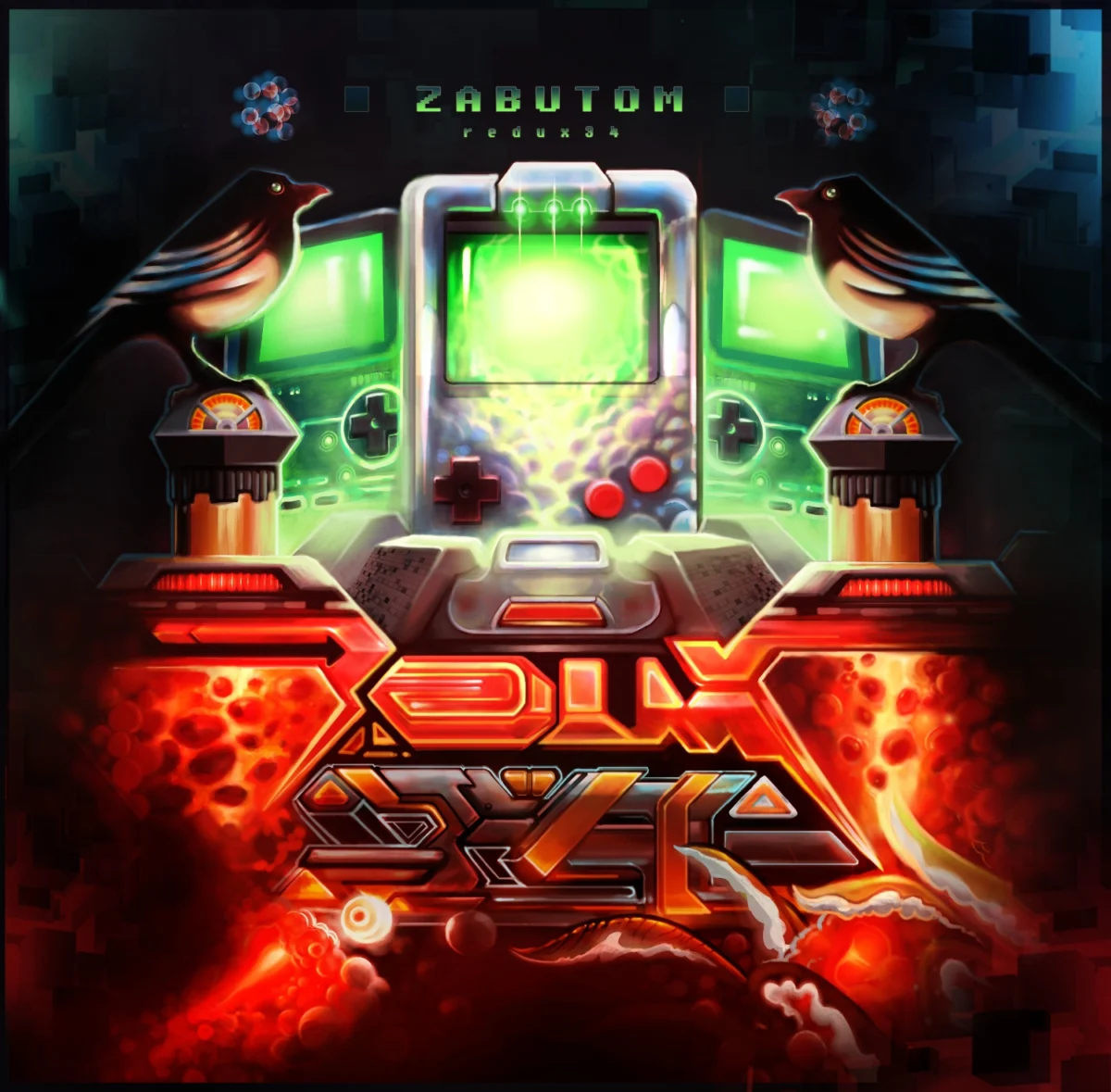
The landscape of contemporary electronic music witnessed a significant milestone on September 18, 2015, with the release of Redux34, the latest full-length studio album from the Swedish composer and chiptune pioneer Niklas Sjösvärd, known professionally as zabutom. Released under the Ubiktune label, Redux34 represents a sophisticated evolution of the 8-bit aesthetic, moving beyond the nostalgic constraints of early video game music to embrace a complex synthesis of progressive rock, IDM (Intelligent Dance Music), and folk-inspired textures. This release marks a pivotal moment in Sjösvärd’s career, occurring just a year after his formal academic graduation and serving as a culmination of nearly a decade of technical experimentation and creative perseverance.
The Artistic Evolution of Niklas Sjösvärd
Niklas Sjösvärd, born in 1985, belongs to a generation of Scandinavian musicians who transitioned from the underground "demoscene" of the early 2000s into the broader world of professional electronic composition. The demoscene—a computer art subculture focused on producing self-contained programs that generate audio and visuals in real-time—provided the foundational technical skills that Sjösvärd would later refine. Throughout the first decade of the millennium, he became a fixture in chiptune circles, contributing to numerous compilations and performing live at international festivals dedicated to hardware-restricted music.
In 2011, Sjösvärd released Zeta Force on the Ubiktune label. The album was largely a retrospective collection, featuring high-energy compositions reminiscent of 1980s and 1990s "shmup" (shoot ’em up) arcade soundtracks. While Zeta Force established zabutom as a master of the Nintendo Entertainment System (NES) and Gameboy sound chips, it remained firmly rooted in the tropes of the genre.
The years following Zeta Force saw Sjösvärd pursuing a formal education in music theory and electronic production. In 2014, he earned a Bachelor’s degree in Composition and Electronic Music from the Academy of Music and Drama at the University of Gothenburg. This academic immersion provided him with the tools to integrate disparate musical traditions—such as the complex time signatures of progressive rock and the organic instrumentation of folk—into his established digital workflow. Redux34 is the first major output following this period of intense study, reflecting a heightened level of production quality and structural complexity.
The Narrative and Technical Genesis of Redux34
The development of Redux34 was characterized by a series of technical setbacks and creative shifts that spanned seven years. The title itself serves as a testament to the album’s arduous journey. According to Sjösvärd, the concept for the title track began in 2008 during his early years of performing with Gameboys. While utilizing Little Sound DJ (LSDJ)—a popular software tool for composing music on the Nintendo Gameboy—Sjösvärd experienced a catastrophic hardware failure. The LSDJ cartridge crashed just as the foundational elements of the track were completed, resulting in the total loss of all saved data.

The necessity of recreating the work from memory led to the designation "Redux," while "34" refers to the track’s 3/4 time signature. This theme of loss and reconstruction became a recurring motif throughout the album’s production. Several tracks faced similar fates, with lost patterns, corrupted settings, and vanished mixes requiring Sjösvärd to return to the proverbial drawing board multiple times. This "redux" philosophy extends beyond technical recovery; it represents the artist’s return to his chiptune roots after exploring avant-garde electronic music, modular techno with the "Buchla Boys," and acoustic folk projects like Fowlcloud.
Technical Composition and Sound Design
Redux34 distinguishes itself through a "retro-futuristic" production style that avoids the thin, tinny quality often associated with low-bitrate music. Instead, the album features expansive soundscapes where 8-bit "bleeps" are treated with the same weight as traditional instruments. The sonic palette of the album is diverse, incorporating:
- Hardware-Based Chiptune: Utilizing the internal sound chips of the NES and Gameboy to provide a rhythmic and melodic foundation characterized by pulse waves and triangle-wave basslines.
- Analog Synthesis: The addition of warm, thick textures from analog synthesizers provides a modern contrast to the sharp edges of the digital 8-bit sounds.
- Electric and Acoustic Instrumentation: The integration of electric guitars and folk-inspired acoustic elements bridges the gap between digital synthesis and organic performance.
- Advanced Spatial Processing: The use of "spaced out" delay textures and sophisticated reverb creates a sense of depth and three-dimensionality, a departure from the flat, dry output of original vintage hardware.
The album’s stylistic breadth is particularly evident in its fusion of IDM and progressive rock. Tracks on Redux34 often eschew standard 4/4 pop structures in favor of shifting meters and episodic movements. This approach aligns the album with the "prog-chip" subgenre, which seeks to elevate chiptune to the level of complexity found in 1970s art rock.

Collaborative Visual Identity
The immersive quality of Redux34 is further enhanced by its visual presentation. The album features original artwork by Anders Karlsson, a concept artist and painter based in Norrköping, Sweden. Karlsson’s illustrations depict mysterious, melancholic, yet hopeful alien vistas that mirror the "retro-futuristic" vision of the music. The synergy between the audio and the visual components suggests a cohesive world-building effort, positioning the album as a narrative experience rather than a mere collection of songs.
Chronology of Development
The timeline of Redux34 provides insight into the meticulous nature of Sjösvärd’s creative process:
- 2008: Initial compositions begin on Gameboy hardware. The "Redux34" title track is lost due to a cartridge crash and subsequently reconstructed.
- 2008–2011: Sjösvärd performs early versions of the tracks at chiptune festivals, refining the live energy of the compositions.
- 2011: Release of Zeta Force, which serves as a stylistic bookend to Sjösvärd’s early "pure" chiptune era.
- 2012–2014: Enrollment in the Academy of Music and Drama. Sjösvärd engages in side projects involving modular synthesis and folk music, which begin to influence the direction of Redux34.
- 2014: Post-graduation, Sjösvärd focuses on the final production and mixing of the album, incorporating high-fidelity studio techniques to blend digital and analog elements.
- Early 2015: Collaboration with Anders Karlsson for the album’s visual concept and artwork.
- September 18, 2015: Redux34 is officially released globally on digital and physical formats.
Industry Context and Broader Implications
The release of Redux34 occurs within a broader trend of "chip music" moving into the mainstream consciousness and academic spheres. In the mid-2010s, the novelty of 8-bit sounds began to give way to a more nuanced appreciation of hardware-limited composition as a legitimate art form. Sjösvärd’s bachelor’s degree in the field exemplifies this shift toward academic validation.

Industry analysts note that the Ubiktune label has been at the forefront of this movement, consistently releasing albums that challenge the boundaries of what chiptune can be. By incorporating elements of IDM and folk, Redux34 appeals to a wider demographic of electronic music listeners who may not have a background in retro gaming but appreciate high-concept production and complex song structures.
Furthermore, the album’s "melancholic yet hopeful" tone resonates with a contemporary audience that finds comfort in the intersection of nostalgia and futurism. The success of the album on major streaming services and the demand for physical CD releases suggest a robust market for physical media among collectors and audiophiles within the electronic community.
Conclusion
Redux34 is more than a collection of tracks; it is a document of an artist’s growth and a testament to the resilience of the creative spirit in the face of technical failure. Niklas Sjösvärd has successfully synthesized his demoscene heritage with formal musical training, resulting in a work that is both technically impressive and emotionally resonant. As the chiptune genre continues to evolve, Redux34 stands as a definitive example of how vintage limitations can be leveraged to create modern, sophisticated, and boundary-pushing music. The album is currently available across all major digital platforms and in physical formats, marking a new chapter for one of Sweden’s most innovative electronic composers.