 Farhan hamdan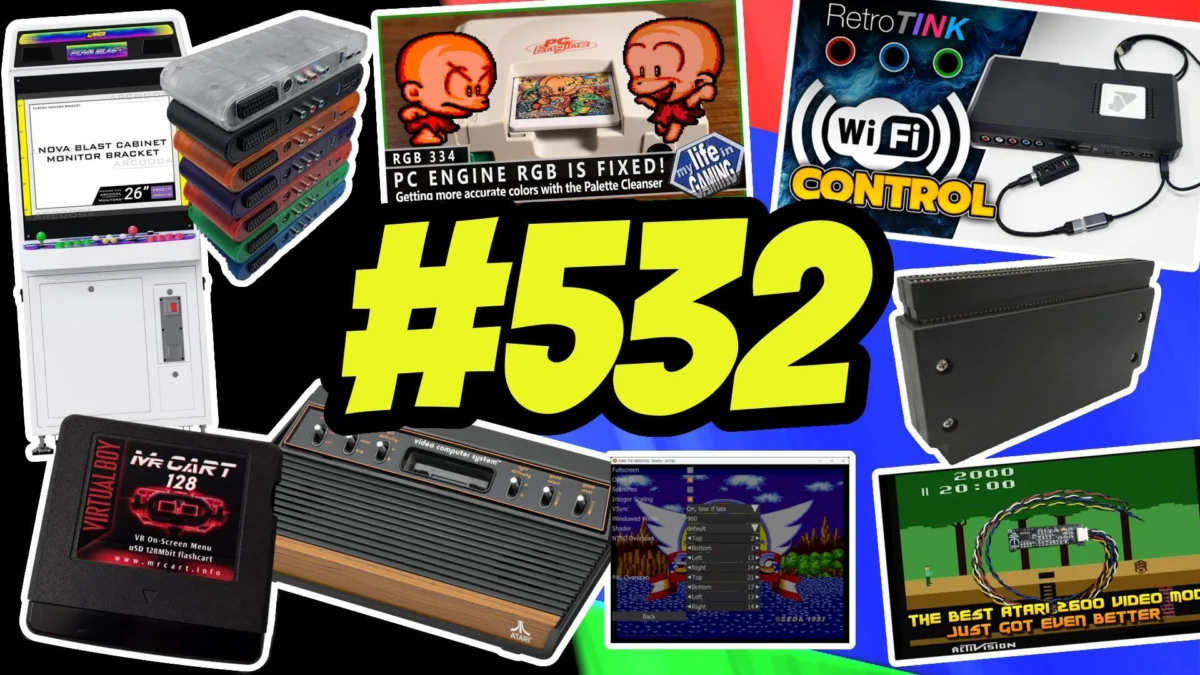
The retro gaming community continues to experience an unprecedented renaissance in hardware preservation, modification, and modern display compatibility, as highlighted in the latest industry digest. Released on September 23, 2026, Weekly Roundup #532 aggregates a substantial array of technological breakthroughs, aftermarket hardware launches, and community-driven engineering feats designed to keep vintage gaming hardware relevant and functional for contemporary enthusiasts. From advanced video signal processors and custom cartridge adapters to long-awaited software milestones like BlastEm v1.0, the retro computing landscape is evolving past mere emulation into sophisticated physical preservation.
As modern displays increasingly abandon analog inputs in favor of high-definition digital interfaces, the demand for precise signal conversion, latency-free adapters, and high-fidelity restorations has reached an all-time high. This week’s developments underscore a broader industry shift: hardware modifications are no longer crude, experimental soldering projects, but rather precision-engineered enhancements that rival modern consumer electronics in build quality and performance output.
Main Facts and Hardware Highlights
The latest roundup covers a diverse spectrum of retro platforms, ranging from classic 8-bit systems like the Atari 2600 to 16-bit powerhouses, arcade hardware, and virtual reality pioneers. Among the most notable hardware announcements are the new RetroTINK wireless control adapters, developed in collaboration with DonutShop and Retro Bridge. These adapters aim to bridge the gap between legacy controller ports and modern wireless peripherals, offering input responsiveness critical for twitch-based retro titles.
In the arcade sector, Arcooda has introduced specialized 4K 26-inch display brackets tailored for Unico Nova Blast monitor replacements. This development provides arcade operators and collectors with a seamless method to integrate modern, ultra-high-definition visual technology into classic cabinet architectures without compromising structural integrity.
Meanwhile, Atari enthusiasts received a significant boost with multiple hardware revisions targeting the iconic 2600. The introduction of the Lumacode 2600 mod, alongside the Tiara V2 improved composite and S-video modification, demonstrates a continued dedication to extracting cleaner, more accurate video signals from hardware originally designed for RF television broadcasts in the late 1970s. Complementing these internal modifications is the upcoming Lumacode RGB and YPbPr converter, designed to standardize high-grade video output across multiple display types.
Chronology of Recent Retro Developments
The trajectory leading up to the September 23, 2026 roundup has been defined by incremental yet rapid engineering milestones over the preceding months. The retro hardware ecosystem has steadily transitioned from niche hobbyist forums to organized commercial production runs, allowing complex modifications to reach a global consumer base.
Earlier in the year, display upscaling technology set a high benchmark, paving the way for advanced color correction tools and signal digitizers. The release of Zaxour’s palette cleanser for the PC Engine—designed to correct inaccurate RGB colors over standard configurations—highlights a growing emphasis on historical authenticity. For decades, players experienced modified or default color palettes that deviated from original developer intent due to hardware limitations or conversion errors. The new palette solution systematically addresses these discrepancies, offering purists an authentic visual experience.
Following these visual corrections, software preservation hit a monumental milestone with the official release of BlastEm v1.0. As one of the most accurate and efficient Sega Genesis/Mega Drive emulators in existence, reaching version 1.0 signifies full feature completion, robust stability, and widespread compatibility across various operating systems and hardware architectures, including low-power devices.
In the portable and cartridge-based hardware sphere, the introduction of the MrCart-128 ROM cartridge for the Virtual Boy breathes new life into Nintendo’s notoriously short-lived stereoscopic 3D console. By facilitating homebrew distribution and backup execution on original hardware, storage solutions like the MrCart-128 ensure that the Virtual Boy’s library remains accessible despite the degradation of original physical media. Furthermore, the commercial availability of the Morph 2K and Furrtek’s MVS-to-AES cartridge adapter—now readily available through US distributors—demonstrates the maturing supply chain for high-end Neo Geo and multi-platform accessories.

Supporting Data and Technical Implications
The commercial viability of these aftermarket solutions is underpinned by significant advancements in FPGA (Field Programmable Gate Array) technology, custom PCB manufacturing, and accessible surface-mount assembly. Independent hardware developers are increasingly utilizing automated manufacturing processes to ensure reliability, solder joint longevity, and consistent signal integrity.
For instance, the integration of digital-to-analog and analog-to-digital signal paths in devices like the Lumacode system requires stringent adherence to timing specifications to avoid input lag or visual artifacting. Independent benchmark tests across community testing grounds indicate that modern retro adapters consistently achieve sub-frame latency, a critical metric for competitive retro gaming and speedrunning communities.
Data collected from hardware distributors indicates that demand for premium video cables, upscalers, and ODEs (Optical Drive Emulators) has grown exponentially year-over-year. Consumers are increasingly willing to invest in high-end solutions—such as 4K arcade monitor upgrades and specialized FPGA cartridges—to future-proof their vintage collections against component failure and aging cathode-ray tube (CRT) displays.
Official Responses and Community Reactions
While major multinational consumer electronics manufacturers largely ignore legacy hardware preservation, the developer and consumer community has established a robust self-sustaining ecosystem. Independent creators, open-source contributors, and boutique hardware vendors operate in close synergy, frequently gathering at industry events to demonstrate upcoming hardware revisions.
A prime example of this community momentum occurred recently at the Tokyo Game Show, where the Neo Geo AES+ hardware was publicly demonstrated. The presentation drew significant crowds, signaling strong commercial and nostalgic interest in SNK’s iconic 24-bit platform. Observers at the event noted that the enthusiasm surrounding the AES+ and related hardware mods proves that retro gaming is viewed not merely as a nostalgic pastime, but as a vibrant, living culture of hardware appreciation.
Related parties, including boutique modders and content curators, have emphasized that educational outreach is vital. By demystifying complex technical modifications through detailed video documentation, weekly roundups, and open-source schematics, the community empowers users to safely upgrade and maintain aging electronics rather than discarding them.
Broader Impact and Industry Implications
The continuous evolution of retro gaming hardware modifications carries significant implications for the broader tech and entertainment industries. First, it directly challenges the planned obsolescence model prevalent in modern consumer electronics. By demonstrating that hardware from the 1970s, 80s, and 90s can be indefinitely repaired, upgraded, and adapted to modern 4K displays, the retro community champions a sustainable philosophy of hardware longevity.
Second, the sophisticated engineering required to reverse-engineer custom chips—such as the Atari TIA or NEC HuC6280—fosters high-level technical skills in digital logic design, embedded systems, and PCB layout among independent developers. Many of the techniques pioneered in the retro modification scene find secondary applications in industrial maintenance, electronic repair, and vintage computer restoration.
Finally, the economic impact of boutique hardware manufacturing cannot be understated. Small enterprises specializing in niche adapters, custom shells, and replacement displays contribute to a thriving secondary economy that supports component suppliers, logistic networks, and content creators alike. As long as dedicated communities continue to invest time, capital, and ingenuity into preserving digital heritage, the hardware ecosystem surrounding retro gaming will remain remarkably resilient and innovative.