Farhan hamdan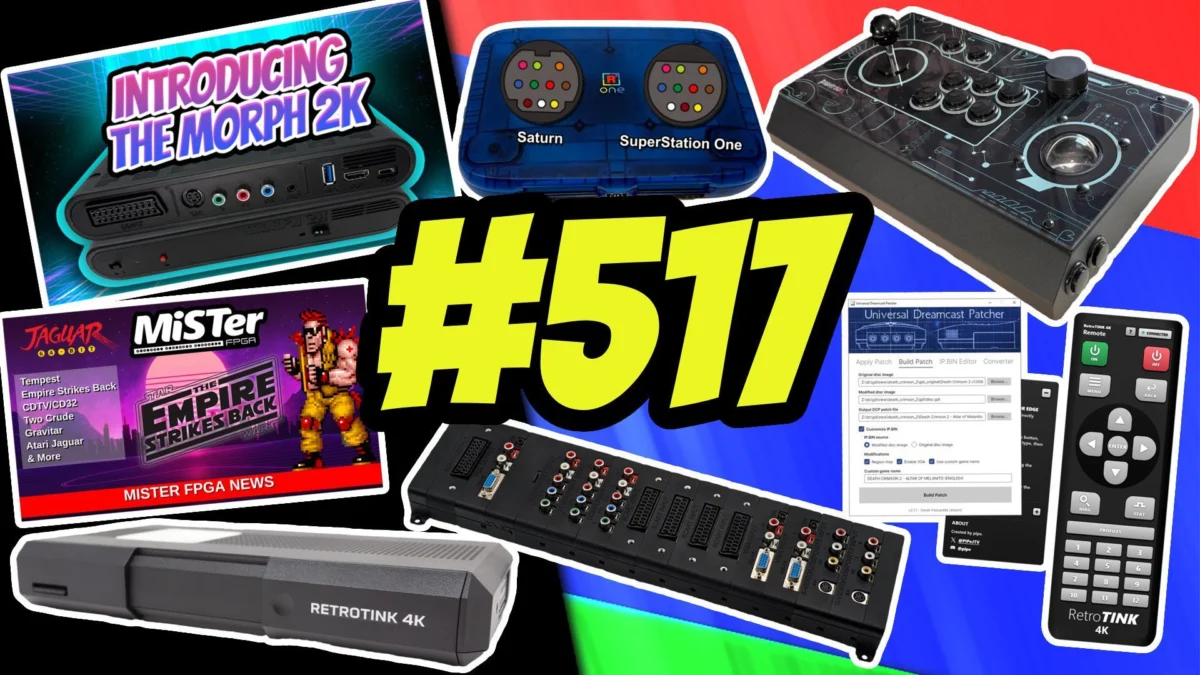
Major Hardware and Firmware Innovations Drive Retro Gaming Evolution
The retro gaming community continues to witness significant innovation in hardware and firmware, aimed at enhancing the fidelity, accessibility, and longevity of classic gaming experiences. Among the most anticipated developments are crucial updates for the RetroTINK 4K, a leading video upscaler, and the introduction of advanced transcoder modules, alongside detailed reviews of specialized gaming peripherals.
RetroTINK 4K Receives Significant Enhancements
The RetroTINK 4K, a premium solution for upscaling analog video signals from classic consoles to modern displays, has received two pivotal updates that significantly augment its capabilities and user experience. The RT4K USB PC Remote functionality introduces a new paradigm for device control. Previously, users primarily interacted with the unit via its on-device interface. This new USB PC control integration allows for direct management and fine-tuning of the RetroTINK 4K’s extensive settings through a connected personal computer. This development is particularly significant for streamers, content creators, and enthusiasts who require precise control over video output, often needing to adjust parameters on the fly or integrate the upscaler into complex production workflows. The ability to manage settings from a desktop interface streamlines configuration, offers greater accessibility, and potentially enables more sophisticated scripting or automation for video output profiles. This move aligns with the increasing demand for integrated, software-driven control mechanisms in high-end AV equipment.
Following this, the RT4K Modeline Upgrade Firmware (v1.21.0) has been released, expanding the device’s compatibility and output flexibility. Modelines define the specific timing parameters for video signals, and an expanded library of these allows the RetroTINK 4K to support a broader array of resolutions, refresh rates, and display timings. This update directly addresses the diverse and often idiosyncratic video outputs of various retro consoles and arcade boards, ensuring that users can achieve optimal display results on a wider range of modern televisions and monitors. The continuous refinement of modelines is crucial for eliminating visual artifacts such as screen tearing, input lag, or incorrect aspect ratios, which can plague retro gaming setups. This firmware update underscores the manufacturer’s commitment to continuous improvement and adapting the RetroTINK 4K to the ever-evolving ecosystem of retro gaming displays and source hardware.
Scalable Video Switch (SVS) Transcoder Modules Emerge
Another notable hardware development is the introduction of Scalable Video Switch (SVS) Transcoder Modules. While specific details regarding the full SVS system were not exhaustively detailed in the roundup, the availability of these transcoder modules signifies a modular approach to video signal conversion. Transcoders are essential components in retro gaming setups, responsible for converting one type of video signal (e.g., RGB, YPbPr, S-Video) to another, often to ensure compatibility with modern displays or capture devices. A modular SVS system suggests that users can customize their video signal processing chain by selecting specific transcoder modules as needed. This flexibility can be invaluable for advanced users and professional setups dealing with a multitude of retro consoles, each potentially requiring different signal conversions. The modularity could also offer future-proofing, allowing users to upgrade or swap components as new standards or needs arise, potentially reducing overall costs compared to purchasing entirely new integrated units. The emphasis on "scalable" further implies a system designed to grow with a user’s collection and requirements, a significant advantage in the diverse world of retro video.
Morph 2K Review: A New Contender in Video Processing
The roundup also featured a comprehensive review of the Morph 2K, a device that appears to be a new entrant in the video processing landscape for retro gaming. While the full review details require consulting the linked article, the inclusion of the Morph 2K suggests a growing market for dedicated video solutions beyond established brands. Devices like the Morph 2K typically aim to provide high-quality video conversion or upscaling, often with a focus on specific features or price points that differentiate them from competitors. The review likely assesses its performance in terms of image quality, input lag, compatibility, and user interface, providing valuable insights for consumers considering alternatives to more prominent options. The emergence of new hardware contenders encourages innovation across the industry, often leading to more specialized features, competitive pricing, and a broader range of choices for consumers.
MiSTer FPGA Platform Sees Extensive Core Updates
The MiSTer FPGA project, a highly regarded open-source hardware platform for recreating classic console and arcade hardware through Field-Programmable Gate Arrays (FPGAs), continues to be a focal point of development. The June 10th roundup highlighted two significant collections of updates: Major MiSTer Updates to Many Cores Released and Lu’s MiSTer Updates (June 4th).
The significance of MiSTer lies in its ability to offer hardware-level accuracy, distinguishing it from software emulation. By reconfiguring the FPGA chip to mimic the original hardware circuitry, MiSTer provides an experience that is virtually indistinguishable from playing on original consoles, without the inherent input lag or compatibility issues often associated with software emulators.
The "Major MiSTer Updates" signify a broad sweep of improvements across numerous console and arcade cores. These updates typically encompass a range of enhancements: improved compatibility with game libraries, bug fixes addressing graphical glitches or sound inaccuracies, performance optimizations, and the addition of new features such as save states, cheats, or display options. Such widespread updates are crucial for the ongoing refinement of the MiSTer platform, ensuring that a continuously expanding catalog of games runs with the highest possible fidelity. The collaborative, open-source nature of the MiSTer project means that these updates are often the result of contributions from a global community of developers, testers, and enthusiasts, reflecting a collective effort to perfect digital preservation.
Concurrently, Lu’s MiSTer Updates (June 4th) specifically reference contributions from a prominent developer within the MiSTer community. Developers like "Lu" are instrumental in advancing the platform, often focusing on specific cores or addressing complex technical challenges. These individual contributions frequently involve deep dives into the intricacies of original hardware, reverse-engineering undocumented features, and meticulously translating them into FPGA logic. Lu’s updates, like those from other dedicated developers, are vital for expanding the MiSTer’s library of supported systems and improving the accuracy of existing cores. The continuous stream of updates, both broad and specific, underscores the dynamic and rapidly evolving nature of the MiSTer FPGA ecosystem, cementing its position as a cornerstone of modern retro gaming.

Software Enhancements and Community Tools Streamline Retro Experiences
Beyond hardware, the retro gaming community benefits immensely from ongoing software development and community-driven tools designed to improve compatibility, correct errors, and enhance gameplay.
Universal Dreamcast Patcher Receives Complete Rewrite
A significant announcement for Sega Dreamcast enthusiasts is the Complete Rewrite of Universal Dreamcast Patcher. The Dreamcast, a console revered for its innovative games and forward-thinking features, often requires patching for various reasons, including region unlocking, fan translations, or applying unofficial fixes and enhancements. A "complete rewrite" suggests a fundamental overhaul of the tool’s codebase, likely resulting in improved stability, greater compatibility with different game versions and operating systems, and potentially a more user-friendly interface. Older versions of such tools can become outdated as operating systems evolve or as new patching techniques emerge. This rewrite promises a more robust and efficient patching solution, making it easier for users to customize their Dreamcast game libraries, access fan-made content, and overcome regional restrictions, thus extending the life and playability of Dreamcast titles. The statement "now better than ever" indicates a significant leap in its functionality and reliability, directly benefiting the console’s dedicated fanbase.
SuperStation One L&R Audio Reversal Fix
A specific, yet important, technical correction highlighted in the roundup pertains to the SuperStation One L&R audio reversal. In audio setups, correct channel orientation (left and right) is critical for an immersive and accurate sound experience, particularly in games where directional audio cues are important. An audio reversal issue, where the left channel plays through the right speaker and vice versa, can be distracting and diminish the intended sound design. The announcement of a fix for this issue, specifically for the SuperStation One via a MiniDIN connection, demonstrates the community’s meticulous attention to detail and commitment to resolving even subtle inaccuracies. Such fixes, while seemingly minor, contribute significantly to the overall authenticity and quality of the retro gaming experience, ensuring that enthusiasts can enjoy their games precisely as developers intended, from visual fidelity to audio presentation.
Peripherals and Technical Maintenance: Supporting the Retro Ecosystem
The roundup also touched upon new gaming peripherals and essential technical maintenance, highlighting the practical aspects of sustaining a retro gaming setup.
Fightbox R10 Pro Arcade Stick Review
For fighting game aficionados and arcade enthusiasts, the review of the Fightbox R10 Pro Arcade Stick provides valuable insights. Arcade sticks are specialized controllers designed to replicate the feel and precision of arcade cabinets, offering a distinct advantage in fighting games and other genres. The "Pro" designation typically implies high-quality components, robust construction, and advanced features tailored for competitive play. A review of such a peripheral would assess factors like button and joystick responsiveness, build quality, ergonomics, compatibility with various platforms (PC, consoles), and overall value. The inclusion of this review in the roundup caters to a specific segment of the retro gaming community that prioritizes authentic control schemes and precision input, recognizing that the controller is as integral to the experience as the console or game itself. The market for arcade sticks is diverse, and comprehensive reviews help consumers navigate options to find the best fit for their playstyle and budget.
UPS Battery Replacement: Ensuring System Longevity
Beyond gaming specifics, the roundup included a practical guide on UPS Battery Replacement. An Uninterruptible Power Supply (UPS) is a critical component for protecting valuable electronics, including retro gaming setups, from power fluctuations, surges, and outages. The batteries within a UPS have a finite lifespan, typically 3-5 years, and require periodic replacement to maintain their protective capabilities. This guide serves as a crucial reminder for users about preventative maintenance for their equipment. A failing UPS battery can lead to unexpected shutdowns, potential data corruption on connected devices, or even damage to sensitive retro hardware. Providing a step-by-step guide for battery replacement empowers users to maintain their power protection systems effectively, ensuring the longevity and stable operation of their entire retro gaming infrastructure. This practical advice underscores the comprehensive nature of the roundup, extending beyond just new products to cover essential operational aspects.
Community Support and Future Implications
The continued development and refinement across all facets of the retro gaming landscape, as highlighted in Weekly Roundup #517, underscore a thriving and dedicated community. The numerous updates for MiSTer FPGA cores, the advanced capabilities of the RetroTINK 4K with its new firmware and PC control, and the ongoing support for classic consoles like the Dreamcast, collectively demonstrate a robust commitment to both the preservation and enhancement of retro gaming experiences. These efforts ensure that classic titles remain accessible, playable, and enjoyable on modern hardware, often surpassing the original experiences in terms of visual fidelity and convenience.
The emphasis on community contributions, evident in both open-source projects like MiSTer and the continuous feedback loops that drive commercial hardware improvements, is a testament to the collaborative spirit within the retro gaming world. The roundup concludes with a vital call for community support via monthly services, tips, and affiliate links, acknowledging that these extensive development and content creation efforts are often sustained by the direct engagement and financial contributions of enthusiasts. This model of community-driven development and support is crucial for the ongoing innovation and long-term viability of the retro gaming ecosystem, ensuring that new hardware, software, and technical insights continue to emerge and enrich the hobby for years to come. The collective output detailed in this roundup reinforces the notion that retro gaming is not merely a nostalgic pursuit but a dynamic field of technological advancement and passionate preservation.