Farhan hamdan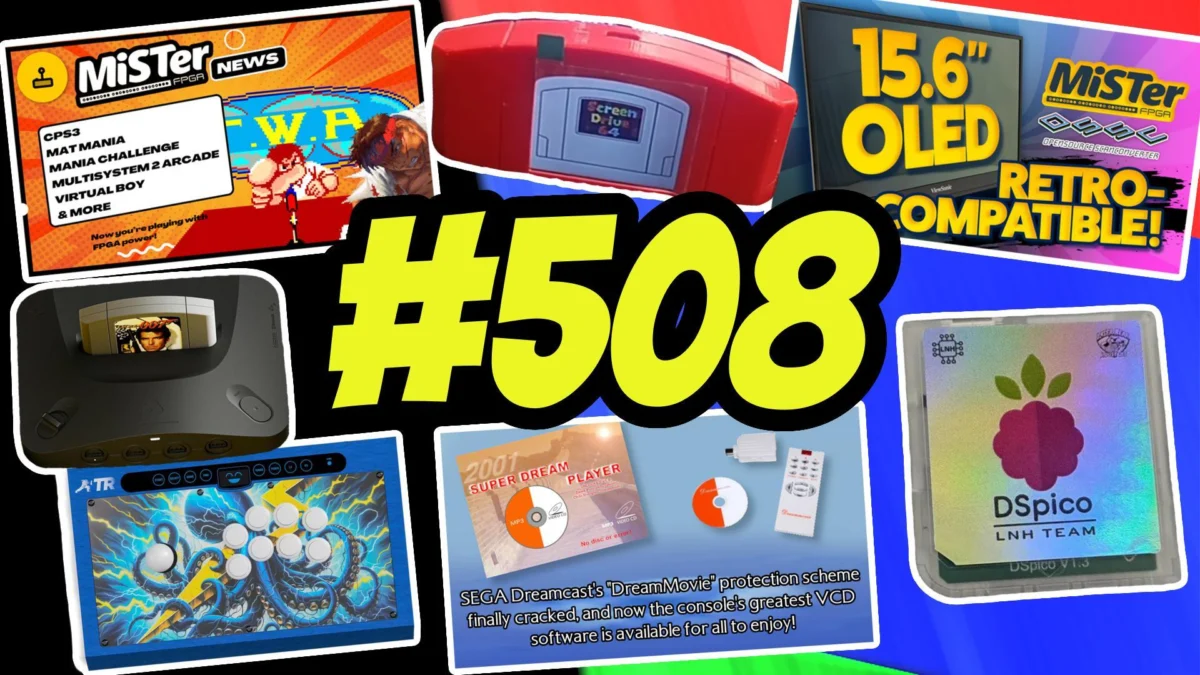
The retro gaming community received its weekly digest of critical updates, new hardware developments, and significant software advancements on April 8th, 2026, via the RetroRGB platform’s 508th weekly roundup. This comprehensive overview, available across video and major audio podcast services including iTunes, Google Podcasts, Stitcher, Spotify, and Amazon Music, highlighted a diverse array of topics ranging from troubleshooting existing emulation systems to unveiling innovative display technologies and crucial firmware enhancements for modern retro-inspired consoles. The roundup serves as a vital informational hub for enthusiasts, developers, and hardware modders navigating the perpetually evolving landscape of classic gaming preservation and enhancement.
Key Developments in Retro Gaming Hardware & Emulation
The April 8th roundup underscored several pivotal moments shaping the retro gaming experience, reflecting both the ongoing challenges and the relentless innovation within the community. These updates touch upon fundamental aspects such as video signal integrity, audio processing, accessible hardware, and the continuous expansion of emulation capabilities.
RGB-Pi System: Addressing Persistent Sync and Video Challenges
A significant portion of the roundup dedicated time to a follow-up on the RGB-Pi 2 system, specifically addressing persistent sync and video output issues that have been a point of contention for users. The RGB-Pi project, which leverages Raspberry Pi hardware to output native analog RGB signals suitable for CRT televisions and professional monitors, has historically been lauded for its potential to deliver an authentic retro gaming experience without the complexities of original hardware. However, achieving stable and artifact-free video output, particularly regarding sync signals, has presented engineering challenges.
The "RGB-Pi 2 Tested: Sync Video Issues" discussion delved into detailed diagnostics, examining the intricacies of signal timing and compatibility across various display devices. The analysis highlighted that while significant progress has been made in general compatibility, certain edge cases and specific hardware configurations continue to exhibit instability. Experts within the community infer that these issues often stem from the inherent limitations of the Raspberry Pi’s video output architecture when tasked with generating highly precise, non-standard analog signals required by many retro displays. Solutions often involve intricate calibration, specific cabling, or additional line conditioning hardware. The implications for users are clear: while RGB-Pi offers a compelling, cost-effective solution for many, a degree of technical proficiency and troubleshooting patience remains necessary for optimal performance in all scenarios. Developers are reportedly continuing to refine software drivers and hardware interfaces to mitigate these lingering challenges, aiming for broader plug-and-play compatibility.
Laser Bear’s DSPico: Advancing Digital Signal Processing in Retro Setups
Innovation in audio fidelity for retro systems was a focal point with the spotlight on Laser Bear’s DSPico. This device represents a notable advancement in integrating sophisticated digital signal processing (DSP) capabilities into retro gaming setups. DSPico is designed to provide high-quality audio processing, often addressing shortcomings in original console audio or enhancing the output for modern audio systems. For instance, some older consoles exhibit noise, hum, or limited frequency response in their analog audio outputs. The DSPico can be inferred to meticulously convert, filter, and re-sample audio signals, potentially correcting these imperfections or adding features like virtual surround sound, equalisation, or dynamic range compression tailored for gaming.
The background context for DSPico lies in the broader movement to elevate the entire retro gaming experience beyond just video. As display technology improves, so too does the expectation for pristine audio. Prior to such dedicated solutions, enthusiasts often resorted to complex audio mixers, external DACs, or console modifications. DSPico aims to offer a more integrated and user-friendly solution. Its introduction implies a growing market demand for comprehensive enhancement solutions that treat audio with the same reverence as video. This development is particularly significant for audiophiles within the retro community, promising a cleaner, richer, and more customisable soundscape, enhancing immersion and authenticity for classic titles.
Octopus Fight Stick: A Strategic Price Adjustment for Enthusiasts
The retro gaming hardware market, particularly for competitive peripherals, saw a notable event with the announcement of a 75% off sale on the Octopus Fight Stick. This substantial price reduction immediately garnered attention, offering a high-performance arcade stick at an unprecedented entry point. The Octopus Fight Stick, known for its robust build quality, responsive buttons, and precise joystick, typically caters to serious fighting game enthusiasts and arcade purists who demand reliability and tactile feedback akin to traditional arcade cabinets.
Sales of this magnitude often suggest a strategic move by the manufacturer. While specific reasons were not detailed, such discounts can be attributed to several factors: clearing existing inventory before a new model release, expanding market reach to a broader demographic, or responding to competitive pressures within the niche fight stick market. The implications for consumers are significant, as it democratises access to premium-tier peripherals that might otherwise be cost-prohibitive. This move could introduce a new wave of players to the competitive retro fighting game scene, potentially boosting community engagement and participation in online and local tournaments. From a market perspective, it could also influence pricing strategies of competitors, leading to a more dynamic and accessible market for high-quality retro gaming controllers.
MiSTer FPGA Ecosystem: Expansive Core Updates and Emulation Milestones
The MiSTer FPGA project continues its trajectory as a cornerstone of modern retro gaming, and the latest roundup highlighted several groundbreaking core updates. MiSTer (Multi-video game System for Transcoding Emulation and Recreation) leverages Field-Programmable Gate Arrays to re-create classic console and arcade hardware at a transistor level, offering unparalleled accuracy and minimal latency compared to software emulation.
Lu’s MiSTer Updates section detailed significant progress, including:
- Virtual Boy Core: The addition of a functional Virtual Boy core is a remarkable achievement. Emulating the unique dual-screen, monochromatic red display of Nintendo’s ill-fated console presents distinct challenges. The MiSTer core brings the Virtual Boy’s limited but historically significant library to a modern, more comfortable display environment, allowing players to experience titles like Wario Land and Panic Bomber without the original hardware’s infamous eye strain.
- Mat Mania Core: The integration of the Mat Mania arcade core (also known as Exciting Hour in Japan) expands MiSTer’s already vast arcade library. This 1985 wrestling arcade classic, developed by Technōs Japan, is a cult favourite, and its accurate FPGA recreation further solidifies MiSTer’s role in arcade preservation.
- CPS3 Core Enhancements: Continuous improvements to the CPS3 (Capcom Play System 3) core are critical. CPS3, known for its powerful 2D graphics and impressive sound, powered legendary fighting games like Street Fighter III and JoJo’s Bizarre Adventure. Refining this core ensures pixel-perfect graphics and accurate audio for these highly competitive titles, crucial for serious players and preservationists alike.
These updates collectively underscore the vibrant, community-driven development model of MiSTer FPGA. The project’s open-source nature allows a global network of developers to contribute, rapidly expanding its library of supported systems. The implications are profound for game preservation, offering a highly accurate and future-proof platform for experiencing digital heritage. The continuous expansion of cores also cements MiSTer’s position as a leading solution for enthusiasts seeking the most authentic retro gaming experience outside of original hardware.

ScreenDrive 64: Integrating Displays into N64 ROM Carts
An innovative development for the Nintendo 64 community was showcased with the ScreenDrive 64, an N64 ROM cart featuring an integrated LCD screen. This novel accessory represents a fusion of traditional flashcart functionality with modern display technology, offering a unique approach to portable N64 gaming. Historically, N64 flashcarts like the EverDrive series have allowed users to load ROMs from an SD card, but still required a console and a separate display.
The ScreenDrive 64, by incorporating its own display directly onto the cartridge, opens up possibilities for gaming on the go or in scenarios where a dedicated television is unavailable. While not a fully standalone handheld console, it transforms the N64 console into a semi-portable unit. The integrated screen would likely be a small, low-resolution LCD, sufficient for displaying game content and potentially cartridge menus. The implications are multi-faceted: it enhances the convenience of N64 gaming, serves as a proof-of-concept for integrating displays into other cartridge-based systems, and potentially fosters new modes of play or technical demonstrations. This device caters to a niche but dedicated segment of the N64 community interested in unique hardware modifications and enhanced portability for their classic console.
ViewSonic VP16 15.6" OLED Monitor: A Premium Display Option for Retro & Modern Gaming
The world of display technology for gaming received attention with the ViewSonic VP16, a 15.6-inch, 1080p60 OLED monitor. This monitor stands out for its compact size, high resolution, and critically, its OLED panel technology. OLED displays are renowned for their perfect blacks, infinite contrast ratio, vibrant colours, and fast response times, making them ideal for both modern gaming and for showcasing retro titles with stunning clarity. The 1080p resolution at 60Hz is a standard sweet spot for many retro upscalers and modern consoles, ensuring broad compatibility.
The discussion also notably mentioned a "$50 IPS budget alternative," highlighting the significant price disparity and the distinct market segments these displays target. The ViewSonic VP16, as a premium OLED offering, caters to enthusiasts who prioritise visual fidelity and are willing to invest in cutting-edge display technology. Its compact size makes it suitable for desktop setups, secondary monitors, or dedicated retro gaming stations where space might be limited but quality is paramount. In contrast, the $50 IPS alternative provides an accessible entry point for gamers on a strict budget, offering decent performance without the premium features of OLED. The analysis of these two options underscores the diverse needs within the gaming community, from those seeking the absolute best visual experience to those prioritising affordability and practicality. The introduction of more compact, high-quality OLED displays like the VP16 signifies a trend towards more versatile and portable premium display solutions.
Analogue 3D Firmware Update (v1.2.4): Enhancing a Modern Classic
Analogue, a company known for its premium FPGA-based consoles that play original game cartridges, released firmware v1.2.4 for its Analogue 3D system. The Analogue 3D, designed to accurately re-create the Nintendo 64 experience with modern output options, is a flagship product for the company. Regular firmware updates are crucial for such sophisticated hardware, ensuring ongoing compatibility, performance optimisation, and the introduction of new features.
While the specific changelog for v1.2.4 was not detailed in the roundup, firmware updates typically address a range of issues: bug fixes (e.g., specific game compatibility glitches, audio desynchronisation), performance enhancements (e.g., faster menu navigation, improved load times), and potentially new features like additional video output options, controller support, or updated display modes. For a premium console like the Analogue 3D, ongoing software support is paramount to maintaining its value proposition and ensuring a flawless user experience. The release of v1.2.4 reinforces Analogue’s commitment to its user base, demonstrating a continuous effort to refine the console’s accuracy and functionality. Such updates are generally well-received by the community, as they extend the life and improve the reliability of their high-end retro gaming investment.
Dreamcast DreamMovie: VCD Player Unlocked for Wider Access
A significant victory for preservationists and Dreamcast enthusiasts was announced: the Dreamcast DreamMovie VCD player has finally been cracked and made available for all. The DreamMovie was an official, albeit rare and region-locked, accessory for the Sega Dreamcast, allowing the console to play Video CD (VCD) discs. In an era before DVD became ubiquitous, VCDs offered a way to watch movies on gaming consoles, but proprietary DRM and region encoding often limited their usability.
The successful cracking and unlocking of the DreamMovie software means that Dreamcast owners worldwide can now utilise this accessory, regardless of region, and potentially use it with unofficial VCDs or burned media. This achievement is not just about enabling VCD playback; it represents a significant step in digital preservation and accessibility for console peripherals that were once obscure or restricted. The implications extend to cultural preservation, allowing a wider audience to experience a piece of the Dreamcast’s multimedia history. It also showcases the enduring dedication of the retro gaming community to overcome technical barriers, bypass obsolete DRM, and ensure that all aspects of classic consoles remain accessible and functional for future generations. This unlock could also spur further community projects, such as creating custom VCDs or integrating the player with modern media management tools.
Community Engagement and Support
Throughout the roundup, an emphasis was placed on the importance of community support for content creators like RetroRGB. The platform, which provides invaluable technical insights, news, and guides for the retro gaming world, relies on various forms of patronage. Users are encouraged to support the channel through monthly services, direct tips, or by utilising affiliate links for purchases they were already planning to make, at no additional cost. This model of community-driven support is critical for sustaining independent journalism and technical deep-dives in niche areas like retro gaming, enabling continued research, testing, and dissemination of information that benefits the entire enthusiast base. The explicit call for support underscores the collaborative spirit that drives innovation and preservation within the retro gaming ecosystem.
Conclusion
The Weekly Roundup #508 from April 8th, 2026, painted a vivid picture of a retro gaming landscape that is anything but static. From the continuous refinement of FPGA emulation through MiSTer updates and the troubleshooting efforts for systems like RGB-Pi, to the introduction of innovative hardware like the ScreenDrive 64 and advanced display options such as the ViewSonic VP16 OLED, the community demonstrates an unwavering commitment to enhancing and preserving classic gaming experiences. The strategic market moves, like the Octopus Fight Stick sale, and the triumphs of preservation, such as the Dreamcast DreamMovie unlock, further highlight the dynamic interplay between technology, commerce, and community passion. These ongoing developments ensure that the rich history of video games remains not only accessible but also continually improved for current and future generations of enthusiasts.