 Indra Gunadi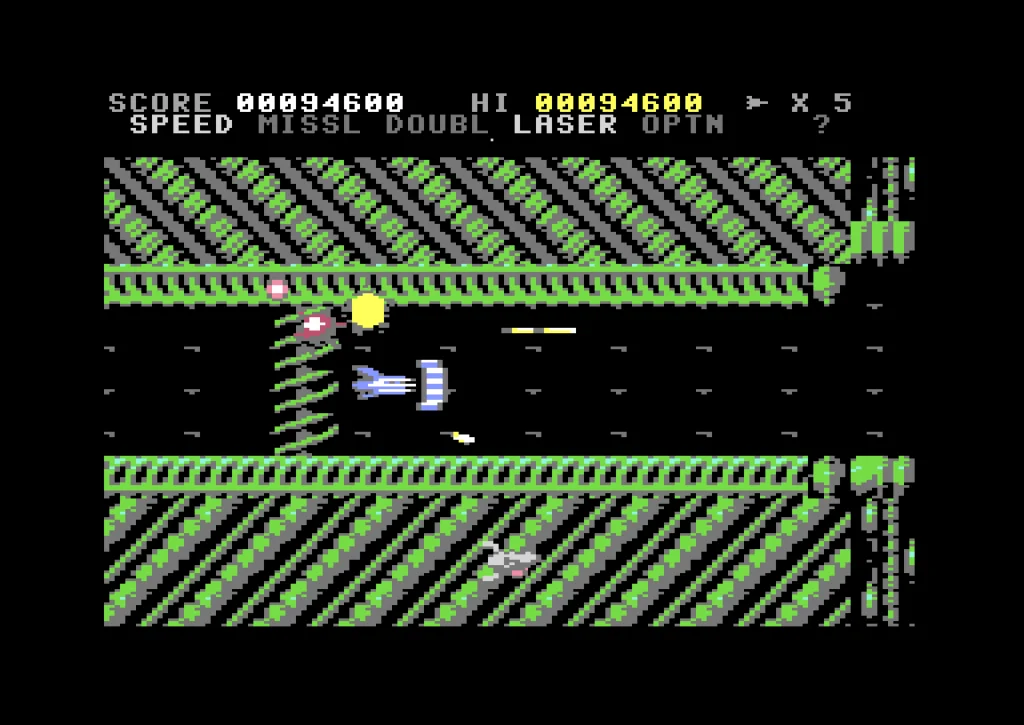
The release of Void Lancer on October 2, 2026, marks a significant milestone in the ongoing preservation and evolution of the Commodore 64 (C64) software library. Developed by the programmer known as Snow-G, this horizontal scrolling shooter demonstrates the technical ceiling of the 8-bit MOS Technology 6502 architecture four decades after its original market dominance. The game distinguishes itself through a visceral, biomechanical aesthetic clearly inspired by the surrealist works of H.R. Giger, integrating complex sprite manipulation and atmospheric sound design that push the hardware’s capabilities to their functional limits.
A New Chapter in 6502 Assembly Programming
At its core, Void Lancer is a testament to the efficiency of 6502 assembly language programming. Unlike modern software development, which often relies on high-level abstraction layers, creating a title for the C64 requires a deep, granular understanding of the machine’s memory map, interrupt vectors, and the limitations of the VIC-II (Video Interface Chip).
Snow-G has architected a six-stage campaign that transports players through environments described as "veined flesh and bone cathedrals." The technical achievement here lies in the management of screen redraws and sprite collisions within the tight constraints of the C64’s 64 kilobytes of RAM. By utilizing AI-assisted code generation tools—a methodology increasingly common in the homebrew scene—the developer has managed to optimize cycle-heavy routines that allow for fluid horizontal scrolling without the typical "jitter" associated with lower-budget 8-bit titles.
The Evolution of the C64 Homebrew Scene
The Commodore 64, released in 1982, remains one of the most prolific platforms for independent software development in the 21st century. The release of Void Lancer arrives during a period of resurgence for retro-computing, where the "homebrew" market has transitioned from simple hobbyist experiments to high-fidelity commercial-grade releases.
Historically, the timeline of C64 software development can be divided into three distinct eras:
- The Commercial Era (1982–1994): The period of mainstream retail dominance where companies like Epyx, Ocean Software, and System 3 defined the platform’s library.
- The Abandonment Era (1995–2005): A decade where the platform was largely relegated to emulation enthusiasts and archival projects, with minimal new content being produced.
- The Renaissance Era (2006–Present): A period defined by the availability of sophisticated cross-compilers, modern debuggers, and a robust online community that treats the C64 as a legitimate platform for artistic and technical expression.
Void Lancer stands as a modern iteration of this Renaissance. It utilizes the hardware to evoke a specific emotional response—anxiety and organic horror—rather than simply providing arcade-style reflex challenges. This shift in design philosophy reflects a broader trend in independent development where creators prioritize thematic cohesion alongside technical proficiency.
Aesthetic Influences and Technical Challenges
The choice to emulate a Giger-esque visual style on a system with a color palette of only 16 colors and a standard resolution of 320×200 pixels presents a unique set of constraints. The "flesh and bone" aesthetic requires high-frequency detail, which the C64 struggles to render due to sprite limitations.
To overcome this, Snow-G has implemented a specialized tiling system that creates the illusion of organic, flowing textures. By manipulating character sets (the "C64 font" logic) rather than relying solely on hardware sprites, the game manages to fill the screen with intricate patterns that suggest a much higher graphical fidelity than the hardware should technically allow. This technique, while complex, is essential for maintaining the game’s atmosphere without causing significant CPU slowdown.
The six boss encounters featured in the game serve as the primary pacing mechanism. Each boss acts as a "gatekeeper" to the next stage, requiring the player to memorize attack patterns—a staple of the horizontal shooter genre (often referred to as "shmups"). The programming of these AI routines within the 6502’s limitations represents a complex interplay of state-machine logic and collision detection, ensuring that the gameplay remains fair while providing a steep difficulty curve.
Data and Hardware Constraints
To understand the scope of Void Lancer, one must consider the environment in which it operates:
- Processor: MOS Technology 6510/6502, clocked at approximately 1.023 MHz.
- Memory: 64 KB RAM, of which only a fraction is available for active game assets after the KERNAL and BASIC ROMs are accounted for.
- Video: VIC-II chip, providing 16 colors and 8 hardware sprites.
- Audio: SID (Sound Interface Device) chip, which remains one of the most capable sound synthesizers in the history of home computing.
Void Lancer optimizes these parameters by offloading much of the heavy lifting to the VIC-II’s raster interrupt capabilities. By timing the software to "race the beam" (updating registers while the monitor refreshes), the game achieves visual effects that would have been considered impossible during the platform’s initial release window in the early 1980s.
Industry Implications and Community Reception
The release of Void Lancer has prompted discussion within the retro-gaming community regarding the ethics and utility of AI-assisted code. While some purists argue that hand-coded assembly is the only authentic method for C64 development, the consensus among active developers is that the end result—a playable, bug-free, and high-quality game—is what matters most for the longevity of the platform.
"The use of AI-assisted code in Void Lancer is not a replacement for human creativity," notes a representative from a prominent C64 preservation society. "It is a tool for optimization. If we can use modern workflows to make it easier for a solo developer to create a complex game like Void Lancer, the platform remains relevant and the library continues to grow."
This shift towards utilizing modern development tools (such as C-to-6502 cross-compilers and AI-assisted debugging) has lowered the barrier to entry for new developers. Consequently, the volume of high-quality software being released for the C64 in 2026 is arguably higher than it was in the late 1980s.
The Broader Impact on Digital Preservation
Void Lancer is more than just a game; it is an artifact of digital preservation. By continuing to develop for legacy hardware, programmers like Snow-G ensure that the technical knowledge required to manipulate the 6502 architecture is not lost to time. When software is written for the C64, it reinforces the need for accurate emulators and hardware replacements (such as modern FPGA-based C64 clones).
The implications for the broader tech industry are also notable. The "Void Lancer" model of development—taking a severely resource-constrained piece of hardware and pushing it to its absolute limits—serves as an educational exercise in efficiency. In an era where modern software often demands gigabytes of memory for basic tasks, the discipline required to develop for the C64 provides valuable lessons in code optimization, memory management, and algorithmic efficiency.
Conclusion
As the Commodore 64 approaches its 45th anniversary, titles like Void Lancer demonstrate that the platform remains a viable canvas for digital art. Through a combination of classic assembly techniques and modern development assistance, Snow-G has delivered a product that honors the history of the 8-bit era while pushing the boundaries of what the hardware can achieve.
Whether the player is a long-time enthusiast of the platform or a newcomer curious about the roots of modern gaming, Void Lancer offers a compelling case study in the power of constraints. It serves as a reminder that with sufficient ingenuity, legacy hardware can still produce experiences that are both technically impressive and artistically distinct. As the homebrew scene continues to evolve, the industry will likely see more titles that leverage this unique intersection of historical hardware and cutting-edge development methodologies.