 Indra Gunadi
The Genesis of GBJAM and Modern Homebrew Culture
The Game Boy Jam (GBJAM) has long functioned as a cornerstone event for developers interested in the limitations and aesthetic charm of the original Game Boy and its successor, the Game Boy Color. Established years ago as a creative exercise, the jam challenges participants to produce a fully functional game within a strictly defined timeframe—typically ranging from one to two weeks. The constraints are not merely thematic; they are technical. Developers must adhere to the hardware’s restrictive color palette, resolution limitations, and audio channels, forcing a level of optimization that is rarely required in modern PC or console development.
AshGB, the developer behind Cow-Pirate Bartholomus and the Dungeon Platform Islands, utilized this intensive 10-day window to build a multi-layered experience. The project serves as a testament to the maturation of homebrew tools, such as GBDK (Game Boy Development Kit) and various visual scripting engines that have lowered the barrier to entry for creators while maintaining the integrity of the original hardware specifications.
Game Mechanics and Structural Design
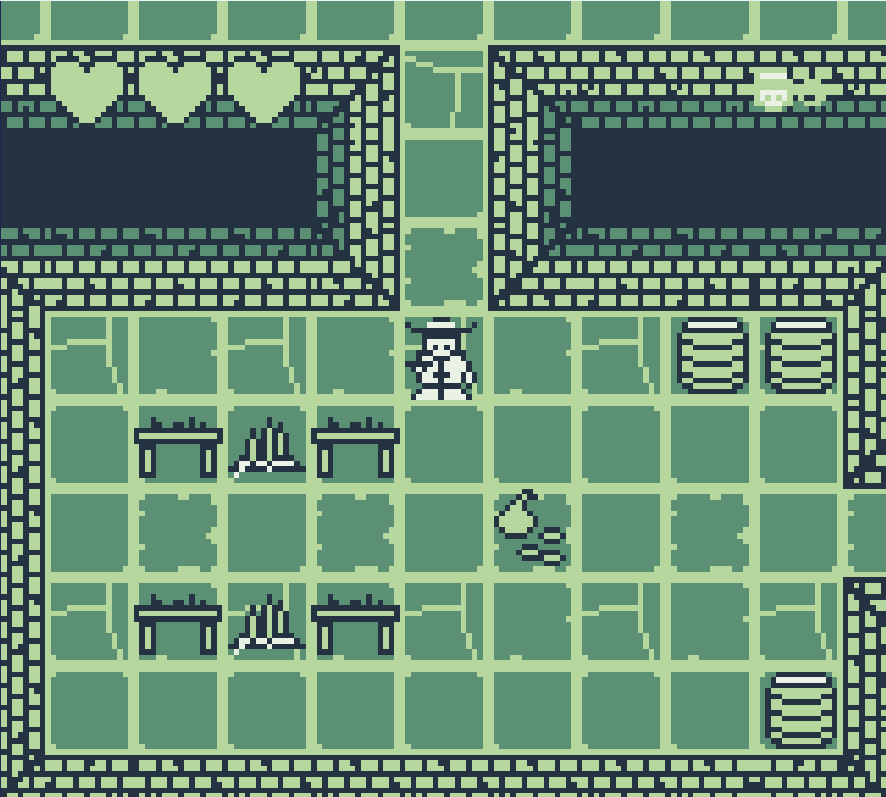
The gameplay loop of Cow-Pirate Bartholomus and the Dungeon Platform Islands is characterized by a hybrid structure that blends traditional platforming with rogue-lite elements. Players are tasked with hunting three distinct shards scattered across various platforming environments. This primary objective acts as the connective tissue for the game’s narrative and progression system.
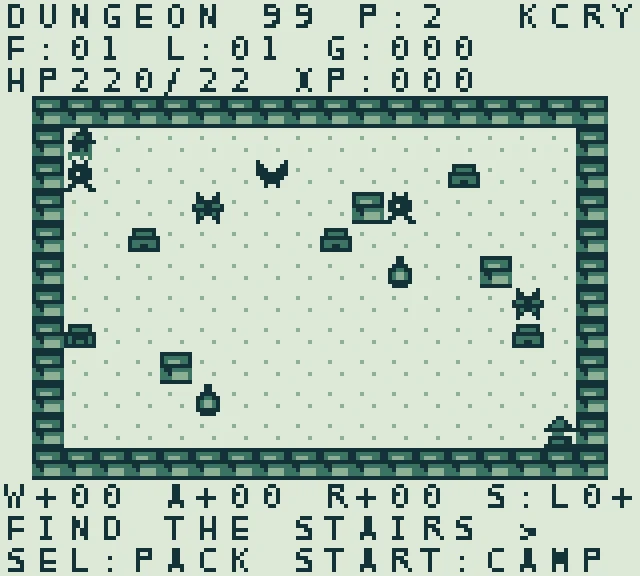
Once the player secures a shard, the game transitions into a randomized dungeon phase. This design choice is particularly noteworthy for a GBC title, as implementing procedural generation—even on a micro-scale—requires careful memory management to ensure the game remains compatible with the hardware’s 32KB to 1MB ROM limits. By alternating between static platforming challenges and randomized dungeon crawls, AshGB creates a cycle of repetition that maintains player engagement despite the inherent technical limitations of the platform.
A Chronology of the GBJAM14 Development Cycle
The development of Cow-Pirate Bartholomus and the Dungeon Platform Islands took place in early October 2026, coinciding with the official GBJAM14 event. The timeline for such projects is notoriously compressed, demanding a disciplined approach to development:
- Phase 1 (Days 1–2): Concept and Asset Generation. During this initial period, the developer established the core mechanics, focusing on the character physics of the "Cow-Pirate" and the sprite limitations of the GBC’s object attribute memory (OAM).
- Phase 2 (Days 3–6): Level Architecture. This stage involved the construction of the primary platforming islands. Given the limited VRAM, developers often employ tile-swapping techniques to create the illusion of variety without exceeding the hardware’s tile-map memory.
- Phase 3 (Days 7–9): Procedural Implementation. The most technically rigorous phase involved the creation of the dungeon generation algorithm, which ensures that each shard-collection mission offers a unique path, preventing the game from feeling overly repetitive.
- Phase 4 (Day 10): Debugging and ROM Optimization. The final 24 hours were dedicated to optimizing the code for potential deployment on original hardware via flash cartridges.
The Technical Landscape of Game Boy Development
To understand the achievement represented by AshGB’s latest release, one must consider the historical context of the Game Boy Color. Released in 1998, the GBC was powered by a Sharp LR35902 core running at approximately 4.19 MHz or 8.38 MHz. With a resolution of 160×144 pixels and the ability to display only 56 colors from a palette of 32,768, it presents a stark contrast to modern mobile devices.
When developers like AshGB create for this hardware today, they are effectively engaging in "extreme optimization." Every byte of data is accounted for. The inclusion of a "randomized dungeon" is not just a gameplay feature; it is an exercise in resource management. By using seeds for randomization, the developer avoids the need to store massive amounts of level data, instead using small code snippets to generate layouts on the fly. This approach is reflective of the industry’s wider interest in "demakes" and retro-inspired development, where the focus is shifted from high-fidelity graphics to gameplay depth and efficient programming.
Community Reactions and Industry Implications
The release of Cow-Pirate Bartholomus and the Dungeon Platform Islands has been met with positive reception within the homebrew community. Forums dedicated to Game Boy development have noted the title’s accessibility and its clever use of the GBC’s color-swapping capabilities to denote different environmental themes.
From an industry perspective, such titles represent a growing trend of "digital archeology" and preservation. By keeping the Game Boy platform alive through new software, developers are ensuring that the skills required to work within constrained systems are not lost to time. Furthermore, the commercial and critical success of indie games with retro aesthetics has prompted a re-evaluation of the GBC’s hardware capabilities. It is no longer viewed merely as a relic, but as a viable platform for creative expression.
Industry analysts observe that the success of games like those featured in the GBJAM series often leads to a "halo effect" for the developers. Many who cut their teeth on 10-day game jams eventually move into professional indie game development, bringing with them a mastery of optimization and a deep appreciation for the fundamental building blocks of game design.
Broader Impact on Retro Gaming Preservation
The implications of this project extend beyond the immediate enjoyment of the game. By releasing the game in a format that can be played on original hardware, AshGB is contributing to the longevity of the Game Boy ecosystem. The hobbyist market for flash cartridges—devices that allow users to play digital ROM files on real consoles—has exploded in the last decade, and games like Cow-Pirate Bartholomus provide the necessary software to justify the continued production and maintenance of these consoles.
Furthermore, the game serves as a teaching tool. Because the source code for many jam entries is often made available or discussed in post-mortems, it provides a roadmap for aspiring programmers to learn about hardware-level coding. Understanding how to handle interrupts, how to manage bank switching, and how to optimize sprite display is a foundational education that bridges the gap between 1990s-era software engineering and contemporary systems programming.
Conclusion: The Future of 8-Bit Creativity
Cow-Pirate Bartholomus and the Dungeon Platform Islands is more than just a 10-day project; it is a manifestation of the current state of the retro-development scene. It demonstrates that the constraints of 1998 hardware are not an obstacle to innovation, but rather a catalyst for it. As the industry continues to advance toward increasingly complex graphical and processing capabilities, the return to these simple, elegant systems provides a necessary reminder of the core elements that define a game: curiosity, challenge, and the satisfaction of mastering a mechanic.
As we look toward future iterations of the GBJAM, it is clear that developers like AshGB will continue to push the boundaries of what is possible on the Game Boy Color. Whether through the implementation of complex algorithms in tiny memory footprints or the creation of engaging narratives within a handful of tiles, the homebrew movement remains a vital, evolving sector of the gaming landscape. The journey of the cow-pirate through the dungeon islands is, in many ways, symbolic of the journey of the modern developer: navigating the constraints of the past to build something unique for the present. The release of this title stands as a reminder that even in an era of terraflop processing and photorealistic rendering, there is still a massive, hungry audience for the charm and technical brilliance of the 8-bit era.