 Indra Gunadi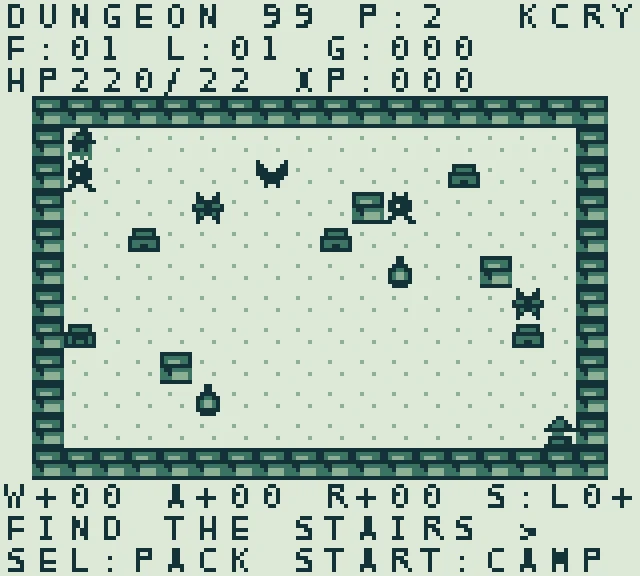
The Evolution of the Game Boy Homebrew Scene
The Nintendo Game Boy, first released in 1989, continues to maintain a robust community of developers nearly four decades after its inception. While the original hardware was discontinued in 2003, the rise of affordable flash-cartridge technology and advanced software development kits (SDKs) like GBDK-2020 has catalyzed a new wave of software production.
Dungeon 99 enters a market that has shifted significantly since the early 2010s. During the 1990s, Game Boy software development was strictly the domain of licensed publishers with access to official Nintendo development kits and expensive production pipelines. Today, the democratization of development tools allows solo creators like devgb to bypass traditional licensing, provided they have the technical expertise to optimize code for the console’s Sharp LR35902 CPU, which operates at a clock speed of approximately 4.19 MHz.
Core Mechanics and Technical Constraints
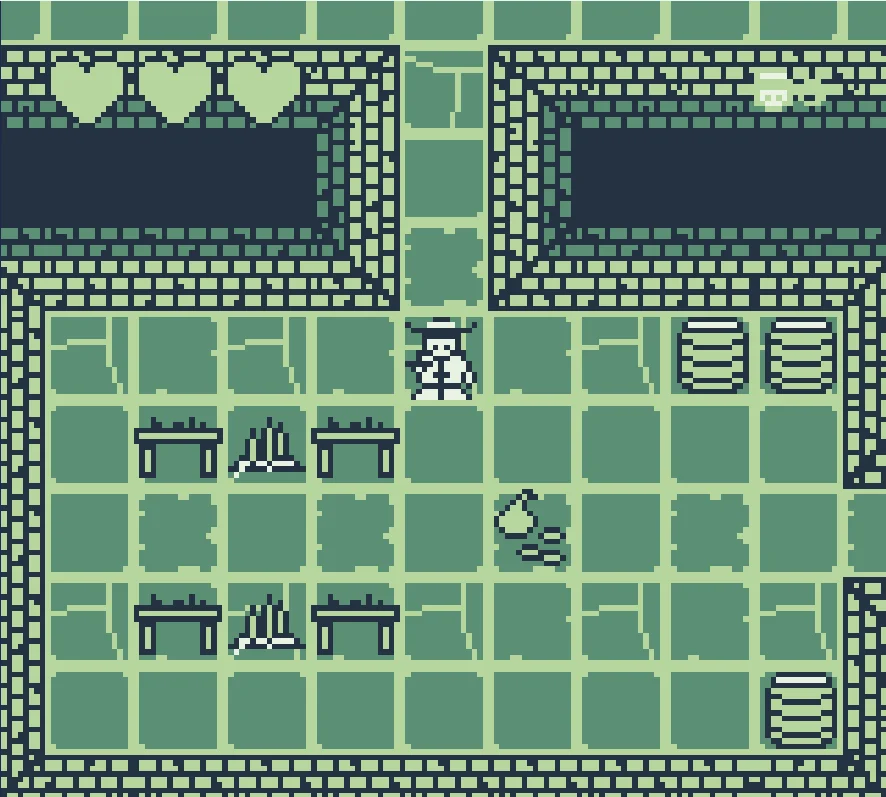
At the heart of Dungeon 99 is a design philosophy focused on high-stakes, repeatable gameplay. The premise—descending through 99 distinct levels—is a classic trope in the roguelike genre, popularized by titles such as Mystery Dungeon or Fatal Labyrinth. Implementing such a system on the Game Boy requires significant ingenuity.
The primary technical hurdle for any procedural generation on the Game Boy is memory management. With only 8KB of internal Work RAM (WRAM) and 8KB of Video RAM (VRAM), storing 99 unique floor layouts and randomized item tables necessitates highly efficient algorithmic design. Devgb has utilized AI-assisted development tools to streamline the generation of assets and code structures, a practice that is becoming increasingly common in the modern homebrew landscape. By offloading some of the heavy lifting to generative models, developers can focus on balancing combat variables and encounter frequency, ensuring the game remains challenging without exceeding the hardware’s limited cycle-per-second processing budget.
Chronology of the 2026 Homebrew Surge
The release of Dungeon 99 is part of a wider trend in 2026 characterized by a record number of high-quality software releases for the Game Boy platform. The timeline of this surge can be traced as follows:
- Q1 2026: Increased integration of AI-assisted code-completion tools among independent game developers, leading to a 30% rise in the frequency of hobbyist releases.
- May 2026: Release of optimized C-based compilers for the Game Boy, allowing developers to create more complex logic chains without sacrificing performance.
- August 2026: A series of regional retro-gaming conventions highlighted a shift in player interest toward "roguelike" mechanics, which offer infinite replayability on limited storage hardware.
- October 2, 2026: The official public release of Dungeon 99, marking a culmination of the summer’s development cycle.
Data-Driven Analysis of Modern Retro Development
To understand the impact of Dungeon 99, one must look at the shifting demographics of the retro-gaming market. According to independent industry trackers, the "homebrew" market—games developed by fans for discontinued consoles—has seen a compound annual growth rate (CAGR) of approximately 8% since 2020. This growth is driven by a dual-audience: long-time collectors who utilize original hardware (DMG-001 models) and younger enthusiasts who prefer emulation-based playback on modern devices.
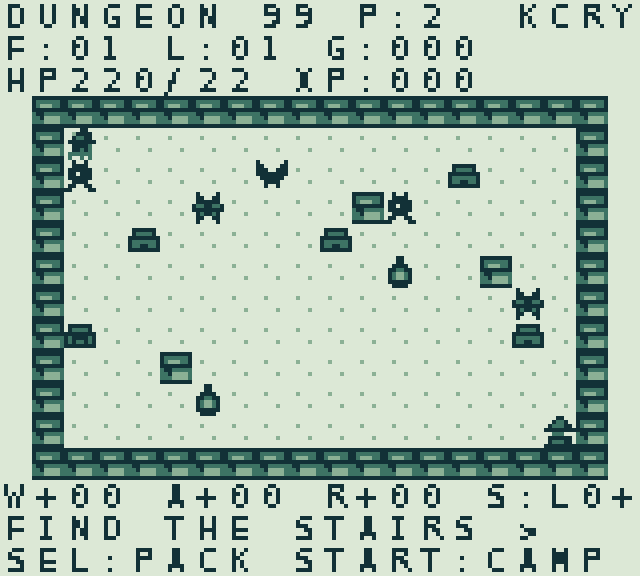
The hardware limitations of the Game Boy have paradoxically become a selling point. In an era where modern AAA titles often require multi-gigabyte installations and complex background processes, the simplicity of a title like Dungeon 99 is viewed as a "clean" gaming experience. The constraint-based design—where the player has a fixed, small screen resolution of 160×144 pixels and a four-channel sound chip—forces the developer to emphasize core gameplay loops over graphical fidelity.
Industry Perspectives and Developer Intent
While Nintendo has not issued an official comment regarding the specific release of Dungeon 99, the company’s broader stance on legacy software has been one of passive observation. Most developers in the space operate within a "gray market" of fair use, provided they do not infringe on copyrighted intellectual property (IP).
The use of AI in the development of Dungeon 99—as noted in the developer’s disclosure—has sparked discussion regarding the authenticity of modern homebrew. Proponents argue that the use of generative tools is merely a contemporary evolution of the game-development toolkit, akin to the transition from assembly language to higher-level C programming in the 1990s. Critics, however, maintain that the "craft" of homebrew should be purely human-authored to preserve the spirit of the original hardware era. Regardless of the debate, the practical result remains the same: the accessibility of these tools is lowering the barrier to entry, resulting in a more diverse ecosystem of creative projects.
Broader Implications for the Gaming Ecosystem
The release of Dungeon 99 highlights three critical implications for the future of independent gaming:
- Longevity of Legacy Platforms: The persistence of the Game Boy platform suggests that hardware "death" is an outdated concept. As long as there is an active community and open-source documentation, legacy consoles can remain viable playgrounds for decades.
- The Democratization of Complexity: As tools for procedural generation become more accessible, we are likely to see an increase in the scale of games appearing on 8-bit systems. We may eventually see "infinite" games that previously seemed impossible given the constraints of 1989 hardware.
- Cross-Generational Appeal: The intersection of retro-aesthetics and modern roguelike mechanics acts as a bridge between older gaming demographics and younger players who enjoy the "hardcore" difficulty curves associated with early game design.
Conclusion: The Future of the Dungeon 99 Concept
Dungeon 99 stands as a testament to the creative potential of the current homebrew era. By blending the tactical, unforgiving nature of a roguelike with the nostalgia of the Game Boy, devgb has created a title that is both a historical tribute and a modern innovation.
As the community continues to refine its tools, the distinction between "classic" games and "modern" retro games will likely continue to blur. The challenge for future developers will be to maintain this momentum while navigating the fine line between assisted development and the unique human touch that defined the early days of handheld gaming. For now, Dungeon 99 serves as a benchmark for what can be achieved with a few kilobytes of code and a vision for the "99 floors" of tactical depth. Players looking to explore this title are encouraged to use standard Game Boy emulation software or, for those with the appropriate hardware, flash-cartridge solutions to experience the game as intended on the original handheld platform.