 Indra Gunadi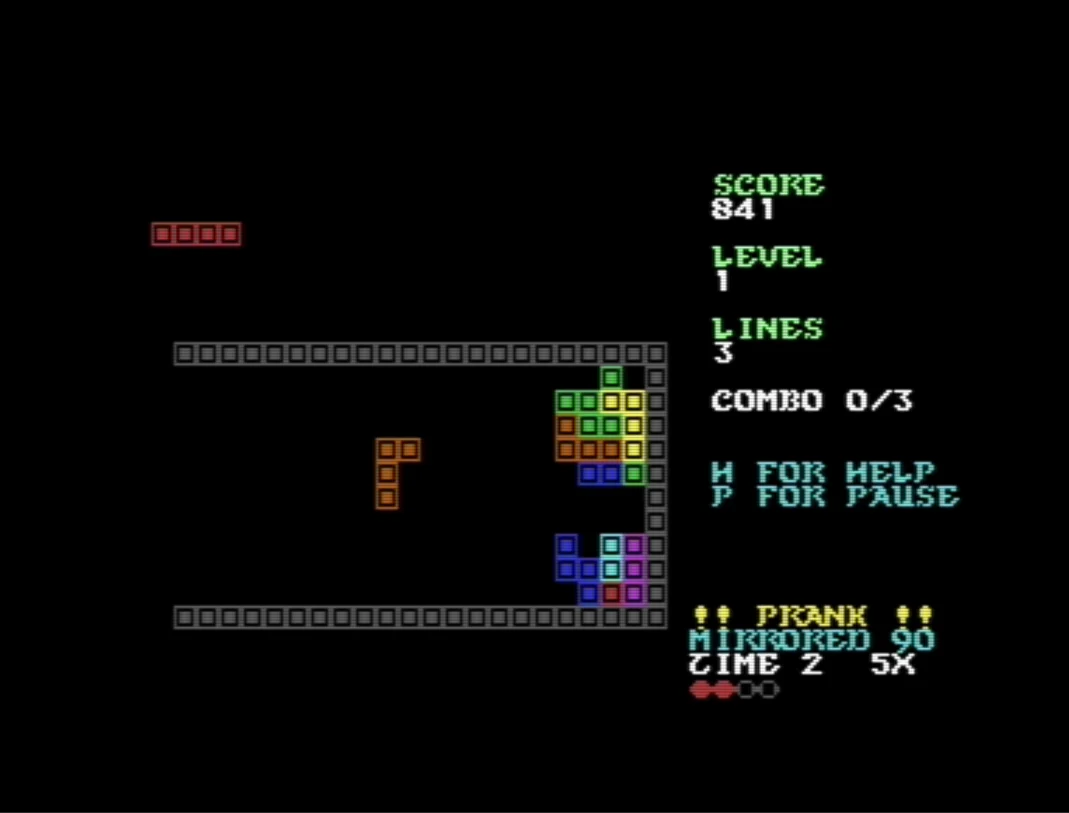
The Evolution of C64 Puzzle Software
The Commodore 64, which celebrated its 44th anniversary in 2026, remains a vibrant platform for independent software developers. Despite the limitations of its MOS Technology 6510 microprocessor and the aging SID sound chip, the platform continues to receive high-quality software updates. Tricky Tetris serves as the latest case study in how modern programming techniques can breathe new life into legacy hardware.
Historically, the tile-matching genre has been a staple of the C64 since the late 1980s. Following the massive global success of Alexey Pajitnov’s original design, countless iterations were produced for the 8-bit market. However, most of these historical releases focused on faithful recreation. Tricky Tetris differentiates itself by integrating a "prank" or "chaos" engine that alters the game’s environment in real-time, requiring the player to adapt to shifting variables rather than relying solely on memorized patterns.
Mechanics and Gameplay Disruptions
The technical core of Tricky Tetris adheres to standard block-stacking logic, featuring a clear playfield, block rotation, and a predictive system for incoming pieces. The game incorporates modern features such as a "Hold" function, which allows users to swap the current piece with one held in reserve, and a robust high-score tracking system that records performance across multiple difficulty tiers.
The innovation lies in the "Tricky" modifier system. As the player progresses through successive levels, the software triggers randomized events designed to impede progress. These include:
- Flipped Fields: The play area may invert its orientation, forcing the player to reorient their mental map of the falling pieces.
- Control Swapping: A temporary reversal or reassignment of input commands, challenging the player’s muscle memory.
- Sudden Gravity Shifts: Changes in the velocity of falling pieces, which disrupt the rhythm of placement and increase the likelihood of structural errors.
These mechanics are designed to increase the difficulty curve exponentially. According to initial performance benchmarks, surviving these chaotic intervals is required to reach the score threshold of 5× (five times) the standard points. This multiplier system acts as an incentive for high-skill players to engage with the more disruptive elements of the game rather than avoiding them.
Chronology of Development
The project, spearheaded by Zsolt Tarczali, underwent a standard development lifecycle common to modern retro-coding projects. Initial conceptualization began in early 2026, with the primary objective of optimizing C64 assembly code for smooth performance during the high-intensity "chaos" segments.
- Q1 2026: Initial coding of the base engine and graphical assets.
- Q2 2026: Implementation of the randomization algorithms and the "Hold" mechanics.
- Q3 2026: Bug testing and optimization for PAL and NTSC display standards.
- October 9, 2026: Official release of the software via digital distribution channels.
The development of Tricky Tetris highlights the ongoing dedication of the C64 community, which maintains a rigorous standard for documentation and code efficiency. By utilizing cross-development tools—where modern PCs are used to write and compile code for the 6510 architecture—developers like Tarczali can achieve results that were often unattainable during the machine’s commercial peak.
Data Analysis: The C64 Homebrew Ecosystem
The release of Tricky Tetris is part of a larger trend in the retro computing sector. Data from independent software repositories indicates that 2026 has been a record-breaking year for Commodore 64 content, with a 15% year-over-year increase in new software titles.
Market analysts tracking the retro scene note that software releases are now targeting a demographic that values both nostalgia and technical complexity. Unlike the casual puzzle games of the 1980s, which were designed for simple pick-up-and-play sessions, modern C64 homebrew often includes high-fidelity assets, sophisticated soundtracks, and advanced gameplay loops that mirror contemporary indie game design.
The persistence of the Commodore 64 as a viable platform is attributed to its massive installed base and the existence of "The Scene"—an international network of programmers, artists, and musicians who continue to produce high-quality content. This ecosystem provides a stable environment for developers to refine their skills and contribute to a body of work that keeps the hardware relevant decades after its discontinuation.
Implications for the Retro Gaming Community
The release of Tricky Tetris raises an interesting question regarding the future of legacy hardware: at what point does a classic game stop being a "clone" and start being an evolution of the source material? By incorporating randomized, high-stakes modifiers, Tricky Tetris addresses the monotony that can sometimes settle into long-term play sessions of classic puzzle games.
For the user, the implication is a game that is significantly more difficult to "solve." In traditional versions of tile-matching games, expert players often reach a state of flow where the gameplay becomes mechanical. By introducing unpredictability, Tarczali has forced a return to active problem solving. This shift has been noted by several prominent figures in the retro-coding forums, who have praised the implementation of the gravity and control-swap modifiers for their ability to maintain engagement without sacrificing the core "feel" of the C64 platform.
Furthermore, the release serves as a benchmark for what can be accomplished with modern debugging tools. The stability of the game—even during the most chaotic segments—demonstrates a high level of code optimization. As developers continue to push the boundaries of what the 6510 processor can handle, the community anticipates that future projects will likely integrate even more complex AI behaviors and dynamic graphical overlays.
Technical Specifications and Compatibility
Tricky Tetris is designed to run on any standard Commodore 64 or 128 (in C64 mode). It is fully compatible with common flash cartridges and software-defined storage solutions, such as the 1541 Ultimate or Pi1541. The game’s footprint is optimized to ensure fast loading times, a critical factor for players utilizing original floppy disk drives or emulators.
The software utilizes standard joystick input for control, with the developer providing documentation on how the control-swap mechanic interacts with different controller types. This accessibility ensures that players using modern adapters or original Competition Pro joysticks can experience the same level of responsive gameplay.
Official Statements and Community Reception
While Zsolt Tarczali has remained focused on the post-release maintenance of the software, community members have been quick to weigh in on the game’s balance. In threads across prominent Commodore-focused discussion boards, the consensus suggests that the game is "deceptively simple" in its presentation but "brutally efficient" in its challenge.
"The difficulty curve is sharp," noted one user during initial playtesting. "You think you have the rhythm, and then the screen flips or the gravity shifts, and you’re forced to abandon your plan. It’s exactly the kind of innovation this genre needs."
Such reactions underscore the importance of the homebrew community in maintaining the platform’s vitality. By providing a platform for creators to share their work, organizations and repositories like PDROMs ensure that these projects are not lost to time. The release of Tricky Tetris stands as a testament to the fact that the Commodore 64 is not merely a relic of the past, but a living, breathing platform that continues to offer meaningful entertainment experiences for a global audience of enthusiasts and historians alike.
Conclusion: A Legacy Reimagined
As we move further into the 2020s, the intersection of modern design philosophy and classic 8-bit architecture continues to yield impressive results. Tricky Tetris by Zsolt Tarczali is a prime example of this synergy. By respecting the legacy of the genre while fearlessly introducing disruptive mechanics, the game succeeds in capturing the attention of a new generation of players while honoring the platform’s storied past. Whether for the casual player looking for a brief challenge or the hardcore retro enthusiast looking to test their reflexes, this latest release reinforces the enduring appeal of the Commodore 64. As the community looks toward the next major releases, it is clear that the creative spirit driving the retro scene is stronger than ever.