 Indra Gunadi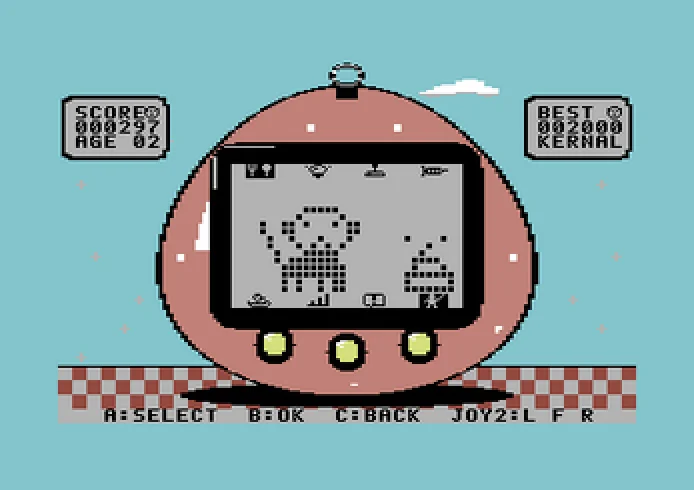
The Evolution of the Digital Pet Genre
The concept of the virtual pet reached its zenith in the mid-1990s, catalyzed by the global success of products like the Tamagotchi and the Giga Pet. These devices relied on rudimentary liquid crystal displays, characterized by fixed-position icons and limited pixel density. The appeal was rooted in the psychological phenomenon of the "parasocial bond," where users formed attachments to virtual entities requiring consistent care, feeding, and discipline.
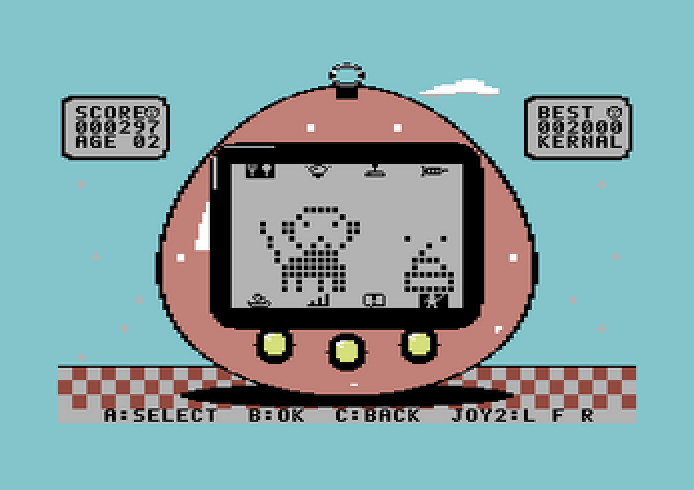
For decades, the Commodore 64—a machine released in 1982—was primarily associated with arcade-style action games, text-based adventures, and productivity software. However, the contemporary homebrew movement has shifted focus toward experimental software that mimics non-gaming hardware. Egg Pet 64 is the culmination of this trend, utilizing the C64’s VIC-II chip to replicate the aesthetic of a monochrome LCD screen while providing a depth of interaction that far exceeds the original hardware limitations of the 90s.
Technical Specifications and Gameplay Mechanics
Egg Pet 64 provides users with a comprehensive simulation suite. Upon initialization, the player is presented with a selection of 10 distinct animal species, ranging from domestic staples like the cat to more contemporary internet-culture favorites such as the capybara, alongside a duck and a variety of mystery eggs.
The software utilizes a sophisticated state-machine architecture to track the "needs" of the digital entity. Players must manage hunger, hygiene, and social interaction metrics. A notable feature of the software is the implementation of a "scold" mechanic, which adds a layer of complexity to the gameplay. The system tracks whether the pet is genuinely in distress or merely attempting to manipulate the player’s attention. This adds a layer of nuance to the simulation, requiring the user to exercise judgment rather than simply reacting to prompts.
From a development perspective, LUKsoftware utilized AI-assisted tools for various components of the production, including graphics rendering and code optimization. This hybrid development model—marrying legacy machine assembly with modern generative assistance—has become a hallmark of the 2026 homebrew landscape, allowing small independent developers to produce titles with higher polish and more complex logic than was feasible in the era of the machine’s commercial life.
Chronology of C64 Homebrew Development
The history of Commodore 64 software is traditionally divided into three phases: the Commercial Era (1982–1994), the Decline/Dormant Era (1995–2005), and the Modern Renaissance (2006–Present).
- The Commercial Era: Developers were constrained by cartridge storage limits and tape-loading speeds, focusing primarily on arcade ports and high-score-driven gameplay.
- The Dormant Era: As interest in 8-bit computing waned, development was restricted to small, non-commercial groups and hardware enthusiasts.
- The Modern Renaissance: Starting in the mid-2000s, the emergence of the internet allowed for the distribution of digital disk images (.d64 files). The development of hardware interfaces, such as the 1541 Ultimate and modern SD-card-based storage solutions, removed the physical barriers to entry, enabling developers like LUKsoftware to distribute their work to a global audience.
Egg Pet 64 arrives at a moment where the Commodore 64 is experiencing a surge in interest as a platform for "niche" software, moving away from action games toward simulation and utility applications.
Industry Implications and Market Impact
The release of Egg Pet 64 has sparked discussion among historians and technology analysts regarding the preservation of cultural artifacts through software emulation. By recreating the interface of 90s hardware on an 80s platform, LUKsoftware is effectively performing a cross-platform synthesis of digital history.
Analysts observe that the "retro-computing" market is no longer a purely nostalgic endeavor. It has transitioned into a legitimate hobbyist market with its own ecosystem of developers, physical cartridge manufacturers, and global distribution platforms. The fact that Egg Pet 64 utilizes AI-assisted development tools indicates a shift in the labor model of the homebrew community. Rather than spending thousands of hours on manual sprite work, developers are now able to iterate quickly, leading to an increase in the volume and quality of software being released for 40-year-old hardware.
Feedback and Community Reception
Early feedback from the C64 enthusiast community suggests that the title is well-regarded for its adherence to the "LCD aesthetic." Users have praised the visual design, noting that the simulation successfully captures the "flicker" and monochromatic high-contrast style that defined the handheld market of 1997.
"The appeal of Egg Pet 64 is not necessarily in the high-fidelity graphics, but in the successful translation of a specific cultural memory onto a hardware platform that was never intended to display it," said an independent software analyst specializing in legacy hardware. "It is a testament to the versatility of the C64’s architecture that it can support such specific simulations."
There have also been discussions regarding the sustainability of these projects. Because the Commodore 64 requires specific knowledge of its memory map and custom chip registers, the barrier to entry remains high. However, the integration of AI-assisted content creation, as explicitly mentioned in the development documentation for Egg Pet 64, may lower these barriers, potentially attracting a new generation of developers who are less concerned with the "low-level" hardware optimization and more interested in the creative application of retro hardware.
Broader Impact on Digital Preservation
Beyond the scope of entertainment, Egg Pet 64 contributes to the broader field of digital preservation. By creating software that mimics the functions of lost or discarded electronic devices, developers are ensuring that the gameplay loops and interactive experiences of the past remain accessible.
As digital hardware—including original handheld pet devices—faces the inevitable degradation of capacitors and batteries, the act of "porting" these experiences to durable, long-standing platforms like the Commodore 64 serves a dual purpose. It preserves the software logic while providing a functional hardware environment that remains supported by modern adapters and monitors.
The Commodore 64 remains a bedrock of the computing industry’s history. With over 12.5 million units sold during its production run, it remains the highest-selling single computer model in history. The continued development of software for this machine—over four decades after its debut—highlights a unique phenomenon in technology: the transition of hardware from a consumer appliance to a permanent cultural medium.
Future Outlook
As we look toward the remainder of the 2020s, it is anticipated that the trend of "cross-era" software development will continue to grow. We expect to see more titles that combine legacy hardware constraints with modern AI-driven assets. The success of Egg Pet 64 demonstrates that there is a consistent, if niche, demand for experiences that prioritize charm, simplicity, and historical reverence over the computational brute force found in modern AAA gaming.
For the user, the installation and operation of Egg Pet 64 follow the established standards of the C64 homebrew community. Utilizing a modern disk emulator or a verified original 1541 disk drive, users can load the software and immediately engage with the simulation. The lack of complex dependencies makes it a highly accessible entry point for those looking to explore the modern state of Commodore computing.
Ultimately, Egg Pet 64 is more than a simple novelty. It is a calculated piece of software engineering that balances the limitations of 1982 hardware with the design sensibilities of 1996, all while utilizing the technical efficiencies of 2026. It stands as a prime example of how the Commodore 64 continues to defy its age, serving as an active, vibrant canvas for developers who wish to explore the intersections of technology, nostalgia, and modern innovation.