 Retno Hari Mulyono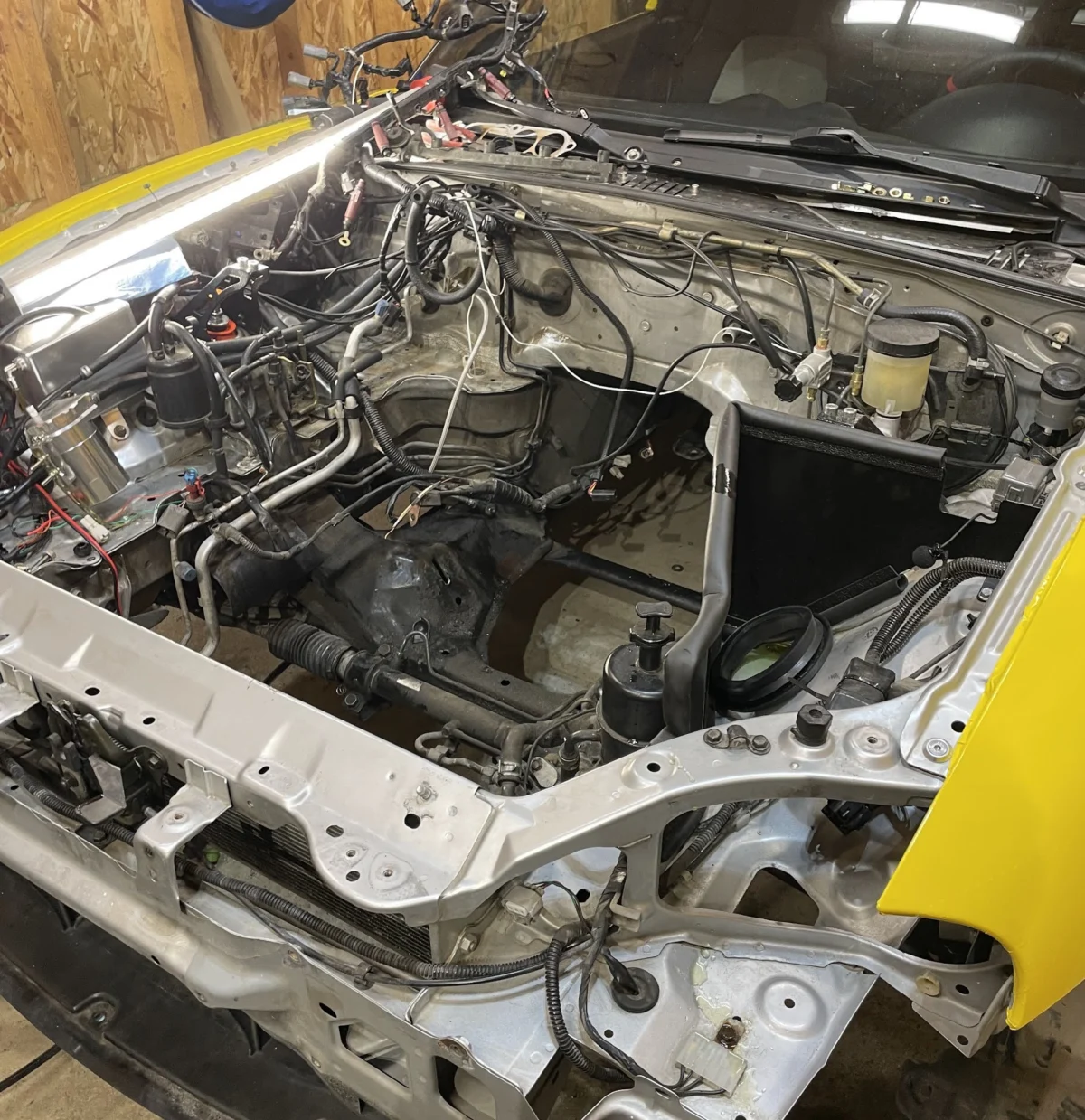
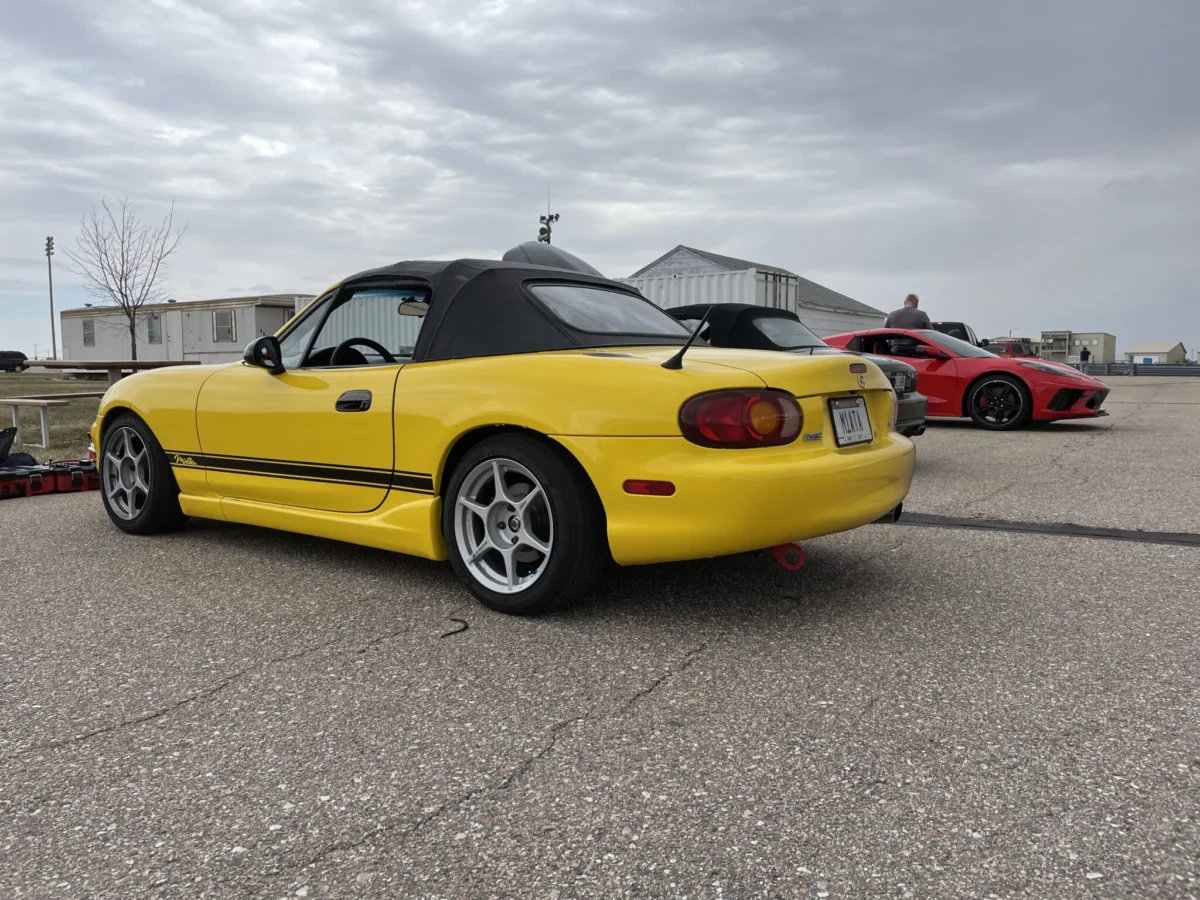
The DIY automotive community has long celebrated the Mazda MX-5 Miata as one of the most accessible and rewarding platforms for mechanical modification and restoration. Over the recent winter maintenance cycle, a detailed powertrain overhaul was conducted on a 2000 Mazda NB Miata to resolve a series of compounding mechanical issues, most notably progressive oil leaks and thermal management limitations inherent to the vehicle’s aging BP-series engine. Rather than executing piecemeal repairs under the tight spatial constraints of the engine bay, the decision was made to execute a complete engine and transmission extraction. This comprehensive intervention provided an opportunity to replace worn seals, upgrade the clutch assembly, rectify oil pan degradation, implement a vital coolant reroute, and install a European/Japanese Domestic Market (EUDM/JDM) flat-top intake manifold to optimize performance for upcoming track applications.
Background Context and Impetus for Powertrain Removal
The Mazda MX-5, spanning its first generation (NA) through its second generation (NB), utilizes longitudinal-mounted inline-four engines—specifically the B6 (1.6-liter) and BP (1.8-liter)—derived from Mazda’s front-wheel-drive platform architecture. While renowned for their durability, high-revving character, and mechanical simplicity, these powerplants share a notorious propensity for developing multiple oil leaks as rubber gaskets, O-rings, and RTV silicone sealants degrade over decades of thermal cycling.
In the case of this specific 2000 NB Miata, several distinct mechanical discrepancies manifested simultaneously. The rear main seal had deteriorated significantly, resulting in an escalating loss of engine oil that made accurate consumption monitoring impossible. Simultaneously, the oil pan’s drain plug threads had been previously stripped, necessitating a temporary, suboptimal conical plug to maintain fluid containment. Furthermore, preparations for competitive track use exposed the engine’s factory thermal management limitations. While daily driving imposes minimal stress on the cooling system, high-rpm track environments demand enhanced thermal dissipation to prevent cylinder-specific heat concentrations. Addressing these interconnected issues individually would have proven inefficient; therefore, extracting the engine and transmission assembly as a single unit from the top of the vehicle was determined to be the most viable engineering approach.
Chronology of the Overhaul Process
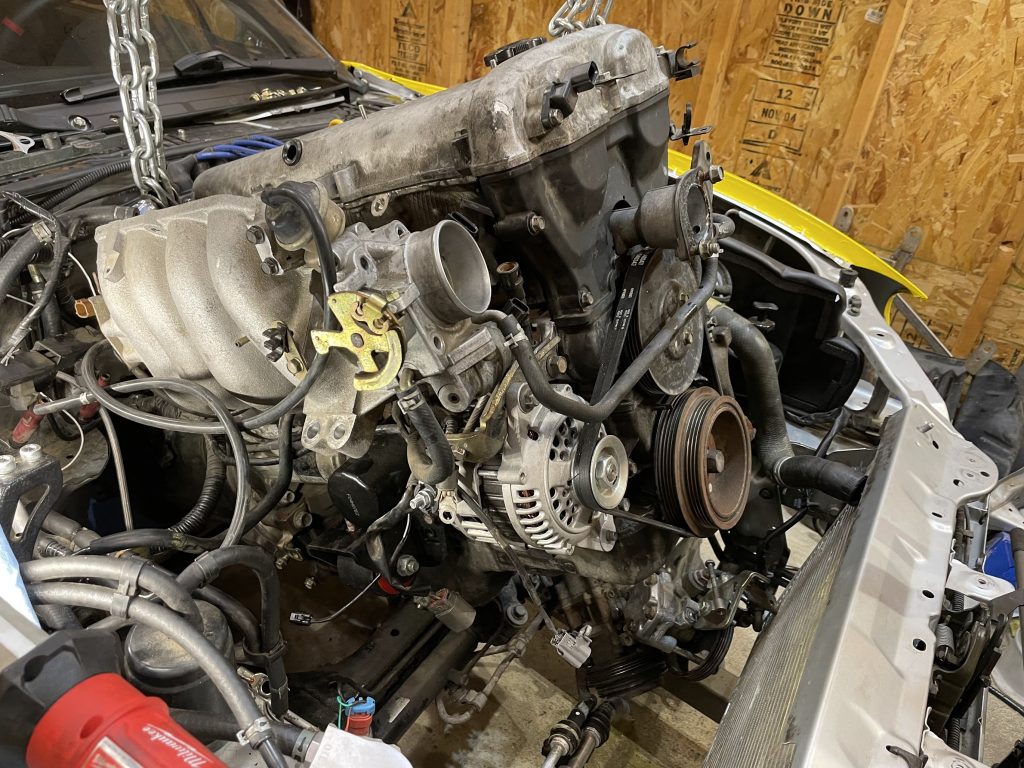
The winter maintenance project followed a structured chronology, beginning with the disconnection of electrical harnesses, plumbing, and peripheral components, culminating in the extraction of the engine-transmission unit.
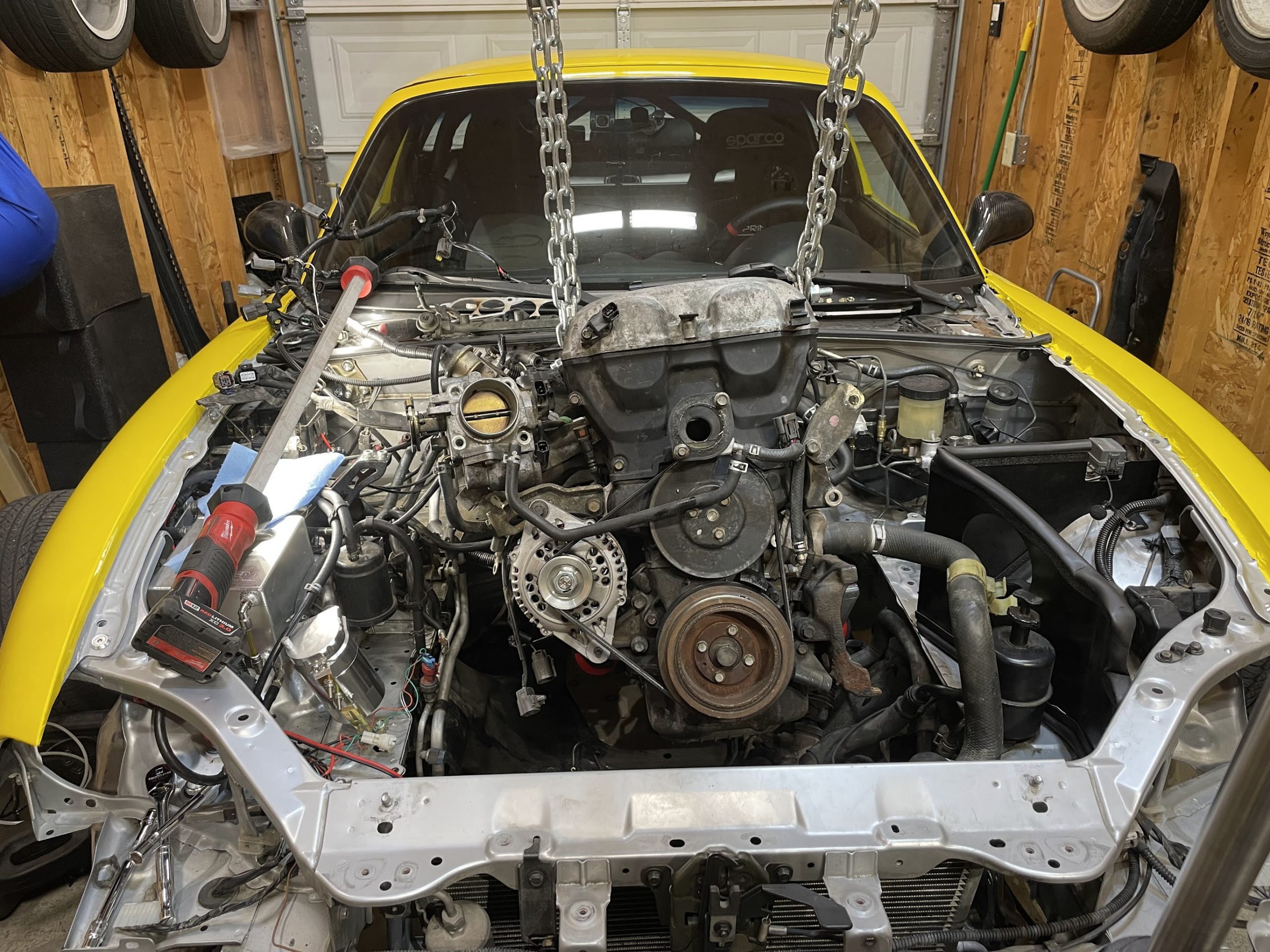
Phase one involved the physical removal of the powertrain. Utilizing a standard garage engine hoist, the complete assembly was extracted through the top of the engine bay. The operation verified that while extraction is straightforward for a single technician, reinstallation requires meticulous spatial alignment to ensure the motor mounts interface correctly with their respective subframe mounting points.
Phase two centered on leak mitigation and sealing. With the engine secured on an engine stand, attention shifted to the rear main seal. Using a specialized installation tool—specifically the second-generation rear crank seal installer from Flyin Miata—the new seal was seated to exact factory depth tolerances. Concurrently, input and output shaft seals on the 5-speed manual transmission were replaced, as the rear output shaft exhibited early-stage weeping.
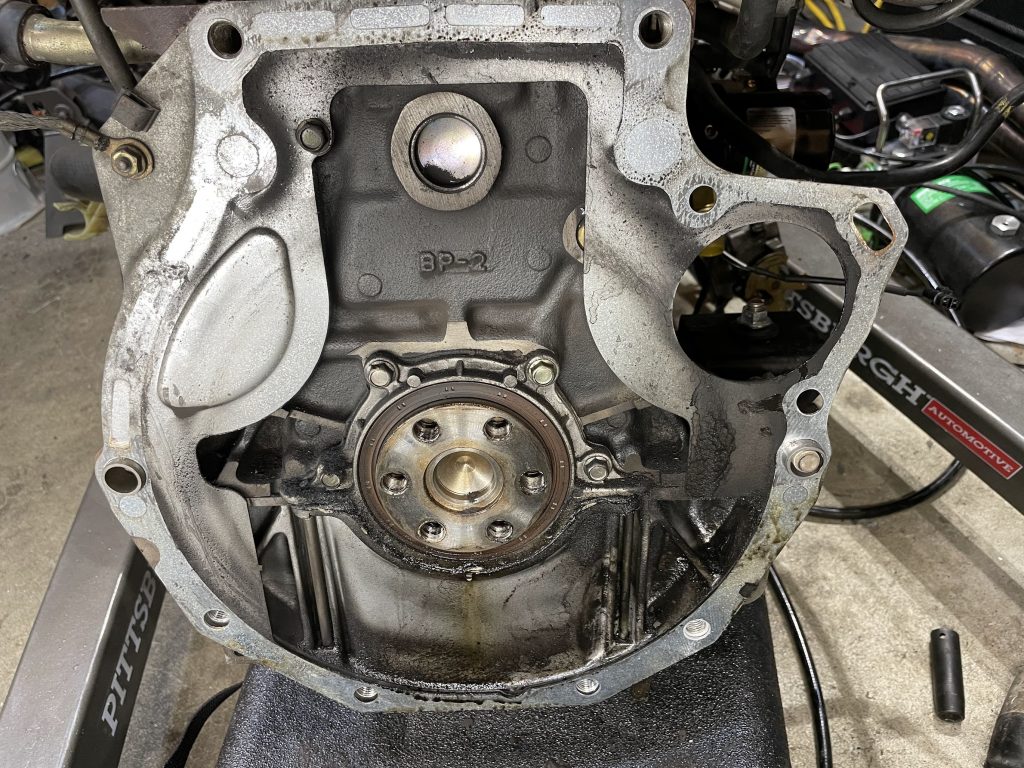
Phase three addressed the oil pan assembly. The factory oil pan was removed to eradicate the compromised drain plug threads. Because Mazda sandwiches an aluminum baffle plate between the engine block and the oil pan—with the oil pickup tube bolted directly to the baffle—careful separation is required to avoid bending the delicate plate during RTV sealant removal. A replacement, undamaged OEM oil pan was prepped with fresh RTV and installed alongside a new oil pickup tube gasket.
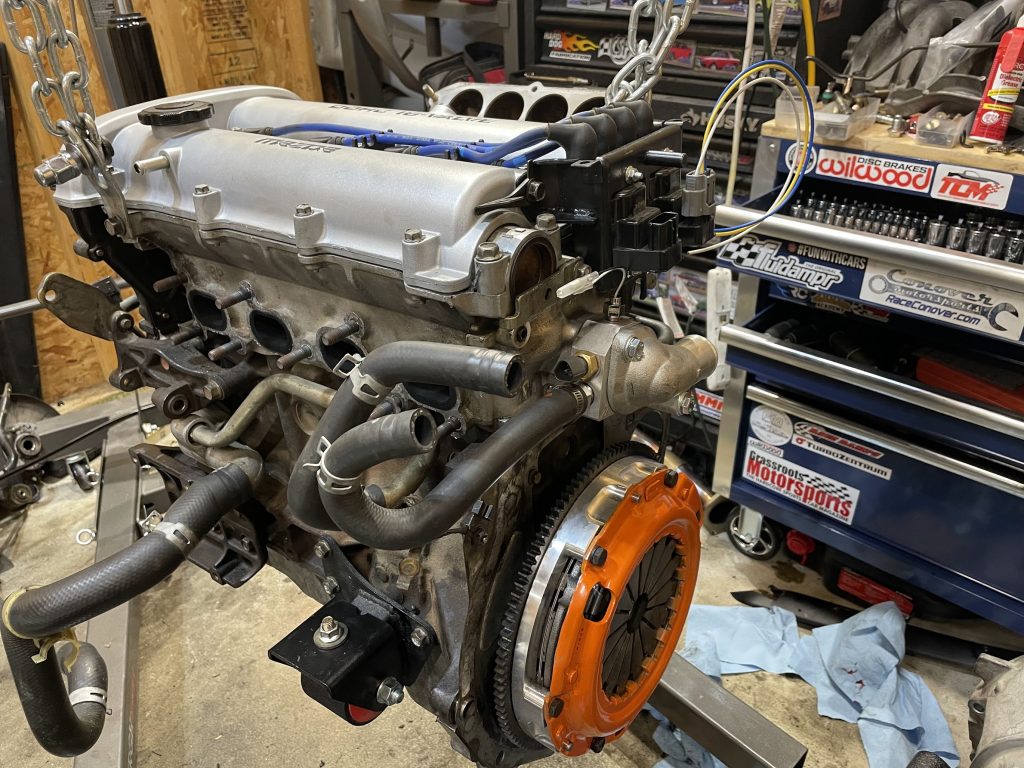
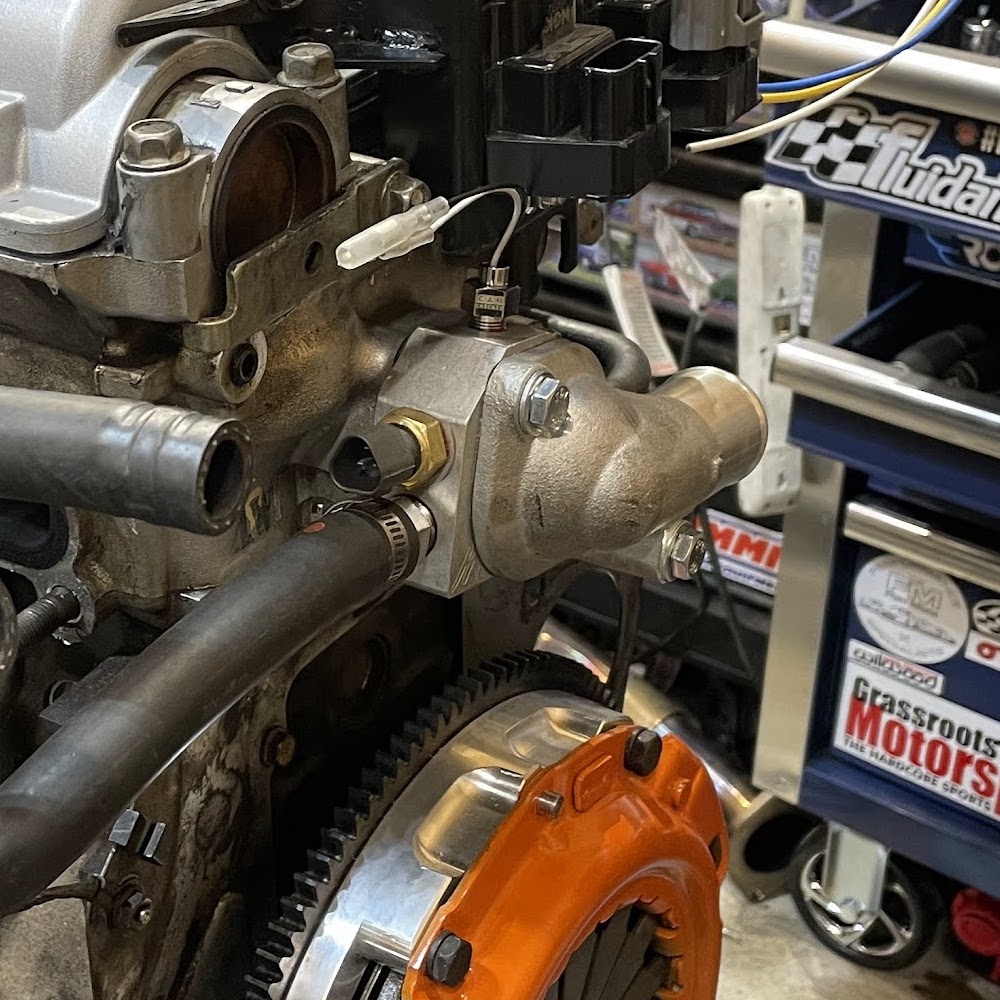
Phase four involved drivetrain upgrades. Believed to be original factory components, the clutch and flywheel were replaced to preemptively avert clutch slippage under future power modifications. A Supermiata organic sport clutch was paired with a 9-pound lightweight aluminum flywheel. This combination was selected to preserve street-drivable engagement characteristics while supporting increased torque capacity and accelerating rotational response for downshift rev-matching.
Phase five implemented thermal and volumetric enhancements. To combat the stock cooling system’s tendency to leave rear cylinders hotter than front cylinders—a byproduct of adapting a transverse engine design for longitudinal rear-wheel-drive layout—a Hawley Performance coolant reroute kit was installed. This modification relocated the thermostat to the rear of the cylinder head, forcing coolant to flow evenly across all four cylinders. Finally, to optimize high-RPM volumetric efficiency for track use, the factory Variable Inertia Charging System (VICS) intake manifold was replaced with a cleaner, simplified EUDM/JDM flat-top intake manifold. The valve cover and intake manifold were subsequently refinished in a durable OEM-style silver aluminum paint to restore engine bay aesthetics.
Technical Analysis of Upgrades and Component Performance
Each modification introduced specific mechanical impacts that warrant careful engineering evaluation for future platform developments.
The integration of the Supermiata sport clutch and lightweight flywheel yielded immediate operational changes. Initial road testing revealed a low release point and an aggressive initial friction engagement, accompanied by a temporary friction odor during the bedding-in period. Over subsequent mileage, the clutch pedal pressure stabilized to a slightly firmer yet highly modulatable feel comparable to the factory unit. The 9-pound aluminum flywheel successfully reduced rotational inertia, noticeably sharpening throttle response and simplifying heel-toe downshifts.
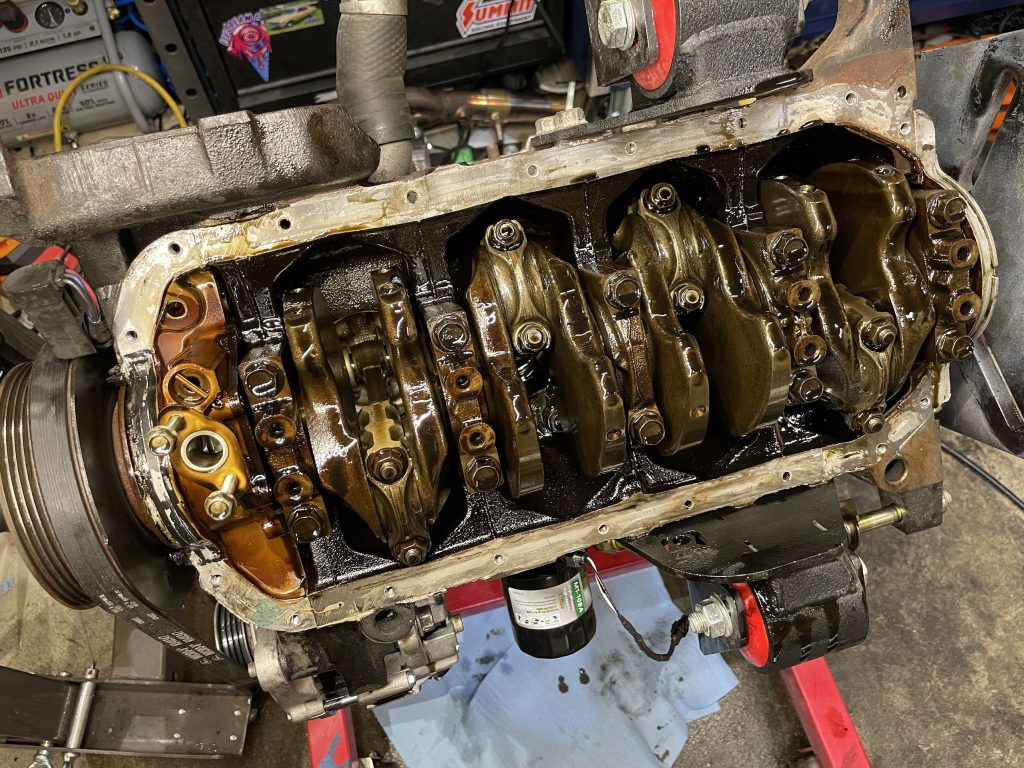
Conversely, the oil pan replacement introduced a post-installation anomaly. Approximately 500 miles following reinstallation, a minor oil seepage was detected along the front flange area where the oil pan mates to the block, originating from a hairline crack. Because the resting oil level sits well below the elevation of the crack during engine-off states, the leak manifested only during active operation under oil pressure. An emergency application of high-temperature structural epoxy successfully arrested the leak, though a secondary replacement oil pan has been procured as a contingency measure.
The Hawley Performance coolant reroute demonstrated immediate efficacy in lowering overall operating temperatures, as verified by auxiliary gauges. Coolant and engine oil temperatures remained stable during aggressive street driving. However, bleeding air from the cooling system proved significantly more complex due to the newly introduced high points in the plumbing route at the rear of the engine, necessitating an elevated, spill-proof coolant funnel to fully purge trapped vapor pockets. While the Hawley kit offers cost-effective utilization of off-the-shelf components, post-installation analysis suggests that alternative single-piece configurations featuring integrated bleed nipples—such as the Supermiata Qmax system—may offer superior serviceability and sensor port integration during future maintenance cycles.
Broader Implications and Future Outlook
The comprehensive overhaul underscores both the rewards and inherent challenges of deep automotive restoration on aging sports car platforms. Successfully executing a powertrain pull without professional shop infrastructure demonstrates the viability of advanced DIY mechanical stewardship for enthusiast vehicles like the Mazda Miata.
However, the reappearance of a minor rear oil leak shortly after reassembly highlights the unforgiving nature of legacy engine sealing surfaces. Despite meticulous gasket preparation and professional tooling, minor residual vulnerabilities can persist, necessitating continuous post-maintenance diagnostic monitoring. To mitigate operational downtime during future diagnostics, secondary sourcing has already commenced, including a secured deposit for a verified, low-mileage BP4W replacement motor imported from the United Kingdom via Prestige Spares, scheduled for delivery in early spring.
As the vehicle transitions from winter maintenance into active track preparation, upcoming project phases will focus on rigorous track-day thermal validation, comprehensive chassis safety enhancements—including roll bar integration and harness installation—and a retrospective review of the first full year of platform ownership. These forthcoming milestones will provide critical data on whether the current powertrain modifications can withstand sustained high-stress motorsport environments.