Chalid Lutfie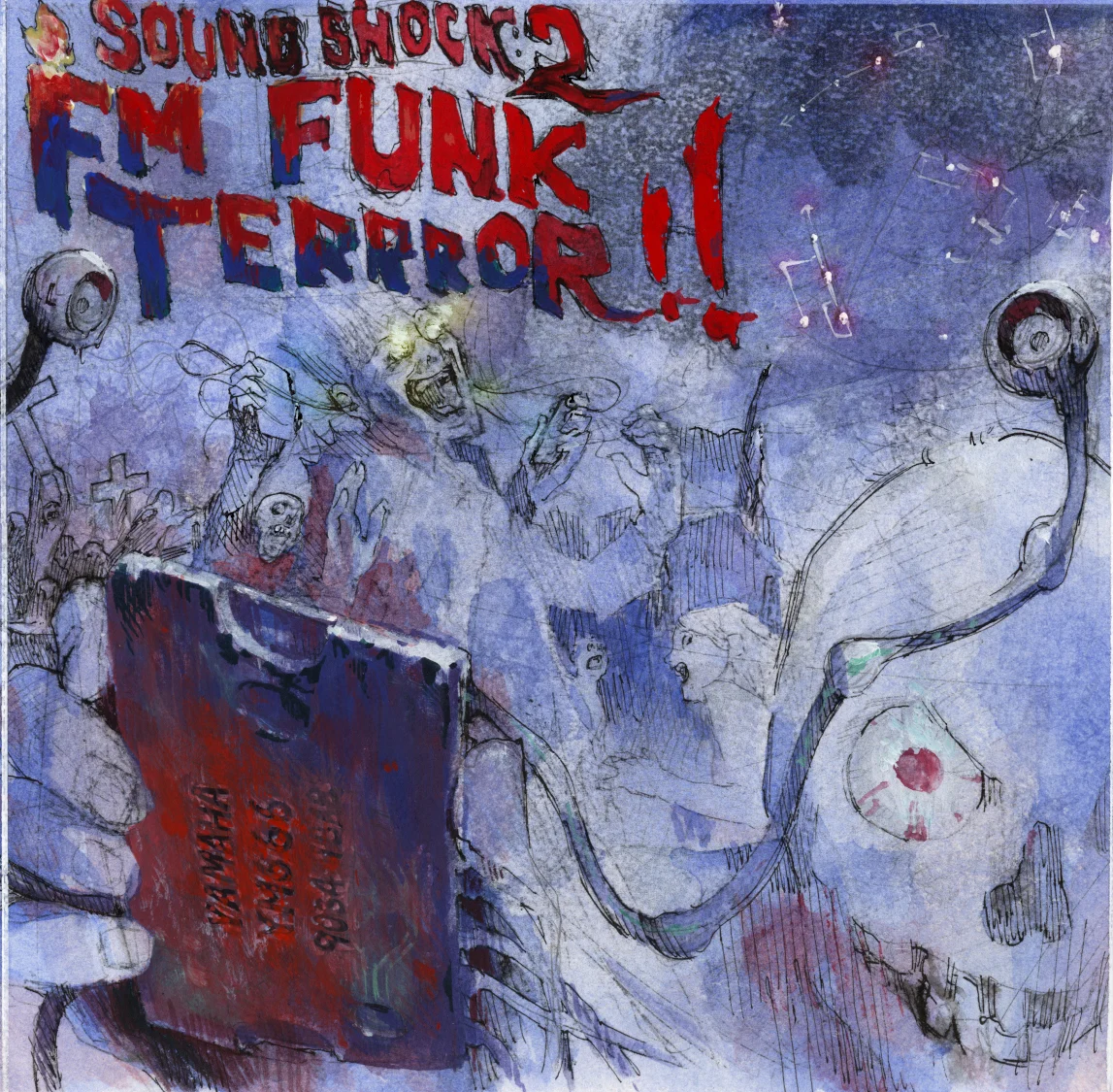
The conclusion of the SOUNDSHOCK music series marks a significant milestone in the contemporary chip music scene, signaling the end of a trilogy that has sought to celebrate and evolve the legacy of Frequency Modulation (FM) synthesis. On April 15, 2017, the project’s curator, known in the community as zinger, released a comprehensive retrospective detailing the visual evolution of the series. This update shifted the focus from the auditory complexities of the albums to the hand-painted cover art produced by Tsuyoshi Shimokura, a professional artist and musician whose work has become synonymous with the SOUNDSHOCK identity. The retrospective provides a rare glimpse into the creative synergy between music production and visual storytelling, revealing how 1980s arcade aesthetics, horror cinema, and Eastern philosophy converged to define a niche subculture’s aesthetic.
The Origins of a Collaborative Vision
The partnership between the SOUNDSHOCK project and Tsuyoshi Shimokura began through an introduction by the artist hex125. Originally, Shimokura was invited to contribute musically to the first installment, SOUNDSHOCK: FM FUNK MADDNESS!!. However, upon discovering a repository of Shimokura’s visual work, zinger identified a unique artistic voice that resonated with the project’s technical themes. Shimokura, a professional artist with a background in manga, possessed a deep-seated passion for vintage computing, arcade gaming, and the specific nuances of FM sound chips.
This intersection of interests proved vital. FM synthesis, popularized in the 1980s through the Yamaha DX7 synthesizer and the sound chips found in the Sega Genesis and various arcade boards, is often characterized by its metallic, complex, and "funky" textures. Translating these abstract audio qualities into a visual medium required an artist who understood both the technical architecture of the hardware and the cultural zeitgeist of the era in which it thrived.
Chronology of the SOUNDSHOCK Trilogy
The SOUNDSHOCK series was developed as an escalating tribute to the "FM sound," with each volume adopting a distinct thematic lens. The visual progression of the covers mirrors the increasing complexity and conceptual depth of the music contained within.
Phase I: FM FUNK MADDNESS!!
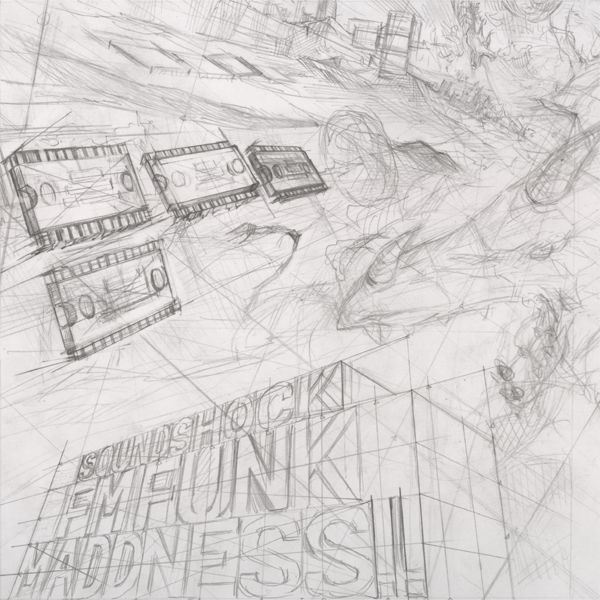
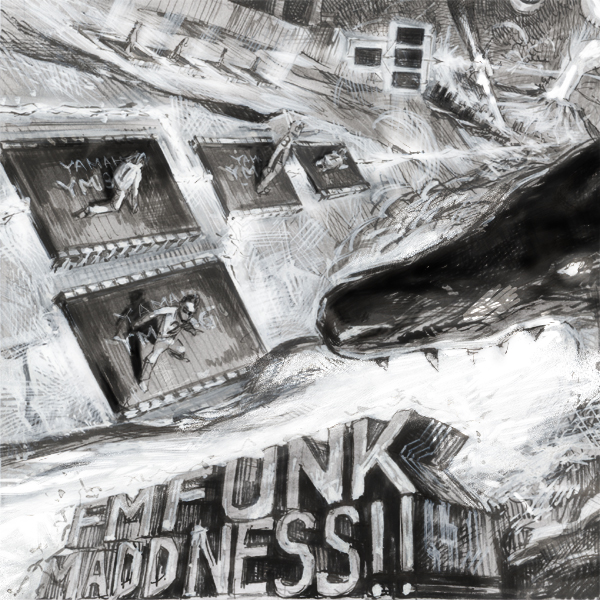
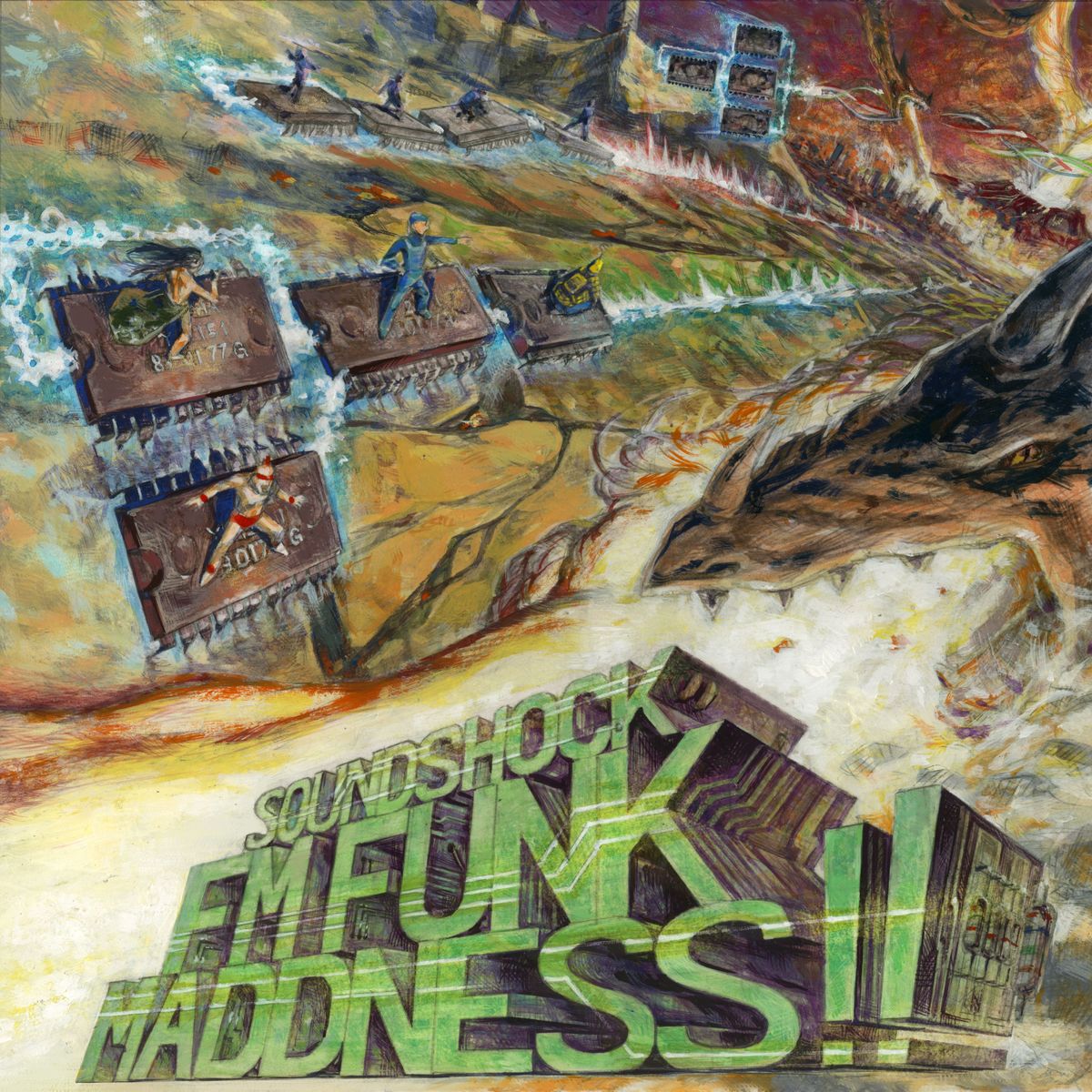
For the inaugural release, the creative team sought inspiration from the vibrant, high-energy flyer art of Taito’s classic arcade titles, specifically Metal Black and Darius II. The objective was to personify the music as a heroic force. Shimokura’s concept involved "heroes" or musicians utilizing the power of FM sound to combat monstrous entities.
The artwork features a meticulous attention to technical detail. Shimokura integrated representations of FM chips—specifically those resembling the Yamaha YM series—aligned in patterns that mimic algorithm charts. These charts are fundamental to FM synthesis, representing how different operators (oscillators) interact to create sound. In a whimsical yet technical touch, the chips were depicted with legs resembling caterpillars, suggesting a living, breathing mechanical ecosystem.
Phase II: FM FUNK TERRROR!!
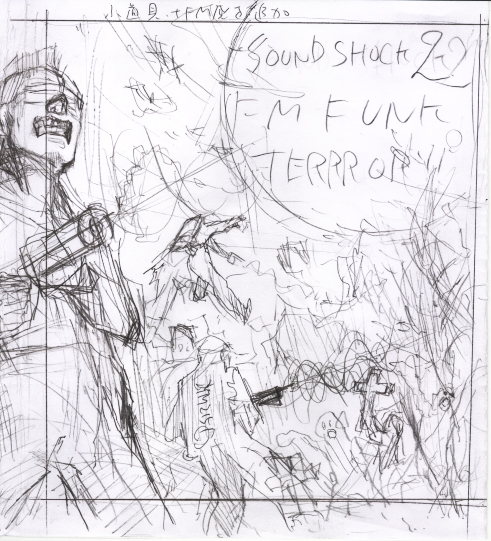
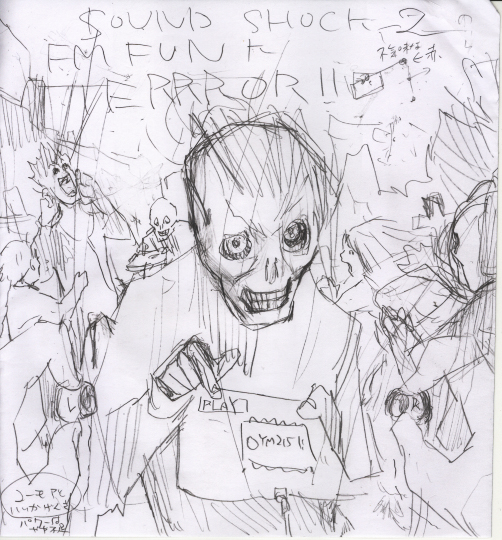
The second volume shifted toward a darker, more visceral aesthetic. Drawing from 1980s horror iconography, zinger provided Shimokura with reference materials ranging from the A Nightmare on Elm Street and The Evil Dead film series to the cult-classic arcade game Splatterhouse.
The resulting artwork is a dense, detail-oriented homage to the "horror" of FM sound—a reference to the aggressive, gritty tones the hardware can produce. A prominent figure in the composition is a ghoul wielding a gravestone-styled device labeled "YM666," a play on the Yamaha chip designations. The sky in the background features stars arranged in FM algorithm configurations, reinforcing the idea that the "terror" is written into the very laws of the sonic universe. This volume established the series’ penchant for linguistic exaggeration, utilizing three ‘R’s in "TERRROR" to emphasize its "over-the-top" nature.
Phase III: FM FUNK NIRVANA!!
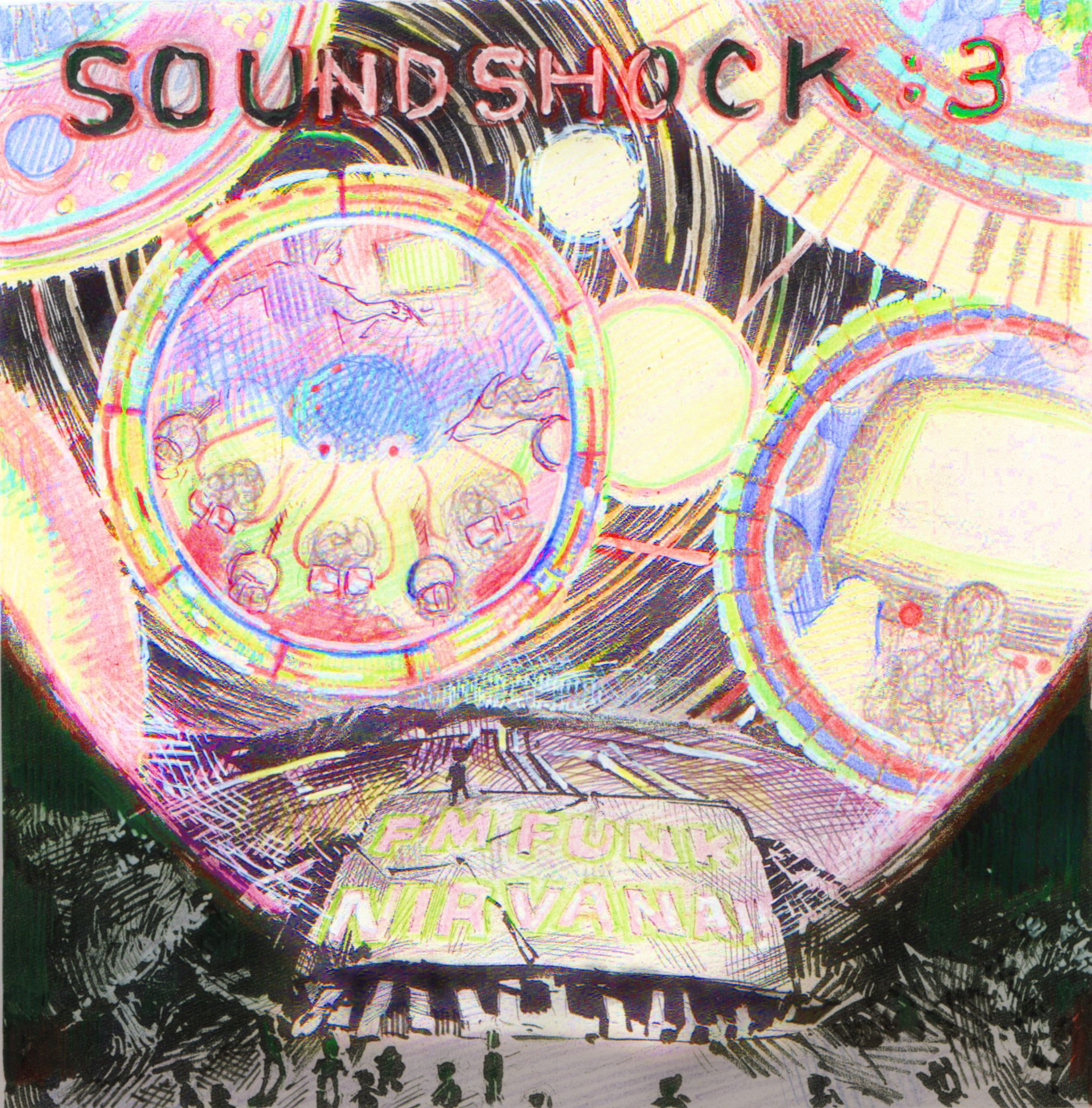
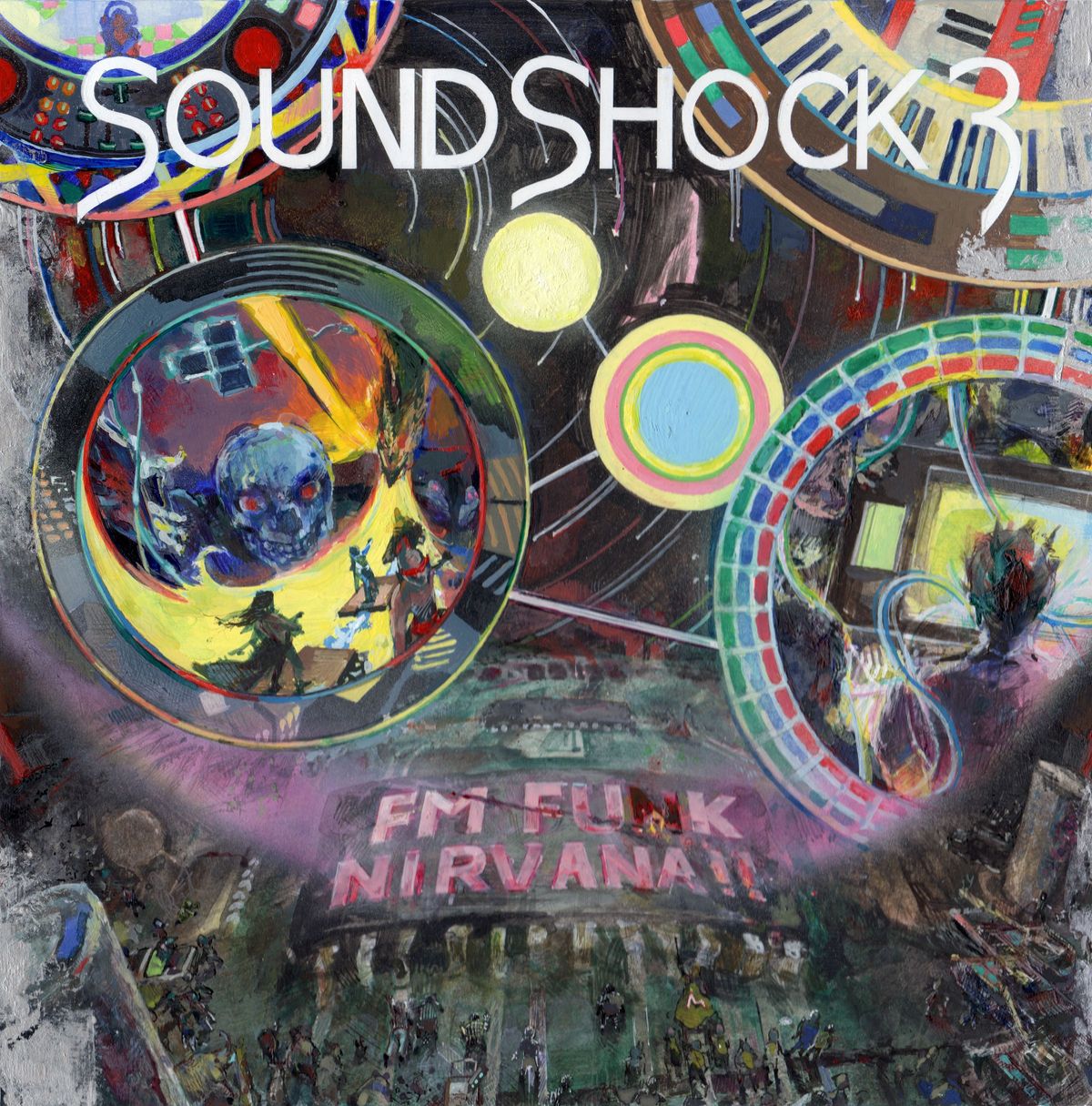
The final installment, SOUNDSHOCK 3: FM FUNK NIRVANA!!, represents the conceptual peak of the series. The title was inspired by a fan comment on social media, which suggested the "Nirvana" theme as the logical conclusion to the trilogy’s escalation. Unlike the previous titles, the spelling of "NIRVANA" remained standard; the curators felt the word already represented a "maxed out" state of perfection that could not be improved by additional lettering.
Visually, Shimokura moved away from the kinetic action of the first two covers toward a meditative, spiritual composition. Inspired by the soundtrack art of Darius Gaiden and Buddhist mandalas, the cover depicts a cosmic map of "elements" contained within spheres. At the base of the image, a mass of followers is shown worshipping a giant FM chip mounted on a circuit board. This imagery positions FM synthesis not merely as a tool for entertainment, but as a spiritual guiding force—a "mandala" for the dedicated listener.
Technical Context: The Role of FM Synthesis
To understand the significance of the SOUNDSHOCK project, one must consider the historical context of Frequency Modulation synthesis. Developed by John Chowning at Stanford University and later licensed by Yamaha, FM synthesis revolutionized the music industry in the 1980s. Unlike subtractive synthesis, which filters waveforms, FM synthesis uses one waveform (the modulator) to change the frequency of another (the carrier).
This method allowed for the creation of complex, harmonically rich sounds that were previously impossible for affordable hardware to produce. It became the signature sound of the Sega Mega Drive/Genesis (via the YM2612 chip) and the PC-88/98 computer series in Japan (via the YM2203 and YM2608 chips). The SOUNDSHOCK series serves as a modern revival of these sounds, pushing the aging hardware to its absolute limits through contemporary composition techniques.
Analysis of Implications and Artistic Philosophy
The retrospective includes a "concluding message" from Tsuyoshi Shimokura, which offers a philosophical reflection on the end of the series. Shimokura posits that the conclusion of SOUNDSHOCK is not a "sad thing" but rather the planting of a "seed" for future creators. He describes the contributors and listeners as "progeny of our forerunners," suggesting a lineage of digital artistry that spans decades.
This perspective highlights a broader trend in the "retrogaming" and "chip music" communities: the transition from nostalgia to active preservation and evolution. By treating the FM chip as an object of "worship" in the final album art, the series acknowledges the profound impact that these silicon components have had on a generation of artists. The project suggests that while the specific hardware may become obsolete, the "spiritual" essence of the sound—the specific logic of its algorithms—continues to inspire "spiritual offshoots" in new musical genres.
Broader Impact on the Chip Music Scene
The SOUNDSHOCK trilogy has been instrumental in maintaining interest in FM synthesis during an era dominated by high-fidelity digital sampling. By combining high-quality musical contributions with professional-grade, hand-painted artwork, the project elevated the standard for independent chip music releases.
The collaboration between zinger and Shimokura demonstrates the importance of visual branding in niche music markets. In an age of digital streaming, the focus on "album art prototypes" and "creative processes" emphasizes the value of the physical or conceptual "package" of an album. The series has successfully bridged the gap between Japanese doujin (indie) culture and Western enthusiasts, creating a global dialogue centered around a shared appreciation for 16-bit era technology.
As the series concludes, the legacy of SOUNDSHOCK remains a testament to the enduring power of FM sound. The meticulous documentation of its visual history ensures that the creative efforts of Shimokura and the various musical contributors are preserved for future "stars that have yet to be born," fulfilling the artist’s vision of the project as a foundation for future innovation. The transition from the "Maddness" of early experimentation through the "Terror" of technical mastery to the final "Nirvana" of artistic realization provides a complete narrative arc for one of the most respected projects in the modern FM synthesis revival.