Chalid Lutfie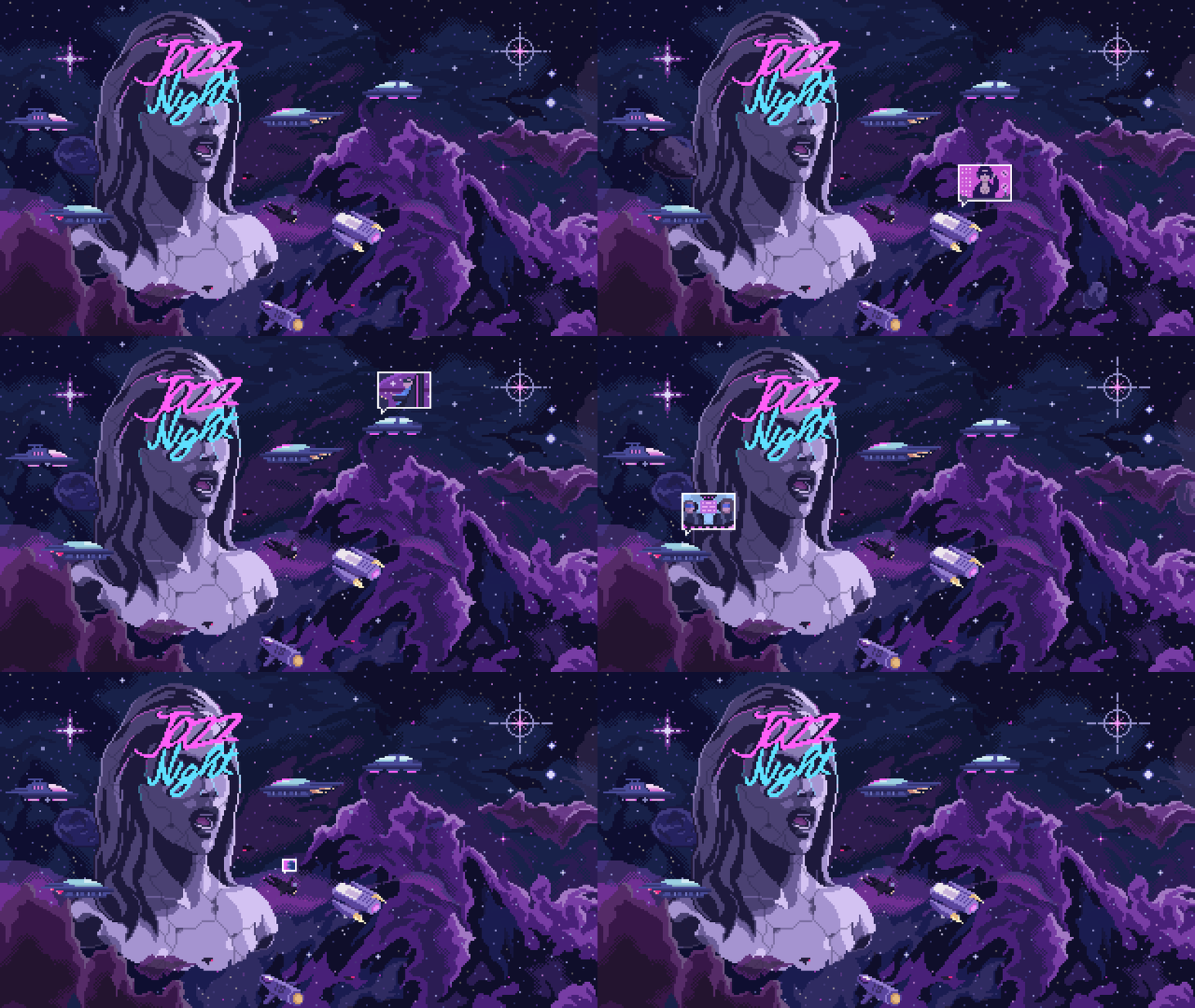
The release marks the Ubiktune debut of Juan Irming, the Los Angeles-based producer and composer performing under the moniker Amplitude Problem. Released on April 25, 2017, the album, titled The Frequency Modulators Orchestra, Vol. 1, represents a specialized exploration of retro-electro-jazz. The project is a conceptual endeavor that utilizes frequency modulation (FM) synthesis exclusively, paired with lo-fi percussion, to bridge the gap between cold, digital sound generation and the fluid, improvisational nature of traditional jazz.
The album arrives during a period of renewed interest in vintage synthesis techniques and the chiptune-adjacent synthwave movement. By restricting the instrumentation to FM synthesis—a method famously associated with the 1980s digital revolution—Irming attempts to humanize a medium often criticized for its clinical precision. The result is a collection of tracks that Irming describes as a "zany chiptune adventure," aimed at transforming pixelated soundscapes into a sophisticated, synth-funk soundtrack.
Historical Context and Artist Background
Juan Irming’s career trajectory is deeply rooted in the European demoscene of the late 1980s. The demoscene, a subculture centered on producing self-contained computer programs that generate audio-visual presentations, served as a primary training ground for many of today’s leading digital composers. Irming operated as a composer for the Atari ST crew known as SYNC. During this era, the Atari ST was a dominant force in music production due to its built-in MIDI ports, and SYNC was recognized as a prominent collective within the community. Irming’s work during this period earned several first-place finishes in demo music competitions, establishing his reputation for technical proficiency in constrained hardware environments.

In the early 1990s, Irming transitioned into formal musical education at the Musicians Institute in Los Angeles. This move allowed him to blend his self-taught digital foundations with classical and contemporary music theory. Over the following decades, he expanded his portfolio to include work as a sound designer, keyboardist, and producer. His credits span ten long-play records and include collaborations with notable figures in the synthwave and nerdcore rap scenes.
Notably, Irming contributed heavily to YTCracker’s 2014 cyberpunk album, Introducing Neals, and has shared billing on compilations featuring genre-defining artists such as Mitch Murder, Lazerhawk, and GUNSHIP. His live performances have reached audiences at major industry events, including Comic-Con and the Game On Expo, where he performed alongside acts such as The Gothsicles and The Minibosses.
The Evolution of the FM Concept
The genesis of The Frequency Modulators Orchestra, Vol. 1 can be traced back to 2014 during the production of YTCracker’s "Feel Like Leisure Suit Larry." While the majority of that project focused on the broader synthwave aesthetic, the specific track reignited Irming’s interest in the percussive and "zany" qualities of FM synthesis.
FM synthesis, popularized by the Yamaha DX7 in the 1980s and later the OPL chips found in early PC sound cards and the Sega Genesis, operates by modulating the frequency of one waveform (the carrier) with another (the modulator). Unlike subtractive synthesis, which filters harmonically rich waves, FM synthesis builds complex timbres from the ground up. This process is notoriously difficult to program manually, often resulting in sounds that are perceived as metallic, "glassy," or "cold."
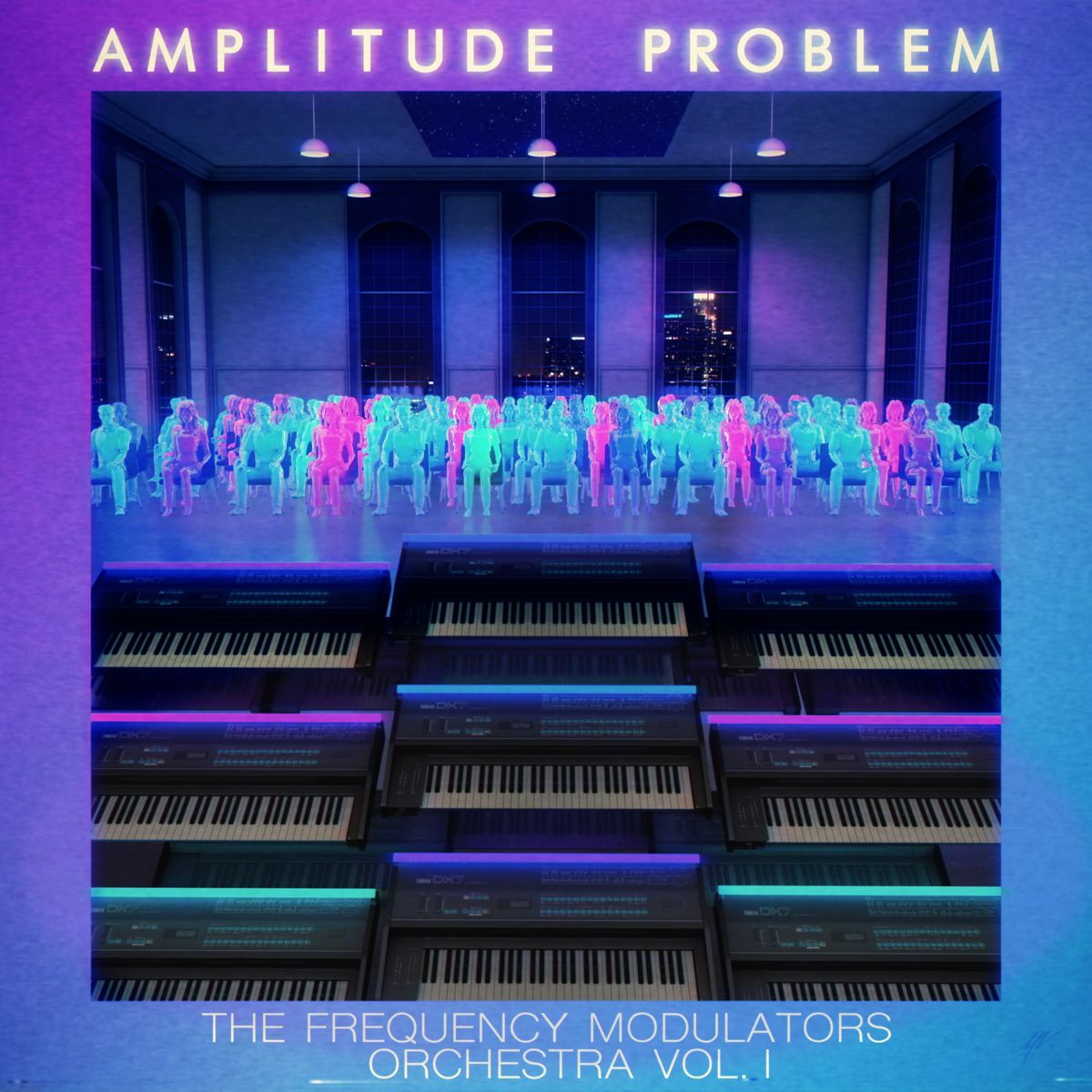
Following the 2015 release of his album Blue Bots Dots, which featured the FM-heavy track "Funky Mustache," Irming committed to a ten-month creative cycle dedicated to a full-length FM project. The objective was to utilize the inherent rigidity of digital synthesis to execute "warm" human grooves. This required a heavy emphasis on live keyboard improvisation to counteract the programmed nature of the medium.
Production and Technical Specifications
To ensure the album met the high fidelity standards required for jazz listeners, Irming enlisted the services of Grammy Award-winning mastering engineer Don Grossinger. Grossinger’s portfolio includes work with jazz legend Miles Davis, a fact that underscores the project’s ambition to be viewed as a legitimate entry into the jazz-funk canon rather than a mere novelty chiptune record.
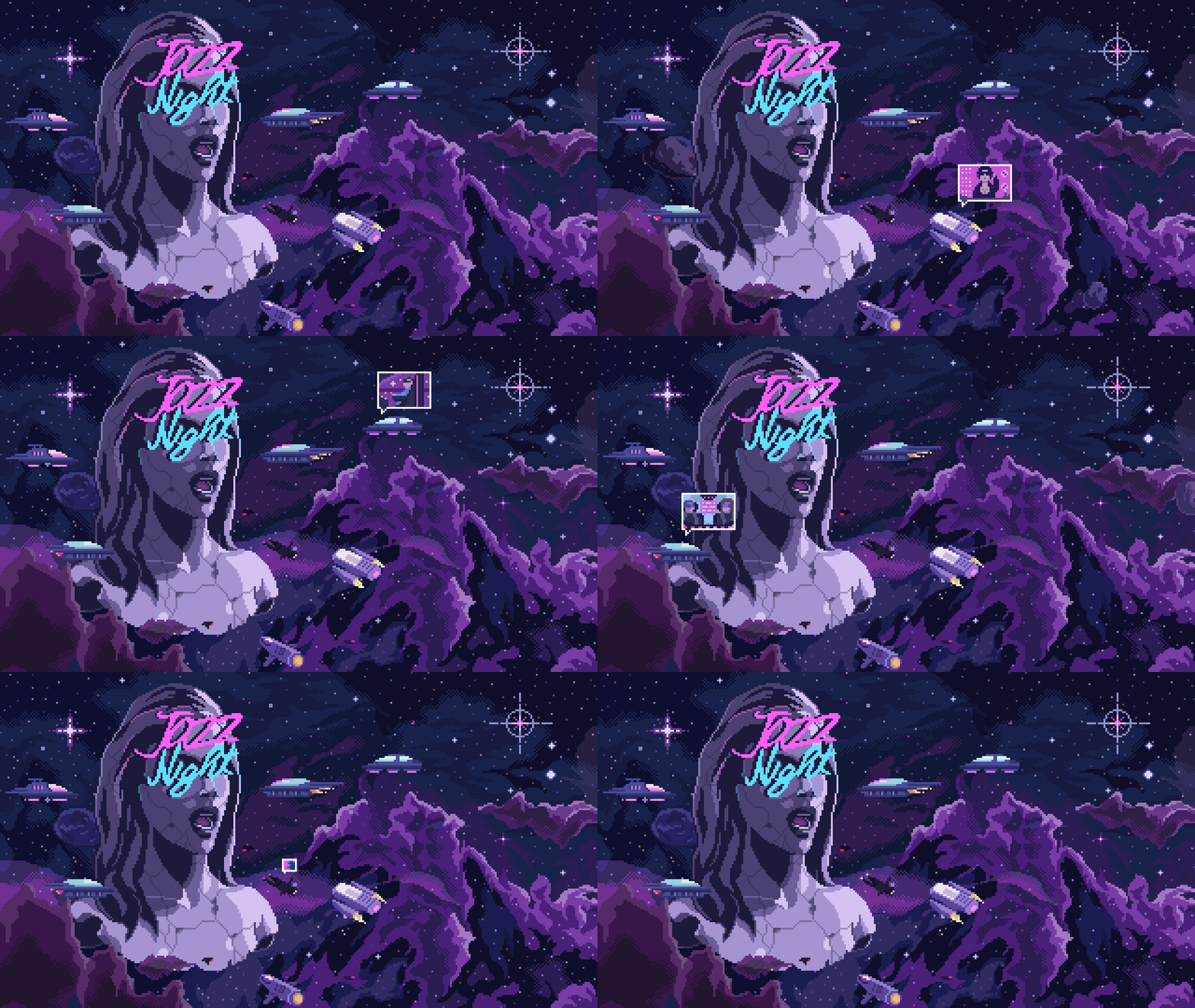
The visual identity of the album was a collaborative effort involving two prominent artists in the retro-digital space. The front cover art was handled by Mythical Vigilante, while additional art and animations were provided by Valenberg. Valenberg, known for intricate pixel art, created a "Jazz Night" animation specifically for this release, reinforcing the intersection of high-tech digital art and the classic "smoky lounge" jazz aesthetic.
The album’s narrative structure is divided into two distinct thematic halves. The first four tracks are described by the artist as an introspective deep dive, while the final three tracks offer a commentary on external life and the universe. This progression from the internal to the cosmic is a hallmark of concept albums, providing a cohesive arc to what could otherwise be a disparate collection of instrumental jams.

Analyzing the "Frequency Modulators" Persona
A key element of the release is the creation of a fictional ensemble. Irming opted to credit the music to "The Frequency Modulators Orchestra" rather than a solo act to reflect the improvisational nature of the recordings. In this conceptual framework, each FM instrument is treated as a separate band member, granted the "privilege" to improvise and interact within the soundstage.
This approach addresses a common challenge in instrumental electronic music: the absence of a vocal lead. Irming noted that writing purely instrumental music places a higher burden of proof on the composer to maintain listener engagement. By adopting the persona of an orchestra, the music shifts from a static production to a dynamic performance, allowing for tracks like "Ghosts in My Medicine Cabinet" to embrace experimentalism without the constraints of traditional pop structures.
Broader Implications for the Genre
The release of The Frequency Modulators Orchestra, Vol. 1 comes at a time when the "Chiptune" and "Synthwave" labels are increasingly overlapping with more traditional genres. By positioning an FM-only album within the jazz-funk framework, Amplitude Problem challenges the perception of digital music as being inherently "soulless."
Industry analysts observe that this trend reflects a broader move toward "technical nostalgia," where artists use the limitations of obsolete technology to find new creative avenues. The Atari ST and FM synthesis are no longer seen as inferior tools compared to modern software; rather, they are viewed as instruments with specific timbral characteristics, much like a Fender Rhodes or a Hammond B3 organ.
Furthermore, the involvement of a mastering engineer of Don Grossinger’s caliber signals a maturation of the indie-electronic scene. It suggests that artists originating from the demoscene and video game music sectors are increasingly seeking to meet the production standards of mainstream legacy genres.
Impact and Future Outlook
The Frequency Modulators Orchestra, Vol. 1 is currently available across all major digital distribution platforms and streaming services. Its arrival on the Ubiktune label—a label known for its curated selection of high-quality chip-inspired music—further solidifies the album’s standing within the community.
As the first volume in a suggested series, the album sets a precedent for future explorations into FM synthesis. The project serves as a case study in how specific synthesis methods can be decoupled from their historical associations (such as 1980s pop or 16-bit video games) and applied to complex, improvised musical forms.
In the context of Juan Irming’s career, this debut on Ubiktune represents a synthesis of his past and present. From the competitive demo circles of Europe to the professional studios of Los Angeles, the album is a culmination of decades of technical and musical evolution. For the broader music industry, it highlights the enduring versatility of frequency modulation and the ongoing dialogue between the digital and the human.
Chronology of Development
- 1980s: Juan Irming begins his career in the European demoscene with the Atari ST crew SYNC.
- Early 1990s: Irming attends the Musicians Institute in Los Angeles, bridging the gap between digital programming and formal theory.
- 2014: Production begins on YTCracker’s Introducing Neals; the track "Feel Like Leisure Suit Larry" sparks a renewed interest in FM synthesis.
- 2015: The track "Funky Mustache" is released on the album Blue Bots Dots, serving as a proof-of-concept for an all-FM jazz-funk project.
- Late 2015: The concept for The Frequency Modulators Orchestra is finalized.
- 2016: A ten-month intensive production and recording period begins, focusing on live improvisation and FM sound design.
- Early 2017: Mastering is completed by Don Grossinger; visual assets are finalized by Valenberg and Mythical Vigilante.
- April 25, 2017: The Frequency Modulators Orchestra, Vol. 1 is officially released on Ubiktune.