Cecilia Chamidah Nur
Hideo Kojima stands as one of the most influential, internationally recognized, and revered figures in the video game industry, a visionary whose career spans nearly four decades. His impact transcends geographical borders, linguistic barriers, and hardware platforms, solidifying his status as a global creative force. While online platforms are awash with interviews and thousands of in-depth analytical essays dissecting his work, and even books penned by Kojima himself, the question remains: what fresh perspectives can be offered on such a mythical figure?
For many outside of Japan, the name Hideo Kojima first entered public consciousness with the groundbreaking arrival of Metal Gear Solid on the PlayStation in 1998. This seminal title propelled him into the international spotlight, garnering universal acclaim and marking a pivotal moment in his career. However, his journey began much earlier, rooted in a rich and often overlooked history of innovation on Japanese personal computers and early consoles. This feature delves into the foundational experiences, influential media, and early projects that shaped Kojima’s unique creative "DNA," demonstrating that the meta-narrative genius and boundary-pushing design for which Metal Gear Solid became famous were, in fact, integral to his work from its very inception.
A Luminary’s Genesis: Before the PlayStation Spotlight
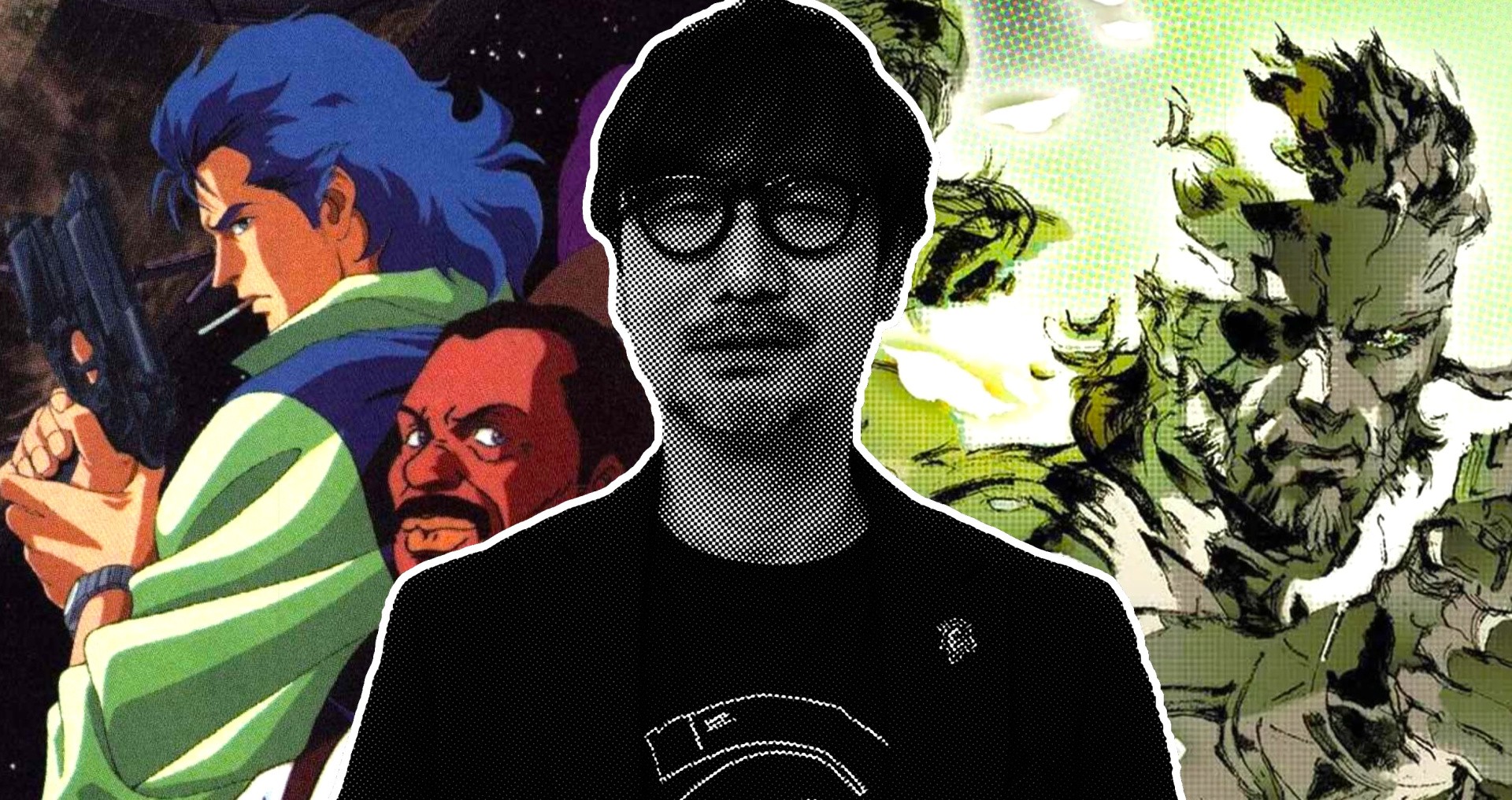
While Metal Gear Solid served as the global launchpad for Kojima’s celebrity, his earlier works had a more limited reach in Western markets. The original Metal Gear on MSX2 (1987) saw a European release, and its NES port reached America in 1988, but neither version prominently celebrated its auteur creator. The same pattern applied to Snatcher on Mega / Sega CD (1994/95) and Policenauts, despite receiving exquisite two-page spreads in prominent gaming magazines like DieHard GameFan in 1996. In these early instances, Kojima’s name remained largely absent from Western media narratives.
The paradigm shifted dramatically in 1998. A concerted media campaign accompanied Metal Gear Solid‘s release, culminating in unprecedented critical reception. Electronic Gaming Monthly #113 famously awarded it perfect review scores of 10/10/10/10, a symbolic statement that underscored its revolutionary impact in the American market. Famitsu #508, Japan’s esteemed gaming publication, offered a similarly high 9/10/9/9. This disparity, though minor in numerical value, highlighted a strategic elevation of Kojima’s persona in Western markets. His penchant for incorporating cinematic influences, predominantly American, resonated deeply with international audiences, broadening his appeal and universality.
Metal Gear Solid was lauded as a masterpiece, not least for its innovative fourth-wall-breaking interactions. Examples such as Meryl’s codec frequency being printed on the game packaging, the game recognizing save files from other Konami titles (Kojima reportedly even wished to integrate saves from other developers), the requirement to swap controller ports to defeat Psycho Mantis, and receiving a "massage" from Naomi, all transcended traditional gaming conventions. These elements were not mere gimmicks; they represented a fundamental aspect of Kojima’s design philosophy – a desire to challenge the boundaries of the medium – a mindset consistently present throughout his career, often setting him apart from his contemporaries.
The Digital Crucible: Kojima’s PC Roots and Early Inspirations
A crucial, yet often under-documented, aspect of Kojima’s early development lies in his deep engagement with Japanese personal computers. Up until Metal Gear Solid, he was predominantly involved in developing and playing games on these platforms. This context is vital, as the history of Japanese personal computers remains poorly documented compared to console gaming, especially in Western narratives.
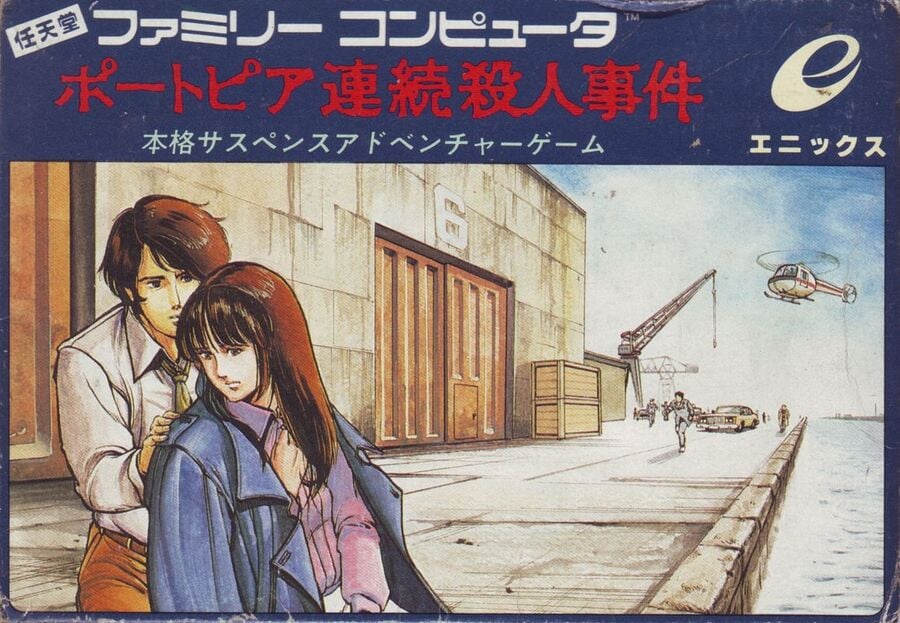
Over the years, Kojima has repeatedly cited four games as having the greatest impact on his creative vision: Super Mario Bros. (NES, 1985) for demonstrating the possibilities of action games; Another World (Amiga, 1991) for exemplifying authorship and cinematic storytelling; Xevious (Arcade, 1982) for showcasing intricate "worldview" and lore; and The Portopia Serial Murder Case (PC-6001, 1983) for its compelling story and innovative detective mechanics. In each, he expressed a profound sense of witnessing the future of interactive entertainment. Additionally, he highlighted Hydlide (PC-88, 1984), expressing shock at its open-world design and hoping to evoke similar player emotions with Metal Gear Solid V: Ground Zeroes (PS4, 2014).
While Super Mario Bros. and Another World are extensively documented in English, and Xevious is well-known among older arcade enthusiasts, The Portopia Serial Murder Case and Hydlide often suffer from a lack of proper contextualization outside Japan. This is partly attributable to the US-centric bias prevalent among many game historians. Hydlide, for instance, is frequently dismissed by US essayists as inferior to The Legend of Zelda (NES, 1986). However, this critique often ignores chronology; Hydlide launched in Japan two years before Zelda, reaching the US five years later in 1989, stripped of its original context. In Japan, Hydlide was a revolutionary phenomenon, selling a million copies across eight computer formats and significantly influencing Kojima and the Metal Gear Solid series.
Kojima’s reverence for these titles is not merely anecdotal. He directly cited Hydlide as an inspiration for Ground Zeroes‘ open-world design. More remarkably, fans have discovered fragments of The Portopia Serial Murder Case‘s game code hidden within Ground Zeroes and The Phantom Pain, sparking deep investigations within the community. Enthusiasts actively comb through data, speculating that a complete, perhaps altered, version of Portopia for the PC-6001 might be embedded within, eagerly seeking to extract and play it. This meta-textual inclusion exemplifies Kojima’s deep respect for his influences and his penchant for embedding layers of meaning.
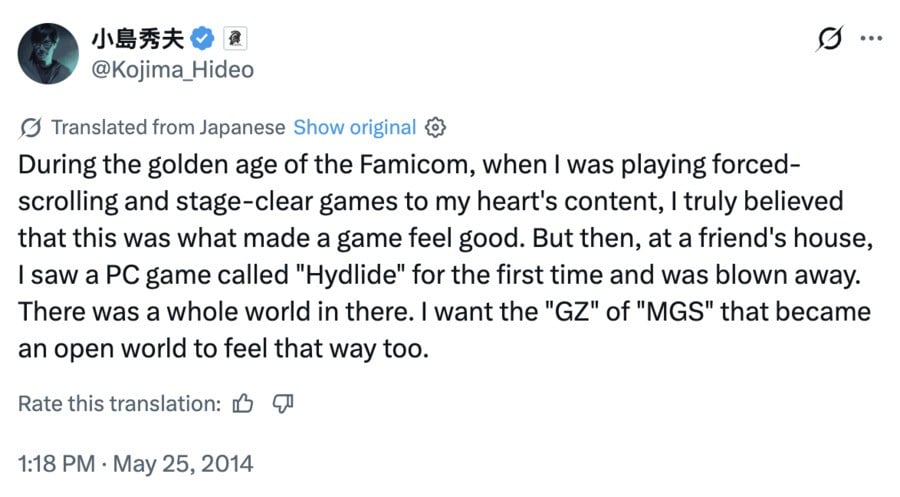
The historical significance of Portopia extends beyond Kojima. It is also one of Yuji Horii’s earliest games, making it a foundational ancestor to the Dragon Quest series and, by extension, the entire JRPG genre. Understanding the various computer versions, alongside their packaging, manuals, maps, and even physical anomalies of the floppy disks, is crucial for comprehensively appreciating the context that inspired Kojima and other Japanese creators. This holistic approach to game preservation allows scholars to conduct a veritable "archaeology of the mind," tracing the lineage of creative thought.
This archaeological pursuit reveals interconnected influences throughout Japanese game design. Hydlide‘s creator, Tokihiro Naito, was influenced by Tower of Druaga (Arcade, 1984). Shigeru Miyamoto, in turn, drew inspiration from Druaga for The Legend of Zelda, as did Yui Tanimura of FromSoftware for the messaging system in the Soulsborne series. Thus, titles like Breath of the Wild, Elden Ring, and Metal Gear Solid V share discernible, traceable roots in this rich tapestry of early Japanese computer gaming.
From Uncredited Contributions to Defining Genres: The Early Konami Years
Kojima’s professional journey at Konami began with an uncredited role on Yume Tairiku Adventure / Penguin Adventure (MSX, 1986). While he has been keen to stress this was not his directorial debut, contributing only "gimmicks and other ideas," the game itself was a marvel of inventive creativity. Described by Time Extension contributor Ashley Day as "an entire game of brilliant little moments" and the "Super Mario Bros. of the MSX," Penguin Adventure‘s rich array of Easter Eggs and novel mechanics fostered an environment that encouraged the experimental spirit Kojima would later embody. Even if his direct input was minimal, this "training environment" undeniably shaped his understanding and appreciation for innovative game design.
His next project, Lost Warld (a portmanteau of "war" and "world"), was significantly more ambitious. Though ultimately unreleased, it saw extensive development, featuring opening and ending cinematics and bonus stages. The project famously started using leftover assets from a cancelled wrestling game, Masked Fighters. In a 2012 interview, Kojima described dedicating himself to developing a script and ideas spanning "200 to 300 pages," transforming it into an Indiana Jones-style platformer. Despite three months of intensive work, its ambitions exceeded the hardware and ROM capacity, leading to its cancellation. Kojima later recounted this as "the biggest disappointment of my life." Lost Warld represents a vital missing puzzle piece, a formative experience that, despite its failure, was crucial to his maturation process at Konami and instilled in him a resilient determination.
The project that would define Kojima for decades was Metal Gear (MSX2, 1987). Ironically, it was not his original concept but a troubled, failing project within Konami, which he was assigned to salvage. Through ingenuity and an acceptance of the MSX2’s technical limitations, he crafted something profoundly distinct. As he explained in a 1999 interview, "Several Konami veterans had been working on this war game for two years. But it wasn’t going anywhere… if you got involved in this project you’d end up demoted." Kojima took the generic "war game" brief and subverted it, eschewing direct combat in favor of stealth. While the origins of the stealth genre can be traced to earlier titles like Manbiki Shounen (1979), Kojima’s 1987 release was a monumental evolution that standardized many of its core elements.
Metal Gear also marked the beginning of Kojima’s integration of film influences and real-world geopolitical themes. He frequently cited films like The Great Escape as inspirations. The game’s setting in South Africa was particularly poignant given the political climate of the 1980s. South Africa was embroiled in the Angolan Bush War, a conflict often likened to South Africa’s Vietnam. Japan, notably, maintained a unique trade relationship with South Africa, defying international sanctions, which resulted in Japanese citizens being granted "honorary white status" under Apartheid. Kojima, exposed to international news via NHK, would have been acutely aware of these events. This early integration of complex geopolitical backdrops foreshadowed later Metal Gear installments, where such themes would become central (e.g., Afrikaans dialogue in MGSV).
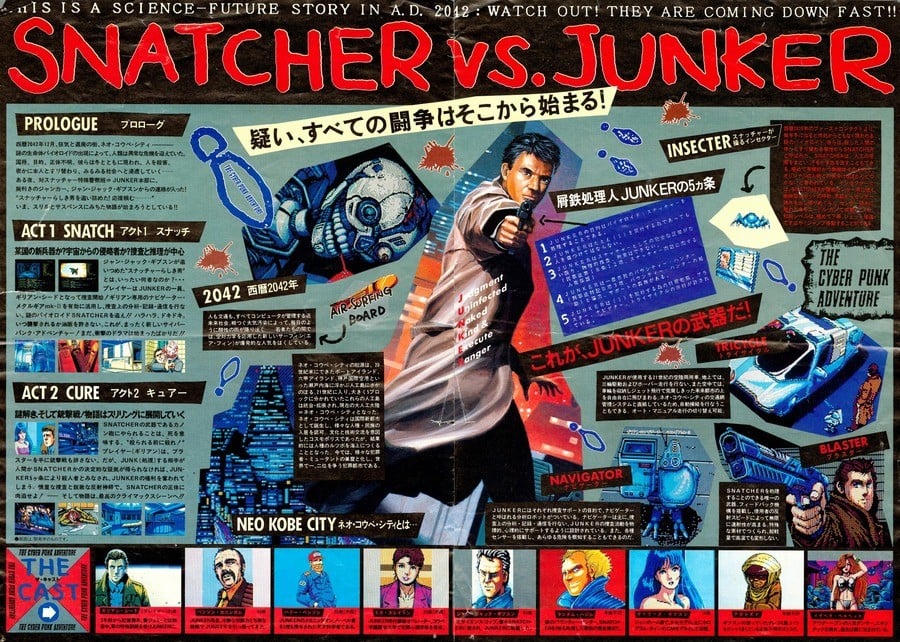
Snatcher followed (PC-88/MSX2, 1988), Kojima’s ambitious attempt at an adventure game akin to Portopia, but imbued with heavy influences from cyberpunk cinema like Blade Runner, Terminator, and even elements of Dune. Initially titled "Junker," its development was stressful and comparatively large for its time. The initial computer versions ended on a cliff-hanger, with the final act only added in later ports to PC Engine and Mega CD. Though often described as a "digital comic," Snatcher featured innovative ideas, including shooting segments. The most intriguing, albeit scrapped, concept involved a "dying message" printed on a floppy disk with heat-sensitive paint, revealing itself as the disk warmed up inside the computer. This audacious idea, though never implemented, perfectly encapsulated the meta-narrative and physical interaction that would become a Kojima hallmark.

Metal Gear 2: Solid Snake (MSX2, 1990) was again spurred by external events. It followed Konami’s NES sequel, Snake’s Revenge (1990), a competent game that, despite fan criticism for not being the "true" MSX2 sequel, contained elements later found in Kojima’s entries. Kojima himself enjoyed Snake’s Revenge, and its developer, likely Hitoshi Akamatsu, explicitly requested Kojima create his own sequel. This sense of obligation led to MG2:SS, a fantastic game that served as the definitive template for future installments. It was here that the famous "Codec-on-the-back-of-the-box" trick, later attributed to Metal Gear Solid, actually debuted. The game also showcased Kojima’s love for television, with Snake neutralizing acid using chocolate, a direct mimicry of a 1985 MacGyver pilot episode.
Pioneering "Cinematic Virtual Reality": The Policenauts Era
Policenauts (PC-98, 1994), an interactive film noir adventure, saw an even more harrowing four-year development than Snatcher. Its PC-98 launch was inconspicuous, but the game itself was a technical and narrative marvel. Interestingly, when development began in 1990, Kojima envisioned its genre as "Cinematic Virtual Reality." This innovative descriptor was dropped by release due to "Virtual Reality" being trademarked. While most fans know its 3DO, PS1, or Saturn ports, the PC-98 original is celebrated for its stunning, high-resolution pixel art, a testament to the era’s graphical prowess despite a lower color palette.
For many fans born after the millennium, Policenauts and Kojima’s other early works present a unique challenge. Their cognitive frames of reference might miss the subtle nods to 1980s films like Lethal Weapon (primarily aesthetic inspiration) or, more profoundly, the intricate plot influences from the 1978 film Coma. This generational divide also extends to the game’s "playful elements," which border on ecchi. In an era of heightened social sensitivity, where discussions around objectification have evolved, understanding these elements requires an older worldview where such innuendo was a commonplace part of cultural discourse. This context is essential for appreciating the original intent and reception of these works.

Beyond the Screen: Redefining Interaction and Narrative
Kojima’s genius lies not just in his realized projects but also in his relentless pursuit of unconventional ideas. He has frequently noted how his bold concepts—such as Metal Gear‘s emphasis on avoidance, Snatcher‘s blend of adventure and shooting, MGS3: Snake Eater‘s complex survival mechanics, or Boktai‘s sunlight requirement—were often initially misunderstood by colleagues. He laments that it can take years for such originality to be truly appreciated, suggesting a persistent gap between his visionary thinking and conventional industry expectations.
The handheld Boktai series (GBA, 2003), though post-Metal Gear Solid, perfectly encapsulates Kojima’s boundary-pushing ethos. Utilizing an excess of UV light sensors integrated directly into the Game Boy Advance cartridges, Boktai featured an in-game clock and required players to play in real sunlight to charge their weapons. This mechanic fundamentally redefined the game as a physical artifact, making core gameplay directly dependent on real-world environmental variables – the quintessential Kojima experience of intertwining the game world with the player’s reality.
Among his many unrealized concepts, the "namage," or "raw game," stands out. This idea envisioned a game playable for several years but designed to self-destruct or delete itself upon a game over, requiring a re-purchase to play again. While concepts like Sub Mission: A Matter of Life and Death (1986) touched upon this, Kojima’s ambition for such a mechanic was unparalleled. More recently, on his KOJI10 podcast, he discussed ideas for games where characters physically age and weaken, gaining wisdom but losing strength, or a game where the protagonist gradually forgets critical information and abilities if the player takes too long a break. This latter concept echoes a famous meta-moment in MGS3: Snake Eater, where saving mid-battle against The End and reloading a week later (based on the PS2’s internal clock) would result in the boss dying of old age. These ideas underscore Kojima’s deep fascination with the passage of time, consequence, and the player’s interaction with the game’s inherent systems.
The Auteur’s Medium: Games Over Film
Despite the common jest that his body is "70% movies" and essayists often analyzing him through the lens of a filmmaker, Kojima himself has articulated a clear preference for games over film. In a definitive statement in Electronic Gaming Monthly #258, he championed the unique benefits of games: "Film-industry people tell me that shooting a film is easier than making a game, because the director has control over chronology, camera placement, and so on. Directing a movie would be simpler than creating a game, with its necessary player interactivity and innumerable variables. I started making games because I was unable to direct films, but I soon realised the depth interactivity affords. So much can be offered only through the medium of games."
This assertion reveals a profound vision and insight that distinguishes him from many in both the gaming and film industries. Video games, for Kojima, represent the apex of human creative expression, capable of integrating and transcending all prior art forms. They can render any visual style, from traditional painting to abstract light manipulation; generate complex audio landscapes; mimic millennia of architecture or envision impossible structures; simulate or subvert Newtonian physics; and model intricate economic or strategic systems. Games are an infinite medium, capable of expressing anything the mind can conceive.
This perspective stands in stark contrast to the views often expressed by writers and developers with backgrounds in traditional media. Articles on platforms like Game Developer frequently feature lamentations about the difficulties of game writing. Amy Claussen, a veteran writer with a theater background, speaks of narrative rules and prescribed formulas that the games industry "messes up," betraying a fundamental misunderstanding of games’ unique interactive nature. Adam Volk highlights the specialized skill required for game writing, while Adam Maxwell controversially suggests replacing writers with game designers entirely. These examples underscore a prevalent challenge: talented writers from linear media often lack the specific skillset and understanding required to craft compelling, non-linear, interactive narratives.

Kojima, conversely, intuitively grasps the essence of ludology—the study of games and gameplay. He seamlessly integrates gameplay mechanics with narrative in an organic, synergistic manner that never compromises the fundamental point of games: playing them. Few, if any, with a background in TV or film could conceive of the "bloody floppy disks," self-deleting games, radio frequencies on packaging, or the necessity of real sunlight for gameplay. His ability to fuse deep, multi-character narratives with fresh mechanical ideas, always understanding the nuance offered by interactivity, has been a hallmark from the very beginning of his career. He not only wrote compelling scripts for Metal Gear Solid but meticulously built physical locations out of Lego to better understand the architecture of 3D games and optimal camera angles. This level of immersion in the medium is rare, perhaps only paralleled by figures like Shigeru Miyamoto in his mastery of play.
Legacy and Preservation: The Enduring DNA of a Visionary
To experience a Kojima game is to glimpse beyond preconceived notions of what artistic media is capable of. His unique vision places him among the grand pantheon of artistic pioneers. One might draw parallels with Trent Reznor of Nine Inch Nails, who conceived an "augmented reality game" for his 2007 album Year Zero, hiding USB sticks and creating secret websites that culminated in real-world fan events. Yet, Kojima was conceptualizing his own reality-breaking interactions at least two decades prior. His intellectual kinship extends to figures like David Lynch, with his surreal narratives, and William Gibson, whose self-destructing 1992 poem Agrippa echoes Kojima’s own fascination with ephemeral media.
To truly honor Kojima’s stature, it is imperative to understand not just his evolving portfolio but also the games that influenced him. These historical artifacts are the very DNA that defines his creative identity. Thanks to the dedicated efforts of organizations like the Japanese Game Preservation Society, these games are being meticulously archived. This ensures that scholars, enthusiasts, and future generations can continue to analyze these digital relics, and by extension, gain a deeper understanding of the mind of Hideo Kojima – a true visionary whose contributions continue to push the boundaries of interactive entertainment.