Retno Hari Mulyono
For automotive enthusiasts who participate in high-performance driving events, time trials, and autocross competitions, transitioning away from standard street tires to dedicated 200 treadwear (200TW) or competition-compound rubber is an inevitable milestone. These ultra-sticky tires drastically reduce lap times and enhance cornering grip, providing the mechanical adhesion necessary to push a vehicle to its limits safely on a closed circuit. However, the inherent physical properties that make these compounds exceptional on the track render them fundamentally impractical for daily street driving. Fast-wearing rubber compounds degrade rapidly under normal highway conditions, diminishing valuable tread depth and consuming precious heat cycles before the driver even reaches the paddock. Furthermore, many track-oriented tires feature stiff carcasses and aggressive tread patterns that offer negligible grip in cold or wet environments, transforming a routine rainy commute into a hazardous driving experience.
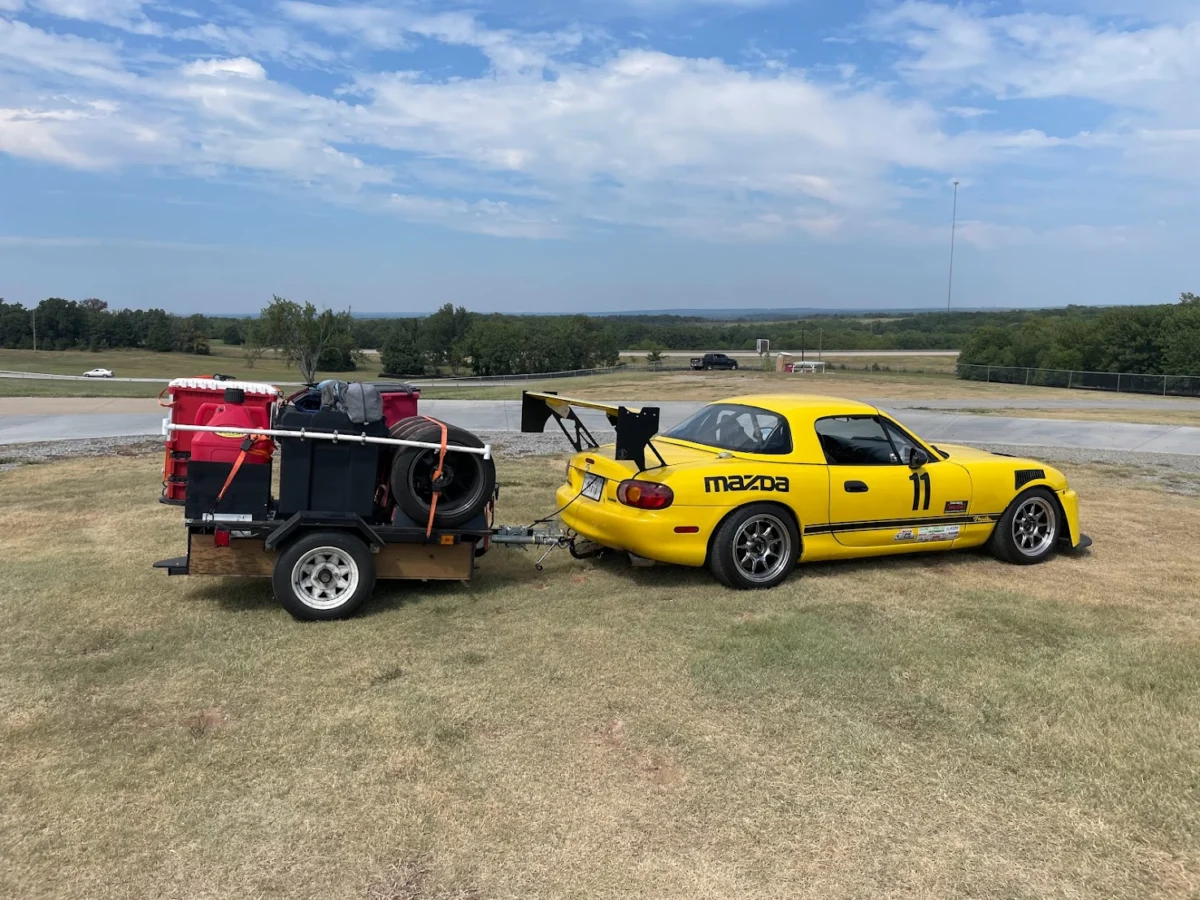
While owners of sedans, hatchbacks, and larger sports cars can often squeeze an extra set of wheels and tires into their back seats or trunk space, drivers of compact, lightweight sports cars—most notably the iconic Mazda Miata—face a severe geometric limitation. With minimal trunk capacity and a cockpit designed strictly around the driver and passenger, bringing a secondary set of track tires, along with essential tools, jacks, spare fluids, and track-side shelter, presents a formidable logistical challenge. To overcome this limitation without resorting to a heavy-duty tow rig and a full-size car trailer, a growing segment of the track day community has embraced a specialized piece of engineering: the custom tire trailer.

The Evolution of the Track-Side Utility Trailer
A tire trailer is typically constructed from a lightweight, compact utility frame, designed explicitly to be towed behind vehicles traditionally considered incapable of towing, such as roadsters and compact hatchbacks. These micro-trailers provide a dedicated platform to transport a complete set of four track wheels and tires, heavy toolboxes, canopies, folding furniture, and auxiliary fuel supplies. For enthusiasts who prefer to drive their sports cars to and from the track rather than trailering the entire vehicle, these utility builds offer an ideal compromise between daily drivability and track-day self-sufficiency.
Industry data from regional motorsport organizations indicates that participation in amateur track days and high-performance driving education (HPDE) events has surged over the past decade. With this growth, the demand for creative, cost-effective paddock logistics has expanded correspondingly. Drivers are increasingly seeking alternatives to commercial, enclosed race trailers, which require large tow vehicles, substantial storage space, and significant fuel expenditures during transit. A lightweight tire trailer attaches via a small receiver hitch, introduces minimal rolling resistance, and allows the tow vehicle to retain its engaging driving dynamics on winding backroads leading to the circuit.
Engineering and Assembling a Custom Tire Trailer: A Chronicle of Development
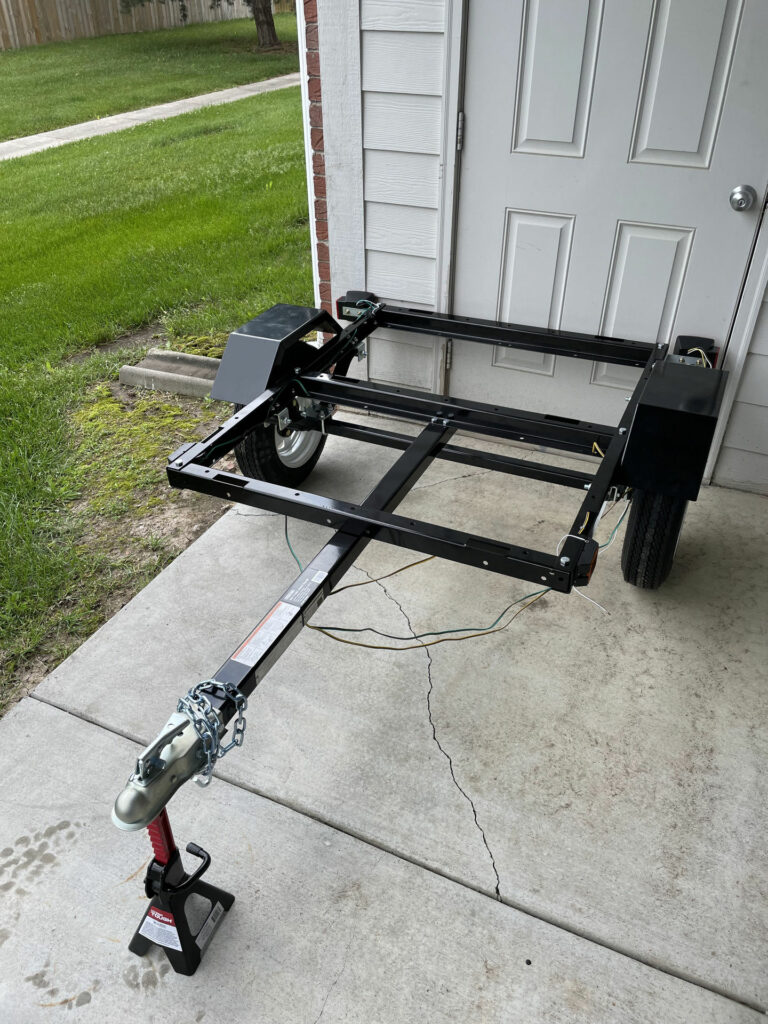
The construction of a functional, high-speed tire trailer requires careful planning regarding weight distribution, axle load limits, structural integrity, and aerodynamic drag. A typical DIY build begins with a basic assembly kit, such as the 40-inch by 48-inch utility frames manufactured by Northern Tool or Harbor Freight. These frames arrive disassembled in standard shipping crates, requiring the builder to bolt together the structural steel components, wire the lighting harness, and install the suspension and wheels.
In the initial development phase of a prominent enthusiast build documented over a two-year operational timeline, the builder selected a 40×48-inch black powder-coated frame. While larger folding 4×8-foot utility frames are available at a marginal increase in weight and cost—offering greater deck stability and load flexibility—the compact footprint was initially favored for tight residential storage and effortless maneuverability.

The initial structural configuration utilized a 3/4-inch Sande plywood deck, precision-cut to an overhanging dimension of 62.25 inches by 40 inches to maximize usable floor space. Recessed carriage bolts, lock washers, and nylon-insert lock nuts secured the wooden platform flush to the steel frame, preventing cargo snagging.
Strategic Cargo Integration and Weight Distribution
Proper tongue weight is critical for maintaining safe towing stability at highway speeds, typically recommended at 10 to 15 percent of the total loaded trailer weight. To achieve optimal balance, the primary heavy payload—the set of four track wheels and tires—was positioned forward on the trailer deck. Securing these components safely requires a robust multi-point retention strategy: a vertical center post running through the wheel hubs, heavy-duty wheel-securing cones, and auxiliary heavy-duty ratchet straps anchored directly to the reinforced frame.
At the center point of the trailer, directly above the axle, the builder integrated a weather-tight structural toolbox (specifically, a Dewalt DWST38000 unit) bolted through the plywood deck using load-distributing aluminum backing plates. This compartment serves as the primary storage vault for critical track-side hardware, including electronic tire pressure gauges, digital pyrometers, high-torque impact wrenches, torque wrenches, spare lug nuts, brake bleeder kits, spare fuses, zip ties, and vital hand tools. The integrated aluminum accessory rails on the lid of the toolbox provide a secure mounting surface for bulky, lightweight items such as collapsible folding canopies, aluminum folding tables, and paddock chairs.
Addressing Fuel Capacity and Fluid Logistics
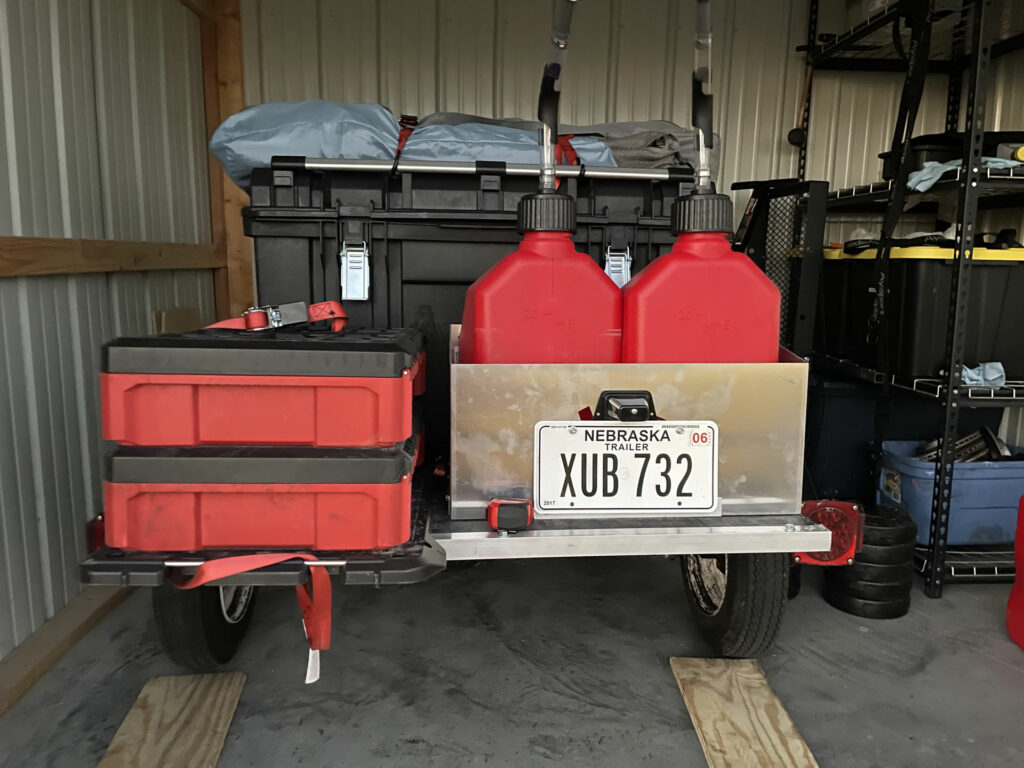
As track vehicle modifications progress, fuel consumption often increases, particularly for cars converted to run on high-octane race gas or E85 alternative fuels where local track-side pumps may be unavailable. The initial trailer configuration incorporated a dual-jug mount at the rear of the platform, designed to secure two five-gallon VP Racing fuel containers using specialized locking mounts and heavy-duty ratchet straps.
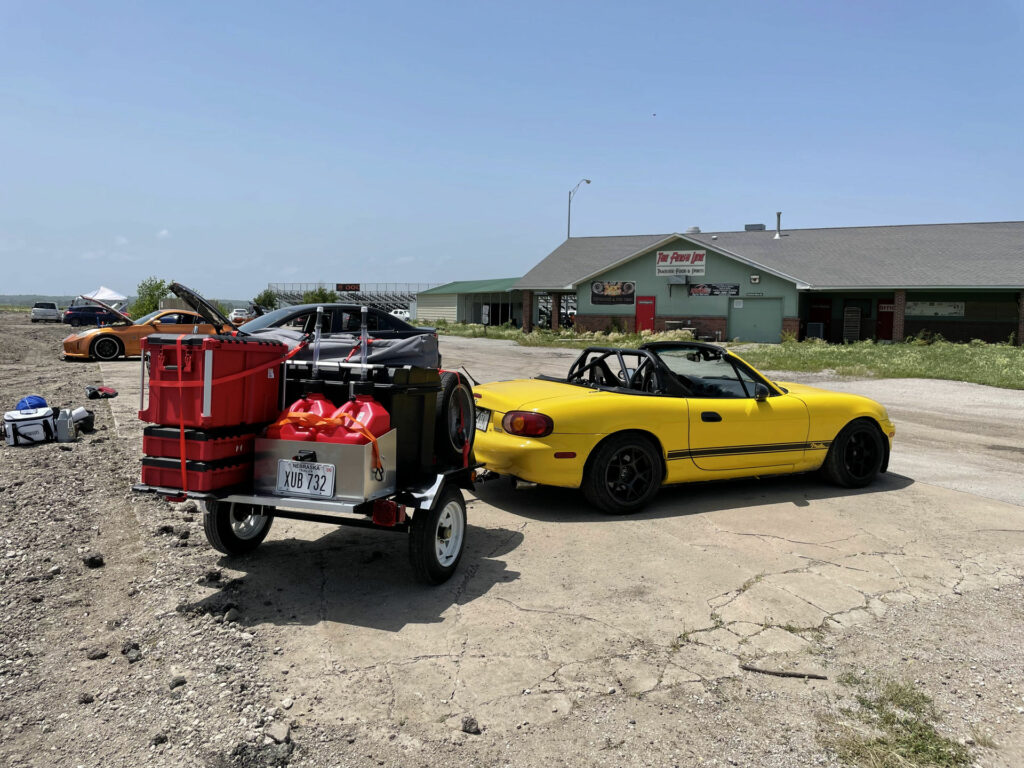
However, extended multi-day track events and long-distance transit routes revealed limitations in this initial capacity. To resolve this, a significant engineering revision was introduced during the second year of the trailer’s operational lifecycle. The dual small jugs were replaced by a single, high-capacity 15-gallon Flo-Fast fuel container housed within a custom-built plywood cradle reinforced with steel L-brackets. To extract and transfer the fuel efficiently, a mechanical hand-crank pump system was integrated, allowing precise refueling into smaller auxiliary containers without lifting heavy fluid loads manually.
Expansion of Storage: The Lower Deck Modification
To further optimize storage without expanding the overall footprint or elevating the center of gravity, the builder implemented a secondary lower deck. By cutting two 2-inch by 10-inch timber boards to span the chassis just below the trailer axle level, a secondary 1/2-inch plywood floor was suspended underneath. Longitudinal steel bars measuring 1 inch by 1/8 inch were bolted across the underside to prevent structural sagging under load.
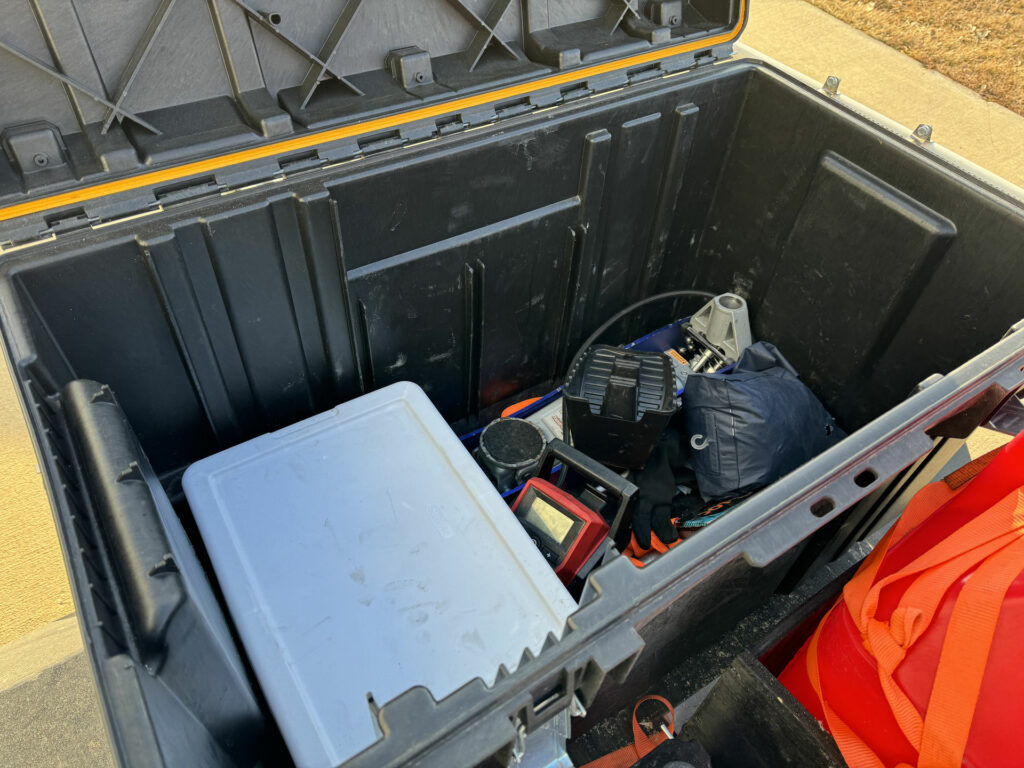
This subterranean storage bay provided a protected, low-slung compartment for dense, heavy items such as heavy-duty steel jack stands, spare trailer hubs, canopy ballast weights, and a spare front splitter assembly to guard against off-track excursions. Utilizing furniture wood threaded inserts combined with machine bolts, the builder fabricated removable front and rear vertical retention panels, ensuring that loose equipment remained secure during high-speed transit over uneven highway surfaces.
Chassis Dynamics: Upgrading from Bias-Ply to Radial Tires
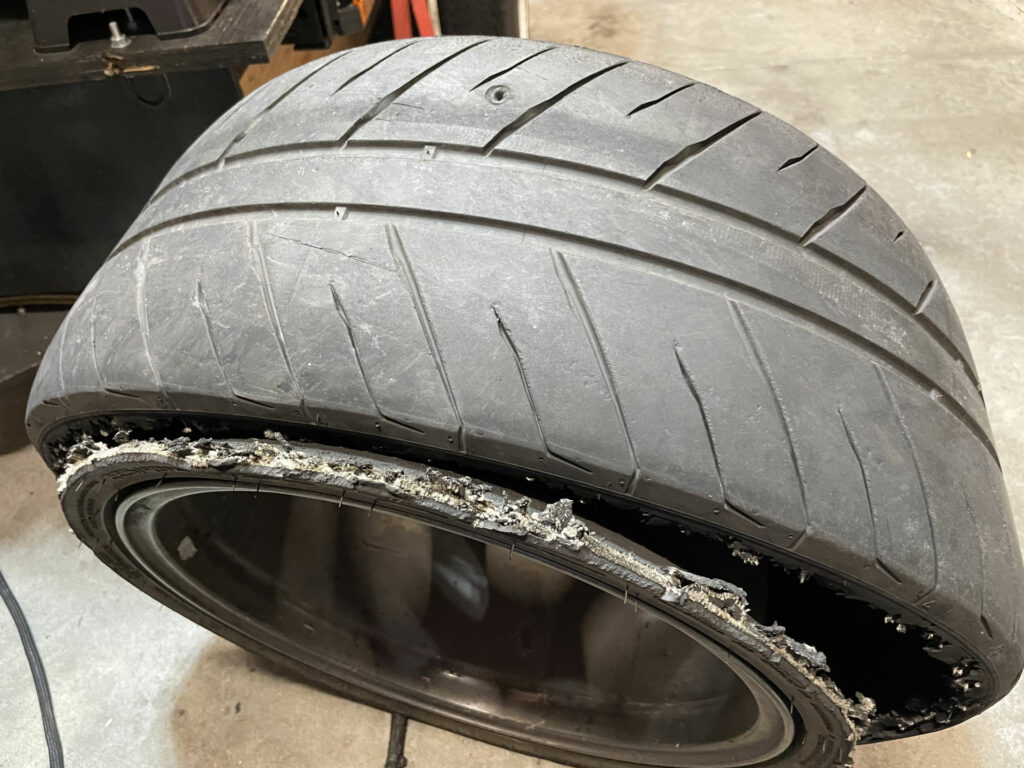
Utility trailers of this scale are frequently supplied with basic bias-ply tires designed for low-speed industrial applications. Following approximately 3,000 miles of rigorous interstate transit—culminating in accelerated tread wear and a sidewall air leak—the trailer underwent a critical running gear upgrade.
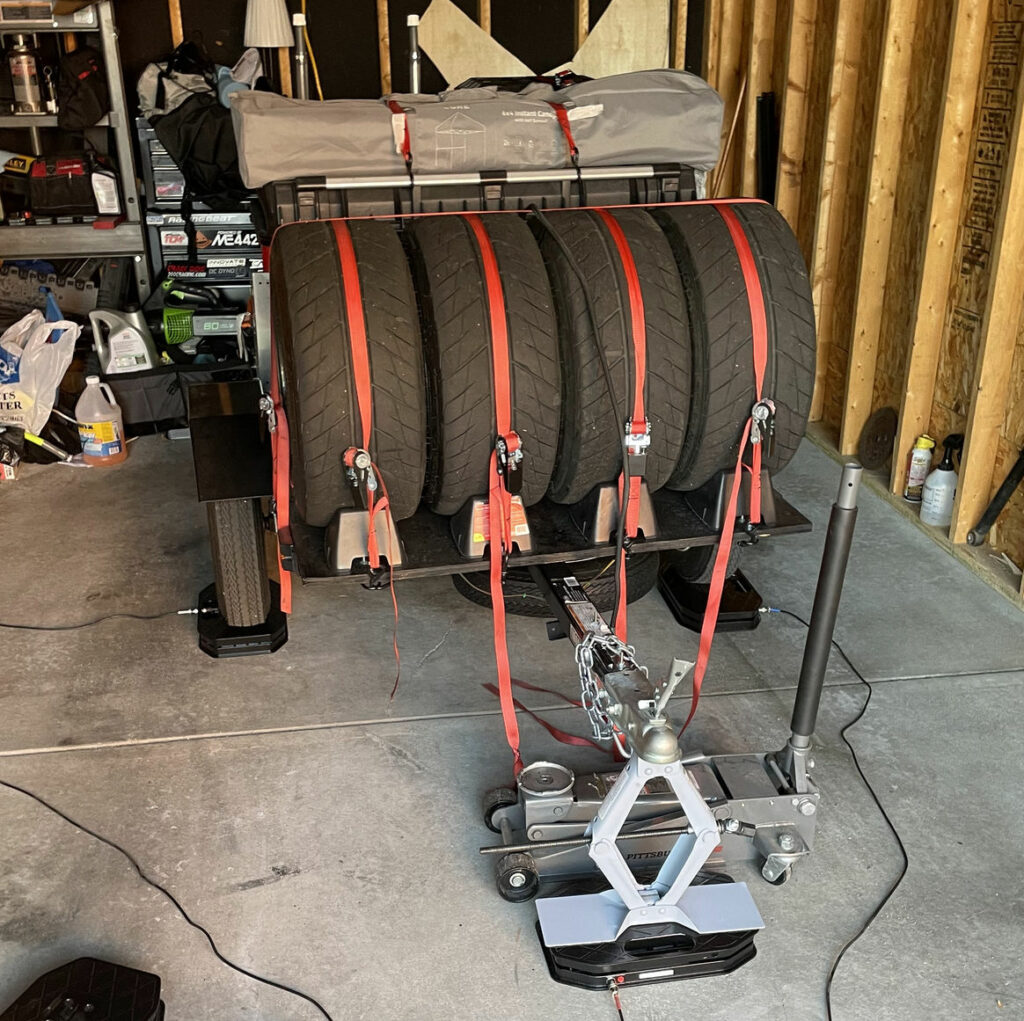
The original factory wheels and bias-ply tires were replaced with a set of 145R12 radial tires. Radial construction generates significantly less internal hysteresis and frictional heat during sustained high-speed highway driving, resulting in lower operating temperatures for both the rubber compounds and the wheel bearings. The slightly taller and wider profile fit cleanly within the existing stock trailer fenders, substantially improving high-speed tracking stability, reducing vibration, and enhancing long-term reliability on multi-state journeys to regional racetracks.
Industry Analysis and Broader Implications for Track Enthusiasts
The widespread adoption of custom micro-trailers highlights a broader trend within grassroots motorsports: the democratization of high-performance driving through ingenuity and resourcefulness. As the cost of dedicated tow rigs, heavy-duty pickup trucks, and multi-axle enclosed car trailers continues to rise, enthusiasts are actively engineering lightweight, modular solutions that preserve the purity of driving a sports car to the circuit.
Industry analysts note that while full-size truck-and-trailer setups offer maximum protection and shelter for a race car, they introduce substantial financial and logistical overhead, including dedicated storage fees, increased insurance costs, and poor fuel economy during transit. Conversely, a well-engineered tire trailer attached to a fuel-efficient roadster represents a minimal investment that yields maximum operational flexibility. Drivers can complete a full weekend of competitive driving, pack up their gear efficiently, and motor home hundreds of miles without the fatigue and expense associated with piloting a heavy commercial-style tow rig.
Future Outlook for Micro-Trailer Logistics
Despite the proven utility of lightweight tire trailers, the evolution of motorsports logistics remains dynamic. Many competitors who begin their journey with micro-trailers eventually transition to full-size tow setups as their vehicle modifications become more extreme, rendering street driving unsafe or illegal entirely due to roll cages, solid engine mounts, and lack of emissions equipment.

For the builder of the profiled Mazda Miata tire trailer, the acquisition of a dedicated pickup truck and car hauler marked the beginning of a new evaluation period. While towing the sports car on a flatbed trailer offers absolute mechanical security, it introduces new trade-offs, including the cumbersome removal of low-hanging aerodynamic splitters and front bumpers required just to clear standard loading ramps. Consequently, even among those who own full-size tow vehicles, the compact utility tire trailer retains a dedicated following for local track nights and regional autocross events where speed, simplicity, and efficiency remain paramount. Ultimately, the tire trailer stands as a testament to the ingenuity of the automotive enthusiast community—proving that with a bit of fabrication skill, spatial planning, and mechanical sympathy, the limitations of a small sports car can be effectively overcome.