Hartono Sudibyo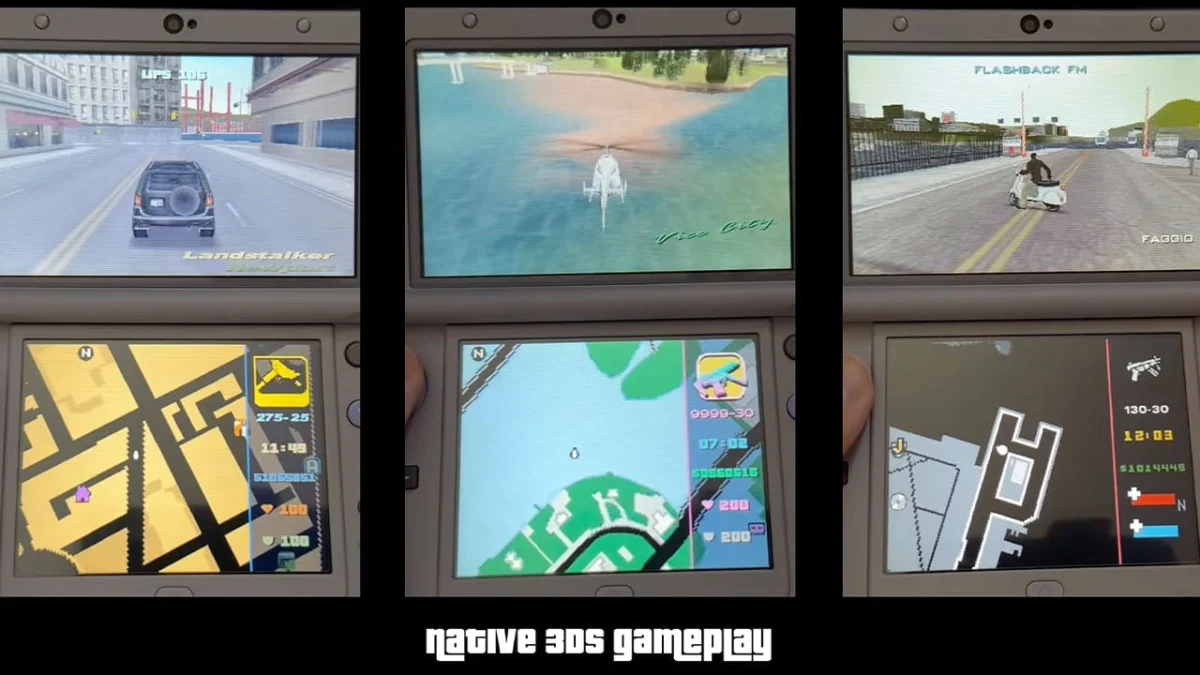
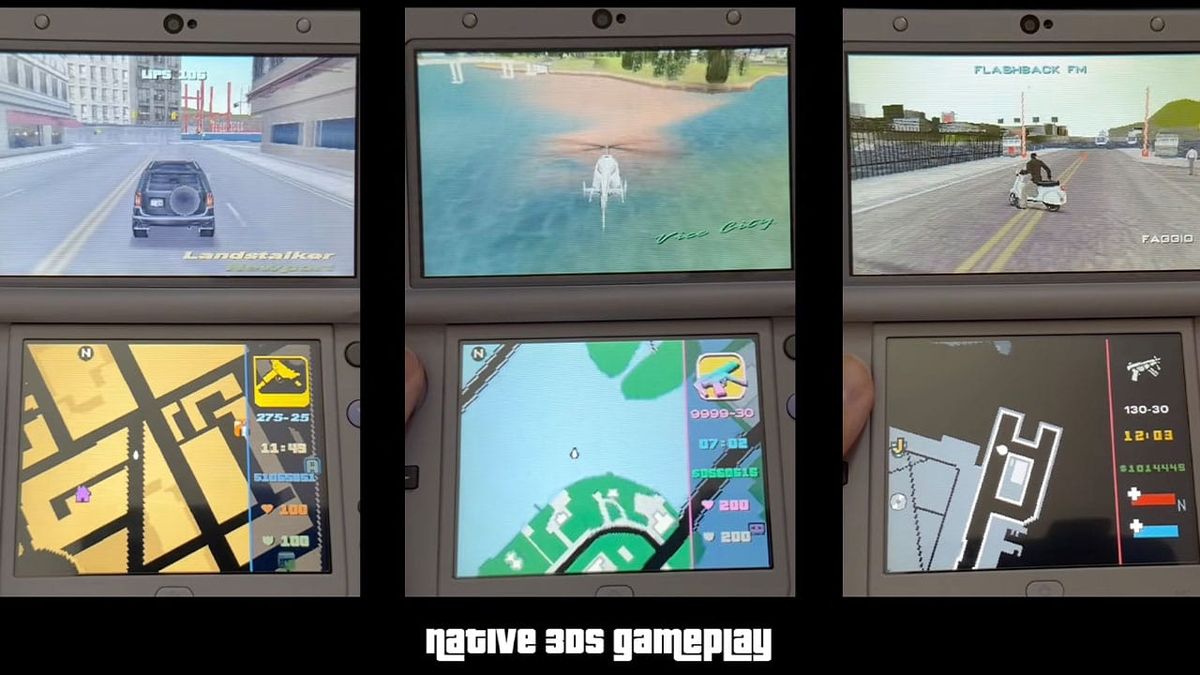
In a development that highlights both the enduring resourcefulness of the retro gaming modding community and the protracted wait for official franchise installments, classic entries from Rockstar Games’ Grand Theft Auto series have been successfully ported to handheld hardware that has long since ceased production. Developer EpicReds0817 has introduced the reGTA Collection, bringing reverse-engineered versions of Grand Theft Auto III, Grand Theft Auto: Vice City, and Grand Theft Auto: Liberty City Stories to the Nintendo 3DS family of systems. This achievement arrives as players worldwide continue to await official news regarding the next major entry in the multi-billion-dollar franchise, ironically resulting in new GTA content on discontinued Nintendo hardware ahead of mainstream corporate schedules.
The technical foundation for this achievement rests upon years of reverse-engineering work pioneered by the enthusiast community. Specifically, the project utilizes the established source code frameworks known as re3, reCV, and reLCS. These projects systematically disassembled the original compiled binaries of the classic 3D-era titles, transforming them into clean-room C++ source code capable of being compiled natively for modern and legacy architectures. EpicReds0817 adapted these codebases specifically for the hardware constraints and unique dual-screen architecture of Nintendo’s popular glasses-free stereoscopic handheld.
Technical Architecture and Hardware Requirements
Adapting complex, open-world 3D environments originally designed for sixth-generation home consoles and PC hardware onto a portable device with significantly lower specifications required extensive optimization. The resulting reGTA Collection features heavily customized controls tailored to the physical layout of the Nintendo handheld. Furthermore, the lower resistive touchscreen of the system has been repurposed to serve as an interactive interface, hosting a fully functional map display, touch-activated navigation controls, and an on-screen cheat-code keyboard designed to replicate the classic sandbox experience of the original releases.
However, the collection’s technical demands mean it is restricted to specific hardware iterations within the Nintendo 3DS ecosystem. The ports are compatible exclusively with the "New" hardware revisions: the New Nintendo 3DS, the New Nintendo 3DS XL, and the New Nintendo 2DS XL, alongside any custom firmware-enabled system capable of executing 3DSX homebrew builds. Original, first-generation Nintendo 3DS and 2DS models lack the necessary processor clock speed, architectural enhancements, and dedicated random-access memory (RAM) required to process the intensive geometric calculations and streaming data demanded by the RenderWare engine iterations.
According to development updates provided by EpicReds0817, the core single-player campaigns for all three titles are fully playable from beginning to end. While optional side missions and certain peripheral activities are presently undergoing verification and testing, the main narrative arcs function reliably on the modified hardware.
Background and Chronology of the Reverse-Engineering Movement
The genesis of the reGTA Collection traces back several years through an intricate timeline of community-led software preservation and legal battles.
In early 2021, independent developers released the re3 and reCV projects, which successfully reverse-engineered Grand Theft Auto III and Grand Theft Auto: Vice City. These open-source projects initially gained widespread acclaim for enabling native ports of the classic games to platforms that Rockstar Games had never officially supported, including PlayStation Vita, Nintendo Switch, and various mobile architectures.
The movement encountered significant corporate friction later in 2021 when Take-Two Interactive, the parent company of Rockstar Games, initiated aggressive legal action against the GitHub repositories hosting the source code, citing copyright infringement. Despite copyright takedown notices and subsequent legal tussles, the source code had already been widely distributed and archived across decentralized networks, allowing independent developers to continue utilizing the codebase for non-commercial, hobbyist projects.
The subsequent release of reLCS expanded these reverse-engineering efforts to the PlayStation Portable (PSP) spin-off title, establishing a robust framework for Liberty City Stories. EpicReds0817’s recent deployment consolidates these disparate community efforts into a unified collection specifically targeted at the Nintendo 3DS, bridging a gap between sixth-generation console gaming and ninth-generation portable hardware modifications.
Installation and Legal Parameters
As is standard within the advanced homebrew and modding community, the reGTA Collection is distributed strictly as source code and build instructions rather than a pre-packaged commercial product. End-users must compile the executables independently using the provided GitHub repositories and supply their own legally acquired read-only memory (ROM) files or game assets extracted from legitimate copies of the titles.

The distribution package includes runtime overrides and custom HOME Menu artwork to ensure seamless integration into existing custom firmware interfaces, such as Luma3DS. However, developers must supply their own compilation toolchains, such as the devkitARM environment, to build the final executable binaries. This distribution method allows the project to operate within the grey areas of software preservation and educational modification, separating the functional engine code from copyrighted audiovisual assets.
Broader Impact and Industry Implications
The emergence of the reGTA Collection underscores a growing trend where hardware longevity is sustained not by original manufacturers, but by grassroots consumer engineering. Nintendo officially discontinued production of the 3DS family of systems in September 2020, concluding an eight-year market run that saw hardware sales exceed 75 million units globally. Despite official support concluding, the active development community surrounding the device remains robust, frequently pushing the hardware far beyond its manufacturer-intended operational parameters.
From an industry perspective, fan-led ports of classic intellectual properties occupy a complex space between copyright protection and cultural preservation. Major publishers like Rockstar Games have historically maintained a stringent approach to unauthorized modifications and distribution of their proprietary software. Yet, the persistent demand for classic titles on portable platforms—coupled with gaps in official publisher portfolios—continues to incentivize independent developers to bridge technological divides.
As the homebrew community continues to refine the reGTA Collection, verifying remaining side missions and optimizing frame-rate stability, the project stands as a testament to the technical ingenuity of modern hobbyists. For owners of the New Nintendo 3DS hardware tier, the collection offers an unprecedented portable iteration of three foundational titles that shaped the modern open-world genre, proving that classic software architecture can find new life on discontinued hardware long after mainstream commercial development has moved elsewhere.