Hartono Sudibyo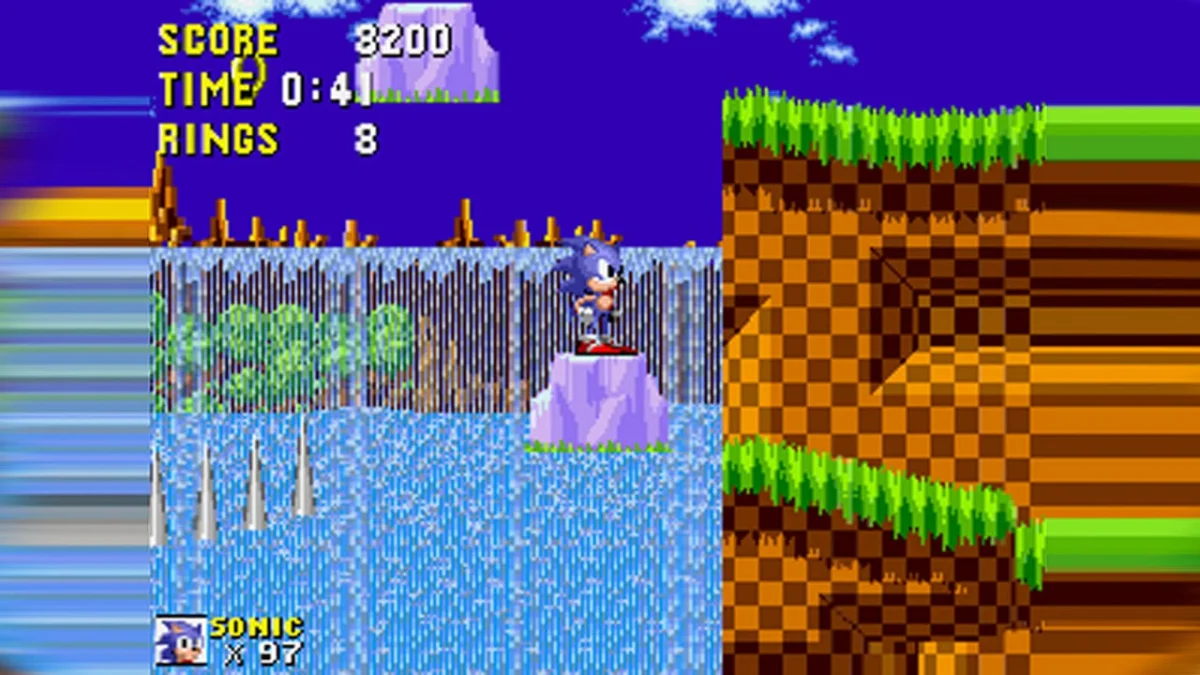
The landscape of retro video game preservation and modification has reached a new milestone with the release of an innovative new ROM hack for the original 1991 Sega Mega Drive classic, Sonic the Hedgehog. Developed by community creator cpc and published via Romhacking.net, the modification transforms the undisputed crown jewel of platforming stages—Green Hill Zone—into an endless, procedurally structured experience. Utilizing 32 distinct layout variations that load at random upon the completion of each stage segment, the hack offers a fresh take on one of the most recognizable and influential environments in interactive entertainment history.
Main Facts of the Modification
The newly released ROM hack reinterprets the foundational level design of Sonic the Hedgehog’s opening act by stringing together 32 meticulously crafted variations of Green Hill Zone. Unlike traditional linear progression where players clear Act 1, Act 2, and Act 3 before moving on to Marble Zone, this modification delivers a continuous loop of Green Hill Act 1 layouts.
When a player successfully navigates a layout and reaches the iconic goal signpost, the game instantly transitions into a newly randomized variant chosen from the pool of 32 designs. To counterbalance the chaotic and unpredictable nature of these shifting layouts, the modification grants players an initial pool of 99 lives alongside an infinite mid-air jump capability. This adjustment is not merely a convenience, but a mechanical necessity; creator cpc has acknowledged that certain randomized sequences may generate exceptionally challenging or outright unconventional platforming obstacles, which developers have described as part of the chaotic appeal.
Despite the endless loop and altered mechanical tolerances, the hack remains tethered to the traditional hardware constraints and architectural framework of the original Sega Mega Drive ROM. Players wishing to experience the modification must supply their own legally acquired, verified ROM file—specifically the North American and European "Sonic The Hedgehog (USA, Europe).md – NOINTRO" distribution—and apply the patch using standard IPS or BPS patching utilities available on community platforms such as Romhacking.net.
Historical Context and the Legacy of Green Hill Zone
To understand the cultural significance of this new modification, one must examine the profound legacy of Green Hill Zone within the broader history of the video game industry. Released in North America on June 23, 1991, Sonic the Hedgehog was designed by Sonic Team programmer Yuji Naka, designer Naoto Ohshima, and director Hirokazu Yasuhara. The title was engineered primarily to showcase the processing power of the 16-bit Sega Genesis (Mega Drive) and to provide a high-velocity mascot capable of competing directly with Nintendo’s Mario franchise.
Green Hill Zone served as the undisputed welcoming committee for millions of players worldwide. Its vibrant checkerboard terrain, looping tracks, swaying palm trees, and cascading waterfalls established an immediate visual identity that broke away from the gloomy, dystopian industrial palettes common in action games of the late 1980s. Composed by Masato Nakamura of the J-pop band Dreams Come True, the stage’s upbeat melody became one of the most recognizable audio signatures in gaming history.

Over the past three decades, Green Hill Zone has transcended its origins as a single level in a 16-bit platformer. It has been reimagined, remade, and referenced across dozens of sequels, spin-offs, and crossover media, appearing in titles such as Sonic Adventure 2, Sonic Generations, and Sonic Mania, as well as non-franchise platforms like Fortnite and various cross-platform exhibitions. It stands alongside Nintendo’s World 1-1 from Super Mario Bros. as one of the most heavily analyzed, replicated, and studied digital environments in the history of game design.
Chronology of ROM Hacking and Community Evolution
The release of cpc’s endless Green Hill Zone hack is part of a rich, decades-long tradition of amateur software modification known as ROM hacking. The practice began in the late 1990s as emulation software matured, allowing enthusiasts to extract machine code from cartridge-based ROM images and alter their hexadecimal values, graphics, and level structures.
Throughout the early 2000s, Sonic the Hedgehog ROM hacking emerged as one of the most technically advanced subcultures within retro gaming. Pioneers utilized disassemblies of the original game’s source code—first made widely available in the mid-2000s—to move beyond simple palette swaps and level editors. Programmers began writing custom assembly routines to implement new physics engines, character abilities (such as the Spin Dash introduced in Sonic the Hedgehog 2), and entirely novel gameplay loops.
In recent years, the sophistication of these community projects has accelerated dramatically. Modern tools allow developers to construct complex automation scripts, custom sprite renderers, and intricate level generators. The endless Green Hill Zone hack represents a modern synthesis of this technical evolution, marrying the pristine pixel art and physics of the 1991 original with contemporary rogue-lite design philosophies—specifically the concept of endless, randomized procedural runs designed to test player adaptability and endurance.
Technical Mechanics and Gameplay Implications
Analyzing the mechanics of the cpc hack reveals a careful balancing act between frustrating design elements and accessible modifications. Traditional Sonic games rely heavily on memorization; players learn enemy placement, loop timing, and hazard locations through repeated playthroughs. By randomizing the sequence of 32 distinct layouts on the fly, the modification actively disrupts muscle memory, forcing even veteran players to rely on split-second reaction times.
The inclusion of infinite mid-air jumps fundamentally alters the physics sandbox of the original game. In standard gameplay, Sonic’s vertical movement is strictly governed by gravity once he leaves a platform or spring. By removing this restriction, the developer allows players to recover from miscalculated jumps that would otherwise result in lost lives or plummeting into bottomless pits. However, the presence of 99 lives indicates that failure remains a frequent outcome, as environmental hazards, spikes, and mobile enemies are distributed unpredictably across the randomized segments.
Creator cpc has noted that certain procedural pairings of the 32 layouts can produce layout transitions that result in seemingly impossible platforming trials. While traditional game design strictly avoids dead ends or unfair obstacles, this hack embraces a chaotic sandbox ethos. It treats the source code not as a sacred, immutable monument to 1990s design, but as a malleable playground for experimentation.

Broader Industry Impact and Intellectual Property Considerations
The proliferation of ROM hacks like cpc’s endless Green Hill Zone raises perennial discussions regarding intellectual property, software preservation, and the relationship between major corporate publishers and fan communities. Sega of America and its parent company Sega Sammy Holdings have historically maintained a relatively lenient stance toward fan-made games, ROM hacks, and non-commercial creative projects compared to other industry giants.
Sega’s historical tolerance has occasionally extended to direct collaboration. Most notably, Christian Whitehead (Taxman), a prominent member of the Sonic retro hacking and fangame community, was officially hired by Sega to develop the critically acclaimed mobile ports of the classic Genesis trilogy and subsequently spearheaded the development of Sonic Mania (2017). This symbiotic relationship demonstrates that corporate entities increasingly recognize the talent incubated within the modding community, viewing skilled creators as potential contributors rather than mere copyright infringers.
Nevertheless, legal realities remain. The requirement that users supply their own legally dumped ROM files acts as a necessary compliance measure for hosting platforms like Romhacking.net, ensuring that the distribution is limited to the patch file itself rather than unauthorized copyrighted binaries. This legal framework allows the preservation and modification subculture to operate within a sustainable grey market ecosystem, fostering continuous innovation without provoking aggressive legal intervention from copyright holders.
Future Outlook for Classic Gaming Modifications
As retro gaming hardware continues to age out of commercial relevance, the role of community-driven preservation becomes increasingly vital. Modifications that breathe new life into foundational software—such as transforming a static 1991 level into an endless, randomized trial—demonstrate the enduring vitality of classic media. They prove that games designed over thirty years ago possess mechanical foundations robust enough to support entirely new genres and playstyles.
The endless Green Hill Zone hack is unlikely to be the final word in Sonic modification; as debugging tools become more powerful and developer communities grow more sophisticated, we can anticipate even more radical reinterpretations of classic titles. For now, players seeking a nostalgic yet intensely disorienting test of their platforming prowess need only acquire a verified ROM, apply the patch, and step once more into the eternal loops of Green Hill Zone.