Retno Hari Mulyono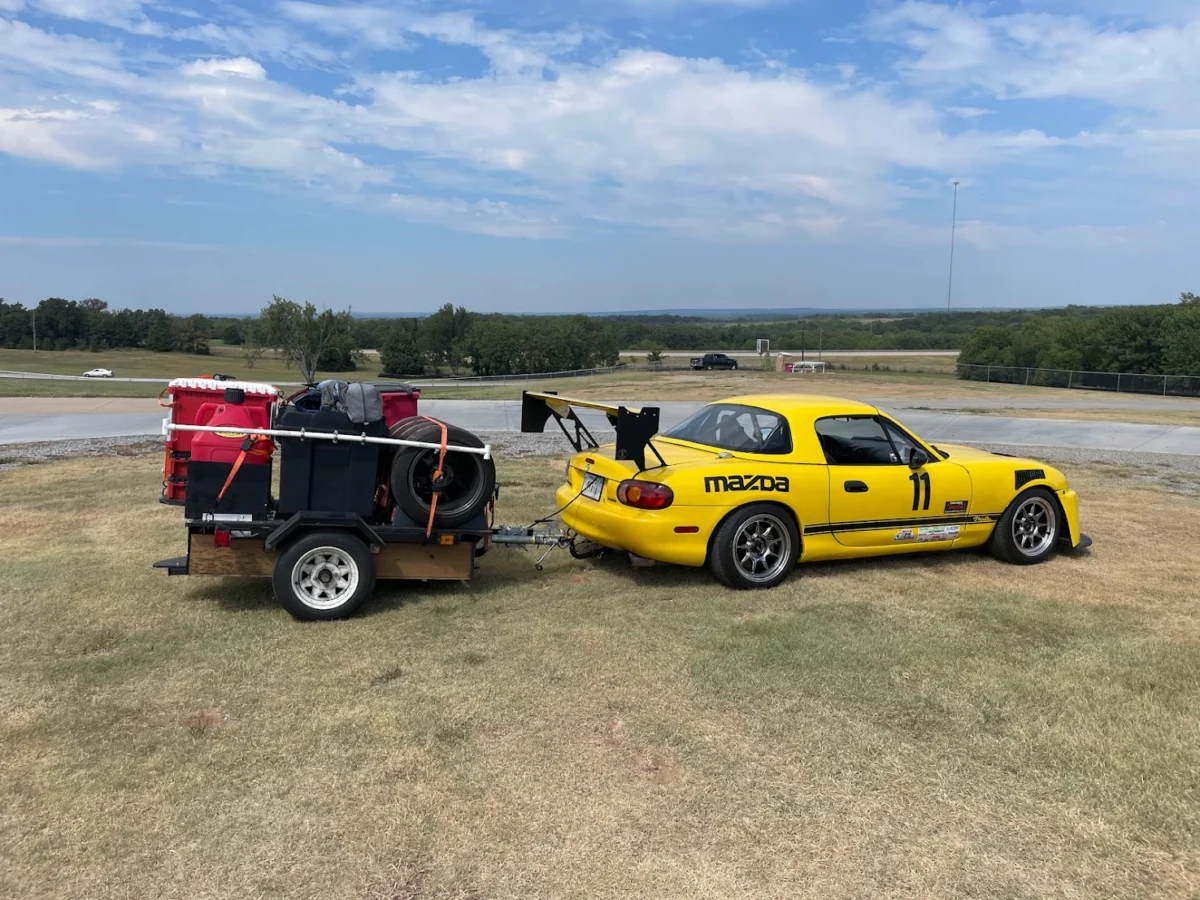
When evaluating the longevity and resilience of modern project cars, few platforms enjoy the enduring popularity and motorsport pedigree of the second-generation Mazda MX-5, commonly known as the NB Miata. Spanning three years of rigorous track evaluation, competitive autocross, and iterative mechanical development, one enthusiast’s journey offers a fascinating case study in amateur motorsports campaigning. From March 2023 through February 2024, this specific build underwent a rigorous calendar of competitive driving, aerodynamic optimization, and structural refinement, documenting the realities of maintaining a dual-duty track and street vehicle.
Main Facts and Motorsport Participation
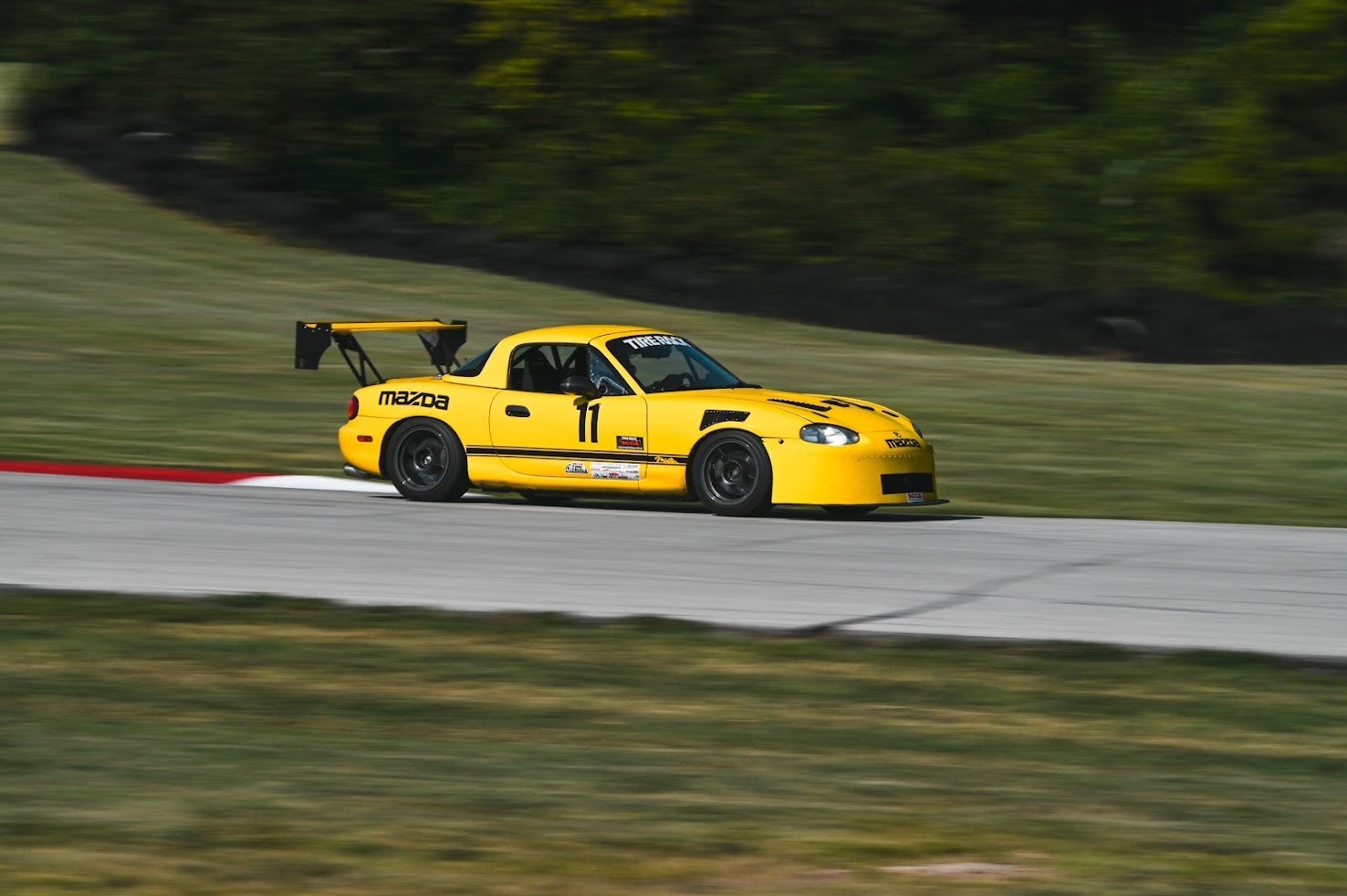
The 12-month operational window covered in this retrospective highlights a significant scaling up of competitive driving frequency. During the 2023 calendar year, the vehicle participated in 15 distinct track days and 15 autocross events, doubling the seat time compared to the vehicle’s first year of ownership and marking a substantial increase over the 10 track days and 9 autocross events recorded in 2022.
Geographically, the vehicle campaigned across five different racing circuits in five distinct states. This included familiar venues such as Motorsports Park Hastings and Heartland Motorsports Park, alongside new technical challenges at Ozarks International Raceway and the Hallett Motor Racing Circuit. Tire management proved crucial for this volume of high-intensity usage. The vehicle utilized Bridgestone RE71-RS tires for autocross—surviving 17 events and approximately 70 competitive runs—while endurance track days were managed primarily on Falken RT660 compounds, accumulating roughly 8.5 hours of track time and 38 heat cycles.
Chronology of the 2023–2024 Ownership Year
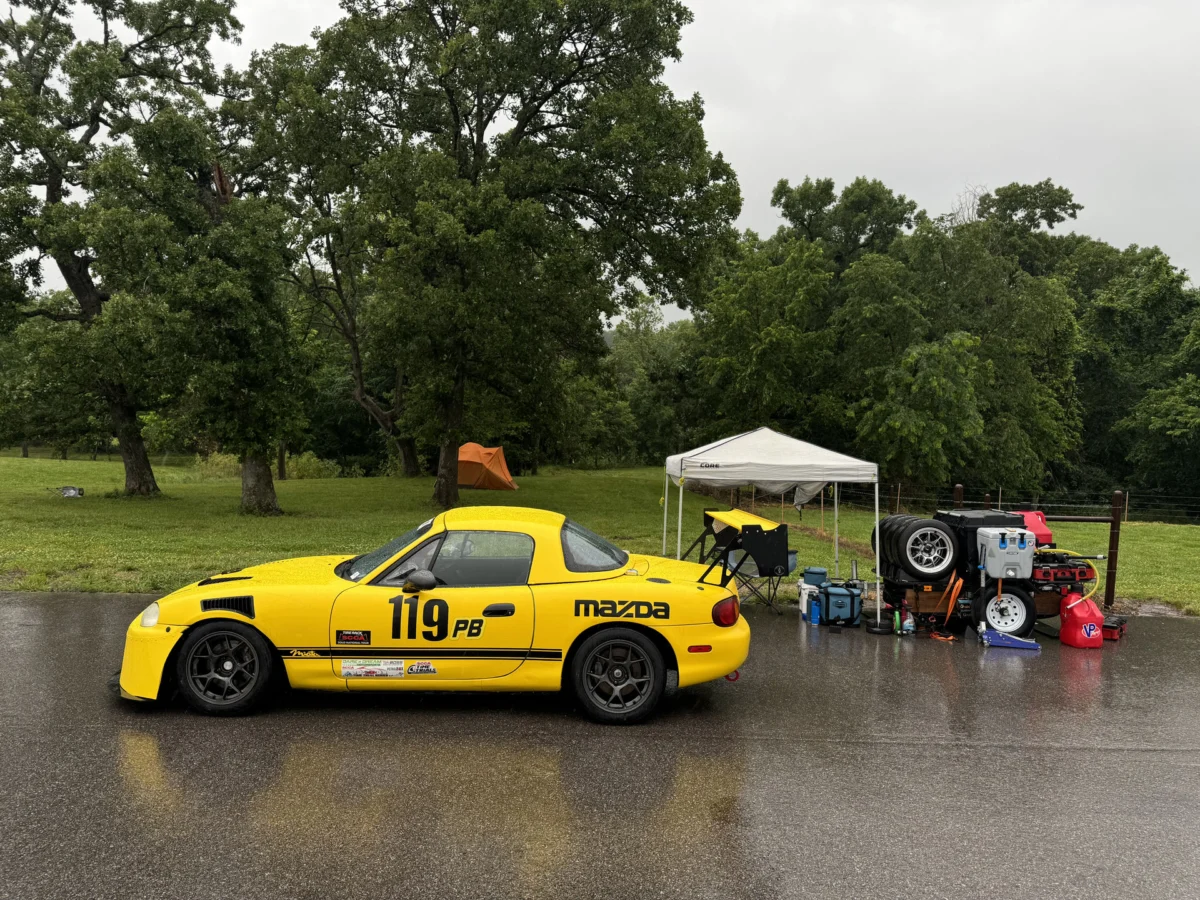
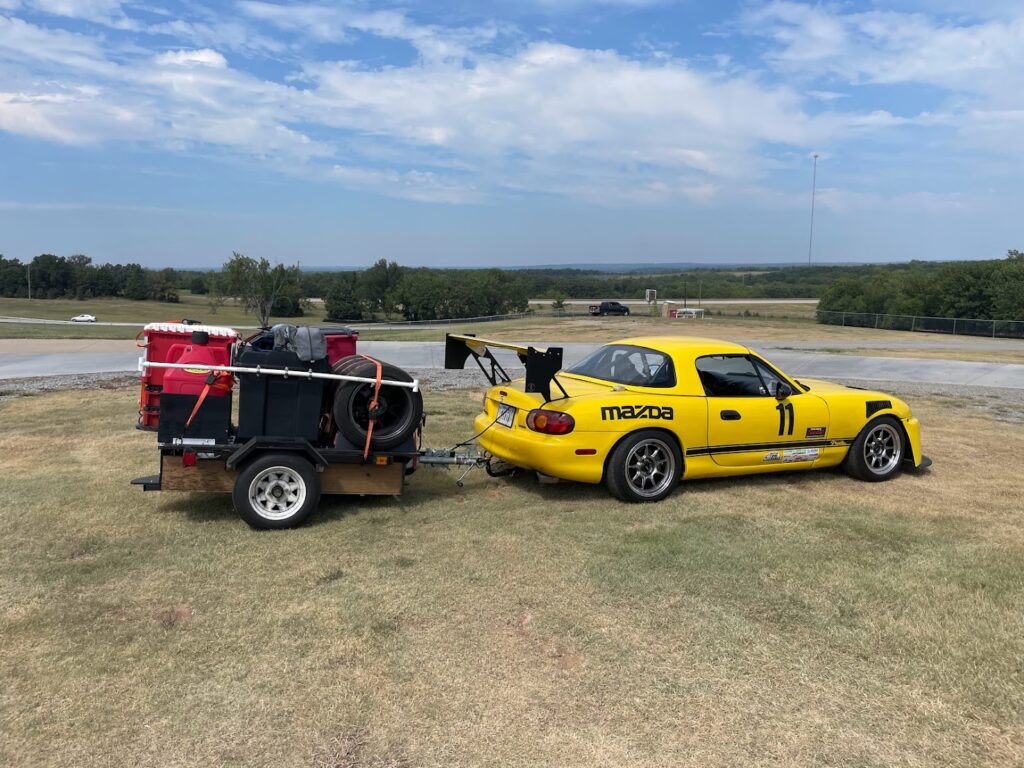
The operational year began in March 2023 with logistical improvements designed to streamline transport to and from racing venues. Having previously constructed a specialized tire trailer in 2022 to carry supplementary wheels, tools, and consumables, the owner engineered a major structural revision. A new lower deck was fabricated, extending downward to just beneath the trailer axle. This modification permitted the integration of a single 15-gallon fuel jug, replacing two smaller five-gallon containers, alongside dedicated under-trailer mounting solutions for a spare aerodynamic splitter and an assortment of wing gurney flaps.
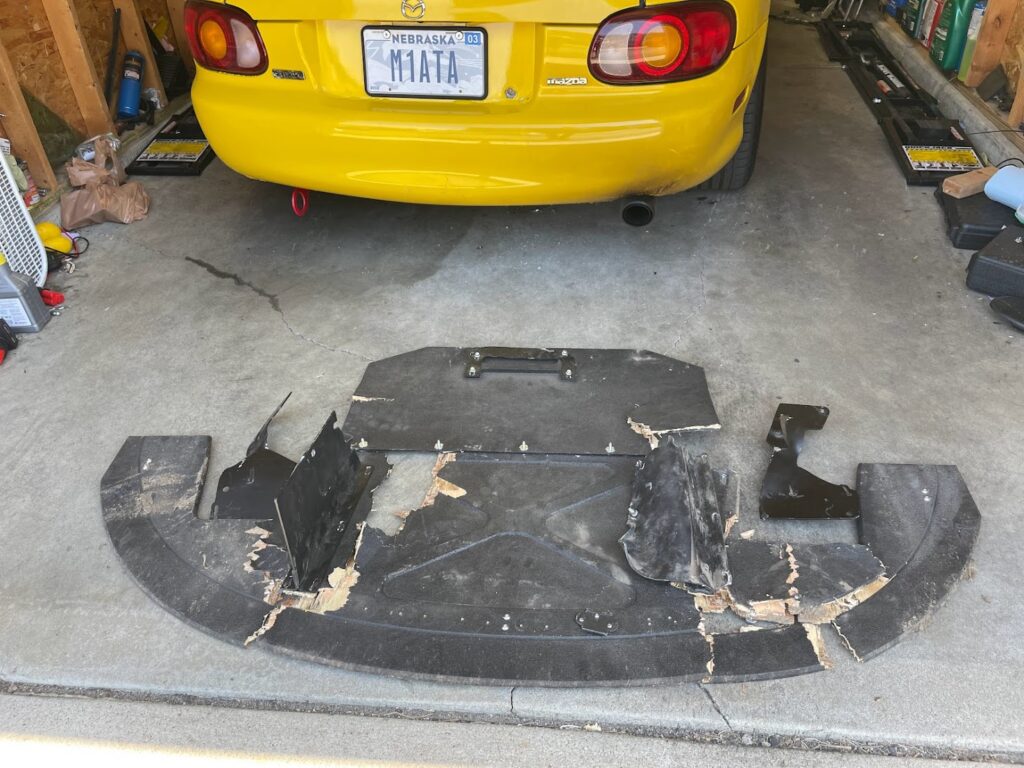
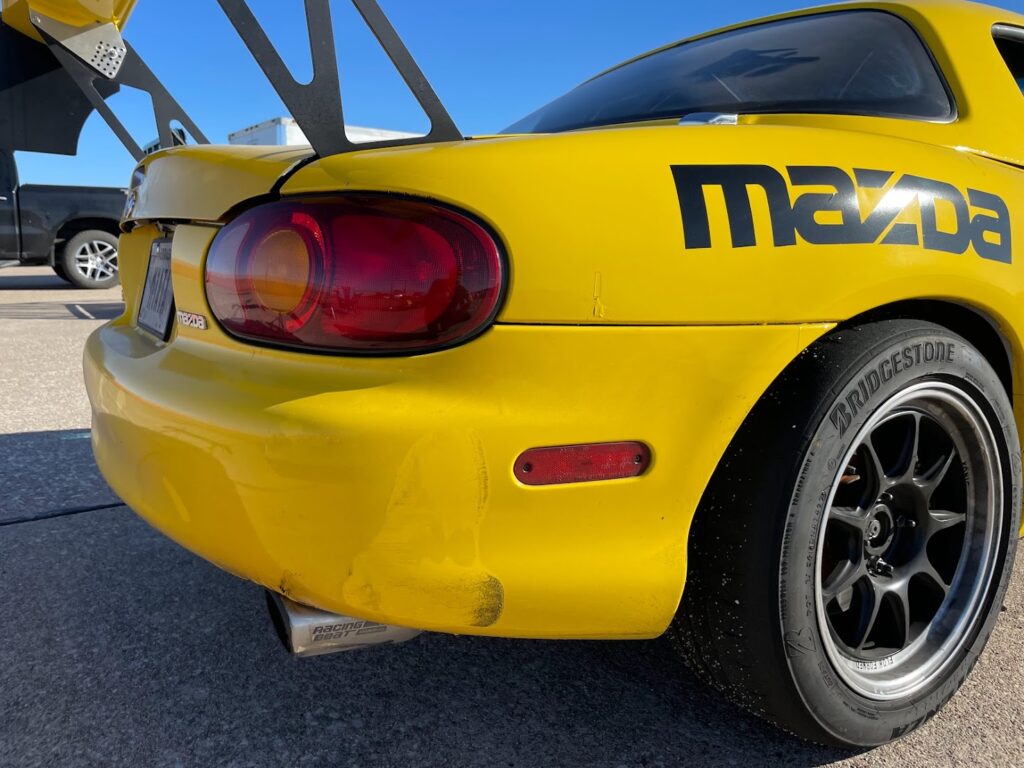
April introduced immediate mechanical adversity following the winter installation of a Nine Lives Racing medium downforce aerodynamic package. During the initial push lap of the season’s first track day at a high-speed circuit, an overly aggressive entry into a fast corner resulted in an off-track excursion. The impact completely destroyed the front splitter, bent the supporting brackets, and distorted the radiator support structure. Demonstrating the logistical demands of weekend racing, the owner utilized a pre-purchased spare mount, reverted to a stock front end for a Saturday autocross event, and fabricated a temporary 1/4-inch plywood splitter overnight to compete on Sunday. Subsequent testing led to the adoption of a more robust 1/2-inch plywood splitter reinforced with side supports to better withstand the rigors of track use and pit lane transitions.
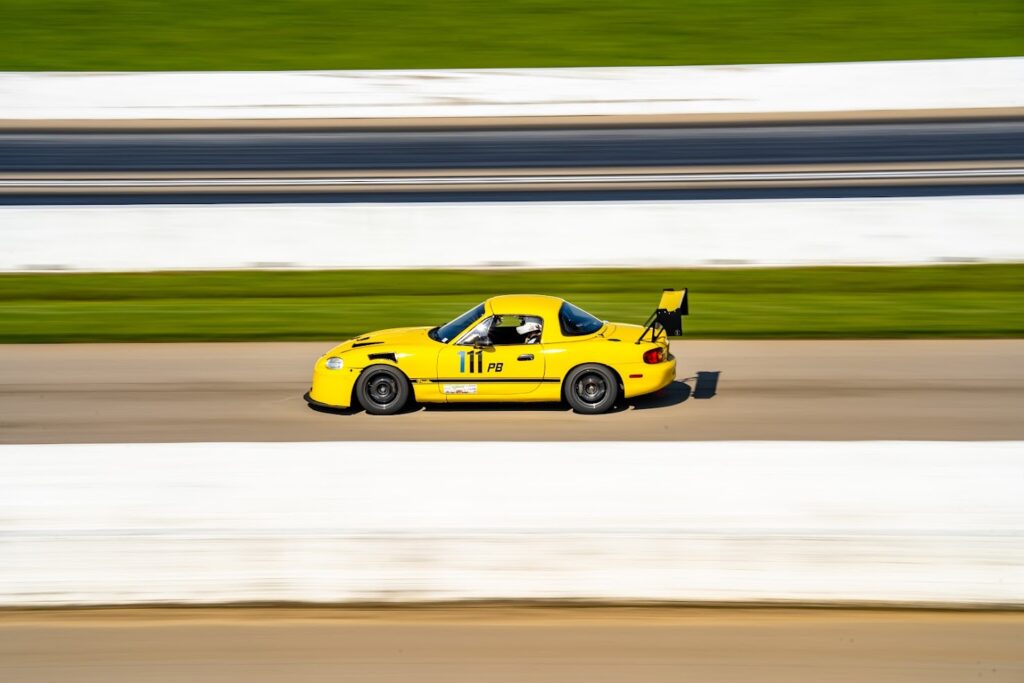
May brought competition to Heartland Motorsports Park for an SCCA Time Trials event utilizing newly adopted 225/45R15 Falken RT660 tires mounted on 15×9-inch wheels. However, this event carried historical finality. At the conclusion of the 2023 season, Heartland Motorsports Park permanently ceased operations after the property owner defaulted on local tax obligations. The subsequent auctioning of individual parcels effectively dissolved the facility, leaving regional motorsports enthusiasts without a premier central racing venue.
June focused on aerodynamic integration and weight reduction. Realizing that the rear wing element required a rigid boundary layer to function at peak efficiency, the factory soft top was permanently excised. Testing indicated that while open-top driving still generated localized downforce, a hardtop was mandatory to maximize the aerodynamic benefits of the rear wing. Removing the soft top yielded marginal weight savings and improved rear cabin packaging, allowing direct access to the fuel pump service hatch without necessitating the removal of the hardtop.
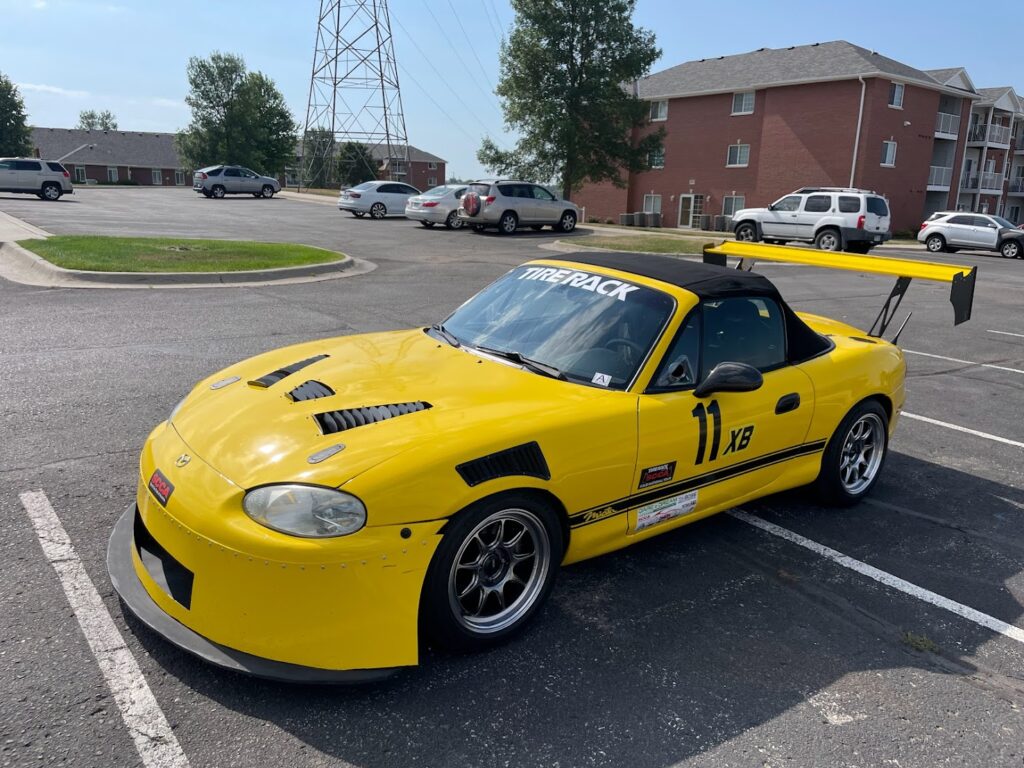
July presented a dual challenge: impending transmission friction failure and a debut at Ozarks International Raceway. While driving to a local autocross event, the vehicle’s performance organic clutch began slipping under load. With an entry scheduled for Ozarks International Raceway the following weekend, sourcing a specialized high-performance replacement was impossible. Instead, a standard parts-store replacement clutch was hastily installed and broken in just hours before departure. Ozarks International Raceway provided an intense technical challenge characterized by relentless elevation changes, blind corners, and concrete barriers positioned in close proximity to the tarmac. Despite initial caution, lap times dropped consistently across every session, signaling immense untapped potential for the aerodynamic-enhanced chassis.
August marked a return to Motorsports Park Hastings for SCCA Time Trials competition, where the driver secured a respectable 1:42.78 lap time. Comparative analysis against NASA Spec Miata lap records (standing at 1:40.415) and Time Trials classifications (TT6/TT5 records ranging from 1:39.625 to 1:34.110) indicated that significant time remained on the table, specifically through high-speed turns where aerodynamic grip could theoretically permit full-throttle execution.
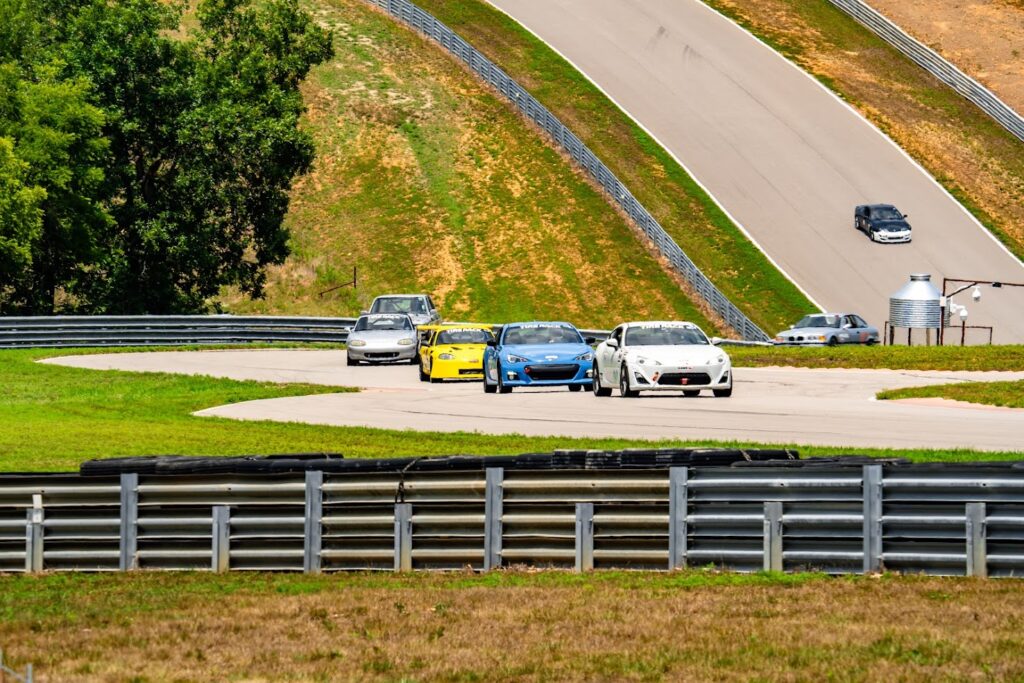
September featured an appearance at the "Miatas at Hallett" event at Hallett Motor Racing Circuit in Oklahoma. Uniquely, the track was run in opposing directions on alternating days. Unlike the unforgiving confines of the Ozarks circuit, Hallett offered manageable elevation changes, traditional straights, and safer runoff areas. This event also marked the integration of a Cool Shirt driver-cooling system—a circulating ice-water vest connected to a cooler—which proved essential for maintaining driver concentration and cognitive function during high-temperature competition where safety apparel restricts natural thermoregulation.
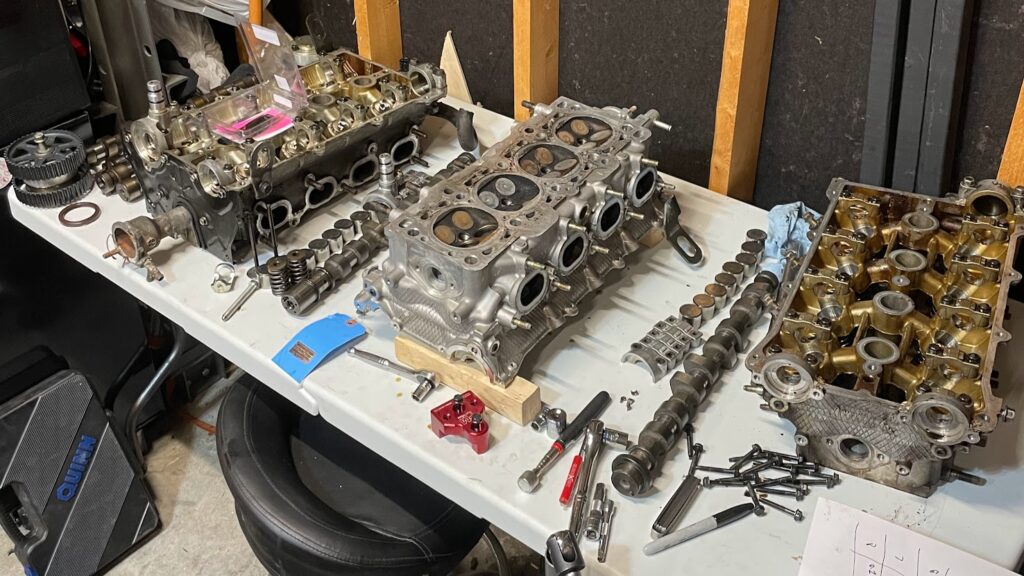
October shifted focus to internal combustion logistics. The vehicle’s original BP4W factory engine, while reliable, exhibited oil consumption at redline and noticeable blow-by during warm deceleration. Over the preceding two years, an inventory of spare hardware had accumulated, including two BP4W engine blocks, one BP6D engine, and an extra BP6D cylinder head. Inspection of the first spare BP4W revealed severe valve wear and missing chunks from several exhaust valves, though the bottom end remained sound. Concurrently, a recently acquired BP6D motor was partially disassembled for professional machine work, including cylinder honing and decking, alongside a professional cylinder head rebuild. While awaiting machine shop completion, a hybrid engine was assembled utilizing the spare BP4W bottom end refreshed with new piston rings, combined with the rebuilt BP6D cylinder head and updated BP6D pistons.
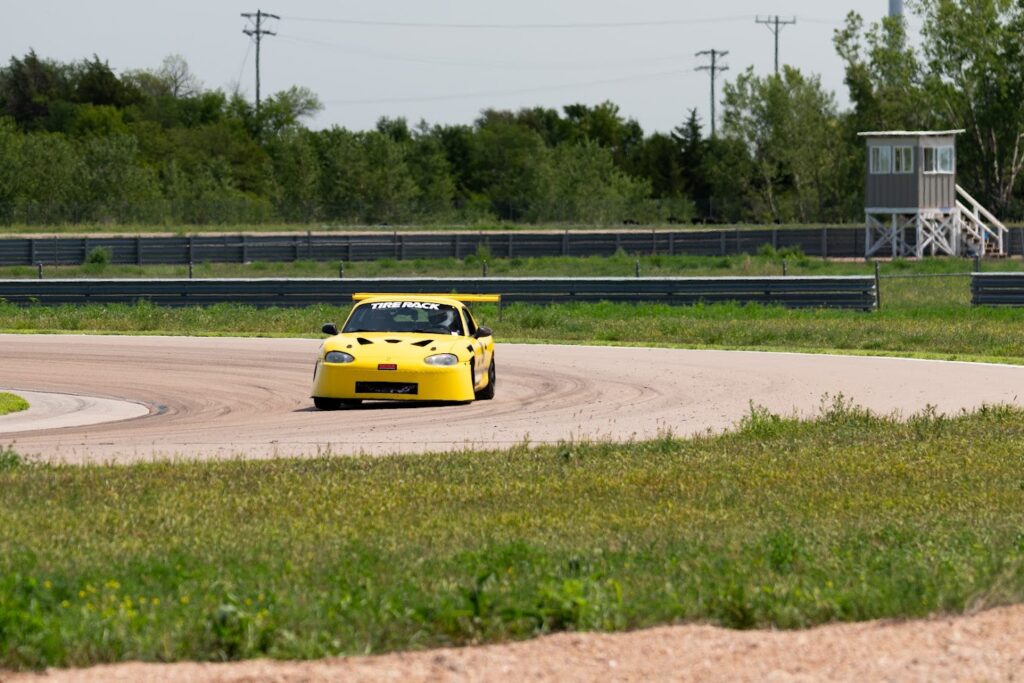
November concluded the competitive driving season with a final local autocross event on November 12, followed by winter storage preparations on Black Friday. Statistics for the year highlighted an aggressive campaign: 17 total autocross events utilizing Bridgestone RE71-RS tires, and 15 track days. Secondary testing with alternative compounds, such as Continental ExtremeContact Sport wet-weather tires, demonstrated surprising performance parity when compared against aging Hankook RS4 endurance tires.
Winter Modifications and Weight Reduction
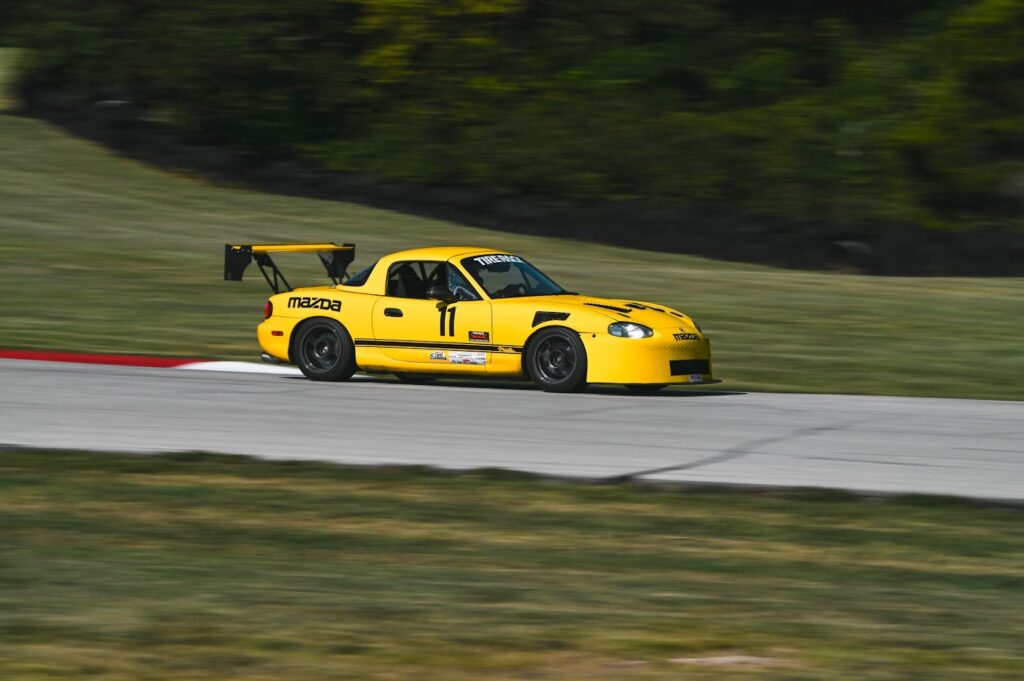
December and January transitioned the project from active competition to strategic development. To improve competitiveness within SCCA Time Trials power-to-weight classifications without adding forced induction, attention turned toward systematic mass reduction. Through targeted component removal, dashboard wiring cleanup, and miscellaneous weight-shedding initiatives, approximately 50 pounds of dead weight were eliminated from the chassis.
January also saw the long-delayed installation of a quick-release OMP steering wheel (330mm flat profile). While sacrificing the factory supplemental restraint system (airbag), the quick-release mechanism offered functional ergonomic advantages, easing ingress and egress while improving footwell accessibility during maintenance. Notably, the steering setup achieved a minor weight reduction compared to the factory steering assembly and proved entirely manageable even without power-assist steering hardware.
February finalized winter preparations by addressing the mounting logistics of the Cool Shirt system. Previously secured via temporary ratchet straps to the passenger seat—thereby eliminating passenger capacity whenever driver cooling was required—the cooler was permanently relocated to the trunk. A custom, lightweight mounting bracket was fabricated using aluminum angle stock and Alumaweld joining techniques, bolted directly to the trunk floor. This bespoke solution achieved secure, structural retention at a fraction of the cost of commercial alternatives.
Broader Impact and Implications
The three-year evolution of this NB Mazda Miata underscores the viability of the MX-5 platform as a premier entry-point and long-term development vehicle for amateur motorsport. By resisting the temptation to implement radical, unproven powertrain modifications and instead focusing on chassis dynamics, aerodynamic balance, reliability enhancements, and rigorous data collection, the build has achieved a high state of mechanical and dynamic maturity.
As amateur racing costs rise and historic venues face increasing municipal and economic pressures—exemplified by the closure of Heartland Motorsports Park—the endurance and adaptability of grassroots racing projects remain a testament to automotive enthusiasm. For this platform, future iterations will likely require addressing power-to-weight deficits through either displacement optimization or forced induction, but the foundational discipline established over three seasons of intense track and autocross evaluation ensures that the vehicle remains a formidable and deeply understood competitor within regional time trials.