Cecilia Chamidah Nur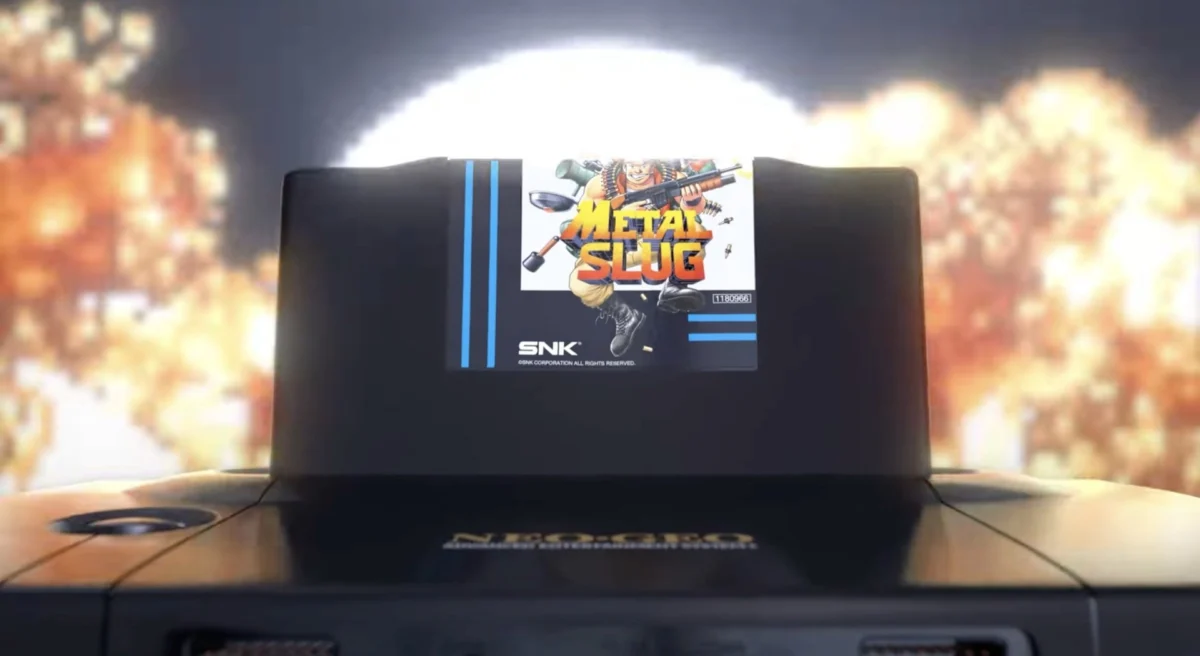
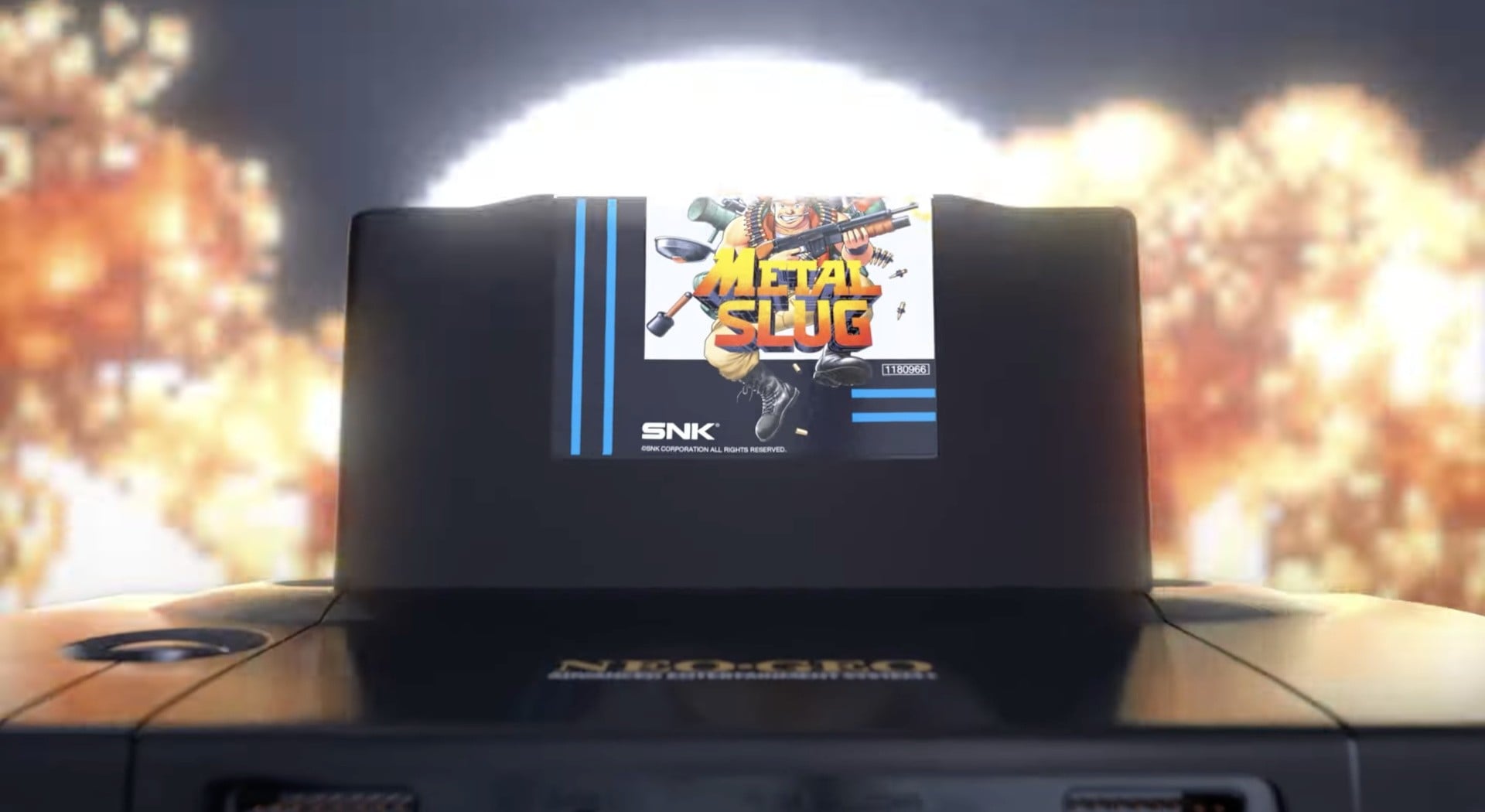
Plaion’s recent announcement of a Neo Geo AES replica, dubbed the Neo Geo+, has ignited fervent discussion within the retro gaming community, particularly regarding the console’s underlying hardware architecture. The project aims to deliver an unparalleled authentic experience, with Plaion asserting that the device will eschew software emulation and even FPGA approximation, instead relying on "newly manufactured chips based on the originals." This ambitious claim has been further bolstered by unofficial reports suggesting the involvement of revered retro engineering figures, notably Furrtek and Jotego, leading to a polarizing debate over the console’s true technical foundation and its potential impact on the dedicated fanbase.
The Neo Geo Legacy: A Benchmark of Premium Gaming
To fully appreciate the significance of the Neo Geo+ and the claims surrounding its fidelity, one must first understand the storied legacy of the original Neo Geo Advanced Entertainment System (AES). Launched in Japan in 1990 by SNK, the AES was a groundbreaking console that brought arcade-perfect gaming experiences directly into homes. Unlike its contemporaries, the AES utilized the same powerful hardware as SNK’s MVS arcade cabinets, meaning consumers could play identical versions of popular titles like Metal Slug, Fatal Fury, and Samurai Shodown without any graphical or performance compromises.
However, this fidelity came at an exorbitant price. The console itself retailed for an unprecedented $649.99 (equivalent to over $1,500 in today’s money), with individual game cartridges often costing upwards of $200-$300 each. This positioned the Neo Geo AES as a luxury item, earning it the moniker "the Rolls-Royce of video game consoles." Its high cost, combined with its relatively niche market, meant that while it garnered immense respect for its technical prowess, it never achieved mainstream commercial success comparable to Nintendo or Sega. SNK eventually ceased manufacturing its own hardware, including the AES, in the late 1990s, marking the end of an era for a truly unique console. Despite its commercial limitations, the Neo Geo cultivated a passionate, dedicated fanbase that continues to value its unique blend of arcade authenticity and exquisite craftsmanship.
Plaion’s Ambitious Vision: Beyond Emulation
In an era dominated by software emulation, which uses software to mimic a console’s hardware, and FPGA (Field-Programmable Gate Array) solutions, which use reconfigurable hardware chips to replicate original systems, Plaion’s approach for the Neo Geo+ stands out. The company has been explicit in its marketing, stating that the Neo Geo+ "natively plays game software from both new and old game cartridges for the most authentic retro gaming experience. Not emulation, not FPGA approximation, but true console reincarnation etched back into silicon."
Plaion has further clarified to Time Extension that the Neo Geo+ is "powered by newly manufactured chips based on the originals." These chips, they claim, have been "re-engineered by modern standards to accurately replicate the original machine’s hardware and software." This phrasing suggests a meticulous reverse-engineering process, where the original Neo Geo’s complex custom chips (such as its 68K CPU, Z80 co-processor, and specialized video and audio chips) have been meticulously analyzed and redesigned to be manufactured using contemporary fabrication techniques. The goal, as articulated by Plaion, is a 1:1 hardware replication, ensuring that the console behaves identically to its vintage counterpart at a fundamental level, addressing the subtle inaccuracies that can sometimes plague even high-quality emulation or FPGA implementations.
The target price point of $250 for the Neo Geo+ positions it competitively against premium FPGA-based consoles like those from Analogue, which often retail in a similar range, while offering what Plaion describes as an even more authentic "true console reincarnation." This commitment to hardware fidelity resonates deeply with a segment of the retro gaming community that prioritues perfect accuracy above all else.
The Endorsement of a Modding Legend: Furrtek’s Perspective
Adding significant weight to Plaion’s claims is the reported involvement of Jean-François Del Nero, widely known by his alias Furrtek. While not officially confirmed by Plaion, his participation has been widely discussed after a now-deleted social media post from Furrtek himself provided a tantalizing glimpse into the project. Furrtek, a revered figure in the world of retro reverse-engineering and particularly within the Neo Geo community, has earned his legendary status through groundbreaking projects like the Neo CD SD Loader and the Fusion Converter, the latter enabling MVS arcade games to be played on AES home consoles. His work has consistently focused on hardware-level understanding and manipulation, making his insights invaluable to the preservation and continued enjoyment of classic systems.
In his "biased opinion," Furrtek stated that the Neo Geo+ "has every chance of being the best since SNK themselves stopped manufacturing hardware. Perfect, maybe not, but certainly with the ambition to do better than emulation, to honour the brand, and to respect the fans." This statement, coming from an individual with such deep technical expertise and a long-standing commitment to the Neo Geo, carries considerable authority. It suggests that, from his perspective, the project’s technical foundation and goals align with the highest standards of retro hardware accuracy. His endorsement implicitly validates the project’s ambition to surpass existing emulation and FPGA solutions in terms of faithful replication, reinforcing the idea that the Neo Geo+ could indeed be the definitive modern hardware interpretation of the classic console.
Further strengthening the technical credibility of the project is the unofficial involvement of Jotego, another highly respected name in the FPGA development scene. Jotego is renowned for creating some of the most accurate and complex FPGA cores for various arcade systems and consoles, often contributing to projects like MiSTer. Their reported involvement suggests that the "newly manufactured chips" are likely based on sophisticated hardware descriptions derived from deep technical analysis, a process that FPGA specialists excel at.
The "Bait and Switch" Accusation: Pramod Somashekar’s Critique
Despite the positive sentiment from figures like Furrtek, Plaion’s marketing language and the nature of the "newly manufactured chips" have drawn criticism from other corners of the retro hardware development community. Pramod Somashekar, another prominent FPGA developer, voiced strong reservations, labeling the approach a "bait and switch."
Somashekar’s core argument hinges on the distinction between an FPGA (Field-Programmable Gate Array) and an ASIC (Application-Specific Integrated Circuit). An FPGA is a semiconductor device built around an array of configurable logic blocks connected by programmable interconnects. This allows the chip to be reconfigured post-manufacturing, making it incredibly flexible and updateable. Projects like MiSTer leverage FPGAs to dynamically load hardware descriptions (cores) for various retro systems, offering a high degree of accuracy and the ability to fix bugs or add features through software updates.
In contrast, an ASIC is a custom-designed integrated circuit manufactured for a specific application. Once an ASIC is fabricated, its functionality is permanently "hard-wired" into the silicon. ASICs offer superior performance, power efficiency, and potentially lower unit cost at mass production volumes compared to FPGAs, but they lack any post-manufacturing flexibility.
Somashekar contends that if specialists like Jotego, known for their FPGA work, are involved in creating the "newly manufactured chips," and Plaion explicitly states "not FPGA approximation," then the most logical interpretation is that the project is taking an existing, highly accurate FPGA design (potentially a derivative of a MiSTer core or similar) and "hardening" it into an ASIC. He articulates this view by stating: "That means this is basically the MiSTer core, but instead of having the design on one FPGA, you break it up into multiple ASICs. It’s a bait and switch, especially after the marketing page says otherwise."

The "bait and switch" claim stems from Plaion’s insistence that it’s "not FPGA approximation." If the core design originates from an FPGA project and is then simply converted into an ASIC for manufacturing efficiency, Somashekar argues that it fundamentally remains an FPGA-derived solution, despite being physically implemented as an ASIC. This, he suggests, misrepresents the underlying technology to consumers who might interpret "true console reincarnation etched back into silicon" as an entirely new, ground-up reverse-engineering effort distinct from the established FPGA scene.
The Inflexibility of ASIC: A Critical Limitation
Beyond the semantic debate, Somashekar highlights a significant practical shortcoming of an ASIC-based approach: the inability to update the hardware. "ASIC is a hard-wired configuration. FPGA can be dynamically reconfigured. So if the solution is based on this, it means you can’t update it. So if a mistake is made, that’s pretty much it," he warns.
This inflexibility is a critical concern for the long-term viability and accuracy of a retro console. Even the most meticulously designed hardware can contain subtle bugs or inaccuracies that are only discovered years later through extensive community testing. For FPGA-based systems, such issues can often be patched through firmware updates. However, with an ASIC, any fundamental error in the hardware logic is permanently etched into the chip. This means that if a particular game exhibits a subtle graphical glitch, an audio discrepancy, or a timing issue due to an ASIC flaw, there would be no way to correct it without a costly and impractical hardware revision. This lack of future-proofing stands in stark contrast to the dynamic nature of FPGA solutions, which continue to evolve and improve over time.
For a product aiming to be the "best since SNK themselves stopped manufacturing hardware," the inability to correct potential imperfections post-launch could undermine its claim to ultimate fidelity, especially in a community that values ongoing accuracy improvements.
Technical Deep Dive: Understanding the Nuances
The debate between Plaion’s marketing and Somashekar’s critique underscores the nuanced differences between various hardware replication methodologies.
- Software Emulation: The most common method, running software that mimics the original hardware’s behavior. Highly accessible and cost-effective but often suffers from varying degrees of accuracy, input lag, and performance issues dueencing.
- FPGA (Field-Programmable Gate Array): Replicates hardware at a much lower level than software emulation. An FPGA can be configured to behave like the original console’s chips, providing a significantly higher degree of accuracy and much lower latency. Its programmability allows for continuous improvements and fixes. The MiSTer project is a prime example of an open-source, community-driven FPGA platform that has achieved remarkable accuracy for a wide array of retro systems.
- ASIC (Application-Specific Integrated Circuit): A chip custom-designed and hard-wired for a specific function. If an FPGA design is perfected to replicate a system, it can theoretically be "hardened" into an ASIC. This would offer the same hardware-level accuracy as the FPGA, but with potentially better power efficiency, lower manufacturing cost at scale, and higher raw performance due to optimized routing. However, the critical drawback, as Somashekar points out, is the complete lack of post-production flexibility.
Plaion’s statement "not FPGA approximation" could be interpreted in multiple ways. It could mean they developed their hardware design independently, without relying on existing FPGA cores. Or, it could mean that while their design process involved FPGA development (perhaps by Jotego and Furrtek), the final product is not a generic FPGA chip running a loaded core, but rather a dedicated, custom-manufactured ASIC derived from that highly accurate FPGA design. In this latter scenario, the device would technically not be an "FPGA approximation" in the sense of a user-configurable FPGA board, but its genesis would still be deeply rooted in FPGA-level hardware description languages. The ambiguity leaves room for interpretation and, consequently, for debate within the technically savvy retro community.
Market Implications and Consumer Expectations
The retro gaming market is a multi-billion dollar industry, experiencing significant growth driven by nostalgia and a desire for authentic gaming experiences. Within this market, there’s a growing segment of enthusiasts willing to pay a premium for hardware that delivers unparalleled accuracy. Products like Analogue’s FPGA-based consoles have successfully tapped into this demand, offering high-quality solutions that bridge the gap between vintage hardware and modern display technology.
The Neo Geo+ enters this competitive landscape with a bold promise: to surpass existing solutions in authenticity. Its success will hinge not only on its technical performance but also on how effectively Plaion manages consumer expectations and addresses the transparency concerns raised by experts like Somashekar. The $250 price point suggests a premium product, and consumers investing at this level expect clarity, accuracy, and potentially, longevity through updateable firmware.
The Neo Geo fanbase, in particular, is known for its discerning taste and deep technical knowledge. Many have invested heavily in original hardware, arcade boards, and sophisticated modding solutions. For such a critical audience, any perceived misrepresentation of the underlying technology, or any inherent design flaw that cannot be corrected, could significantly impact the console’s reception and long-term standing.
Conclusion: Awaiting Further Clarification
The Neo Geo+ project represents an exciting development for fans of SNK’s iconic console, promising a level of authenticity that aims to set a new benchmark. The involvement of modding legends like Furrtek and Jotego lends significant credibility to the endeavor, suggesting a deep commitment to technical excellence. Furrtek’s assessment that the console "has every chance of being the best since SNK themselves stopped manufacturing hardware" underscores the high aspirations of the team.
However, the criticisms from figures like Pramod Somashekar, particularly regarding the potential for a "bait and switch" and the inherent inflexibility of an ASIC-based design, introduce crucial questions about transparency and long-term support. While Plaion has been clear that the Neo Geo+ will not rely on software emulation or FPGA approximation, further official clarification on the precise nature of the "newly manufactured chips" – specifically, whether they are entirely novel ASIC designs or hardened derivatives of existing FPGA cores – would be invaluable.
As the Neo Geo+ approaches its release, the retro gaming community watches with bated breath. Its ultimate success will not only be measured by its ability to perfectly replicate the classic Neo Geo experience but also by its capacity to build trust through clear communication and demonstrate a commitment to overcoming the technical challenges inherent in reviving such a legendary system. The debate highlights the intricate balance between technical innovation, marketing communication, and the exacting demands of a passionate and knowledgeable consumer base in the rapidly evolving world of retro gaming hardware.