Retno Hari Mulyono
The rise of amateur motorsports, particularly track days and autocross, has catalyzed a shift in how enthusiasts manage vehicle logistics and consumable resources. Central to this evolution is the increasing reliance on high-performance, street-legal competition tires, commonly referred to by their 200 Treadwear (TW) rating. While these tires offer the necessary grip for high-speed cornering, they present significant logistical challenges for drivers of compact sports cars, such as the Mazda Miata, which lack the internal cargo capacity to transport a secondary set of wheels. Consequently, a growing segment of the racing community has turned to the "tire trailer" as a primary solution for balancing track performance with street-driven reliability.

The Technical and Safety Imperative for Dedicated Track Tires
High-performance tires, such as the Hankook Ventus RS4 or the Bridgestone Potenza RE-71RS, are engineered with specialized rubber compounds designed to provide maximum friction under high-temperature conditions. However, the chemical properties that make these tires effective on a race circuit make them less than ideal for daily commuting.
Industry data suggests that the lifespan of a 200TW tire is typically measured in heat cycles rather than total mileage. A heat cycle occurs when the tire reaches its optimal operating temperature and then cools down. Repeated cycling on public roads, even without aggressive driving, can harden the rubber compound, eventually leading to a loss of grip even if significant tread depth remains. Furthermore, the aggressive tread patterns of competition tires are often ill-equipped for moisture dispersal. In heavy rain, these tires are prone to hydroplaning at speeds significantly lower than those of standard all-season tires.
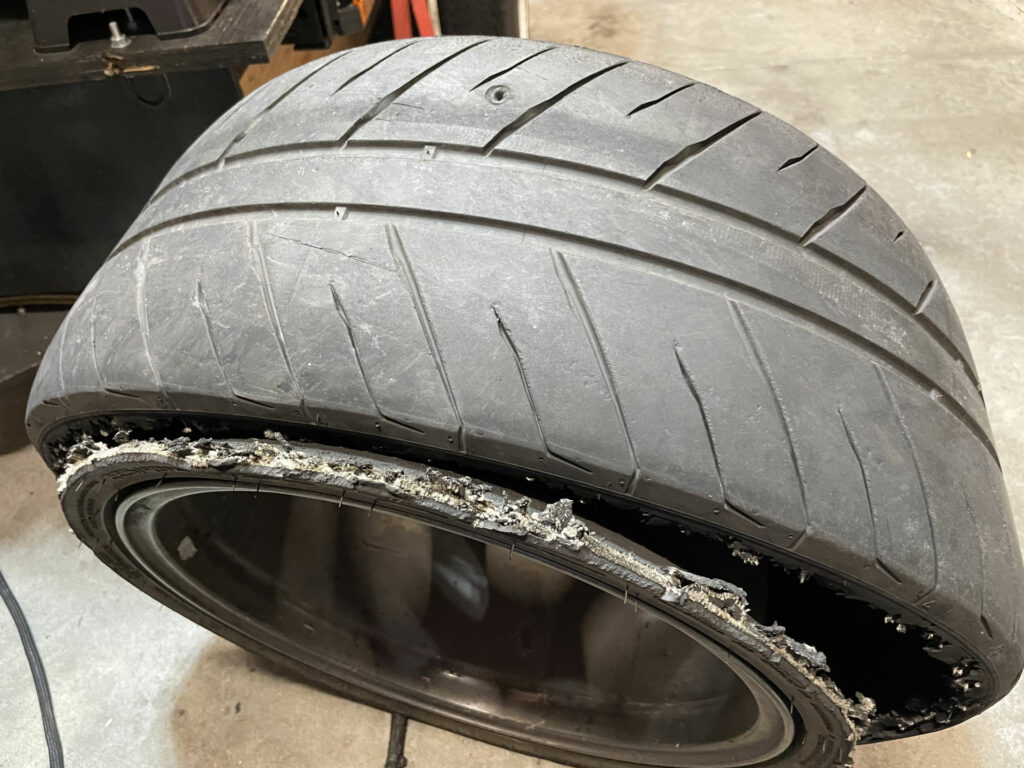
Safety concerns also extend to temperature sensitivity. Many track-oriented tires lose structural integrity and grip when exposed to temperatures below 40 degrees Fahrenheit. For enthusiasts traveling across different climates to reach regional tracks, driving on these tires can introduce unnecessary risk. The tire trailer addresses these issues by allowing the driver to utilize comfortable, rain-capable street tires for the transit phase of an event, reserving the competition rubber for the paddock and the track.
Engineering and Construction of a Compact Tire Trailer
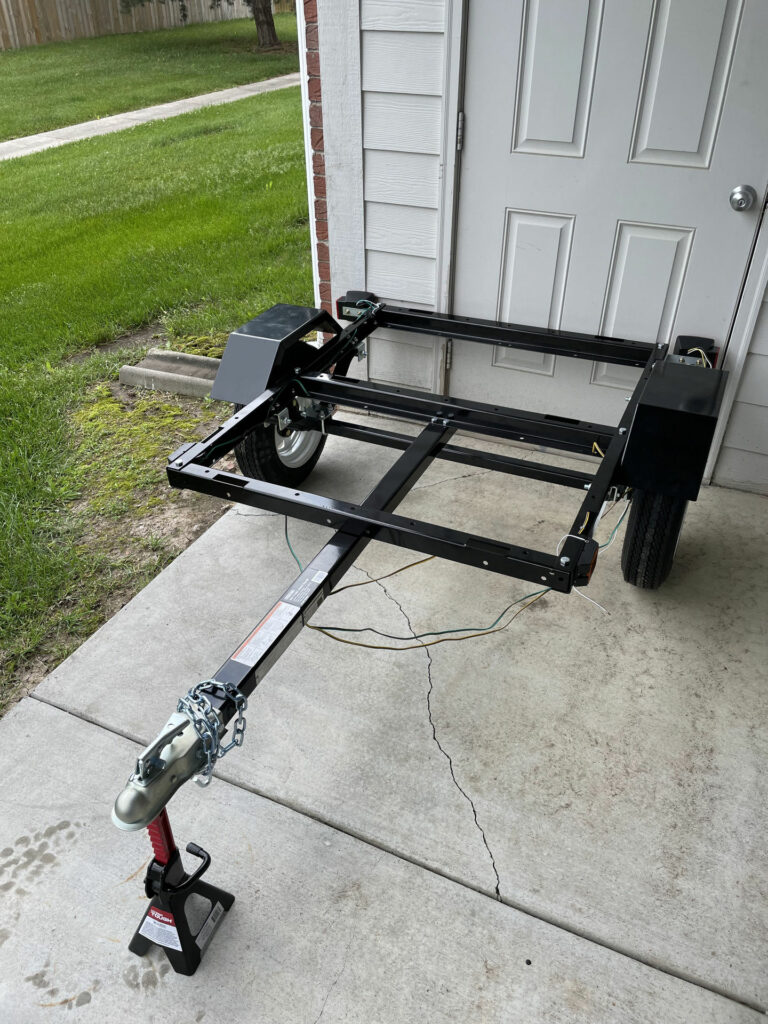
The construction of a tire trailer typically begins with a lightweight utility frame. Popular choices within the community include the 40-inch by 48-inch frames distributed by retailers like Northern Tool or Harbor Freight. These frames are delivered in a disassembled state, allowing for custom modifications during the assembly process.

Technical specifications for a standard DIY tire trailer often involve:
- Frame Material: Powder-coated steel.
- Decking: 3/4-inch Sande plywood or similar weather-resistant timber, often reinforced with carriage bolts and lock washers.
- Suspension: Traditional leaf spring setups, though some high-end custom manufacturers, such as Leroy Engineering, offer independent suspension systems for improved stability at highway speeds.
The builder must prioritize weight distribution to ensure the trailer tracks straight behind a lightweight vehicle. Placing the heaviest items—typically the spare wheels and tires—directly over or slightly forward of the axle is critical for maintaining an appropriate tongue weight. For a vehicle like a Mazda Miata, which has a limited towing capacity (often rated between 1,000 and 2,000 pounds depending on the hitch and regional regulations), keeping the total trailer weight under 500 pounds is a common objective.
Integrated Storage Solutions and Equipment Management
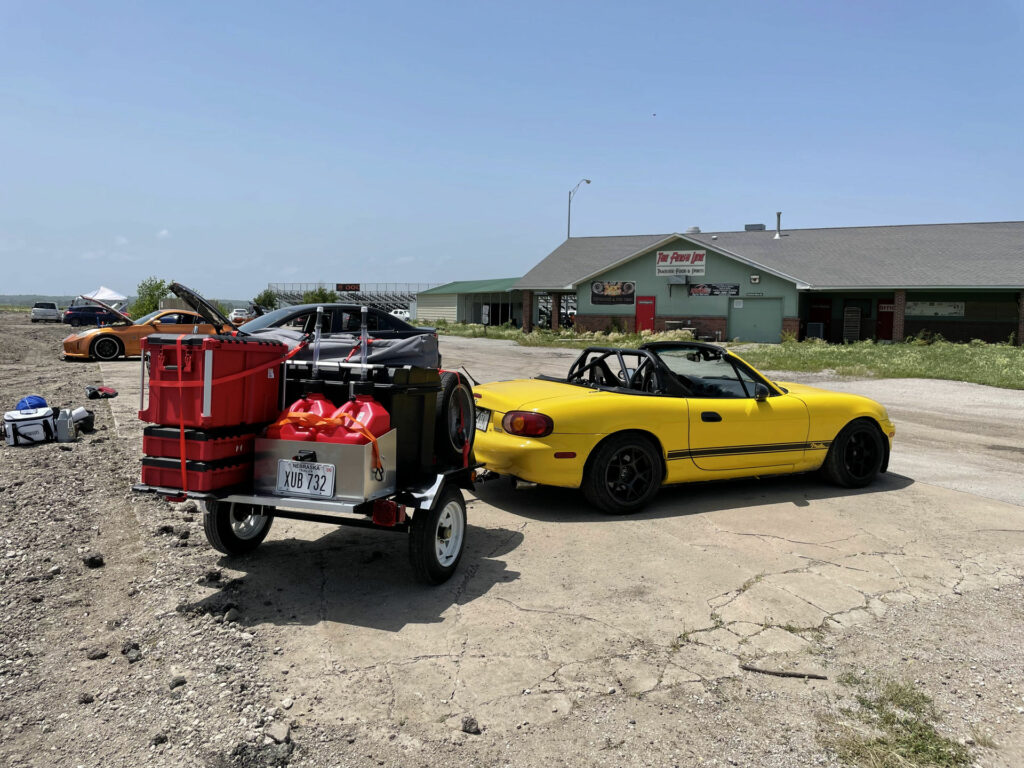
A tire trailer serves as more than just a wheel carrier; it functions as a mobile pit station. Advanced builds incorporate modular storage systems to organize the vast array of tools and fluids required for a weekend of racing.
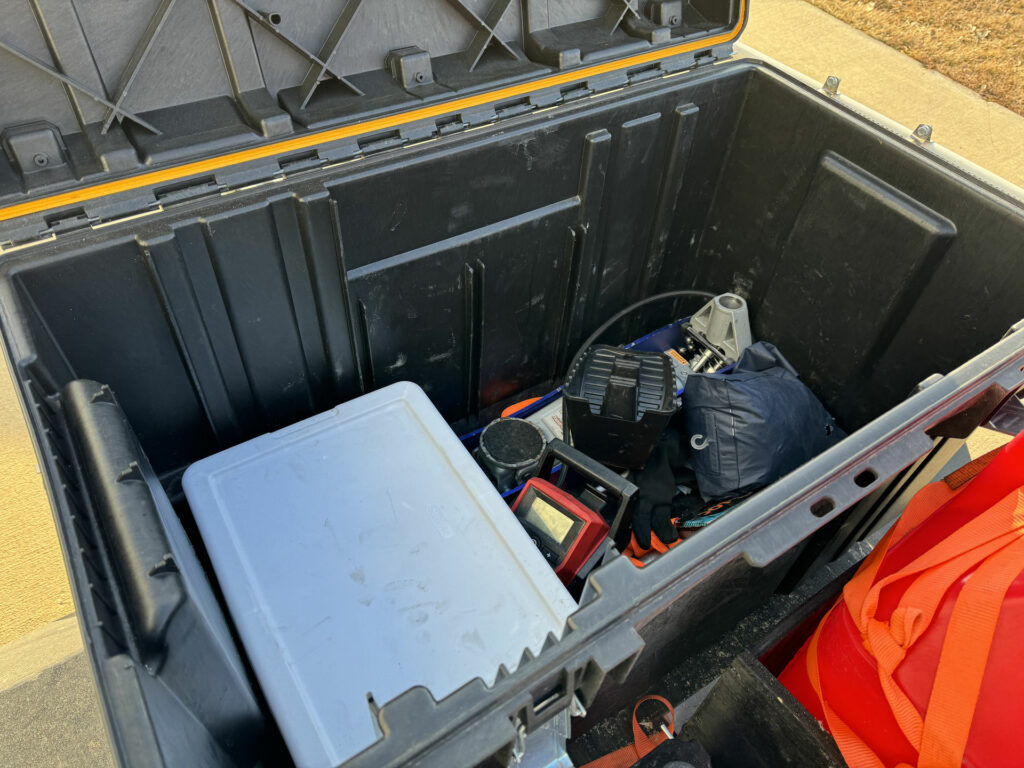
In many documented builds, weather-tight toolboxes, such as the DeWalt DWST38000, are bolted directly to the trailer deck. These units provide secure storage for high-value items, including:
- Impact Wrenches and Torque Wrenches: Essential for rapid wheel changes and safety checks.
- Fluid Management: Spare engine oil, brake fluid (often high-boiling point variants like Motul RBF 600), and coolant.
- Recovery Gear: Jump starters, air compressors, and tire pressure gauges.
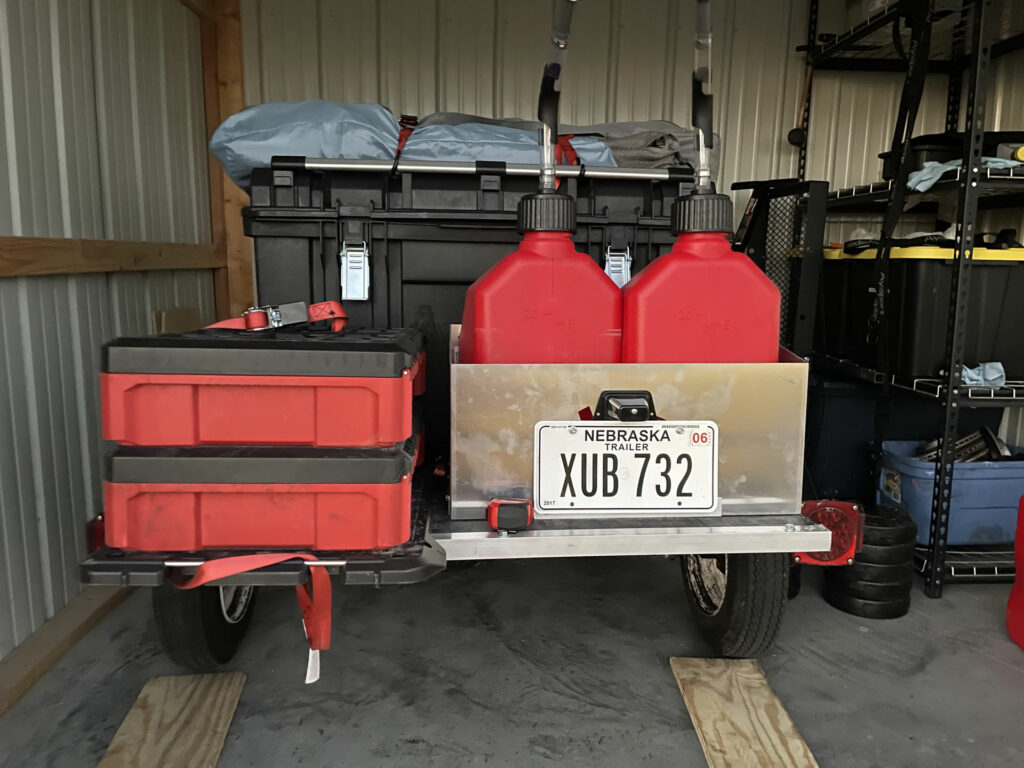
Furthermore, the integration of fuel storage has become a standard feature. Enthusiasts running E85 fuel or high-octane racing gasoline often find that local stations near a track lack the necessary fuel types. By mounting specialized fuel jugs—such as those from VP Racing or Flo-Fast—builders can carry 10 to 15 gallons of additional fuel. This ensures the vehicle can complete multiple sessions without the need for off-site refueling trips, which can consume valuable track time.
Iterative Upgrades and Long-Term Durability
The evolution of a tire trailer often occurs over several seasons of use. Initial builds frequently utilize bias-ply tires, which are standard for small utility trailers. However, long-term performance evaluations have shown that upgrading to radial tires, such as the 145R12 size, provides significant benefits. Radial tires offer better heat dissipation and a more stable contact patch, which results in lower bearing temperatures and reduced wear on the trailer’s axle components.
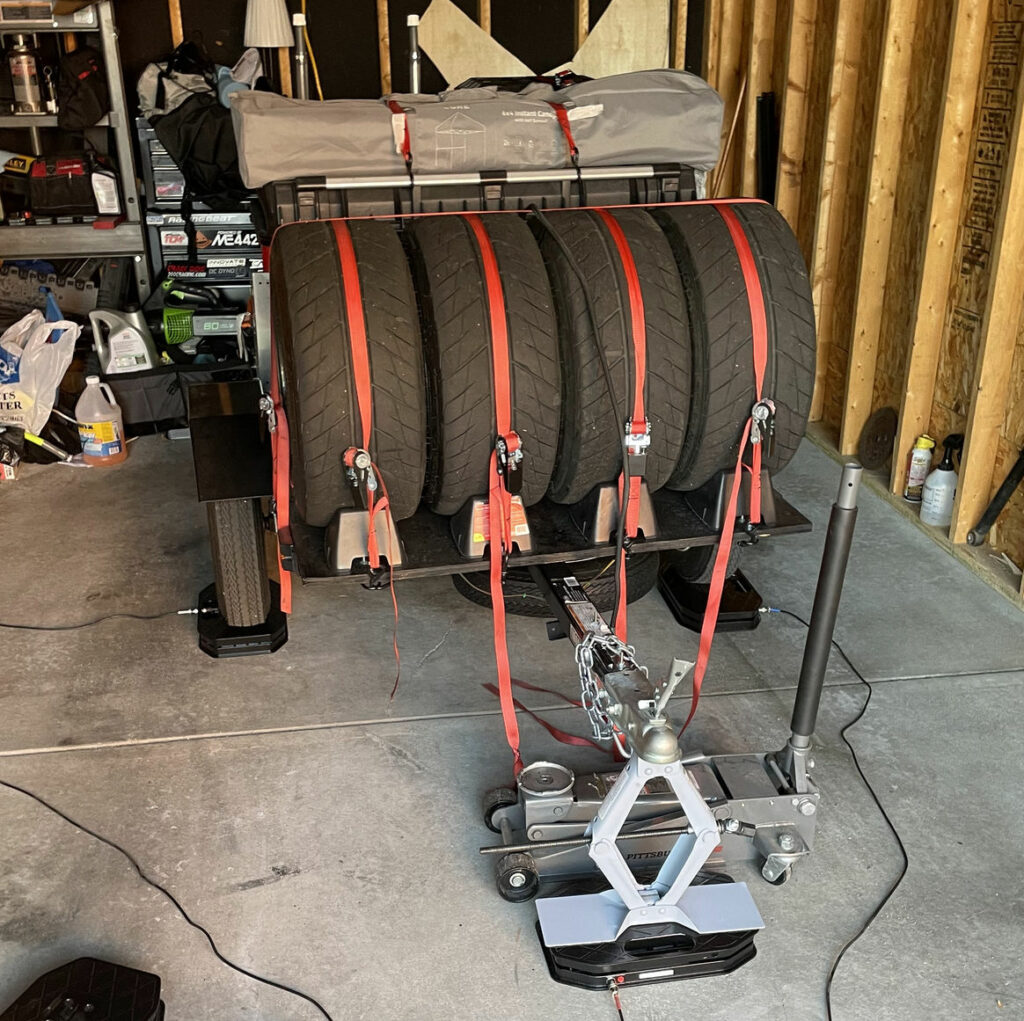
Another common modification is the addition of a "lower deck." By mounting a secondary plywood platform below the main frame—often secured with 2×10 lumber and furniture-grade threaded inserts—builders can create a low-profile storage area for heavy or flat items. This space is ideal for jack stands, canopy weights, and even spare aerodynamic components like front splitters. This dual-deck approach lowers the trailer’s overall center of gravity, further improving towing stability.
Comparative Market Analysis: DIY vs. Professional Solutions
While the DIY approach is the most common due to its cost-effectiveness (with basic builds ranging from $500 to $1,000), a professional market has emerged to serve the high-end enthusiast. Leroy Engineering, based in Ohio, produces the "Paddock" series of trailers, which are specifically engineered for performance cars. These trailers feature high-speed bearings, automotive-grade wheels, and custom-designed racks.
The decision between a DIY build and a professional unit often comes down to the frequency of use and the distance of travel. For enthusiasts attending monthly local events, a modified utility frame is generally sufficient. However, for those competing in national-level events that require thousands of miles of interstate travel, the reliability and safety features of a purpose-built trailer may justify the significantly higher price point, which can exceed $3,000.
Broader Implications for the Automotive Enthusiast Community
The adoption of tire trailers reflects a broader trend toward self-sufficiency in the grassroots racing community. By optimizing the logistics of the "drive-to-track" model, enthusiasts can avoid the substantial costs associated with purchasing a dedicated towing vehicle (such as a heavy-duty pickup truck) and a full-size car hauler.
Economic data from enthusiast forums suggests that the total cost of ownership for a tire trailer is a fraction of that of a traditional towing rig. A truck and trailer setup can easily exceed $40,000 in initial investment, plus ongoing insurance, maintenance, and fuel costs. In contrast, a tire trailer allows the enthusiast to utilize their existing sports car for transit, maintaining the "pure" experience of driving the race car to and from the event while mitigating the risks of tire wear and mechanical failure.
However, the transition from a tire trailer to a full towing rig often marks a shift in the enthusiast’s trajectory. As vehicles become more modified—incorporating roll cages, aggressive aerodynamic packages, and specialized engine tunes—the risk of a mechanical failure that leaves the driver stranded at the track increases. At this stage, the convenience of a tire trailer is often weighed against the security of a flatbed trailer that can transport a disabled vehicle back to a home garage.

Conclusion: The Enduring Utility of the Tire Trailer
For more than two decades, the tire trailer has remained a staple of the track day paddock. It represents a pragmatic solution to a technical problem, balancing the needs for performance, safety, and cargo capacity. As tire technology continues to advance, providing even higher levels of grip at the cost of streetability, the necessity for a secondary set of wheels—and a reliable way to transport them—will only grow.
The tire trailer is more than a piece of equipment; it is a testament to the ingenuity of the automotive community. It allows drivers of small, nimble cars to compete on equal footing with those who have larger support systems, ensuring that the barrier to entry for motorsports remains as low as possible. Whether through a basic $500 kit or a highly customized dual-deck rig, the tire trailer remains an essential tool for the modern track day enthusiast.