Chalid Lutfie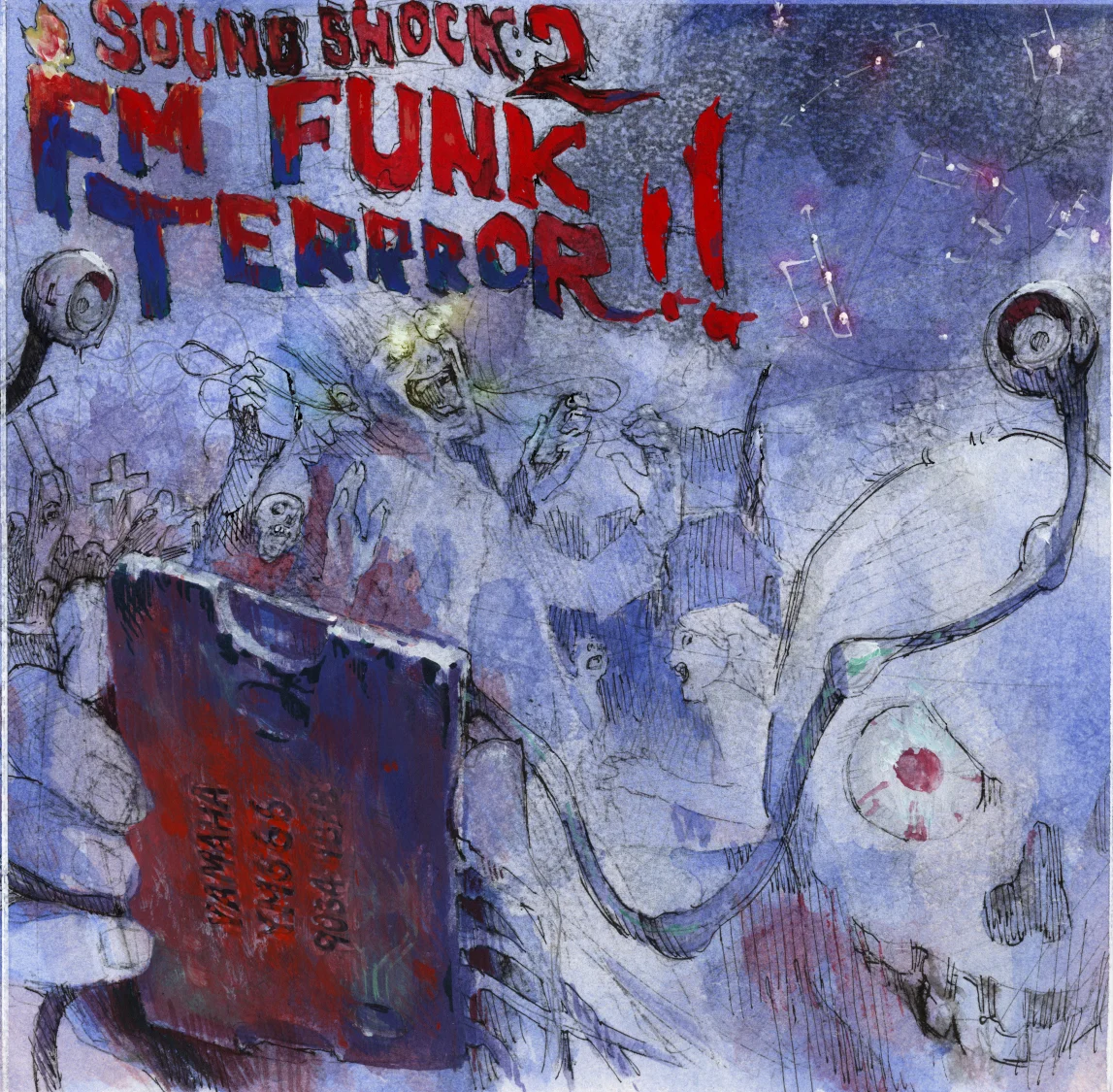
The conclusion of the SOUNDSHOCK trilogy marks a significant milestone in the niche but vibrant community of FM synthesis enthusiasts and chipmusic aficionados. What began as a collaborative effort to celebrate the distinct, metallic textures of Frequency Modulation (FM) sound evolved into a multidisciplinary project where the visual identity—crafted by professional manga artist and musician Tsuyoshi Shimokura—became as integral to the experience as the music itself. Orchestrated by the producer known as zinger, the series has transitioned from a collection of high-energy funk tracks to a profound exploration of retro-gaming aesthetics, horror tropes, and Buddhist philosophy.
The Genesis of the SOUNDSHOCK Collaboration
The partnership between the series producer, zinger, and Tsuyoshi Shimokura was facilitated by the artist hex125. Initially, Shimokura was approached to contribute a musical composition for the first installment, SOUNDSHOCK: FM FUNK MADDNESS!! However, upon discovering Shimokura’s extensive portfolio of hand-painted artwork and his professional background in the manga industry, zinger expanded the scope of the collaboration.
Shimokura’s deep-seated passion for vintage computing, arcade hardware, and FM synthesis provided a rare synergy between the auditory and visual components of the project. His ability to translate the technical structures of FM synthesis—specifically the complex algorithm charts used in Yamaha’s YM series of sound chips—into compelling narrative illustrations defined the series’ aesthetic trajectory.
Chronology of a Trilogy: From Arcade Action to Spiritual Nirvana
The SOUNDSHOCK series followed a deliberate progression, both in its musical complexity and its visual storytelling. Each of the three volumes adopted a specific thematic lens, guided by the collaborative discussions between zinger and Shimokura.
Volume 1: FM FUNK MADDNESS!! and the Arcade Era
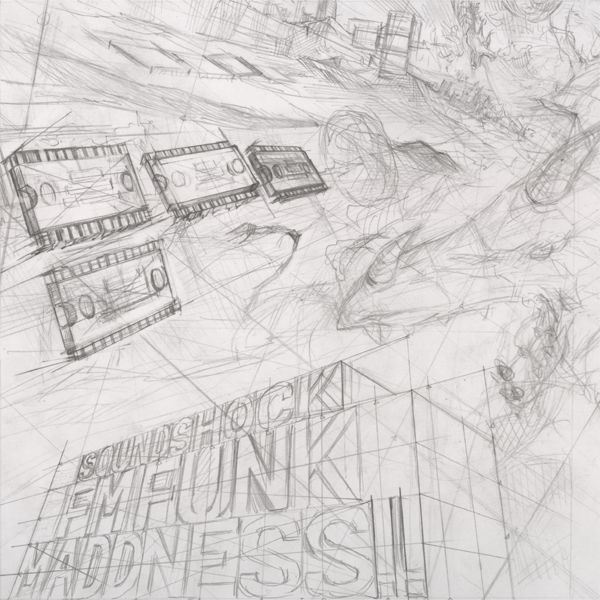
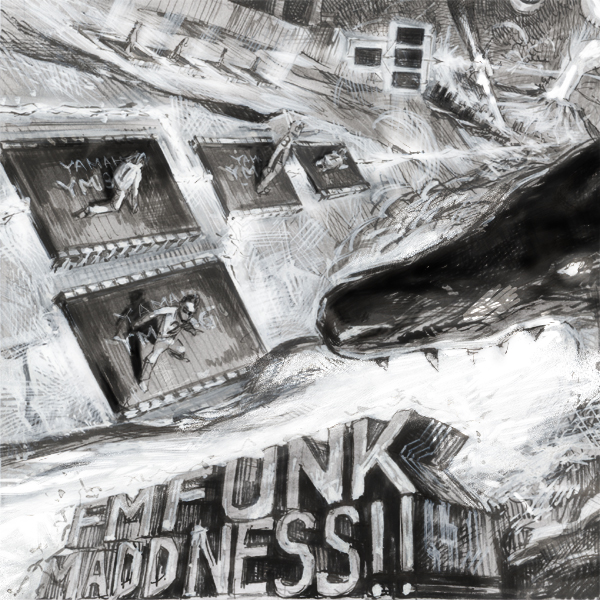
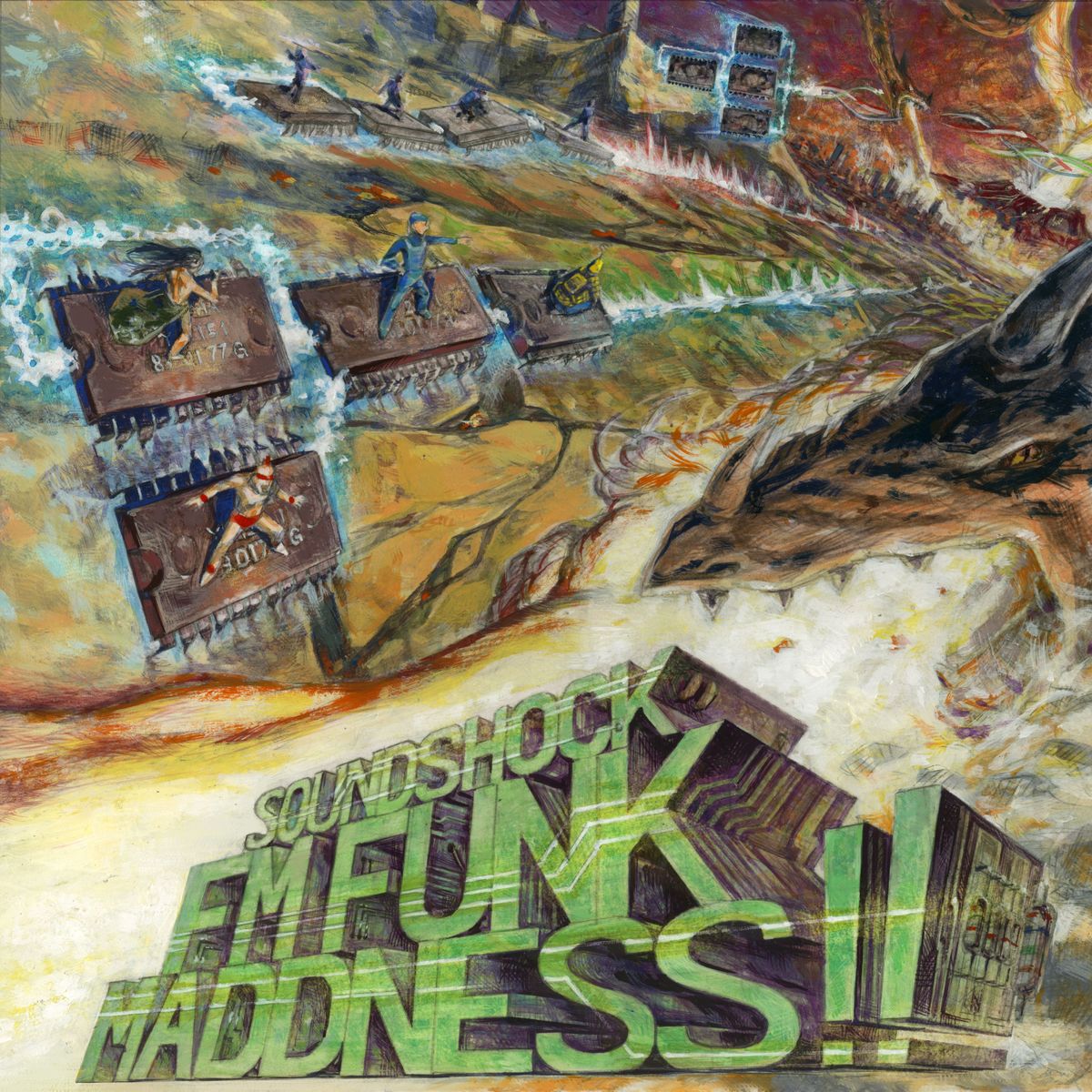
For the debut release, the creative team drew inspiration from the high-octane marketing materials of 1990s Japanese arcades. Specifically, the flyer artwork for Taito’s Metal Black and Darius II served as the primary reference points. These games were noted for their intense, often psychedelic visuals and their pioneering use of FM soundscapes.
Shimokura’s concept for MADDNESS!! centered on a heroic narrative where musicians utilize the "power of FM" to combat monstrous entities. A key technical detail in this artwork is the anthropomorphization of FM chips. Shimokura rendered the integrated circuits with caterpillar-like legs, arranging them into formation based on actual FM algorithm charts. This fusion of hardware specifications with character design established the series’ penchant for rewarding technically literate fans with "Easter eggs" hidden in the art.
Volume 2: FM FUNK TERRROR!! and 80s Horror Aesthetics
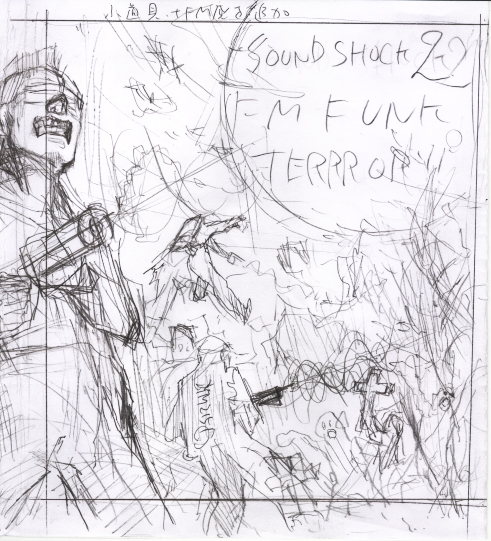
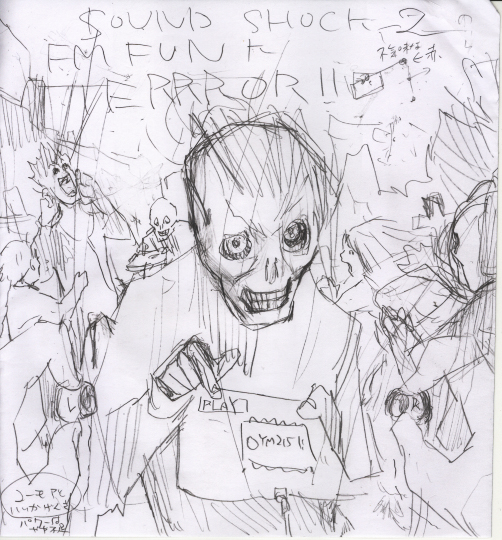
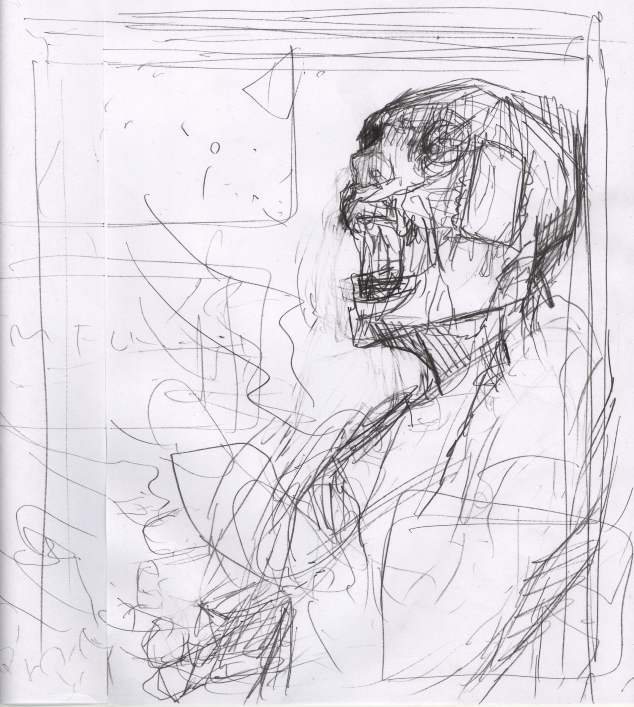
The second installment shifted the tone toward the macabre. Zinger provided Shimokura with a curated collection of 1980s horror movie posters and game flyers, including A Nightmare on Elm Street, The Evil Dead, and the Splatterhouse series. The goal was to capture the "gritty, over-the-top" energy of VHS-era horror.
The resulting artwork featured a "ghoul" character holding a gravestone-styled device labeled "YM666," a play on the Yamaha YM series chips and the "Number of the Beast." Shimokura accompanied the art with a fictional lore: on April 5, as the "Algorithm constellations" align, zombies rise to inflict "FM terror" on humanity. In this narrative, the victims’ brains are "shocked to death," only to have a new passion for FM sound awakened within their souls. This volume reinforced the idea of FM synthesis as a transformative, almost supernatural force.
Volume 3: FM FUNK NIRVANA!! and the Buddhist Mandala
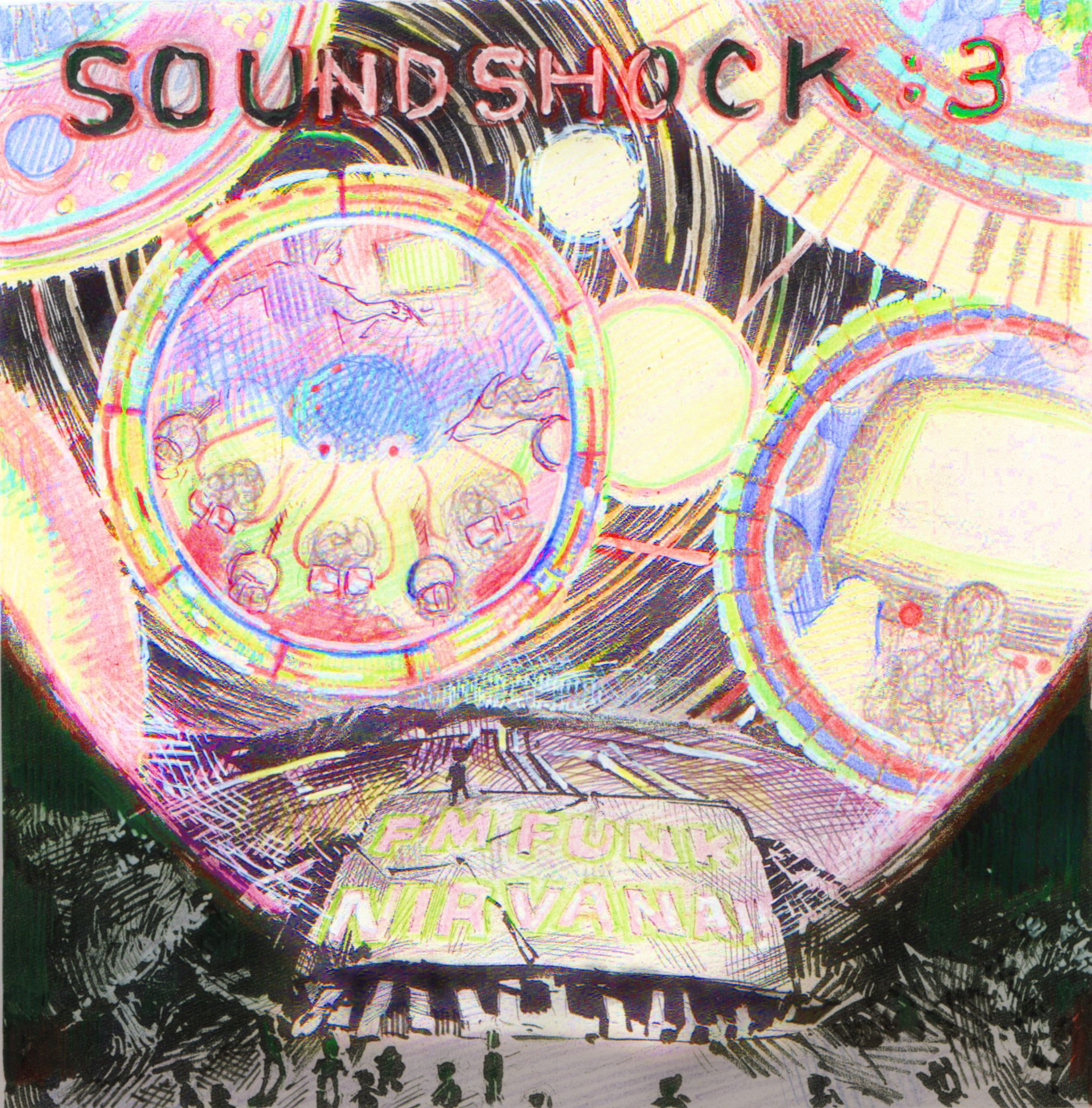
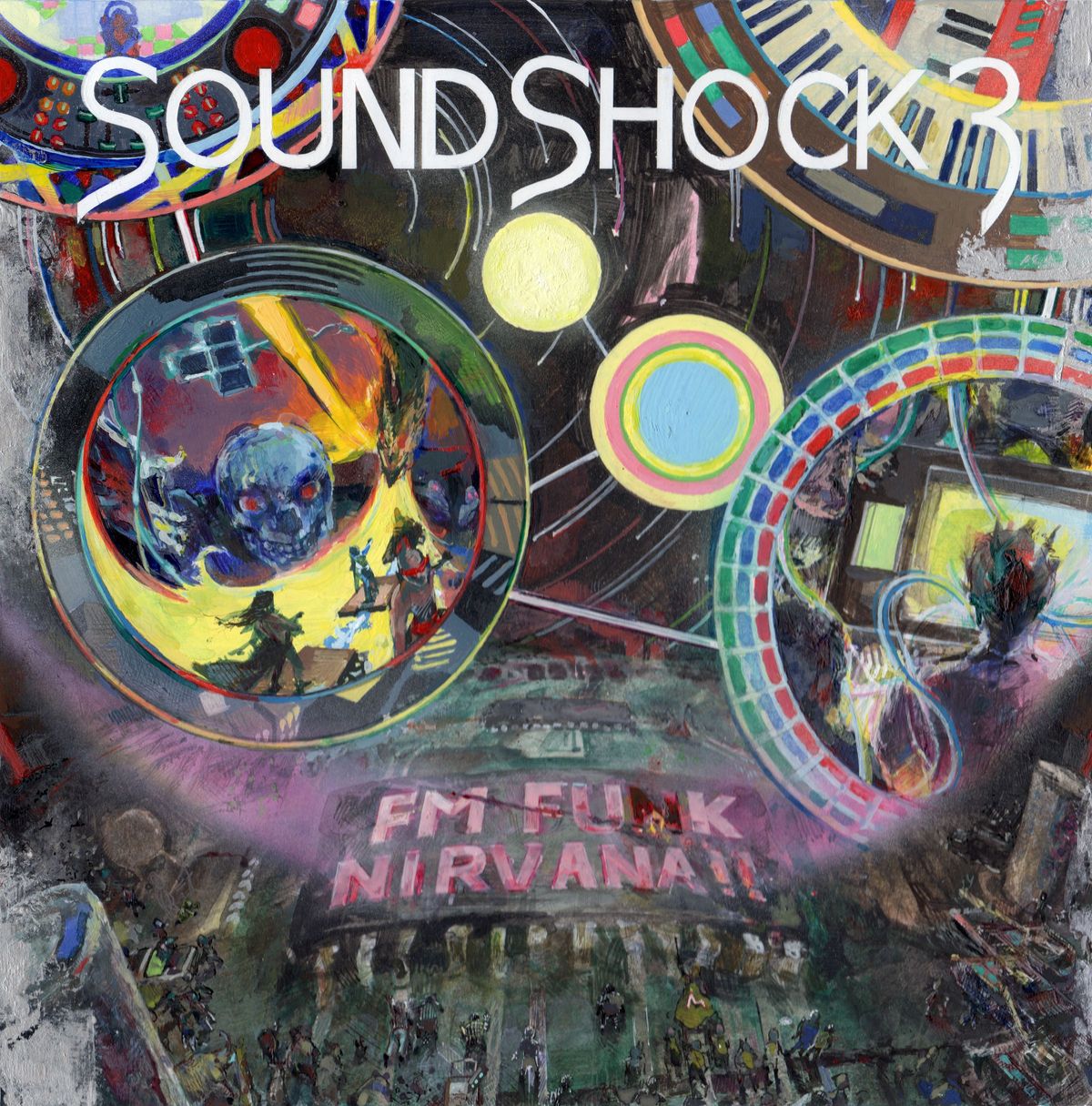
The final chapter, NIRVANA!!, sought to provide a definitive conclusion. While previous titles used intentional misspellings like "MADDNESS" and "TERRROR" to signify "extra power," the team decided to spell "NIRVANA" correctly. According to zinger, the word itself represents an ultimate state that cannot be further augmented without "overloading" its meaning.
Visually, Shimokura moved away from literal action or horror, instead looking toward Buddhist iconography and the soundtrack art of Darius Gaiden. The cover features a "mandala" of spheres in the upper register, representing a vision of the universe. Below, a group of disciples is depicted worshipping a massive FM chip mounted on a circuit board. This imagery suggests that the "disciples" (the listeners and artists) have found a spiritual home in the frequency-modulated sounds of the past, turning a technical hobby into a shared faith.
Supporting Data: The Technical Influence of FM Synthesis
To understand the depth of Shimokura’s artwork, one must consider the technological context of FM synthesis. Popularized in the 1980s by the Yamaha DX7 synthesizer and later by the Sega Genesis (Mega Drive) and various arcade boards, FM synthesis relies on "operators" (oscillators) that modulate one another in specific configurations called algorithms.
The SOUNDSHOCK series was a tribute to the Yamaha YM2151 and YM2612 chips, which defined the sound of the 16-bit era. Shimokura’s insistence on including algorithm charts in his artwork—such as the stars in the TERRROR!! cover forming a 4-operator FM patch—highlights the series’ commitment to authenticity. Data from the chipmusic community suggests that the SOUNDSHOCK series remains one of the most successful modern tributes to this hardware, bridging the gap between retro-enthusiasts and contemporary electronic music producers.
Official Statements and Artist Reflections
In a final message to the community, Tsuyoshi Shimokura reflected on the end of the series not as a loss, but as a beginning. His statement, translated by zinger, emphasizes the cyclical nature of creative influence:
"SOUNDSHOCK has come to an end. That, however, is not a sad thing. Supposing SOUNDSHOCK really has struck a chord in its listeners’ hearts, then our work could be thought of as a seed for future stars that have yet to be born. These new stars, we regard as our spiritual offshoots—just as we are the progeny of our forerunners. For us, believers in FM sound, we are all one and the same."
Zinger echoed these sentiments, expressing gratitude for Shimokura’s ability to take vague concepts—such as "Buddhist imagery" or "80s horror"—and refine them into hand-painted masterpieces that captured the "soul" of the FM sound. The collaboration was characterized by a high degree of creative freedom, with zinger often "staying out of Shimokura’s way" to allow the artist’s intuition to guide the final output.
Broader Impact and Implications for the Doujin Music Scene
The SOUNDSHOCK trilogy is a prime example of the "doujin" (self-published) music culture that thrives in Japan and has gained a significant international following via digital labels like Ubiktune. By prioritizing high-quality, physical-style artwork for digital releases, the series challenged the trend of minimalist or generic cover art in the streaming era.
The Preservation of Hand-Painted Techniques
In an age of digital speed-painting and AI-generated imagery, Shimokura’s hand-painted approach represents a commitment to traditional craft. His background in manga allowed him to infuse the covers with a sense of "motion" and "character" that is often missing from modern graphic design. This has led to a renewed interest in "Physical Media Aesthetics" within the chipmusic community, where the visual packaging is viewed as a physical manifestation of the digital audio.
The "Spiritual Offshoot" Concept
Shimokura’s concept of "spiritual offshoots" speaks to the broader movement of retrogaming and "retrowave" culture. By framing FM synthesis not as an obsolete technology but as a "seed" for future creativity, the SOUNDSHOCK series helped legitimize the study of vintage sound chips as a serious artistic pursuit. The series has influenced a new generation of composers to explore the limitations of the YM2612 chip, ensuring that the "FM Funk" legacy continues long after the final album’s release.
Conclusion
The SOUNDSHOCK series stands as a testament to the power of collaborative world-building. Through the combined efforts of zinger’s curation and Tsuyoshi Shimokura’s evocative artistry, the project transcended its status as a mere music compilation. It became a visual and auditory history of a specific technological era, reinterpreted through the lenses of horror, action, and spirituality. As the "Algorithm constellations" fade, the impact of these three albums remains, serving as a roadmap for future artists who seek to find "Nirvana" in the complex, metallic frequencies of the past.