Jia Lissa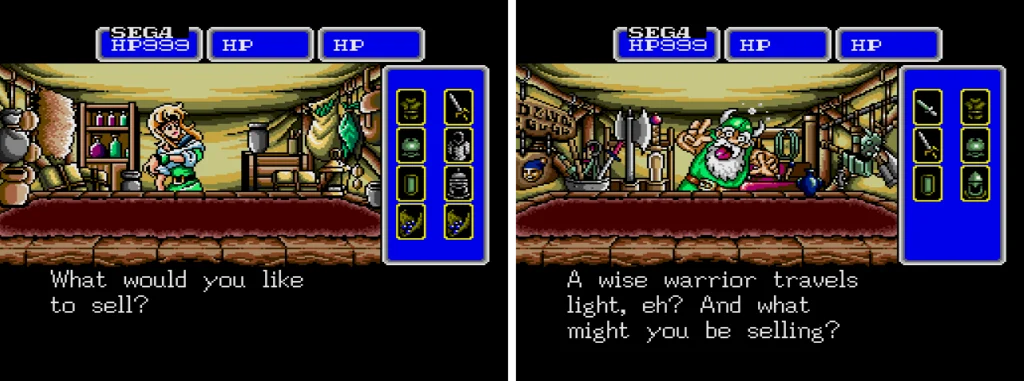
When Sega fans discuss the premier role-playing franchises that defined the 16-bit era, the Shining series invariably stands alongside Phantasy Star as a cornerstone of the platform’s identity. Launched in 1991 for the Mega Drive (known as the Genesis in North America), Shining in the Darkness was not merely another dungeon crawler; it was the foundational stone for a franchise that would eventually span nearly two dozen entries across multiple generations of hardware. Developed by Climax Entertainment, a studio founded by veterans of the Dragon Quest series, the title represented a pivotal shift in how Japanese developers approached the global market, blending Western fantasy tropes with innovative technical wizardry to overcome the hardware limitations of the time.
The Departure from Chunsoft and the Birth of Climax
The architectural DNA of Shining in the Darkness can be traced back to Chunsoft, the developer responsible for the early Dragon Quest titles published by Enix. Two key figures, Hiroyuki Takahashi and Hiroshi "Kan" Naitō, were instrumental in the development of Dragon Quest III and IV. Despite the massive success of those titles on Nintendo’s Famicom, Takahashi and Naitō harbored a growing dissatisfaction with the restrictive nature of development within a large team. They sought a more personal creative freedom and a chance to elevate the public profile of game developers, who were often anonymous at the time.
In April 1990, Takahashi and Naitō left Chunsoft to form Climax Entertainment. Their departure was fueled by a desire to create software that could earn international respect. Takahashi, in particular, was motivated by experiences during focus testing in the United States, where he felt American gamers viewed Japanese software as derivative of Western computer games. He became determined to produce an RPG that prioritized originality and immersive presentation over the "copycat" culture he observed in the domestic Japanese market.

Technical Ambition: Choosing the 16-Bit Frontier
By 1990, the 8-bit Famicom was showing its age. While the Super Famicom had recently launched, its architecture was still a mystery to many third-party developers. Climax Entertainment turned its attention to the Sega Mega Drive, a machine that had been on the market for two years and featured the well-documented Motorola 68000 CPU. Naitō, a self-taught programming prodigy with a fascination for 3D imagery, saw the Mega Drive as the ideal vessel for a "real-time haunted house" concept he had been envisioning.
The development environment provided by Sega was initially rudimentary, lacking the tools to visualize graphics effectively on the hardware. This led Climax to develop their own internal graphics tools, essentially building their own development ecosystem before even beginning work on the game’s assets. Sega’s R&D head, Hisashi Suzuki, recognized the potential of the team and provided them with high-performance Hewlett-Packard workstations, which significantly accelerated the development cycle. This technical synergy allowed Climax to push the Mega Drive beyond its intended limits, simulating 3D environments that rivaled the hardware-assisted effects of Nintendo’s rival console.
The "Panorama 3D" Technique and Visual Philosophy
One of the most striking aspects of Shining in the Darkness was its visual departure from the traditional "manga" style prevalent in Japanese RPGs of the early 90s. Takahashi and Naitō were deeply influenced by the classic animation of Walt Disney, specifically films like Sleeping Beauty and Alice in Wonderland. They aimed for a "caricature" aesthetic that would appeal to a universal audience.
To bring this vision to life, they hired Yoshitaka Tamaki, a freelance artist who shared their affinity for Western animation. The team developed what they termed "Panorama 3D," a technique designed to maximize the sense of spatial awareness and depth within the dungeon’s corridors. Because the Mega Drive lacked hardware support for scaling and rotation—features found in the Super Famicom’s "Mode 7"—Climax had to achieve these effects through software.
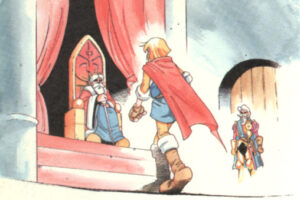
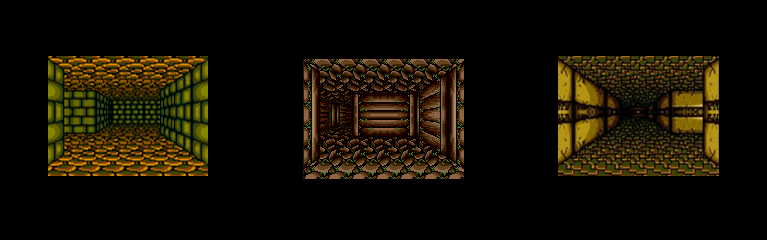
The dungeon movement was constructed using tile-based tricks. By meticulously placing pixel art and utilizing rapid tile updates, programmer Yasuhiro Taguchi created a fluid, first-person perspective that felt natural. To preserve memory for these effects, the game’s playable window was reduced, allowing the hardware to focus on animating large, detailed monster sprites and complex magic effects that filled the screen during combat.
Innovation in Interaction: The Icon-Based Menu System
Climax Entertainment recognized that the text-heavy menus of traditional PC and console RPGs often created a barrier to immersion. For Shining in the Darkness, they implemented a revolutionary icon-based command system. Rather than scrolling through lists of text, players interacted with animated icons that corresponded to the directional keys on the controller.
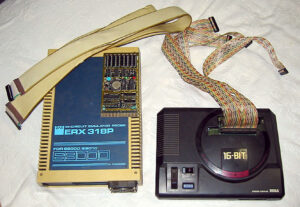
This "whoosh" menu system was designed to be intuitive enough that a manual was unnecessary. While some contemporary critics compared the system to Phantasy Star III, the Climax version was significantly more polished and interactive. This design philosophy extended to the town of Thornwood, where NPCs would react dynamically to the party’s status. For example, an innkeeper might refuse service if a party member was dead, or a priest might comment on a character’s curse before the player even opened the status menu. This level of environmental reactivity was rare in 1991 and contributed to the "immersive RPG" label Sega used during the game’s promotion.
The Controversial Omission of Auto-Mapping
A defining characteristic of Shining in the Darkness that remains a point of discussion among retro gaming enthusiasts is the total lack of an auto-mapping feature. In an era where competing titles like Might and Magic were beginning to offer automated assistance, Climax made the deliberate choice to force players to navigate by memory and landmarks.

Kan Naitō argued that maps "spoon-fed" the player and diminished the satisfaction of exploration. He designed the Labyrinth with logical traps and visual cues—such as torches, puddles, and specific wall textures—that acted as navigational markers. The philosophy was one of "realistic exploration"; just as one would learn a city’s streets through trial and error, the player was expected to learn the Labyrinth’s floors. While items like the "Wisdom Seed" and the "View" spell offered temporary glimpses of the player’s surroundings, the burden of navigation remained a core pillar of the game’s challenge.
Orchestrating the Kingdom: The Score of Masahiko Yoshimura
The atmospheric weight of the Kingdom of Thornwood was largely carried by the soundtrack composed by Masahiko Yoshimura. A graduate of the Shōbi-Gakuen Junior College School of Music Business, Yoshimura brought a sophisticated orchestral sensibility to the Mega Drive’s YM2612 sound chip.
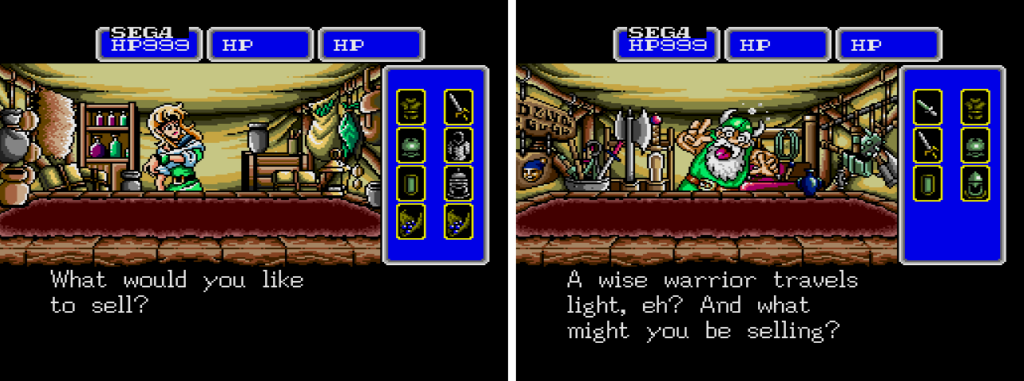
Despite his public frustration with the chip’s limitations, Yoshimura’s score became a benchmark for the series. He worked closely with character designer Yoshitaka Tamaki to ensure the music reflected the tone of each scenario, often debating specific themes for hours. The regal, brassy tones of the castle stood in stark contrast to the claustrophobic, synth-heavy themes of the Labyrinth’s deeper reaches. The soundtrack was so well-regarded that it received a dedicated "Sound Story" CD release in Japan, featuring arranged versions that fulfilled Yoshimura’s original acoustic vision.
Market Reception and the Global Impact
Shining in the Darkness launched in Japan on March 29, 1991, to immediate commercial success. It sold approximately 300,000 units, a staggering 16 percent attach rate for the Mega Drive’s installed base at the time. Despite Takahashi’s fears that a lack of marketing from Sega of America would cause the game to "tank" in the West, it found a dedicated following among RPG fans in North America and Europe.
Key Data Points:
- Release Date: March 29, 1991 (Japan); August 1991 (North America).
- Cartridge Size: 8-Megabit (One of the largest for its time).
- Japanese Sales: 300,000 units.
- Development Time: Approximately six months for the final build.
The game’s success proved that there was a viable market for high-quality, 16-bit RPGs on Sega hardware, which had previously been dominated by arcade ports and action titles. However, the relationship between Climax and Sega became strained shortly after the launch. As Sega transitioned into a global corporate powerhouse, management changes led to a reduction in financial backing for second-party developers. Takahashi later noted that Climax began to be viewed as an "unruly subsidiary," a shift that eventually led to the studio’s departure from Sega’s primary orbit after the Saturn era.
Legacy and the Shining Franchise Evolution
Though Shining in the Darkness was the first game released in the series, it occupies a specific niche in the franchise’s complex chronology. It is technically the sixth entry in the lore’s timeline, preceded by the events of Shining Force and its various sequels and spin-offs. The "Dark Sol" antagonist introduced in this title would become a recurring figure of malice across the series, linking the dungeon crawler to the tactical RPGs that followed.

The innovations introduced by Climax—the icon-based UI, the pseudo-3D environments, and the focus on character-driven town interactions—set the standard for Sega’s RPG output throughout the 1990s. While the franchise would eventually move toward the tactical strategy genre with Shining Force, the first-person dungeon-crawling roots were revisited in titles like Shining the Holy Ark on the Sega Saturn.
Ultimately, Shining in the Darkness remains a landmark achievement in software engineering. By refusing to accept the hardware limitations of the Mega Drive and insisting on a visual style that transcended regional boundaries, Climax Entertainment created a masterpiece that not only saved Sega’s RPG reputation but also launched a legacy that continues to be celebrated by gamers over three decades later.