
 Jia Lissa
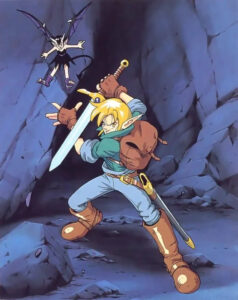
Following the breakout success of the Shining series, Climax Entertainment sought to redefine the boundaries of the action-RPG genre, a mission that culminated in the 1992 release of Landstalker: The Treasures of King Nole. While the studio had established itself as a premier developer for Sega’s 16-bit hardware through the first-person dungeon crawling of Shining in the Darkness and the tactical brilliance of Shining Force, Landstalker represented a radical departure in both perspective and philosophy. Developed during a period of rapid expansion and internal reorganization, the project introduced the Diamond-Shaped Dimension System (DDS520), a technical marvel that attempted to simulate a three-dimensional world through an isometric, pseudo-3D viewpoint. This technical evolution, led by programmer and Climax co-founder Kan Naito, would eventually distinguish Landstalker as a standalone franchise, separate from the Shining lore, and cement its place as one of the most ambitious titles in the Sega Mega Drive library.
The Genesis of Isometric Innovation
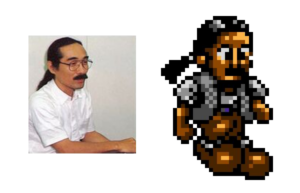
The development of Landstalker began in early 1991, a pivotal year for Climax Entertainment. In June 1991, the studio entered into a joint venture with Sega to form Sonic Co., Ltd. (later known as Sonic! Software Planning). This partnership was designed to streamline RPG production for the Mega Drive and Game Gear, allowing Climax to scale its operations. While Hiroyuki Takahashi led the development of Shining Force, his partner Kan Naito became obsessed with the concept of verticality and depth.
Naito’s vision was inspired by a mundane yet profound observation. Gazing from his tenth-floor apartment window, he noticed how the diagonal perspective of the street below provided a cinematic sense of immersion and realism. He theorized that a video game utilizing this "oblique" angle could offer a level of spatial exploration previously unseen on home consoles. At the time, isometric games like Solstice on the NES existed but were largely restricted to single-screen environments due to hardware limitations. Naito aimed to create what he termed an "electronic diorama world," where players could move diagonally, jump across varying heights, and navigate complex, interconnected maps.

Engineering the DDS520 System
The primary obstacle to Naito’s vision was the Mega Drive hardware itself. The console’s VRAM (Video Random Access Memory) and processing architecture were optimized for horizontal and vertical scrolling, not diagonal movement. To overcome this, Naito spent nearly a year developing the Diamond-Shaped Dimension System 520 (DDS520). The engine utilized diamond-shaped tiles—64×64 pixel units—to construct the game’s floors and surfaces.
Technical data indicates that the engine was far more complex than standard 16-bit frameworks. Every object in Landstalker possessed six faces, meaning that even the unseen backs of buildings existed as data to ensure character priority was maintained when the protagonist moved behind objects. To maintain a fluid frame rate while calculating these 3D vectors, Naito developed custom formulas that treated the diamond tiles as mathematical vectors rather than static images.
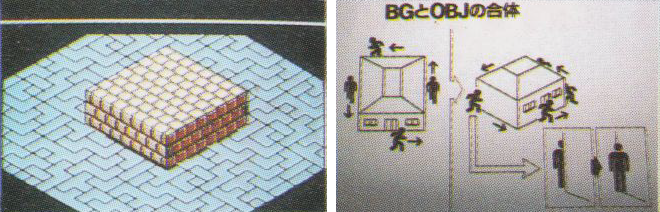
The "520" in the system’s name originally referred to the maximum number of maps the engine could handle. However, as the project expanded, the map count eventually ballooned to 850 total environments. Naito estimated that if all maps were laid out simultaneously, the game world would occupy a physical space equivalent to the Tokyo Dome. This massive scale required the game to be housed on a 16Mb ROM, a significant capacity for the era.
The Evolution of Hero Lancelot
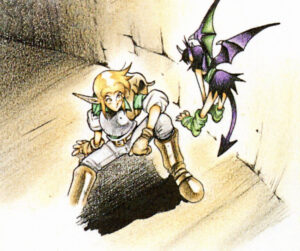
During the early stages of development, the project was tentatively titled Hero Lancelot: Legend of Shining. The initial concept art by Yoshitaka Tamaki featured a beastman wizard, but this was discarded in favor of a more nimble, "Indiana Jones-style" adventurer. The resulting protagonist, Nigel (known as Lyle in Japan), was a forest elf and professional treasure hunter.

To provide a narrative foil and a healing mechanic, Tamaki introduced Friday, a palm-sized nymph. Unlike contemporary RPGs where the hero is often a "chosen one" tasked with saving the world, Nigel’s motivations were grounded in mercenary gain. This shift in tone necessitated a break from the Shining franchise. Although early design documents linked the game to the world of Shining in the Darkness—with enemies like "Chestbeaks" and "Kromeballs" slated to appear—Naito and Takahashi eventually decided to market Landstalker as a new intellectual property. This decision remains a point of historical debate, with some staff members, such as composer Motoaki Takenouchi, suggesting that internal friction between development camps contributed to the rebranding.
The Collaborative Grind: Training Camps and Creative Synthesis
The development of Landstalker was characterized by an intense "training camp" methodology. Key staff members, including map designer Kenji Orimo and writer Shinya Nishigaki, would sequester themselves in the Yomiuri Land Hotel for multi-day sessions. These meetings often lasted until the early morning hours, with the team only breaking for meals or brief visits to the nearby amusement park.

The project gained significant momentum in the autumn of 1991 with the arrival of Yasuhiro Ohori as an external production staff member. Ohori, who would later co-found Matrix Software and create the PlayStation classic Alundra, brought a background in arcade-style action and puzzle design. Under his influence, the team established the "flexible scenario method." This approach allowed map designs to dictate narrative beats; for instance, a tall tower created by a map designer would prompt the writers to add a prisoner, leading to the creation of Princess Lara.
Combat and platforming were refined through trial and error. A notable design choice was the omission of character shadows. While shadows would have improved spatial awareness during jumping sequences, Naito argued that the processing power required to render shadows for every character, enemy, and moving trap would have halved the game’s frame rate and limited the complexity of the environments. Instead, the team focused on fluid animation, with Nigel possessing dozens of frames for walking, attacking, and climbing in four diagonal directions.

A Symphony for the Mega Drive
The game’s soundtrack, composed by Motoaki Takenouchi, played a vital role in establishing its identity. Takenouchi, a protege of Dragon Quest composer Koichi Sugiyama, sought to push the Mega Drive’s Yamaha YM2612 sound chip to its limits. He utilized a blend of orchestral arrangements and rhythmic percussion to create a "world music" feel that complemented the diverse environments of Mercator Island.
One of the soundtrack’s highlights, "A Ballad for Princess Loria," was a two-minute piano piece designed for a non-interactive story event. Takenouchi insisted on high-fidelity data for this track, encouraging players to put down their controllers and simply listen. The final score consisted of 40 tracks, a high number for a 16-bit action game, reflecting the title’s premium production values.
Market Reception and Strategic Impact
Landstalker: The Treasures of King Nole was released in Japan on October 30, 1992. It was an immediate commercial success, selling approximately 35,000 units in its first week—a strong showing for a new IP on the Mega Drive. Critics praised its visual depth and challenging puzzles, though the diagonal control scheme was noted for its steep learning curve.
The game’s success solidified Climax Entertainment’s reputation as a technical powerhouse. However, it also marked the beginning of a divergence within the studio. Hiroyuki Takahashi eventually focused on the formation of Camelot Software Planning, while Kan Naito continued to lead Climax. The two founders’ differing philosophies on RPG design led to a creative split, with Takahashi pursuing traditional tactical RPGs and Naito further exploring isometric 3D in titles like Dark Savior for the Sega Saturn.
Legacy and Canceled Revivals
Despite its popularity, Landstalker never received a direct narrative sequel. A spinoff, Ladystalker, was released for the Super Famicom in 1995, but it lacked the jumping mechanics and isometric purity of the original. In 2005, a full 3D remake of Landstalker was announced for the PlayStation Portable (PSP). A tech demo showcased at the Tokyo Game Show generated significant interest, but the project was ultimately canceled for undisclosed reasons.
Today, Landstalker is recognized as a masterclass in 16-bit engineering. Its influence can be seen in the "isometric boom" of the mid-90s, particularly in titles like Alundra and Equinox. Sega has ensured the game’s continued availability through re-releases on the Wii Virtual Console, Steam, and the Sega Genesis Mini. While Climax Entertainment ceased operations in 2014, Landstalker remains a testament to a period when technical constraints were not viewed as barriers, but as invitations to innovate. The game stands as a singular achievement in the "diorama" style of game design, offering a world that, despite its flat screen, possessed a depth that continues to captivate players decades later.








