Hartono Sudibyo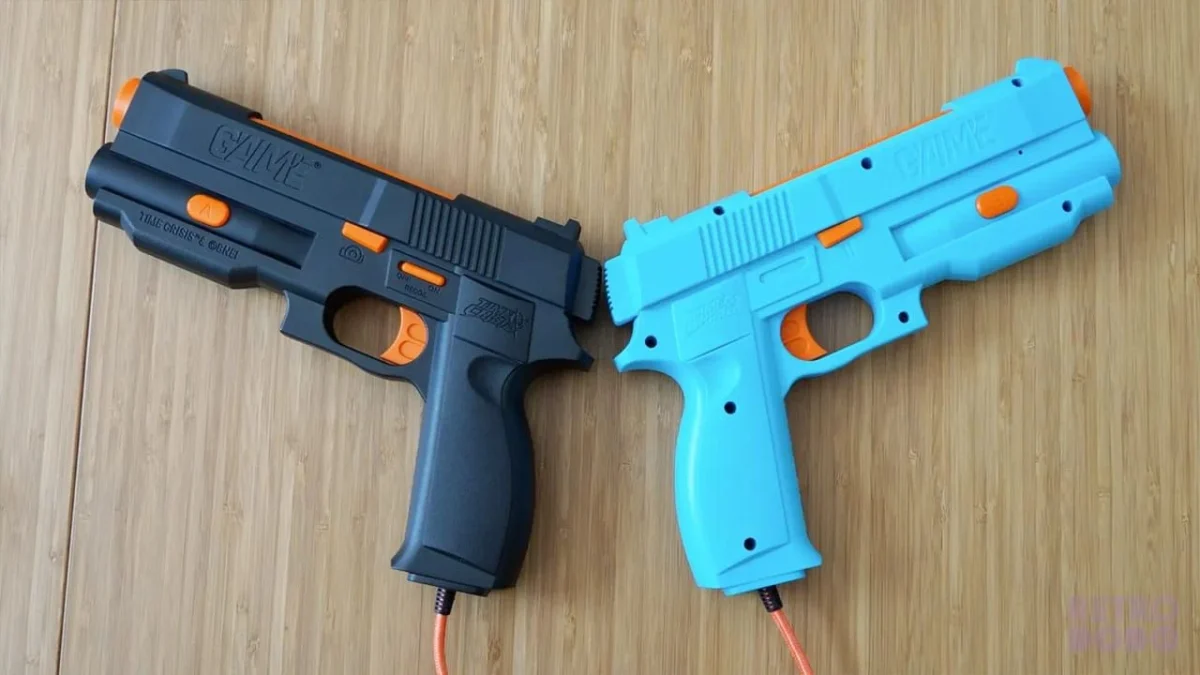
The evolution of arcade peripherals in the modern gaming era has taken a significant leap forward as hardware manufacturers seek to bridge the gap between nostalgic light gun mechanics and contemporary display technologies. Tassei Denki, the developer behind the pioneering G’AIM’E system, has officially unveiled two new hardware iterations of its flagship peripheral at the Tokyo Game Show 2026. By introducing a high-performance Pro variant and a budget-friendly Lite model, the company aims to capture a broader market share across multiple consumer pricing tiers, addressing both hardcore arcade purists and casual living room players.
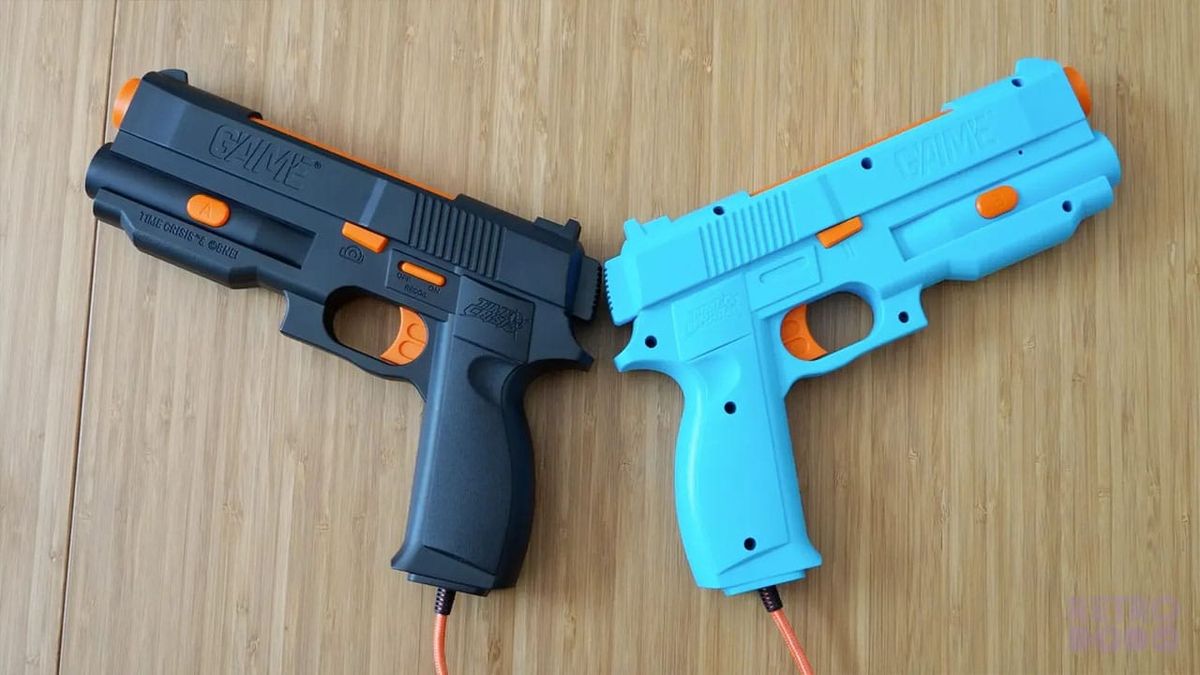
The announcement marks a major milestone for a product category that has historically struggled to adapt to modern flat-panel displays. Traditional light guns, such as the iconic NES Zapper or classic CRT arcade cabinets, relied heavily on cathode-ray tube scanlines and optical sensors to register hits. With the industry-wide shift toward LED, OLED, and projection screens, older light gun technologies became obsolete, forcing developers to rely on cumbersome external sensor bars, calibration borders, or specialized software patches. Tassei Denki’s original G’AIM’E peripheral sought to disrupt this paradigm by utilizing onboard artificial intelligence to track target alignment dynamically, completely eliminating the need for physical tracking borders, external cameras, or scanline compatibility.
Technological Evolution: From AI Tracking to Gyro-Sensor Innovation
The core technology behind the G’AIM’E ecosystem relies on a sophisticated neural network trained on thousands of screen environments. Rather than tracking an infrared light source on a bezel, the peripheral’s internal processor analyzes visual feedback to determine the exact point of aim with high precision. Following an early hands-on debut in late 2025, industry analysts and hardware reviewers have closely monitored the peripheral’s development, noting its departure from traditional hardware dependencies.

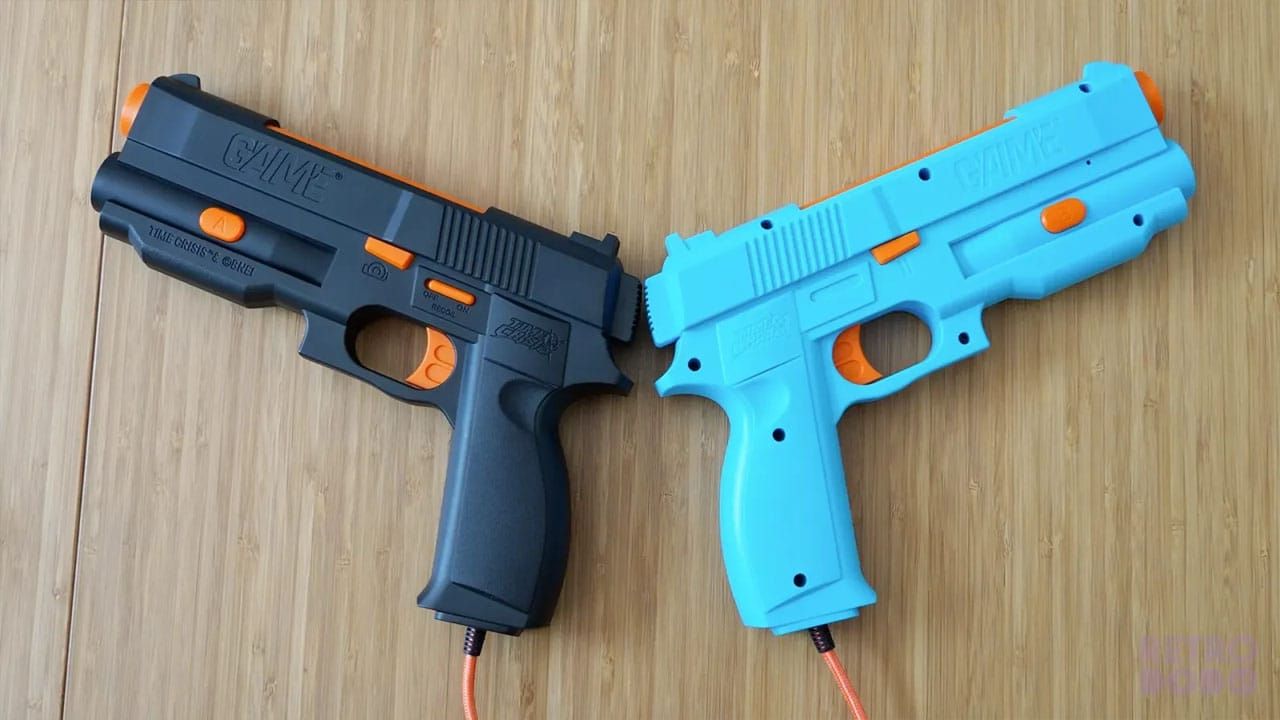
At the Tokyo Game Show 2026, Tassei Denki surprised attendees by revealing a diversification of the product line. The newly announced Pro variant is engineered specifically for competitive and core gamers who demand absolute zero-latency tracking and hyper-realistic handling. Early hands-on reports from industry publications indicate that the Pro model delivers instantaneous response times and exceptional accuracy, though it demands a steadier grip and higher technical execution from the user, scaling back the forgiving nature of casual arcade play in favor of authentic simulation fidelity.
Conversely, the newly introduced Lite variant represents a pivot in design philosophy for the brand. Abandoning the onboard AI architecture entirely, the Lite model relies on standard gyroscope and accelerometer sensor technology—the same foundational motion-control framework utilized in modern console controllers and Nintendo’s historical hardware. Despite dropping the AI processing core to reduce manufacturing costs, on-the-floor testing at the convention suggested that the Lite model maintains a high degree of responsiveness and a solid physical build. While users of the gyro-based Lite version may occasionally need to execute manual sensor realignments—a common quirk of accelerometer-based tracking—the substantial reduction in retail price positions it as an accessible entry point for households looking to experience light gun titles without investing in premium hardware.
Timeline and Development Milestones
The trajectory of the G’AIM’E product family reflects a carefully measured release schedule designed to refine hardware performance based on real-world testing:
- Late 2025: Tassei Denki provides early prototype access to select reviewers, showcasing the foundational AI-tracking light gun concept on modern flat-panel displays.
- Early 2026: Engineering teams focus on hardware optimization, reducing internal processing latency, and exploring packaging variations to accommodate family and multi-player setups.
- September 2026: Tassei Denki officially debuts the Pro and Lite variants at the Tokyo Game Show 2026, demonstrating the expanded tiered lineup to media and trade attendees.
- Post-TGS 2026 (Pending): Finalized firmware tuning, packaging bundle configurations (including prospective Family and Economy packs), and official retail launch dates are scheduled for final announcement.
Market Implications and Industry Impact
The expansion of the G’AIM’E portfolio addresses a longstanding economic hurdle in the niche retro and arcade accessory market: affordability and accessibility. While enthusiast-grade arcade peripherals often command high price points due to specialized manufacturing and low production volumes, hardware segmentation allows companies to scale manufacturing costs efficiently.
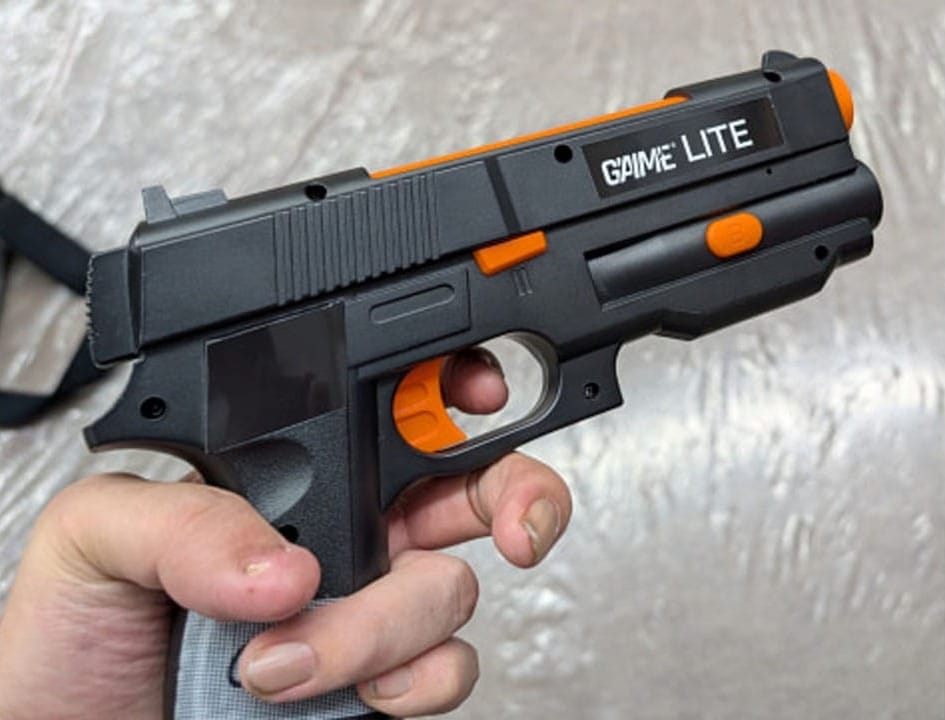
By offering a three-tier lineup—consisting of the standard model, the precision-focused Pro edition, and the gyro-driven Lite version—Tassei Denki is strategically positioning itself to dominate the modern light gun market across various consumer demographics. The inclusion of bundled packaging options, such as multi-gun Family packs and cost-effective Economy bundles, further signals the manufacturer’s intent to target couch co-op enthusiasts and retro gaming families.
Despite the positive reception at the Tokyo Game Show, Tassei Denki has indicated that the products are still undergoing final hardware and firmware adjustments before entering full-scale commercial production. This deliberate developmental timeline suggests that the manufacturer is prioritizing long-term stability and software compatibility over a rushed market release. As official release dates and regional pricing structures are finalized in the coming weeks, the industry will be watching closely to see how successfully these distinct technological approaches—AI neural tracking versus traditional gyro sensors—resonate with the broader gaming public.