Chalid Lutfie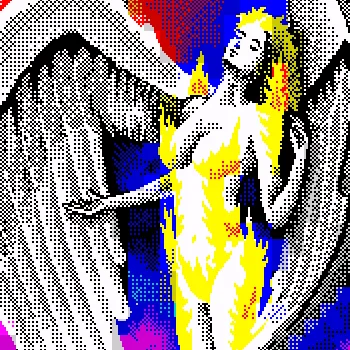
The release of Still Flying marked a transformative moment in the niche but highly influential world of 8-bit chiptune music, serving as the debut long-play album for the composer known as C-Jeff. Written entirely during the 2002 calendar year, the album represents a rigorous exploration of the technical and aesthetic limits of the ZX Spectrum, a home computer that defined the early digital landscape of Europe and the former Soviet Union. C-Jeff, an artist who would later become a prominent figure in the global chiptune and progressive electronic music scenes, utilized the Pro Tracker 3 music editor to craft a series of compositions he categorized under the evocative tagline of "lyric music novels." This designation underscored a shift in the demoscene—a subculture focused on pushing hardware limits through art—from purely technical demonstrations to emotionally resonant, narrative-driven auditory experiences.
The Technological Context of the ZX Spectrum and AY-3-8910
To understand the significance of Still Flying, one must analyze the hardware constraints under which C-Jeff operated. The ZX Spectrum, originally released by Sinclair Research in 1982, was not designed as a high-fidelity musical instrument. However, later models and clones popular in Eastern Europe featured the AY-3-8910 (or the compatible AY-3-8912) programmable sound generator (PSG). This chip provided three channels of sound, typically producing square waves and white noise.
In the early 2000s, while the mainstream music industry was transitioning to high-definition digital recording, a dedicated community of "trackers" continued to work within the strict confines of these 8-bit systems. Pro Tracker 3, the software used for Still Flying, allowed composers to program notes, volumes, and effects on a grid-based interface. The challenge of the medium lay in the "three-voice" limitation; every melody, bassline, and percussion element had to be shared across only three monophonic channels. C-Jeff’s ability to weave complex "novels" through this restricted palette demonstrated a sophisticated understanding of psychoacoustics and rhythmic interlacing, effectively tricking the human ear into hearing a fuller arrangement than the hardware was technically capable of producing.
Chronology of Development and Competitive Milestones
The timeline of Still Flying is inextricably linked to the demoparty circuit of 2002, a series of competitive events where programmers and musicians showcased their latest works. The album was not merely a studio project but a collection of battle-tested tracks that faced peer review in high-stakes environments.
In the summer of 2002, C-Jeff submitted the track "My Mind is Free" to the CAFe 2002 demoparty, held in Kazan, Russia. Due to the artist’s admitted lack of English fluency at the time, the track was originally registered and released under the truncated title "My mind free." Despite the linguistic error, the composition resonated with the audience and judges, eventually securing 13th place in the ZX Spectrum AY Music competition. While not a podium finish, the track served as a proof of concept for the "lyric" style C-Jeff was developing, prompting its immediate inclusion in the album’s tracklist following the event.
Later that same year, the composition "Lonely Soul" was completed. Although it was not part of the initial conceptualization of the album, its stylistic alignment with the rest of the work made it an essential addition. "Lonely Soul" was entered into the Paradox 2002 demoparty in Rostov-on-Don, Russia. This track proved to be a significant critical success, earning 2nd place in the ZX Spectrum AY Music category. The success of "Lonely Soul" validated C-Jeff’s melodic approach and provided the momentum needed to finalize the album as a cohesive unit.
The 2003 Musicdisk Release and Collaborative Production
Approximately 18 months after the initial compositions were completed, Still Flying was elevated from a collection of files to a sophisticated "musicdisk." In the demoscene, a musicdisk is an executable program for a specific hardware platform—in this case, the ZX Spectrum—that features a custom user interface, visual art, and a dedicated player engine to loop the tracks.
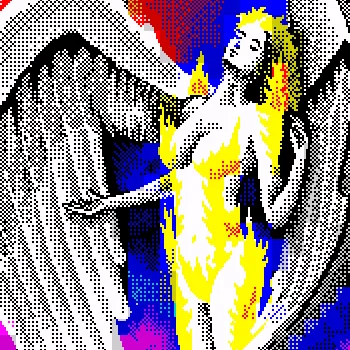
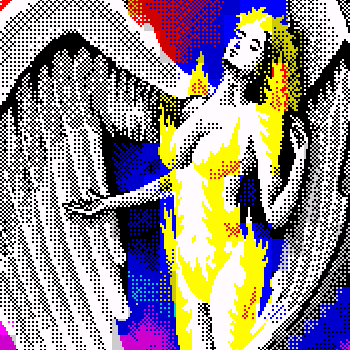
The production of the Still Flying musicdisk involved a collaborative effort that mirrored the collective nature of the 8-bit underground. The software was coded by Vortex, a programmer known for efficient and stable Sinclair-based engines. The visual identity of the project was handled by Schafft, who provided the artwork that accompanied the music, reinforcing the "novel" theme. The final package was assembled and compressed by Poisoned CyberJack, ensuring that the entire album, including the player and graphics, could fit within the limited memory constraints of the ZX Spectrum hardware.
Furthermore, the album benefited from the involvement of MmcM (Sergey Kosov), a legendary figure in the chiptune scene. MmcM provided mastering services, a rare and difficult task for 8-bit music. Mastering in this context involves balancing the output levels of the AY chip’s channels to ensure clarity and punch when played on various television sets or audio monitors, a process that requires an intimate knowledge of the hardware’s electrical output.
Supporting Data and Technical Specifications
The enduring relevance of Still Flying is supported by its continued availability on modern platforms like Bandcamp, where it serves as a historical document of the 2002 tracker era.
Technical highlights of the album include:
- Platform: Sinclair ZX Spectrum (and compatible clones).
- Sound Chip: AY-3-8910 / AY-3-8912.
- Composition Software: Pro Tracker 3.x.
- Total Tracks: The definitive edition includes the core "novels" alongside the award-winning "Lonely Soul."
- Distribution Format: Originally distributed as a .TRD (TR-DOS) disk image for Spectrum emulators and real hardware.
The album’s tagline, "lyric music novels," reflects a specific data-driven approach to composition. Unlike the "techno" or "rave" styles prevalent in 1990s chiptune, C-Jeff utilized a higher density of "ornaments" (rapid arpeggios and volume envelopes) to simulate the vibrato and emotional swelling of classical and progressive rock instruments.
Official Reactions and Inferred Impact
While formal "reviews" in mainstream music publications were non-existent for chiptune in 2002, the reaction within the demoscene was one of respect for C-Jeff’s melodic maturity. The 2nd place finish at Paradox 2002 remains a documented testament to the work’s quality relative to its contemporaries.
In hindsight, the impact of Still Flying can be seen in the trajectory of C-Jeff’s later career. The artist transitioned from the ZX Spectrum to more advanced platforms, eventually releasing acclaimed albums like Electric Chimes and Big Blue, which blended chiptune aesthetics with modern fusion and progressive rock. Still Flying established the "C-Jeff sound"—a blend of melancholic melody and technical precision—that influenced a generation of tracker musicians in the Russian-speaking world and beyond.
The album also contributed to the preservation of the ZX Spectrum as a viable artistic tool. By releasing Still Flying as both a musicdisk and a standalone album, C-Jeff and his collaborators helped bridge the gap between "warez" culture and legitimate independent music production.
Broader Implications and Legacy
Still Flying stands as a primary example of how technological limitations can foster rather than hinder creativity. In an era where 128-voice polyphony and gigabytes of RAM are standard, the three-channel, 8-bit compositions of 2002 provide a masterclass in essentialism. The "lyric music novel" concept introduced by C-Jeff suggested that electronic music could be more than background noise for software; it could be a primary narrative medium.
Today, Still Flying is viewed by chiptune historians as a bridge between the "old school" of the 1990s and the "new school" of the 2010s. It represents a period where the demoscene began to professionalize, moving away from simple "cracks" and toward high-concept digital art. The involvement of masters like MmcM and the inclusion of tracks that competed at major European parties ensure that Still Flying remains a cornerstone of the 8-bit canon.
The album’s copyright, held by C-Jeff since 2002, covers a body of work that continues to be studied by enthusiasts who use emulators or original hardware to experience the music in its native environment. As chiptune continues to influence modern pop and video game soundtracks, the foundational techniques showcased in Still Flying—the arpeggios, the noise-based percussion, and the "lyric" phrasing—remain as relevant as they were during their inception in the Pro Tracker 3 editor over two decades ago.