Chalid Lutfie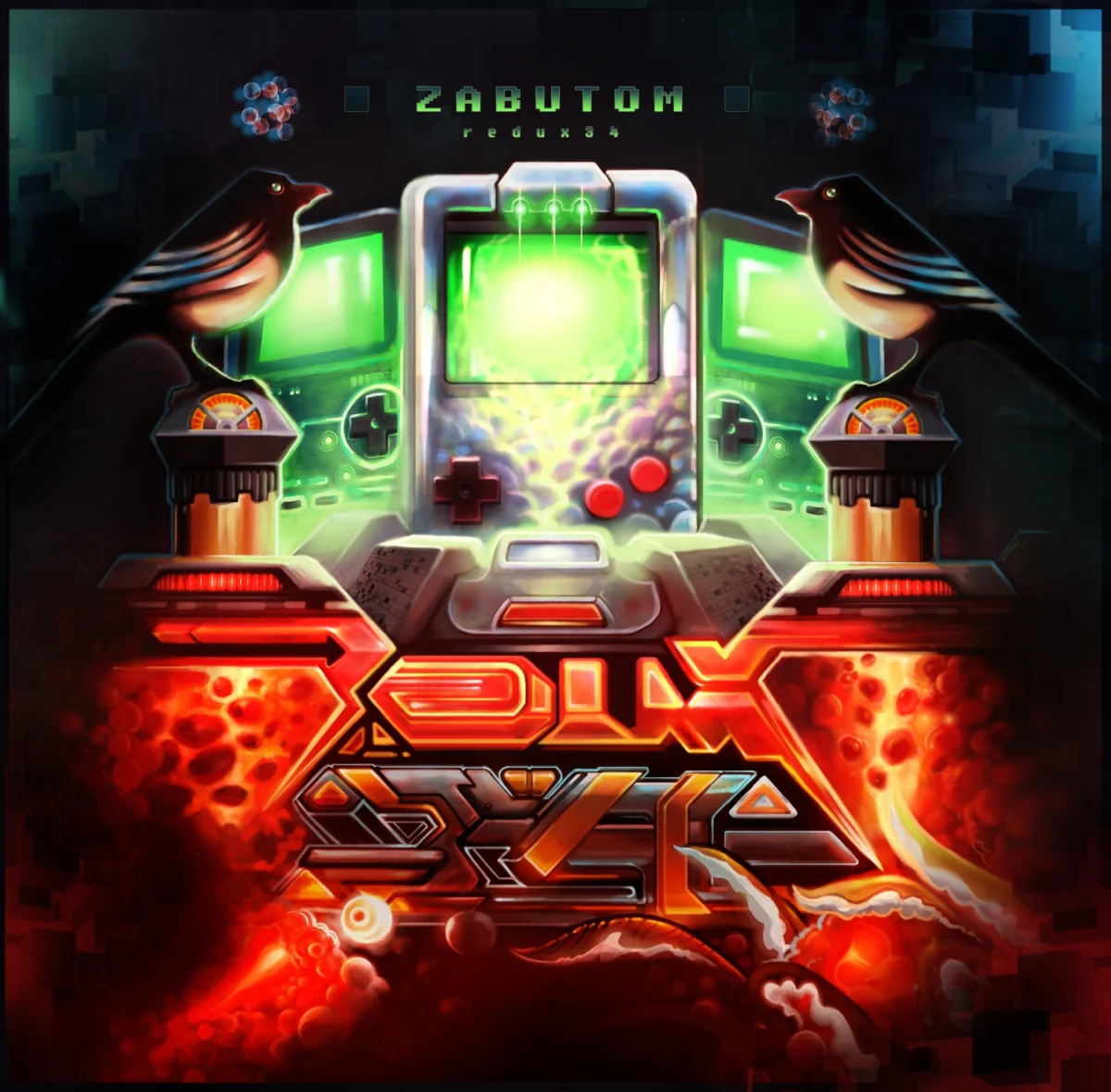
On September 18, 2015, the independent record label Ubiktune announced the official release of Redux34, the latest studio album from the prolific Swedish composer and electronic musician Niklas Sjösvärd, better known by his stage name zabutom. This release marks a significant milestone in Sjösvärd’s career, representing a stylistic departure from his earlier work while simultaneously serving as a technical culmination of nearly a decade of experimentation. Redux34 is characterized by its intricate fusion of 8-bit Nintendo synthesis, progressive rock structures, Intelligent Dance Music (IDM) textures, and folk-inspired melodic sensibilities. The album’s arrival has been met with anticipation within the global chiptune community, a subgenre of electronic music that utilizes the sound chips of vintage gaming hardware to create contemporary compositions.
Niklas Sjösvärd, born in 1985, has been a foundational figure in the Scandinavian electronic music scene since the early 2000s. His roots are firmly planted in the "demoscene"—an international computer art subculture focused on producing self-contained, sometimes extremely small, computer programs that produce audio-visual presentations. Sjösvärd’s early reputation was built on his mastery of the Little Sound DJ (LSDJ) software, a sequencer designed for the Nintendo Game Boy, and his contributions to various high-profile demoscene compilations. His 2011 debut on Ubiktune, Zeta Force, established him as a premier talent in the "shmup-core" style—music inspired by the frantic, high-energy soundtracks of classic shoot-’em-up arcade games. However, Redux34 represents a more mature, experimental phase of his artistry, informed by his formal education at the Academy of Music and Drama in Gothenburg, where he earned a bachelor’s degree in composition and electronic music in 2014.
The Technical Evolution of Redux34
The development of Redux34 is a narrative of technical resilience and creative persistence. The origins of the album date back to 2008, a period when Sjösvärd was becoming a regular fixture at international chiptune festivals. During this time, the artist began exploring the limitations of the Game Boy and the Nintendo Entertainment System (NES) not just as novelty tools, but as legitimate synthesizers that could be integrated into a broader palette of modern production.
The title track, "Redux34," serves as a literal and figurative centerpiece for the project. Its name is derived from a catastrophic hardware failure that occurred in 2008. While Sjösvärd was finalizing the initial version of the track on an LSDJ cartridge, the hardware crashed, resulting in the total erasure of all saved music data. The necessity of recreating the complex composition from memory led to the "Redux" moniker. The "34" refers to the track’s unconventional 3/4 time signature, a rhythmic choice that reflects Sjösvärd’s interest in progressive rock and classical composition. This theme of loss and reconstruction became a recurring motif throughout the album’s production, as Sjösvärd reportedly faced several instances of lost patterns and corrupted mixes over the years, forcing a meticulous "from-scratch" approach to much of the material.
Architectural Soundscapes and Genre Blending
Stylistically, Redux34 functions as a bridge between the rigid, pulse-width-modulated bleeps of 8-bit hardware and the organic warmth of traditional instrumentation. Unlike the high-tempo, arcade-centric focus of Zeta Force, Redux34 prioritizes atmosphere and narrative progression. The production seamlessly integrates electric guitars, analog synthesizers, and expansive delay textures, creating what critics have described as a "retro-futuristic" soundscape.

The album draws heavily from the "prog-chip" movement, a niche within the genre that favors long-form compositions, shifting time signatures, and virtuoso-level programming. By incorporating elements of IDM—a genre pioneered by artists like Aphex Twin and Autechre—Sjösvärd introduces a level of rhythmic complexity and glitch-based processing that elevates the music beyond standard chiptune tropes. Furthermore, his recent excursions into folk-inspired acoustic music and modular techno (through projects like the Buchla Boys) have clearly influenced the melodic depth of Redux34. The inclusion of folk-inspired motifs provides a grounding, human element to the otherwise digital and alien textures of the synthesized leads.
The Role of Visual Identity and Conceptual Art
The immersive experience of Redux34 is bolstered by its visual presentation. The album features cover art by Anders Karlsson, a conceptual artist and painter based in Norrköping, Sweden. Karlsson’s artwork depicts a mysterious, melancholic, yet hopeful world that mirrors the album’s sonic themes. The imagery evokes a sense of exploration and the "strange new worlds" mentioned in the album’s promotional literature. In the contemporary digital music landscape, the synergy between visual art and sound remains a crucial component for independent releases, helping to establish a cohesive brand identity for artists operating outside the mainstream commercial sphere.
The partnership between Sjösvärd and Karlsson underscores a broader trend in the independent electronic scene where high-concept visual art is used to provide context for instrumental music. For Redux34, the artwork serves as a gateway into the "retro-futuristic" vision Sjösvärd sought to convey—a world where the technology of the past is used to soundtrack the dreams of the future.

Academic Influence and the Professionalization of Chiptune
Sjösvärd’s academic background at the Academy of Music and Drama in Gothenburg is evident in the sophisticated arrangement of Redux34. The transition from a self-taught demoscene musician to a degree-holding composer has allowed Sjösvärd to apply formal music theory and advanced electronic production techniques to his work. This professionalization of the chiptune genre is a phenomenon that has gained momentum over the last decade. As the initial generation of "bedroom producers" who grew up with 8-bit consoles reached adulthood, many sought to validate the medium through academic study and high-fidelity production.
Redux34 stands as a prime example of this evolution. It is not merely a collection of songs but a curated auditory journey that reflects Sjösvärd’s diverse musical interests, ranging from experimental electronic installations to live modular techno. His work with projects like Fowlcloud and Léonore Boulanger has also contributed to the "folkloric" undertones found in the album’s softer moments, demonstrating a versatility that is rare in the chip music scene.
Distribution and Global Impact
Ubiktune, the label behind the release, has positioned Redux34 for a wide international audience. The album is available across all major digital distribution platforms and streaming services, ensuring accessibility in an era where physical media has become a secondary market. However, in a nod to the collectors and audiophiles who form the core of the chiptune community, a physical CD version has also been produced.

The release of Redux34 is expected to resonate beyond the niche confines of the chiptune world. Its blend of progressive rock and electronic experimentation makes it appealing to fans of "synthwave," "math rock," and avant-garde electronic music. As the boundaries between genres continue to blur, artists like zabutom are leading the way in demonstrating that the tools used to create music—whether they be a 1989 Game Boy or a modern digital audio workstation—are secondary to the vision and skill of the composer.
Conclusion and Future Implications
The release of Redux34 marks a pivotal moment for Niklas Sjösvärd. It is an album that honors his roots in the Swedish demoscene while pushing the boundaries of what is possible within the framework of chip-based composition. By overcoming technical setbacks and integrating a lifetime of diverse musical influences, Sjösvärd has produced a work that is both a technical marvel and an emotional narrative.
As the electronic music landscape continues to evolve, the "retro-futuristic" aesthetic championed by zabutom remains more relevant than ever. Redux34 provides a roadmap for how artists can utilize the limitations of legacy hardware to foster innovation rather than just nostalgia. For the listener, the album offers a complex, multi-layered experience that rewards repeated listens, proving that even within the "bleeps and bloops" of 8-bit sound, there is a profound capacity for human expression. The success of this release further solidifies Ubiktune’s reputation as a label dedicated to the vanguard of progressive electronic music, and it ensures that zabutom remains a central figure in the ongoing dialogue between the digital past and the musical future.