Hartono Sudibyo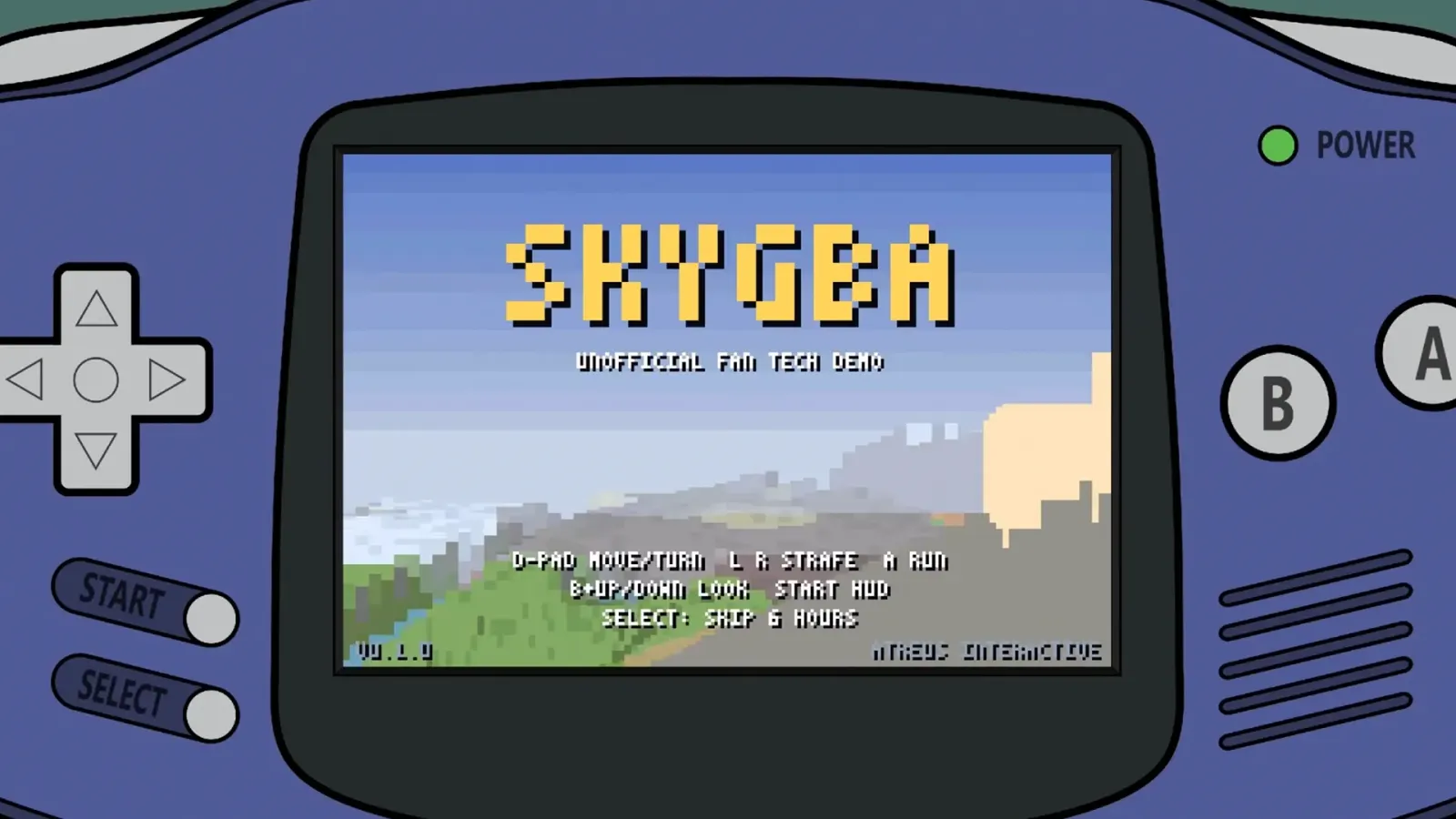
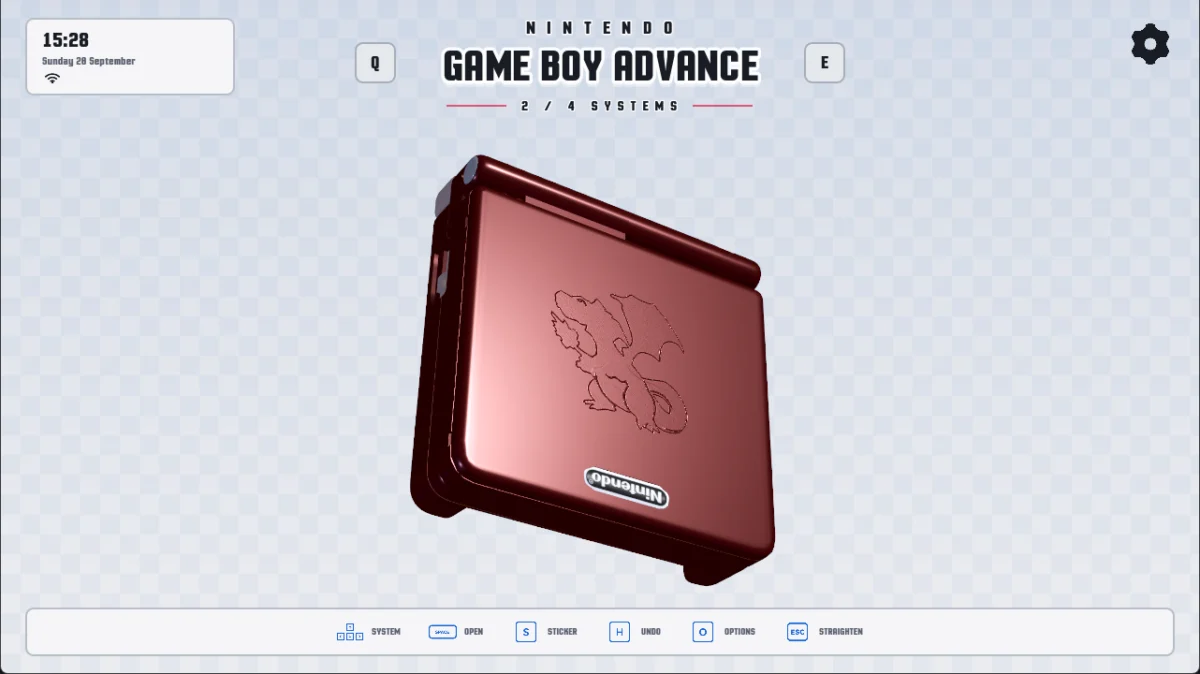
The intersection of retro hardware and modern gaming has reached a new milestone as independent developer and YouTuber Atreus has undertaken an ambitious project to port Bethesda Softworks’ open-world epic, The Elder Scrolls V: Skyrim, onto Nintendo’s 16-bit handheld, the Game Boy Advance. Dubbed "SkyGBA," the early technical demonstration showcases the immense hurdles and unexpected potential of scaling down a massive, contemporary role-playing game designed for seventh-generation home consoles and powerful PCs onto a portable system released in 2001. While the initial footage reveals a rough, heavily abstracted rendering of the province of Tamriel, the project has reignited discussions surrounding the limits of retro hardware optimization, the ingenuity of the homebrew programming community, and the sheer cultural persistence of Bethesda’s critically acclaimed title.
Main Facts of the SkyGBA Project
The SkyGBA tech demo, first revealed to the public through Atreus’s YouTube channel, focuses primarily on map exploration and rudimentary navigation within a reimagined, scaled-down environment. Operating under the moniker Atreus Interactive, the developer utilized custom programming and asset compression to squeeze aspects of Whiterun and its surrounding wilderness into the strict technical boundaries of the Game Boy Advance.
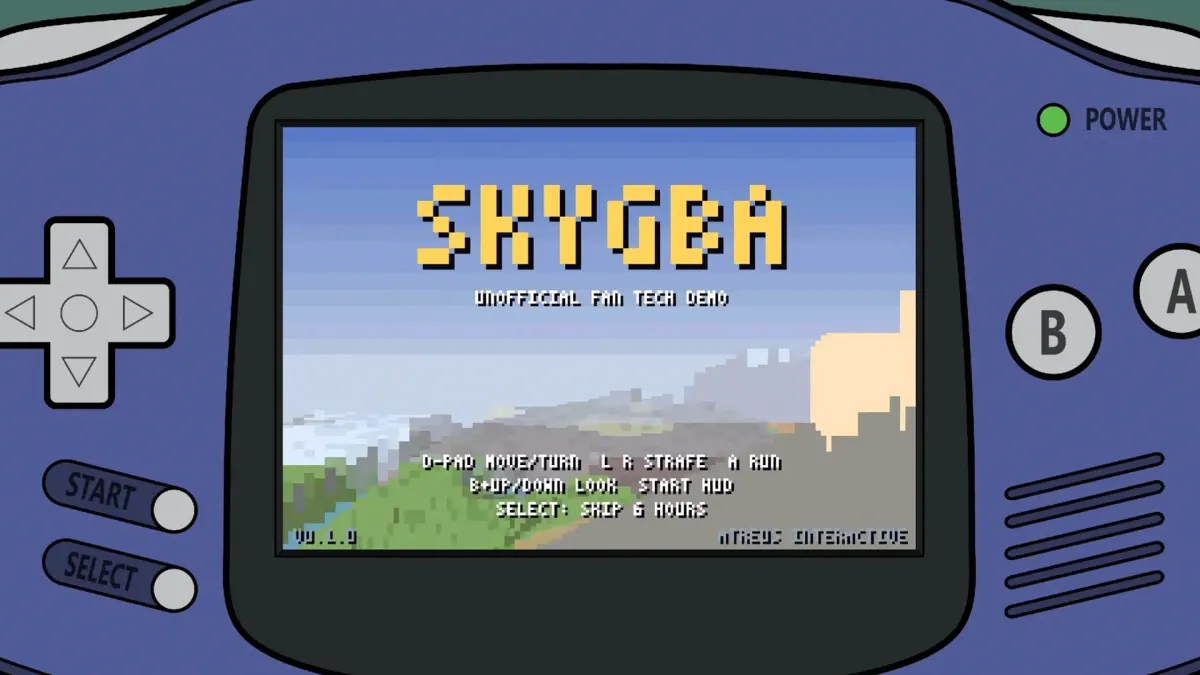
The GBA features an ARM7TDMI 32-bit RISC processor running at 16.78 MHz, paired with a modest 32 kilobytes of internal WRAM and 96 kilobytes of VRAM. Translating a game built for hardware with gigabytes of memory and dedicated graphics processors into this environment requires radical compromises in polygon count, draw distance, texture resolution, and color depth. Consequently, the current state of SkyGBA presents a minimalist wireframe and low-polygon approximation of Skyrim’s iconic geography. Movement is mapped directly to the console’s limited input array—relying on the D-pad and a handful of face buttons—requiring creative control schemes to compensate for the absence of analog sticks and the extensive hotkeys standard on modern platforms.
Chronology and Technical Development
The endeavor to downgrade modern masterworks to vintage hardware is a growing subgenre within the retro gaming and homebrew communities, though projects of this scale remain exceptionally rare. Atreus began sharing preliminary development milestones for SkyGBA in mid-2026, culminating in the release of the initial gameplay footage in September 2026.
Historically, porting advanced 3D titles to older generations of hardware follows a well-documented trajectory of progressive optimization:
- Conceptual Phase: Developers analyze the source engine’s architecture, identifying core components—such as collision detection, basic rendering pipelines, and coordinate systems—that can be translated into lower-level assembly or C code compatible with retro compilers like devkitARM.
- Asset Reduction: High-resolution textures, complex 3D meshes, and dynamic lighting systems are systematically stripped away or replaced with flat-shaded polygons and pre-rendered sprites.
- Memory Management: Because the Game Boy Advance lacks modern virtual memory paging, every active asset must be tightly packed into ROM banks or streamed efficiently from cartridge storage.
- Proof-of-Concept Release: Developers release early, unpolished video demonstrations to gauge community interest, secure feedback, and validate whether the core game loop is fundamentally achievable on the target hardware.
Atreus has indicated that the future trajectory of SkyGBA depends heavily on public engagement. Should the project maintain momentum within the developer and retro gaming spheres, further updates are planned to enhance visual fidelity, refine performance stability, and introduce basic interactive mechanics beyond mere locomotion.
Technical Constraints and Hardware Context
To understand the magnitude of SkyGBA, one must examine the stark contrast between the hardware limitations of the Game Boy Advance and the technical specifications required to run The Elder Scrolls V: Skyrim when it originally launched in November 2011 for the PlayStation 3, Xbox 360, and Microsoft Windows.
| Technical Metric | Nintendo Game Boy Advance (2001) | Minimum PC Requirements for Skyrim (2011) |
|---|---|---|
| CPU | 16.78 MHz 32-bit ARM7TDMI | Dual-Core 2.0 GHz or equivalent |
| RAM | 32 KB WRAM / 96 KB VRAM | 2 GB system memory |
| Storage Media | ROM cartridges (typically 4MB to 32MB) | DVD-ROM / ~6 GB hard drive space |
| Display Resolution | 240 x 160 pixels (15-bit color) | Variable (scalable up to 4K and beyond) |
The architectural disparity is immense. Skyrim relies heavily on complex scripting engines, continuous physics calculations, radiant AI routines for hundreds of non-player characters, and vast streaming open-world cells. The Game Boy Advance, by contrast, was engineered primarily for 2D sprite manipulation, with limited capability for pseudo-3D rendering utilized in titles like V-Rally or Doom.
For SkyGBA to function at all, the developer must bypass standard high-level rendering pipelines and write heavily optimized routines that maximize every clock cycle of the GBA’s processor. This often involves fixed-point math instead of floating-point calculations, as the ARM7TDMI lacks a dedicated hardware floating-point unit.

Broader Impact and Implications for the Homebrew Community
Projects like SkyGBA occupy a fascinating space at the crossroads of software engineering, nostalgia, and artistic expression. While commercial entities rarely attempt to port contemporary titles to hardware decades out of production, independent developers frequently utilize legacy consoles as testbeds for programming mastery.
Analysts in the emulation and retro development sectors note that homebrew projects serve several vital functions:
- Educational Value: Pushing vintage hardware beyond its intended design parameters teaches modern programmers invaluable lessons in efficient memory management, code profiling, and resource allocation.
- Community Engagement: Open-source sharing of technical hurdles fosters collaborative problem-solving, with programmers across the globe contributing optimizations to open repositories.
- Hardware Longevity: Demonstrating that systems like the Game Boy Advance can process complex 3D logic inspires hardware modders to create custom flash carts, upgraded IPS screens, and expanded battery solutions that keep 25-year-old electronics relevant in the modern era.
While critics may question the practical utility of playing a compromised, ultra-low-resolution version of a massive RPG on a tiny, non-backlit screen (or an emulation equivalent), the cultural resonance of the experiment is undeniable. It underscores the status of Skyrim as a ubiquitous digital artifact—one capable of running on virtually any device with a screen and a processor, ranging from smart refrigerators and oscilloscope screens to, potentially, a 2001 handheld console.
As development on SkyGBA continues, the project stands as a testament to human creativity and technical curiosity. Whether it eventually evolves into a fully playable, albeit heavily abridged, demake of Bethesda’s masterpiece or remains a fascinating technical curiosity frozen in a demonstration video, it expands the boundaries of what retro hardware can achieve through sheer persistence and ingenuity.