 Arya Paningal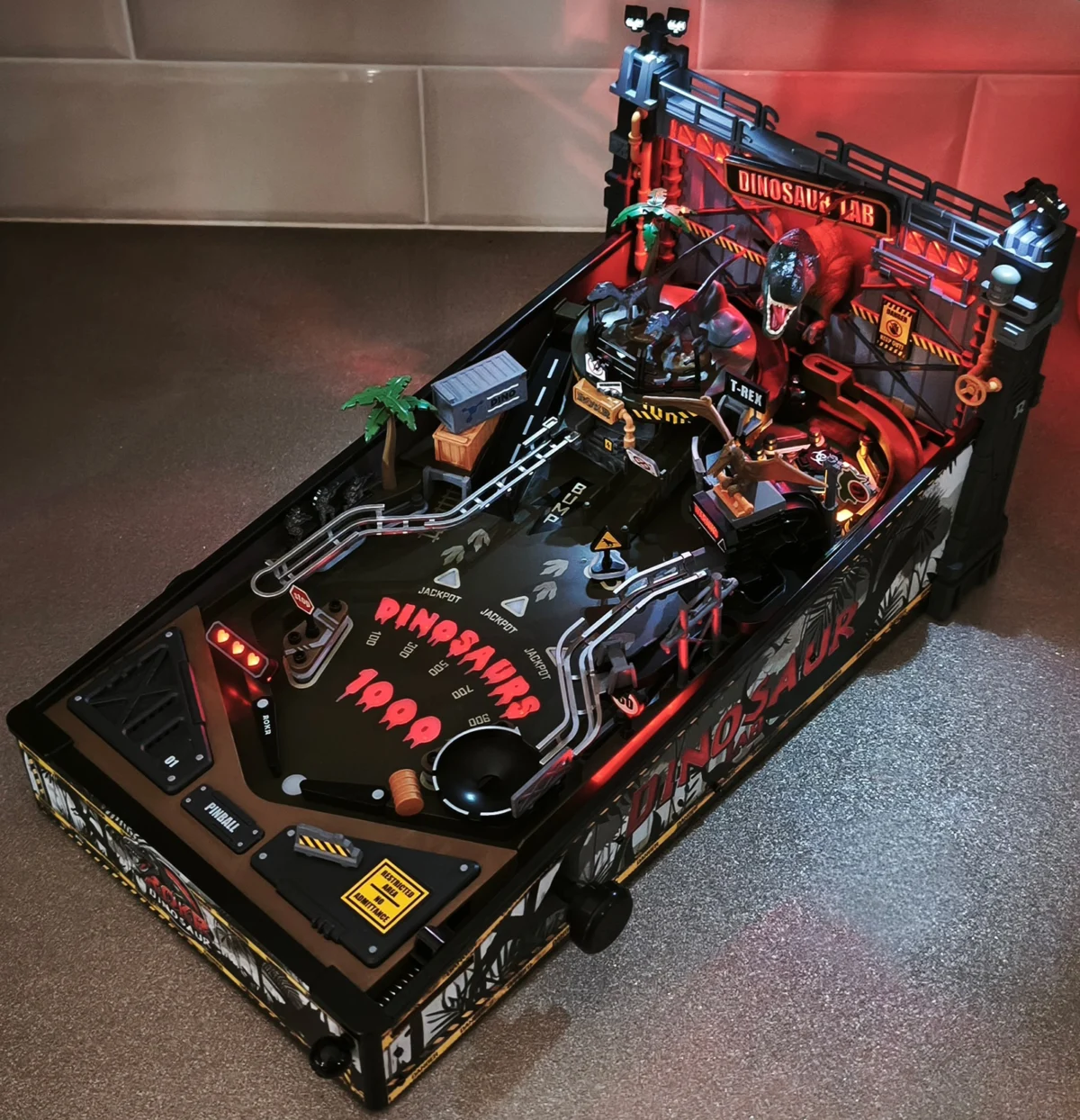
The desktop gaming landscape continues to evolve as ROKR, a subsidiary of the established model-kit manufacturer Robotime, officially commences shipping its latest high-fidelity mechanical construction project, Dinosaur Lab. Since its founding in 2017, Robotime has carved out a specialized niche in the hobbyist market, focusing on self-assembly wooden mechanical models that blend intricate aesthetic design with genuine functionality. Following the 2021 release of its inaugural 3D Pinball Puzzle—a circus-themed tabletop device that surprised the industry with its inclusion of opto-sensors, computer-controlled lighting, and a functional ruleset—the company has now scaled its ambitions with a more sophisticated, narrative-driven product.

The Dinosaur Lab kit represents a strategic pivot in the company’s product design philosophy. While the original 3D Pinball Puzzle emphasized a light, naturalistic wooden aesthetic, the new model adopts a darker, industrial palette that leverages a mix of wood and high-grade plastics. This shift is designed to accommodate the complex 3D modeling required for the dinosaur-themed premise, which depicts a containment breach within a high-security research facility.

Project Timeline and Development
The development cycle for Dinosaur Lab began long before its public debut. ROKR initiated contact with industry analysts and specialized hobbyist publications, including Pinball News, in July 2026 to provide a technical evaluation of the pre-production unit. This early access allowed for a comprehensive assessment of the machine’s mechanics and rule logic months before the general public received their kits.

The project reached its public milestone on June 1, 2026, when it debuted on the crowdfunding platform Kickstarter. This was not the company’s first venture into crowd-funded development; ROKR has successfully utilized the platform for three prior iterations of their mechanical series, dating back to December 2022. The Dinosaur Lab campaign concluded on July 9, 2026, with overwhelming market reception. The project surpassed its original financial goal eighteen times over, securing the support of more than 4,000 individual backers. Initial backers were able to secure the kits for approximately $65, with the pricing scaling incrementally as demand surged throughout the duration of the campaign.

The transition from campaign closure to fulfillment faced a slight delay, with shipping commencing two months behind the initial schedule. This period was utilized by the manufacturer to refine the packaging and ensure the integrity of the components during international transit.

Technical Specifications and Assembly Requirements
The Dinosaur Lab kit arrives in a specialized, protective shipping configuration. Unlike standard consumer electronics, the unit requires the user to perform significant assembly. The kit consists of 482 individual pieces, ranging from minute fasteners to the primary playfield assembly. Based on the manufacturer’s projections, the average build time is estimated at twelve hours, a duration that emphasizes the model’s complexity.

The cabinet design is strictly tabletop, featuring a fixed playfield angle. To ensure stability during play, the base is equipped with four high-friction rubber feet. The control interface, located at the rear of the cabinet, features a USB-C power input, which requires a 5V/2A power source—a common standard for modern electronics. Dual rocker switches provide user control over the game’s difficulty level and sound output. The difficulty settings allow users to toggle between a basic rule progression and a more complex, multi-stage experience that includes a dedicated wizard mode.

The playfield mechanics utilize 8mm steel pinballs. Given the absence of protective playfield glass, the manufacturer has included fifteen balls in the kit to account for potential loss during operation. The cabinet also integrates a functional storage drawer at the rear, capable of housing six spare balls, effectively merging utility with the theme.

Gameplay Mechanics and Ruleset
The gameplay of Dinosaur Lab centers on a high-speed, objective-based scoring system. Unlike traditional arcade pinball machines, which utilize complex solenoids and high-voltage coils, this model employs a combination of passive and active mechanical components to manage ball physics.

The playfield layout is defined by seven distinct shot paths, five of which feature integrated sensors. The scoring objective is to reach a total of 1,000 points. The scoring progress is tracked via illuminated inserts on the playfield, corresponding to the letters in "D-I-N-O-S-A-U-R-S," with each letter representing 100 points. Upon reaching 500 points, the system triggers an "extra ball" reward, visualized through an LED panel located above the left outlane.

The machine’s "Wizard Mode" is accessible only when the difficulty rocker switch is set to the "I" position. In this mode, the player must complete a series of specific tasks: hitting all three ramps, clearing the target bank, and successfully landing five shots into the pop bumper. The pop bumper itself is a highlight of the build, utilizing a conductive metal plate and ring system that triggers a solenoid discharge upon contact, providing tactile and visual feedback.

Market Implications and Industry Context
The release of Dinosaur Lab marks a transition for ROKR from a novelty gift manufacturer to a serious contender in the enthusiast "desktop arcade" sector. The integration of sophisticated rulesets and better-tuned acoustics compared to their previous releases indicates a commitment to improving user experience through iteration.

Industry observers note that the shift toward more durable materials and higher-quality plastic molding in this model addresses common criticisms of the earlier, all-wood designs, which were sometimes susceptible to wear in high-friction areas. By increasing the build tolerances and incorporating more complex, integrated narrative elements, ROKR is targeting a demographic that values the intersection of STEM-based learning and interactive gaming.

Furthermore, the decision to maintain a price point in the $40 to $65 range ensures that these kits remain accessible compared to high-end hobbyist alternatives, which can cost thousands of dollars. The success of the Kickstarter campaign suggests a robust and growing demand for high-end, build-at-home tabletop models. As the units reach the hands of the 4,000+ backers, the long-term impact on ROKR’s brand reputation will likely hinge on the ease of assembly and the durability of the electrical components over repeated use.

Conclusion: The Future of Desktop Pinball
Dinosaur Lab serves as a testament to the maturation of the ROKR brand. By successfully combining the satisfaction of manual assembly with the excitement of an operational gaming device, the company has created a product that appeals to both model builders and casual gamers. The inclusion of a wizard mode and an improved, less repetitive audio-visual package demonstrates a clear understanding of the core gaming audience.

While purists may lament the move away from the purely wooden aesthetic of the original 3D Pinball Puzzle, the practical benefits of the new materials—namely, better ball control and tighter structural integrity—are significant improvements. As the kits move into the hands of the public, the broader industry will be watching to see if this model sets a new standard for what can be achieved in the desktop mechanical toy market. For now, Dinosaur Lab stands as a sophisticated, well-engineered addition to the ROKR portfolio, offering a challenging build and a rewarding, high-speed gaming experience.