Vera Clarissa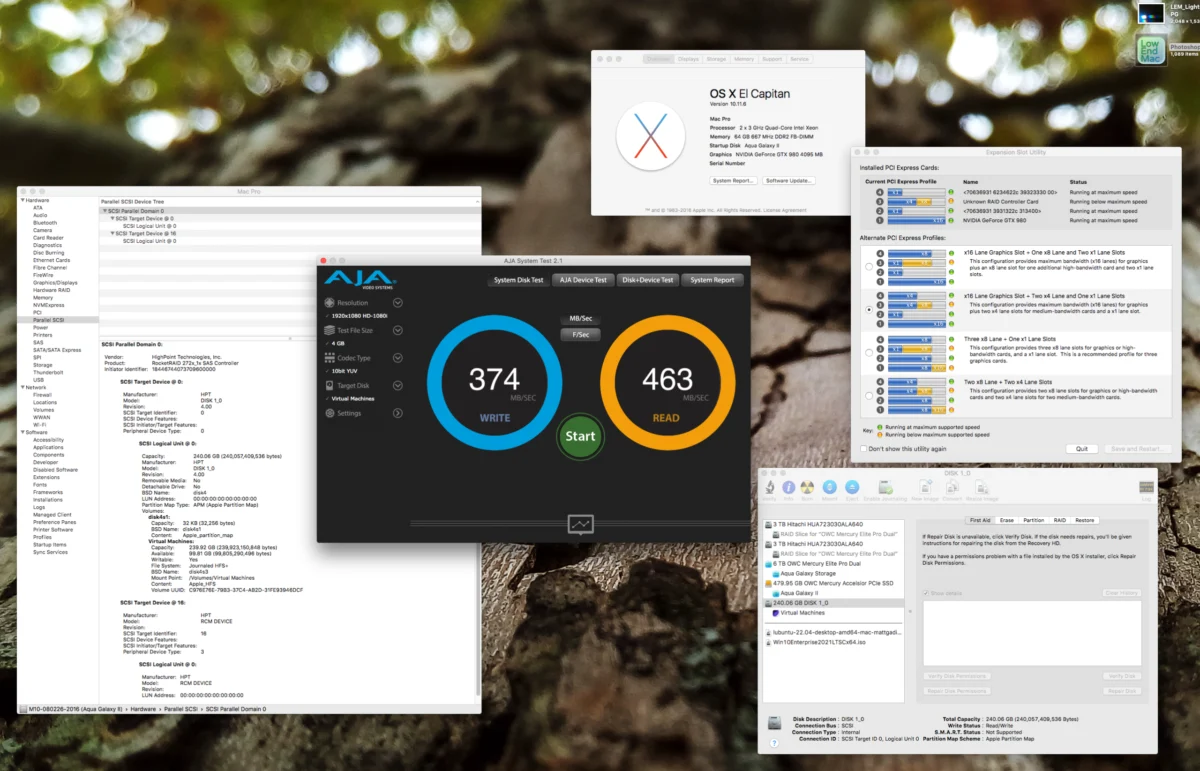
The enduring popularity of the original Mac Pro 1,1 and 2,1 towers among enthusiasts has created a niche ecosystem of hardware experimentation and legacy system optimization. Originally released in 2006, these workstations remain architectural marvels, yet their native storage interface—SATA II, capped at 3.0 Gb/s—serves as a significant bottleneck for modern solid-state drives. Recent technical breakthroughs, however, have demonstrated that it is possible to bypass these internal limitations by integrating a HighPoint RocketRAID 2720SGL PCIe controller, effectively enabling SATA III 6.0 Gb/s speeds on hardware that is nearly two decades old.

Historical Context and Hardware Limitations
When the Mac Pro 1,1 was introduced, it represented the pinnacle of Apple’s workstation engineering. However, the advancement of storage technology has far outpaced the bus speeds of the era. The native SATA II architecture limits drive performance to theoretical maximums of 300 MB/s per port, which is inadequate for modern high-performance SSDs that can easily exceed 500 MB/s.

For years, the community surrounding these machines has sought cost-effective ways to modernize the I/O subsystems. While high-end enterprise RAID cards were historically the standard for such upgrades, their prohibitive costs—often exceeding the current resale value of the Mac Pro itself—rendered them impractical for most users. The identification of the HighPoint RocketRAID 2720SGL as a viable, affordable alternative has provided a new path forward for users looking to extend the functional lifespan of their legacy machines.

Chronology of the Integration Process
The integration of a modern RAID controller into a system designed for the Windows Vista/Mac OS X Tiger era is not a plug-and-play operation. It requires a deep understanding of PCI bus architecture, kernel extensions (kexts), and the evolution of Apple’s system security protocols.

The process begins with the physical installation of the card into a PCIe x8 or x16 slot. Unlike modern plug-and-play peripherals, the 2720SGL requires specific driver intervention to be recognized by the operating system, particularly in later versions of OS X like 10.11 El Capitan. Following the physical installation, users must navigate a series of terminal-based diagnostic steps to ensure the hardware is properly mapped in the PCIe device tree.

By utilizing commands such as ioreg -l -p IODeviceTree, users can verify that the system successfully identifies the card’s vendor ID (1103) and device ID (2720). Once confirmed, the critical challenge involves the manual injection and modification of the kernel extension files to ensure compatibility with the system’s architecture. Because Apple introduced System Integrity Protection (SIP) in El Capitan, the process necessitates the temporary disabling of security features via a recovery environment, a step that underscores the complexity of modernizing legacy hardware.

Technical Challenges and Driver Compatibility
The primary hurdle in this upgrade path is the discrepancy between the driver’s original development environment and the stricter requirements of later macOS iterations. The RocketRAID 2720SGL drivers, typically dating back to 2012, were designed before the implementation of mandatory kernel extension signing. Consequently, simply installing the package provided by the manufacturer often fails, as the system refuses to bind the driver to the card.

Successful integration requires the manual extraction of the .kext files from the installer packages, followed by a thorough inspection of the Info.plist files to ensure the specific PCI device IDs are included. The process involves verifying that the kext is a 64-bit universal binary compatible with the x86_64 architecture of the Mac Pro’s processors. By manually overriding the kext installation and forcing a cache rebuild, users can circumvent the software incompatibility, allowing the OS to recognize the card as a valid SCSI-attached storage controller.

Data Performance and Throughput Analysis
Initial benchmarks for this configuration indicate a significant improvement over the native SATA II implementation. With a single SATA III SSD connected to the RocketRAID 2720SGL, users have observed read speeds of approximately 477 MB/s and write speeds of 388 MB/s. While these figures do not necessarily represent the theoretical 6.0 Gb/s limit of the SATA III interface, they represent a substantial increase over the sub-300 MB/s ceiling of the original internal bays.

This performance gain is particularly notable when compared to the proprietary Apple RAID card, which, while capable for its time, lacks the modern compatibility and bandwidth capacity of the HighPoint controller. Furthermore, the 2720SGL allows for the dynamic adjustment of PCIe lanes based on the drive configuration, providing a scalable solution for users who wish to implement RAID 0 or RAID 10 arrays in the future.

Broader Implications for Legacy Computing
The ability to push the Mac Pro 1,1/2,1 to these performance levels has implications for the "prosumer" and archival communities. These machines, while technically obsolete by modern standards, still possess significant computational power for specific tasks such as audio engineering, file server hosting, and legacy software environments.

By overcoming the storage bottleneck, users can effectively transform a 2006 workstation into a responsive, capable machine for modern workflows. This DIY approach to hardware longevity is not merely a hobbyist endeavor; it serves as a case study in how modular computing architecture allows for extended lifecycles. When users can replace or augment specific subsystems, the necessity of replacing the entire unit is reduced, aligning with broader trends in sustainable technology and circular economy practices.

Future Considerations and Bootability
Despite the successful implementation of high-speed storage, a remaining challenge for the community is the issue of bootability. While the RocketRAID 2720SGL functions perfectly as a high-speed data volume, the ability to boot the OS directly from an array managed by this card remains elusive for many.

Future developments in this area may involve the use of custom EFI bootloaders, such as rEFIt or modern iterations of OpenCore, to bridge the gap between the card’s firmware and the Mac’s EFI environment. The current success in data throughput, however, provides a firm foundation for continued exploration. As the community continues to share documentation and refined installation scripts, the barrier to entry for these modifications will likely decrease, potentially encouraging further interest in maintaining these classic Apple workstations for years to come.

The successful integration of the RocketRAID 2720SGL is a testament to the ongoing utility of high-quality legacy hardware. Through careful software manipulation and thoughtful hardware adaptation, enthusiasts have proven that modern storage standards can be successfully reconciled with vintage infrastructure, ensuring that the legacy of the original Mac Pro remains relevant in an era of rapid technological evolution.