Farhan hamdan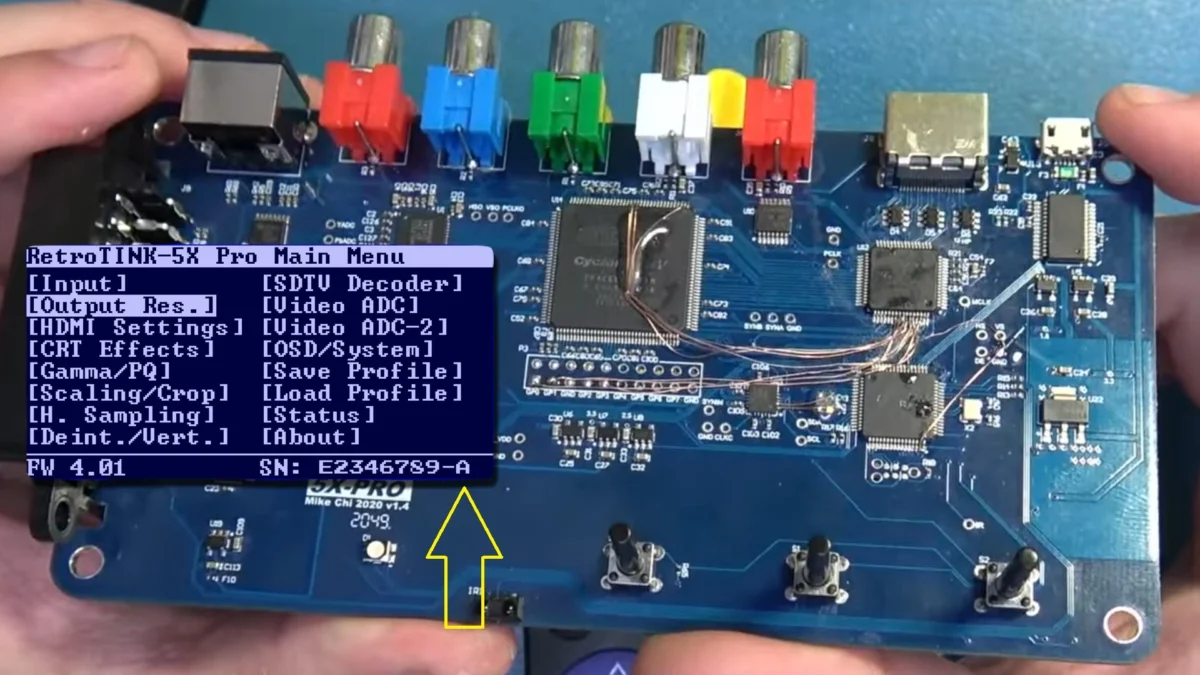
A recent livestream by prominent hardware modder Voultar showcased a sophisticated modification designed to upgrade launch-edition RetroTINK 5x units, specifically those designated as hardware revisions ‘A’ and ‘B’, to achieve the full 4:4:4 chroma output capability found in later iterations of the popular video scaler. This complex hardware intervention aims to unlock the highest possible color fidelity for early adopters, particularly in conjunction with the new high-resolution output modes introduced in the device’s firmware version 4.0. The modification, while technically challenging, represents a significant step for a niche segment of retro gaming enthusiasts striving for absolute visual perfection on modern 4K displays.
The Context: The RetroTINK 5x and the Pursuit of Pixel Perfection
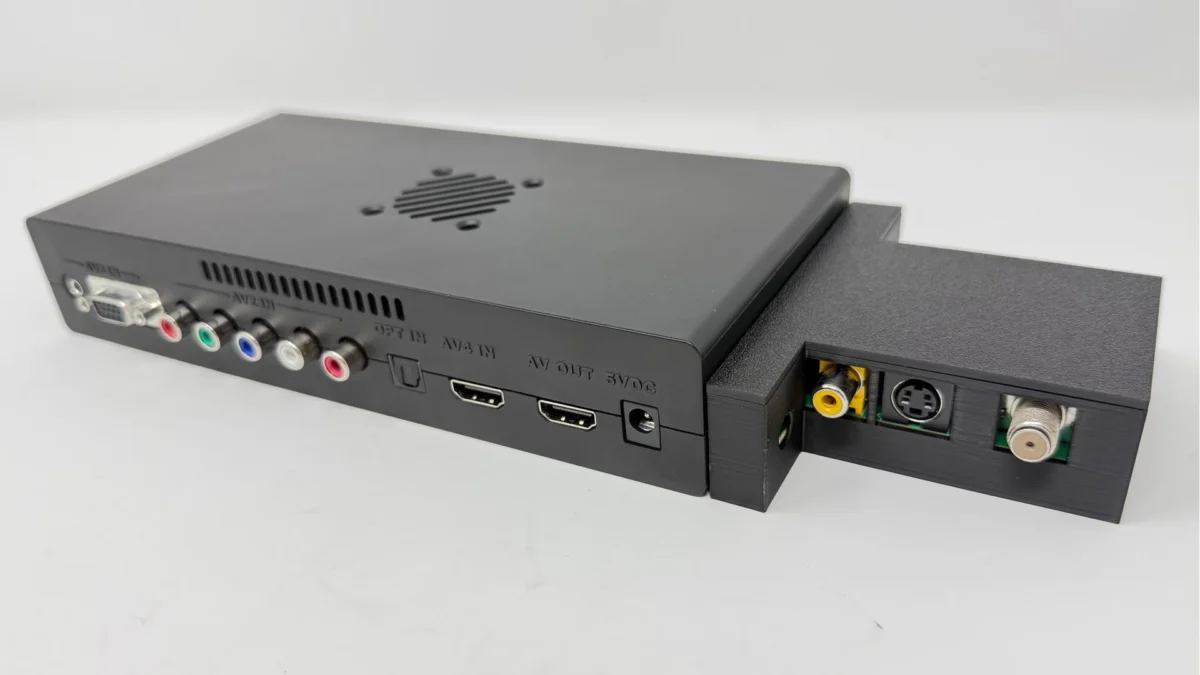
The RetroTINK 5x Pro, developed by Mike Chi, emerged onto the retro gaming scene approximately five years ago, quickly establishing itself as a benchmark device for upscaling classic video game consoles to modern high-definition and ultra-high-definition displays. Its initial design philosophy was ambitious: to combine the user-friendliness and broad compatibility of simpler devices like the RetroTINK 2x with the advanced feature set and customization options typically associated with enthusiast-grade scalers such as the Open Source Scan Converter (OSSC), all while maintaining an accessible price point. The device quickly garnered critical acclaim for its pristine image quality, low latency, and continuous firmware development that added new features and refined existing ones.
At its launch, the RetroTINK 5x delivered an exceptional experience, converting analog composite, S-Video, component, and RGB signals into digital HDMI output. While the internal scaling chain was meticulously designed to be lossless, a minor point of contention for a select group of "elite power users" concerned the final output stage, which utilized 4:2:2 chroma subsampling. Chroma subsampling is a data compression technique that reduces the color information in a video signal, leveraging the human eye’s greater sensitivity to luminance (brightness) than to chrominance (color). In a 4:2:2 signal, the color information is sampled at half the horizontal resolution of the luminance information. For most viewing scenarios and resolutions, especially those prevalent when the RT5x launched, this compression was largely imperceptible, and subsequent firmware updates further optimized the output, leading many to conclude that the 4:2:2 limitation had minimal practical impact on the perceived image quality. The device consistently exceeded user expectations, delivering crisp, vibrant images that breathed new life into classic titles on contemporary screens.
A Chronology of Hardware Revisions and Firmware Innovations
The journey of the RetroTINK 5x is marked by a continuous evolution, driven by both technological advancements and external circumstances.
-
Initial Launch and Early Success (Pre-Mid 2022, Rev A & B): The original RetroTINK 5x units, identified by ‘A’ or ‘B’ in their serial numbers (accessible via firmware), quickly became indispensable tools for retro enthusiasts. These units, while performing admirably, were designed with a final output stage that, by necessity of available components and design choices at the time, produced a 4:2:2 chroma compressed signal. This was a standard practice in many video pipelines and was not considered a significant drawback for the device’s primary function of clean, lag-free scaling. Early firmware iterations, such as v1.55 and v1.98, continuously refined the device’s performance, adding new modes and improving compatibility.
-
The COVID-19 Pandemic and Supply Chain Pressures: The global COVID-19 pandemic introduced unprecedented challenges to manufacturing, particularly in the electronics sector. Widespread component shortages forced hardware developers, including Mike Chi, to adapt. To ensure continued production of the RetroTINK 5x without compromising core quality or increasing costs prohibitively, the main circuit board underwent several redesigns. These revisions were primarily aimed at utilizing alternative components that were readily available in the volatile market.
-
The Emergence of Rev C+ and the 4:4:4 "Bonus": One such revision, beginning with board revision ‘C’, inadvertently yielded an additional benefit. The new component configuration and circuit layout provided greater bit depth in the final output stage, thereby enabling full 4:4:4 lossless chroma output. This meant that color information was sampled at the same resolution as luminance, offering the highest possible fidelity. While a technical improvement, its practical impact was initially considered minor by many, as the existing firmware already delivered visually stunning results that often masked the difference for the average user.
-
Firmware v4.0: Raising the Bar for 4K Detail: The release of firmware version 4.0 for the RetroTINK 5x marked a pivotal moment, fundamentally altering the landscape for early hardware revisions. This update introduced a groundbreaking 3840×960 output option, specifically engineered to take advantage of the horizontal resolution capabilities of 4K televisions. The primary goal of this mode was to render highly detailed horizontal CRT mask effects (simulating the phosphors of a cathode ray tube display) at a true 4K level of detail. The TV would then handle the vertical scaling of the 960 pixels. While not a "true 4K" resolution in both dimensions, this innovation allowed the most critical visual elements—the horizontal lines of the simulated CRT mask—to be displayed with unprecedented clarity and precision.
It was with the advent of v4.0 that the 4:2:2 limitation of the Rev A and B boards became more pronounced and potentially problematic for discerning users. When early RetroTINK 5x units output the 3840×960 signal, the 4K TV receives a chroma-compressed image. As the TV then scales this image vertically to fill its panel, the prior chroma compression can subtly degrade the fine details of the newly rendered 4K-level mask effects, preventing them from being displayed with the absolute fidelity achieved by Rev C and newer boards. This subtle degradation, while potentially imperceptible to many, represented a compromise for those pursuing the ultimate visual experience.
The Technical Imperative: Why 4:4:4 Matters for Specific Use Cases

The distinction between 4:2:2 and 4:4:4 chroma output, while often academic for standard video content, gains significant importance in specific contexts like pixel-perfect retro gaming, especially when employing advanced scaling techniques. In the case of RetroTINK 5x’s v4.0 firmware, the 3840×960 output mode is designed to maximize the horizontal resolution of a 4K display for intricate CRT mask simulations. These mask effects rely on precise pixel placement and color information to recreate the subtle visual nuances of classic CRT displays.
When a Rev A or B unit outputs a 4:2:2 signal in this mode, the color information is horizontally halved. While the RetroTINK 5x itself does an exemplary job of scaling, the subsequent vertical scaling performed by the 4K television on a signal that already has reduced color resolution can introduce subtle inaccuracies or blurriness in the meticulously crafted mask details. The resulting image, though still excellent, would not convey the full intended detail and sharpness of the mask effects as optimally as a 4:4:4 signal would. The 4:4:4 output, on the other hand, ensures that every pixel carries its full color information, allowing the TV to scale the image with maximum fidelity, thereby preserving the intricate details of the mask and the overall sharpness of the picture without any compromise due to chroma compression.
This is particularly relevant for users who have already invested in compatible 4K televisions known for their excellent processing and low input lag, and who have verified that their TV’s 4:3 aspect ratio modes properly align these new resolutions without introducing additional latency. For this highly specific demographic, the mod offers a pathway to unlock the full potential of their existing hardware and the latest firmware features.
Voultar’s "Proof of Concept": The Hardware Mod Unveiled
Enter Voultar, a respected figure in the hardware modification community known for his intricate and often challenging console and accessory mods. His recent livestream was a "proof of concept" demonstration, illustrating that it is indeed possible to upgrade the early RetroTINK 5x boards. The mod is described as "very complicated," requiring advanced soldering skills and a deep understanding of circuit board manipulation.
The modification primarily involves two key steps:
- Crystal Swap (Rev A boards only): For RetroTINK 5x Rev A boards, a specific crystal needs to be replaced. Voultar utilized an Abracon LLC ABM8W-27.1200MHZ-8-R40-D3Y-T3 crystal, a precise component crucial for timing and signal integrity.
- Circuit Modification (Rev A & B boards): Both Rev A and B boards require intricate modifications to their existing circuitry to enable the 4:4:4 signal processing capability. This typically involves rerouting traces, adding or removing discrete components, and performing extremely fine-pitch soldering, often under magnification.
The original article’s author, a seasoned retro hardware expert, expressed admiration for Voultar’s technical prowess but also cautioned against the mod’s complexity. The skill level required is analogous to that demanded for installing intricate HDMI modifications into vintage gaming consoles—a task generally reserved for experienced technicians or highly dedicated hobbyists.
Recognizing the inherent difficulty, Arthrimus, the creator of the SVS (Simple Video Scaler), has reportedly begun exploring the possibility of developing a flex cable solution. Such a cable could significantly streamline the installation process by providing pre-fabricated connections and potentially reducing the number of individual solder points. However, even with a flex cable, the mod is anticipated to remain an "intermediate-to-advanced" undertaking, far from a plug-and-play upgrade. It would still necessitate a steady hand, specialized tools, and a meticulous approach, placing it beyond the capabilities of the average user. This contrasts sharply with some previous, more accessible modifications in the retro gaming community, such as certain upgrades for the original OSSC, which were relatively simpler.
It is important to note that this modification is not an official upgrade path endorsed or offered by Mike Chi or the RetroTINK brand. Rather, it represents an enthusiast-driven endeavor, a testament to the community’s dedication to pushing the boundaries of retro hardware performance. This distinction is crucial; while the RetroTINK 5x continues to receive robust firmware support, the hardware modification falls squarely into the realm of community-led innovation for the most demanding users.
Implications and Broader Impact on the Retro Gaming Community
Voultar’s demonstration and the subsequent discussion highlight several key implications for the retro gaming community:
- Empowering the Elite Enthusiast: This mod caters directly to a highly specialized segment of the retro gaming community—those who are not only technically proficient but also possess an unwavering commitment to achieving the absolute highest fidelity from their classic hardware. For these users, subtle differences in chroma sampling or mask detail are significant enough to warrant complex hardware interventions.
- Extending Hardware Longevity: By enabling early RetroTINK 5x units to match the capabilities of newer revisions, the mod effectively extends the peak performance lifespan of existing hardware. This is particularly valuable for users who prefer to maximize their current investments rather than constantly upgrading to the latest iterations. It offers an alternative to purchasing a new Rev C or later unit for those who feel comfortable undertaking the modification.
- The Principle of Diminishing Returns: Objectively, for the vast majority of RetroTINK 5x users, the visual difference between 4:2:2 and 4:4:4 chroma output, even with the v4.0 firmware’s 3840×960 mode, may be imperceptible in typical gameplay scenarios. Factors such as screen size, viewing distance, individual visual acuity, and the specific content being displayed can all influence whether such a subtle improvement is truly noticeable. The original article’s author respectfully suggested that most users "probably don’t need it," a sentiment that remains largely true for the broader audience. This mod is for those who chase the last few percentage points of perfection, where the effort-to-reward ratio is skewed towards extreme dedication.
- Community Collaboration and Innovation: The collaborative spirit evident in Voultar’s proof of concept and Arthrimus’s consideration of a flex cable underscores the vibrant and supportive nature of the retro gaming hardware community. Enthusiasts frequently push the boundaries of what’s possible, sharing knowledge and developing solutions that might not be commercially viable for manufacturers but are invaluable to dedicated hobbyists.
- The Evolving Landscape of Retro Scaling: This development further illustrates the ongoing evolution of retro scaling technology. As display technologies advance (e.g., higher resolutions, HDR), the demands on upscalers continue to grow. Innovations like firmware v4.0 and subsequent hardware mods demonstrate the continuous effort to bridge the gap between vintage analog signals and cutting-edge digital displays, ensuring that classic games can be enjoyed with unparalleled clarity and accuracy.
In conclusion, Voultar’s hardware modification for early RetroTINK 5x units is a testament to the ingenuity and dedication prevalent within the retro gaming community. While undeniably challenging and targeted at a highly specific user base, it provides a pathway for the most discerning enthusiasts to unlock the full 4:4:4 chroma output, optimizing the immersive CRT mask effects introduced in firmware v4.0 for a truly unparalleled 4K retro gaming experience. For many, the existing RetroTINK 5x performance remains exceptional, but for those committed to pixel-perfect fidelity, this mod offers the ultimate refinement.