Farhan hamdan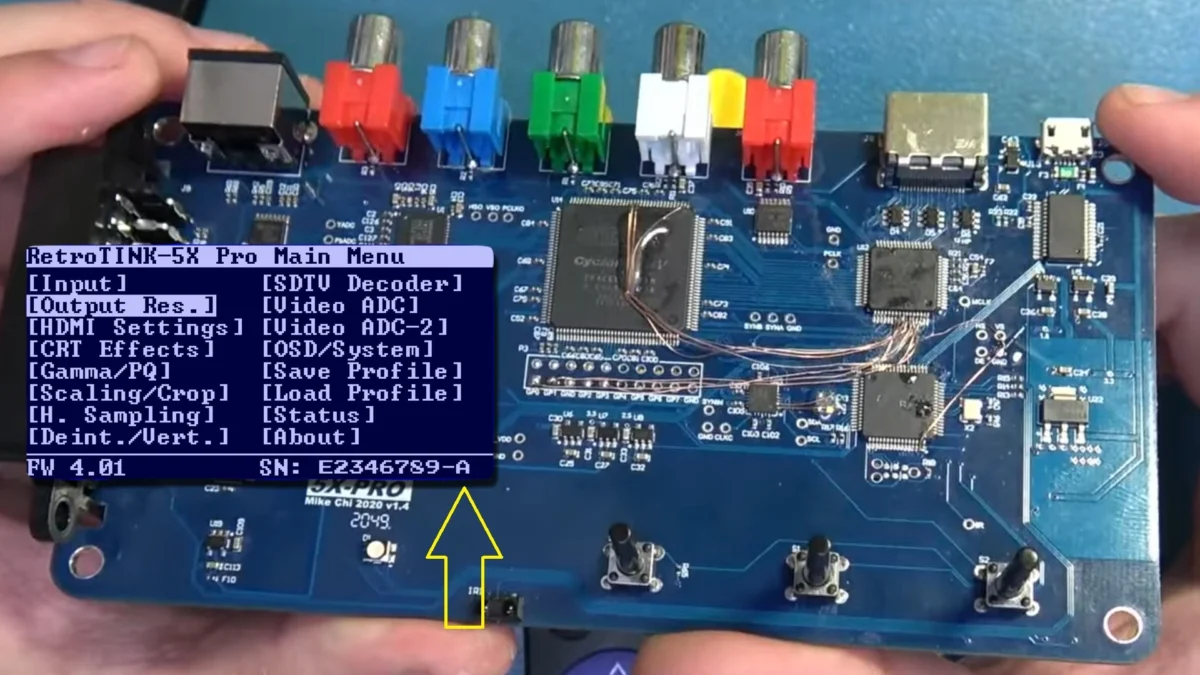
In a significant development for enthusiasts of classic video games and advanced display technology, hardware modder Voultar recently demonstrated a complex modification for early models of the RetroTINK 5x (RT5x) upscaler. This intricate hardware intervention aims to elevate the output capabilities of the original "A" and "B" revision RT5x units to match the full 4:4:4 chroma sampling offered by later "C" revision and subsequent models. The mod is specifically designed for users who possess these older units, have confirmed their 4K televisions are compatible with the new resolutions introduced in firmware v4, and desire to maximize the visual fidelity for features like advanced CRT mask emulation and HDR modes.
The announcement, delivered via a live-streamed modding session, immediately garnered attention within the niche retro gaming community, known for its dedication to preserving and enhancing the visual experience of vintage consoles. However, the creator of the RetroTINK line, Mike Chi, and other prominent figures in the scene, including the original article’s author, have stressed the highly specialized nature of this modification. It is unequivocally positioned as an expert-level undertaking, not a general recommendation for the average user, primarily due to its technical complexity and the specific, often subtle, visual benefits it provides. Users are strongly advised to check their RT5x’s serial number (accessible via firmware settings) to determine their unit’s revision; only those with "A" or "B" at the end of their serial number, indicating manufacture before mid-2022, are relevant targets for this mod. Units designated "C" or higher already incorporate the enhanced output capabilities.
The Genesis of the RetroTINK 5x: A New Era for Retro Scaling
The RetroTINK 5x launched just over five years ago, quickly establishing itself as a benchmark in the competitive landscape of retro video game upscalers. Its primary objective was to bridge the gap between vintage gaming hardware, which outputs analog signals in resolutions like 240p, 480i, and 480p, and modern high-definition (HD) and ultra-high-definition (UHD) displays. Prior to the RT5x, enthusiasts often relied on devices like the Open Source Scan Converter (OSSC), which offered exceptional quality but could be challenging for less technically inclined users, or simpler, more user-friendly but less capable solutions like the RetroTINK 2x.
Mike Chi, the visionary behind the RetroTINK series, aimed to combine the OSSC’s advanced capabilities—such as low-latency line doubling, motion adaptive deinterlacing, and custom resolution support—with the plug-and-play simplicity that characterized the RetroTINK 2x. The RT5x largely succeeded in this endeavor, offering a highly compatible and user-friendly experience while delivering superb image quality. It supported a wide array of input signals, including composite, S-video, component, and RGB SCART, and provided pristine digital output via HDMI.
Initial reception was overwhelmingly positive. The RT5x quickly became a go-to device for retro gamers looking to connect their classic consoles to modern flat-panel televisions without introducing significant input lag or compromising image integrity. Its "lossless" scaling chain, ensuring that the original pixel data was preserved throughout the processing, was a key selling point. However, early models (Revisions A and B) had a specific technical characteristic: their final HDMI output stage compressed color information to 4:2:2 chroma subsampling. While this is a common practice in digital video transmission and often imperceptible to the human eye, particularly with lower resolution content, it became a point of discussion among the most discerning "elite power users" who sought absolute fidelity.
Understanding Chroma Subsampling: 4:2:2 vs. 4:4:4
To fully appreciate the significance of Voultar’s mod, it is essential to understand chroma subsampling. In digital video, color information (chroma) and brightness information (luma) are often processed separately. Chroma subsampling is a data compression technique that reduces the amount of color information in a video signal, leveraging the fact that the human eye is more sensitive to changes in brightness than to changes in color.
- 4:4:4 (Full Chroma): This indicates that no chroma subsampling is applied. Every pixel has its own unique color information. This offers the highest fidelity, particularly for content with sharp color transitions or fine graphical details.
- 4:2:2 (Half Horizontal Chroma): In this scheme, the color information is sampled at half the horizontal resolution of the luma information. For every two pixels horizontally, there is one set of color data. This reduces bandwidth requirements without a drastic perceived loss in quality for most video content.
- 4:2:0 (Quarter Chroma): This further reduces color information by sampling at half the horizontal and half the vertical resolution of luma. It is very common for streaming video and broadcast television.
For the vast majority of users and content, the difference between 4:4:4 and 4:2:2 output from the RT5x was negligible, especially given the relatively low native resolutions of the source material. Firmware updates, such as v1.55 and v1.98, further optimized the RT5x’s performance, allowing users to extract impressive results even with the 4:2:2 output. Mike Chi himself often highlighted that the perception of 4:2:2 as a limitation was largely academic for the product’s intended use case.
The Impact of the COVID-19 Pandemic and Hardware Evolution
The global COVID-19 pandemic introduced unprecedented challenges to manufacturing and supply chains, particularly impacting the availability of electronic components. Like many hardware developers, Mike Chi faced the difficult task of redesigning the RT5x’s main circuit board multiple times to accommodate the scarcity of certain parts. These redesigns were carefully executed to ensure that the core functionality and quality of the RT5x remained uncompromised.
One such revision, beginning with board revision "C," inadvertently yielded a "bonus" side effect. The updated circuit design, utilizing available components, provided greater bit depth in the final output stage. This architectural change naturally enabled the scaler to achieve 4:4:4 lossless output without any additional hardware modifications, effectively eliminating the chroma subsampling present in earlier revisions. While a welcome enhancement for those who acquired these later units, the consensus, even among many experts, was that this improvement alone was not a compelling reason for existing A/B revision owners to upgrade, given the already excellent performance of their devices.

Firmware v4 and the Pursuit of 4K CRT Mask Emulation
The landscape shifted significantly with the release of firmware v4 for the RetroTINK 5x. This update introduced a groundbreaking 3840×960 output option, a feature specifically designed to enhance CRT mask emulation on 4K displays. Modern 4K televisions typically have a resolution of 3840×2160 pixels. By outputting a 3840×960 signal, the RT5x v4 firmware allows the critical horizontal detail of simulated CRT masks (such as aperture grille or shadow mask patterns) to be drawn at the full horizontal resolution of a 4K panel. The television then vertically scales the 960 lines to its native 2160 lines.
This innovation allows for an unprecedented level of detail in CRT mask effects, bringing the aesthetic of classic arcade monitors and consumer televisions closer to perfection on modern screens. However, this is precisely where the 4:2:2 limitation of the earlier A and B revision boards becomes more relevant. When these units output the 3840×960 signal, the color information is still compressed to 4:2:2. As the 4K television then performs the vertical scaling to its full panel height, it is processing a chroma-compressed image. This can subtly degrade the fine detail in the horizontally drawn CRT masks, potentially leading to a less distinct or "softer" appearance compared to the 4:4:4 output from C revision and newer boards. While the difference remains nuanced, it is discernible to users with highly calibrated setups and keen eyes, especially when actively seeking to push the boundaries of visual fidelity for retro content.
Voultar’s Proof of Concept: The Hardware Mod Detailed
Enter Voultar, a well-known and highly respected figure in the retro gaming hardware modding scene, celebrated for his intricate and often challenging modifications. Recognizing the potential for early RT5x owners to achieve the full 4:4:4 output capabilities with the v4 firmware, Voultar undertook a "proof of concept" modification. His live-streamed demonstration showcased a highly complex process involving both a crystal swap (required for Rev A boards) and significant circuit modifications to enable 4:4:4 signal processing (necessary for both A and B revisions).
The mod is not for the faint of heart. It requires advanced soldering skills, precise component placement, and a thorough understanding of electronics. The crystal swap, for instance, involves desoldering a delicate surface-mount component and replacing it with another. The subsequent circuit modifications involve rerouting traces, adding tiny wires, and potentially altering other components on the densely packed PCB. This level of intervention is comparable in difficulty to installing an internal HDMI output modification in a vintage game console, a task typically reserved for professional modders or extremely experienced hobbyists.
While the technical achievement is commendable, and the resulting enhancement allows early RT5x units to truly maximize the benefits of the v4 firmware’s 3840×960 output, it reinforces the highly specialized nature of this upgrade. The original article’s author aptly characterized it as something that, while "awesome people can gain every bit of functionality out of their original RT5x," is probably not a mod they would personally undertake due to its complexity and the relatively subtle nature of the visual improvement for most users.
Community Response and Future Prospects for Accessibility
The immediate reaction from the retro gaming community was a mix of awe for Voultar’s skill and a healthy dose of caution regarding the mod’s accessibility. Recognizing the inherent difficulty, Arthrimus, the creator of the SVS (Simple Video Scaler) and another prominent hardware developer, has indicated that he is considering designing a flex cable solution. Such a cable could simplify some aspects of the mod, potentially reducing the number of individual solder points or making connections easier. However, even with a flex cable, the mod would likely remain in the intermediate-to-advanced category, still requiring a significant skill level. It would not be a simple plug-and-play solution, nor would it be comparable in ease to earlier, more straightforward modifications like those for the original OSSC.
The broader implication is that this mod is not intended to be a widespread "everyone mod their scaler" update, akin to some popular console modifications. Instead, it targets a very specific demographic: the expert user who relishes a challenging hardware project, possesses the necessary tools and skills, and is committed to extracting every conceivable ounce of performance from their retro gaming setup. Mike Chi himself has historically focused on user-friendly designs and widespread accessibility, suggesting that while he appreciates community innovation, he would not likely advocate for such a complex modification as a general upgrade path for his products.
Implications and the Ongoing Evolution of Retro Gaming
Voultar’s RetroTINK 5x 4K mod is more than just a technical feat; it is a testament to the enduring passion and ingenuity within the retro gaming community. It underscores a continuous drive to push the boundaries of what is possible in combining vintage hardware with modern display technologies.
Key Implications:
- Niche Appeal: The mod solidifies the RT5x’s position as a highly customizable and evolving platform, even years after its initial release. However, its appeal remains firmly within a niche segment of highly dedicated enthusiasts.
- Skill Barrier: The high skill requirement acts as a natural barrier, preventing widespread adoption. This is not a deterrent for the target audience but rather a challenge to be overcome.
- Cost-Benefit Analysis: For many users, the effort and potential risk of damaging an expensive scaler may outweigh the incremental visual benefit. The option to purchase a newer "C" revision RT5x, if available, would likely be a more practical and less risky path for those seeking 4:4:4 output without the modding expertise.
- Community Collaboration: The potential development of a flex cable by Arthrimus exemplifies the collaborative spirit of the retro hardware community, where individuals contribute their expertise to make complex projects slightly more accessible.
- Future-Proofing Early Hardware: For those with early RT5x units who are unwilling or unable to upgrade to a newer revision, this mod offers a path to "future-proof" their existing hardware against the demands of increasingly sophisticated firmware updates and display technologies.
- The Pursuit of Perfection: This mod highlights the ongoing quest for absolute visual perfection among retro enthusiasts, even when the improvements are subtle. It speaks to a dedication to preserving the artistic intent of classic game developers while leveraging the capabilities of contemporary displays.
In conclusion, the RetroTINK 5x 4K hardware mod is a remarkable engineering achievement by Voultar, showcasing the extreme lengths to which some enthusiasts will go to optimize their retro gaming experience. While it unlocks the full 4:4:4 chroma output for early A and B revision RT5x units, allowing them to fully leverage the advanced 3840×960 resolution of firmware v4 for superior CRT mask emulation, it remains an expert-only option. Its complexity and the specific nature of its benefits mean it will likely serve a dedicated segment of the retro community, further cementing the RetroTINK 5x’s legacy as a versatile and continually evolving cornerstone of modern retro gaming.