Edi Durjana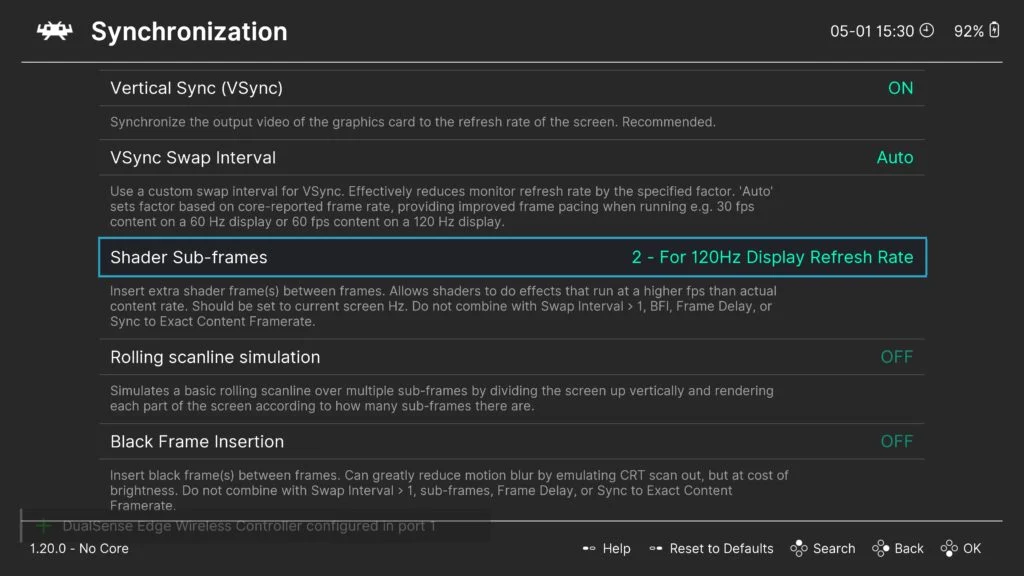
In a significant advancement for display technology and retro gaming enthusiasts, RetroArch has officially introduced an innovative new shader designed to dramatically improve motion clarity on modern high-refresh-rate displays. This shader, dubbed the "CRT Beamracing" shader, stands apart from conventional solutions like Black-Frame Insertion (BFI) by circumventing their inherent drawbacks, offering a superior visual experience that harkens back to the pristine motion of classic Cathode Ray Tube (CRT) monitors. The collaborative effort behind this technological leap brings together the expertise of Mark Rejhon from BlurBusters, a renowned authority on display performance, and Timothy Lottes, celebrated for his pioneering work on the FXAA shader and the highly regarded crt-lottes shaders. This groundbreaking development leverages RetroArch’s recently implemented "subframe" shader capabilities, allowing the processing and display of visual information at multiples of the standard content framerate, thereby redefining the pursuit of perfect motion.
The Quest for Pristine Motion: A Historical Context
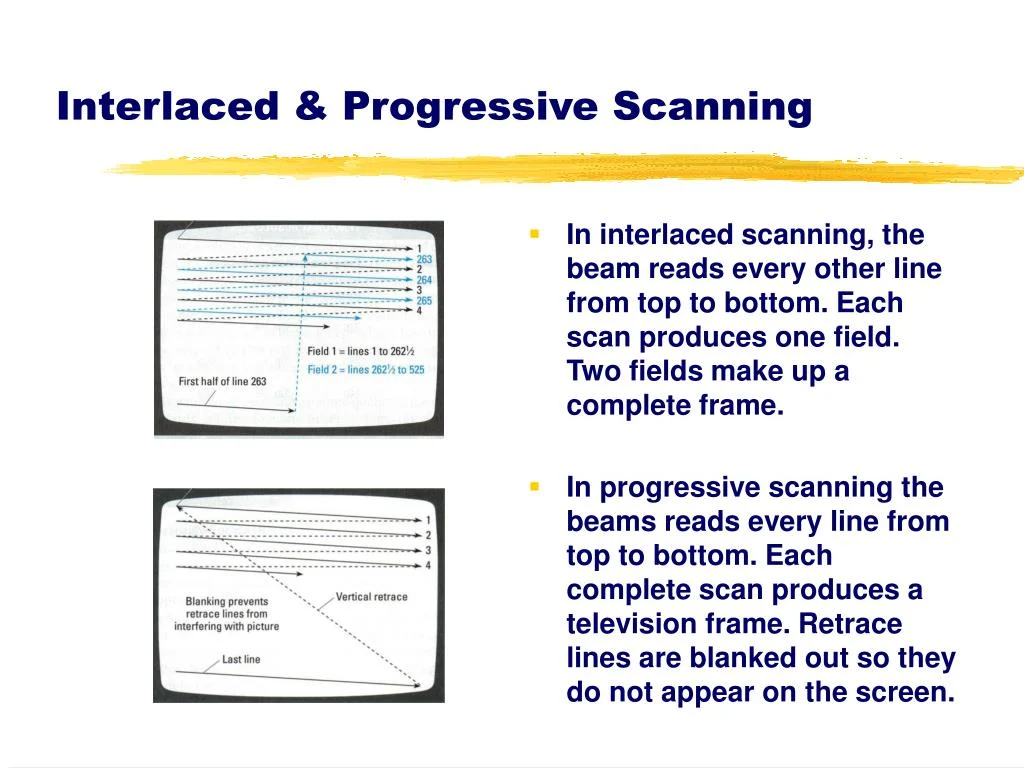
The pursuit of crystal-clear motion has been a long-standing challenge in display technology, particularly with the transition from CRT monitors to modern flat-panel displays such as LCDs and OLEDs. CRTs, with their inherent scanning electron beam, rendered images by illuminating pixels sequentially, line by line, allowing each pixel to decay before the next frame was drawn. This "impulse-type" display mechanism resulted in incredibly sharp motion, as the human eye effectively tracked a moving object by seeing distinct, fleeting images. However, modern LCD and OLED panels operate on a "sample-and-hold" principle. Once a pixel illuminates for a frame, it remains lit and static until the next frame is ready, effectively holding the image for the entire refresh cycle. While this eliminates flicker, it introduces motion blur, as the eye tracks a moving object across a static image, leading to a smearing effect. This phenomenon is particularly noticeable in fast-paced games and scrolling content, detracting from the crispness that retro gaming aficionados remember from their original hardware.
To combat this, various techniques have been developed, with Black-Frame Insertion (BFI) being one of the most common. BFI attempts to mimic the impulse nature of CRTs by inserting a black frame between each rendered game frame. This brief period of darkness allows the previous frame to "decay" from the eye’s retina, effectively resetting the visual persistence and reducing perceived motion blur. While BFI does improve motion clarity, it comes with significant compromises. The insertion of black frames dramatically reduces overall screen brightness, often by 50% or more, which can be visually jarring and dim the viewing experience. Furthermore, the rapid on-off flickering introduced by BFI can cause eye strain and fatigue for some users, and in certain display technologies, it can even contribute to image persistence or burn-in over prolonged use. These drawbacks have limited BFI’s widespread adoption, leaving a void for a solution that could deliver superior motion clarity without these trade-offs.
The Genesis of an Innovation: Collaboration and Technical Foundation
The journey towards the CRT Beamracing shader began with a fundamental understanding of these display challenges and a vision to overcome them. Mark Rejhon, widely recognized through BlurBusters for his extensive research and advocacy for high refresh rates and low motion blur displays, has been a vocal proponent of technologies that enhance perceived motion. His work has consistently pushed the boundaries of what is possible with modern panel technology to deliver a visual experience closer to ideal. Timothy Lottes, another luminary in computer graphics, earned widespread acclaim for creating FXAA (Fast Approximate Anti-Aliasing), a highly efficient post-processing anti-aliasing technique, and for his contributions to realistic CRT emulation shaders. The confluence of their expertise laid the groundwork for a shader that could address the complex interplay between display hardware, human perception, and software rendering.
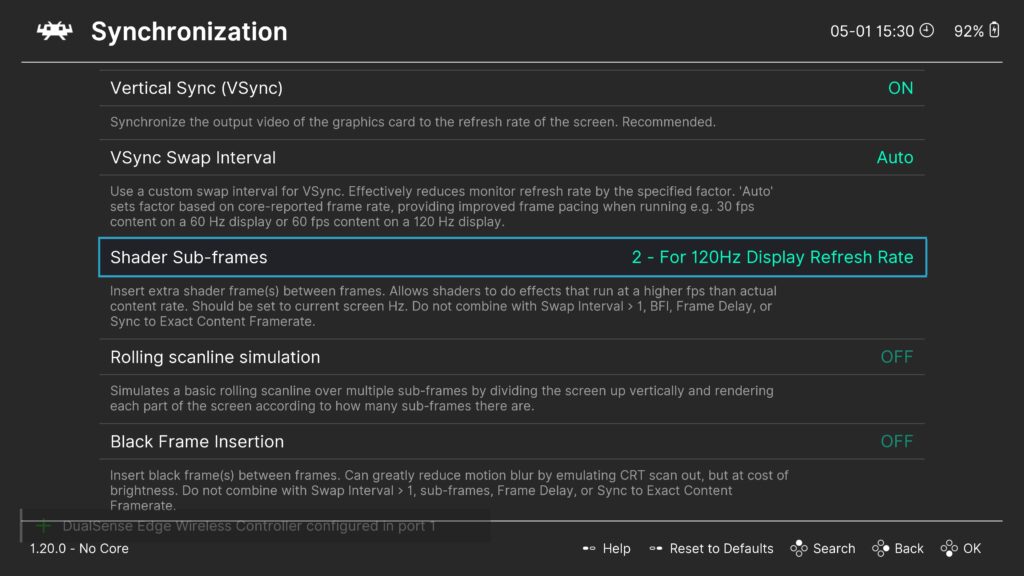
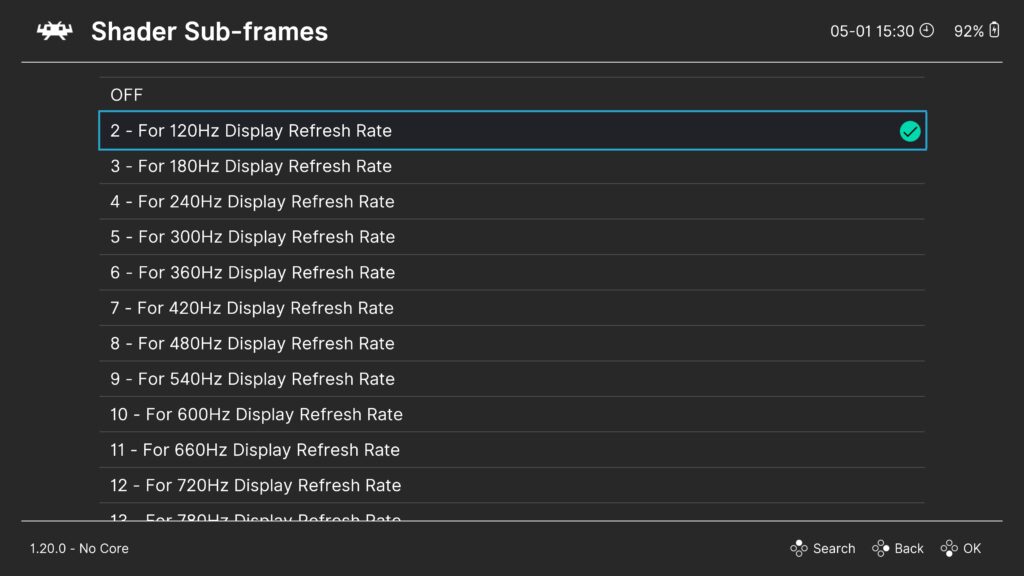
The technical bedrock for this innovation lies in RetroArch’s recently introduced "subframe" shader capabilities. Traditionally, shaders operate on a per-frame basis, processing an entire image before it is sent to the display. The subframe architecture, however, empowers shaders to render and manipulate data at a granularity within a single display refresh cycle. This means that instead of simply presenting one fully rendered frame every 1/60th or 1/120th of a second, the shader can generate and display multiple intermediate "subframes" during that same period. This capability is crucial for the CRT Beamracing shader, as it allows for the simulation of the continuous scanning behavior of a CRT electron beam, rather than simply flashing discrete images. By operating at multiples of the standard content framerate, the shader can effectively "draw" the image progressively across the screen, much like a real CRT, thereby eliminating the sample-and-hold blur without resorting to intrusive black frames.
Unpacking the Advantages: Beyond Traditional BFI
The CRT Beamracing shader distinguishes itself from traditional BFI through several key advantages that directly address the aforementioned drawbacks:
- Preserved Brightness: Unlike BFI, which inherently dims the display by inserting black frames, the CRT Beamracing shader aims to maintain the original brightness levels. By simulating a continuous scan and intelligent pixel manipulation rather than simply turning the screen off, it avoids the significant light output reduction that has historically plagued motion clarity solutions. This ensures a vibrant and engaging visual experience without compromise.
- Reduced Flicker and Eye Strain: The constant on-off flickering characteristic of BFI can be fatiguing and distracting. The new shader’s subframe approach, which simulates a smoother, progressive scan, significantly reduces or entirely eliminates this jarring flicker. This results in a more comfortable viewing experience, even during extended gaming sessions.
- Mitigated Image Persistence: For certain display technologies, particularly some LCD panels, rapid voltage cycling from BFI can contribute to image persistence or "ghosting." The CRT Beamracing shader, by adopting a more nuanced rendering approach, is designed to minimize such risks. This makes it a safer and more sustainable solution for a wider range of modern displays.
- Enhanced Authenticity: Beyond just reducing blur, the shader is explicitly named "CRT Beamracing" because it endeavors to recreate the feel of a CRT. This includes the subtle visual cues of a scanning beam, offering a level of authenticity that simple BFI cannot achieve. When combined with other CRT emulation shaders, it promises an unparalleled retro gaming experience that feels remarkably true to the original hardware.
Implementation and Accessibility for Enthusiasts
To leverage the capabilities of this advanced shader, users must ensure their RetroArch installation is up to date. Specifically, RetroArch version 1.20.0 or any more recent nightly build is required, as previous versions lack the essential Shader Sub-frames feature upon which this innovation relies. This prerequisite underscores the cutting-edge nature of the shader and the continuous development efforts by the Libretro team to push the boundaries of emulation.
For users equipped with high-refresh-rate monitors (120 Hz or higher), the process of integrating and utilizing the CRT Beamracing shader is designed to be straightforward within the RetroArch ecosystem. While specific step-by-step instructions for installation and activation would typically be provided within the RetroArch documentation or a dedicated guide, the general procedure involves navigating to the shader settings menu, loading the appropriate shader preset, and then enabling it. The shader files themselves are typically found within the shaders_slang/presets/crt-beam-simulator directory, where several pre-made presets are available for immediate use.
One of the significant advantages of this shader’s design is its modularity. RetroArch’s robust shader pipeline allows for the layering of multiple visual effects. This means that the CRT Beamracing shader can be seamlessly "prepended" to existing shader presets, such as beloved CRT scanline shaders or color correction filters, without introducing conflicts. This flexibility empowers users to customize their visual experience, achieving both pristine motion clarity and their preferred aesthetic simultaneously, whether it’s a perfectly simulated arcade monitor or a classic consumer television look.
Fine-Tuning for Optimal Visual Fidelity
Achieving the ideal visual balance with the CRT Beamracing shader requires some user-side tuning, as display characteristics can vary significantly. The shader includes intuitive runtime parameters that allow for precise adjustments directly within RetroArch’s shader settings. These parameters are crucial for tailoring the output to specific monitors and user preferences.
- Gamma Adjustment: One primary parameter allows users to adjust the gamma to achieve a neutral image. This is essential for eliminating any unintended "unusual dark lines" or banding that might appear due to display calibration or the shader’s interaction with specific panel technologies. The goal is to ensure that the image’s overall luminance and contrast remain faithful to the original content.
- Brightness and Motion Clarity Trade-off: A critical parameter enables users to fine-tune the balance between overall brightness and the degree of motion clarity. This allows for a personalized optimization based on individual preferences and display capabilities. For monitors operating at 120 Hz, which typically support two subframes (meaning the shader renders two intermediate states per refresh cycle), a value of approximately
0.5has been found to yield excellent results. For ultra-high-refresh-rate 240 Hz monitors, capable of handling four subframes, a value of around0.7is often ideal. These values represent a sweet spot where the benefits of enhanced motion clarity are maximized while maintaining acceptable brightness levels.
Addressing Display-Specific Nuances: Image Persistence and Raster Line Control
The developers have also meticulously considered the diverse landscape of modern display technologies and their unique characteristics. Not all flat-panel monitors are equally susceptible to image persistence, a phenomenon caused by voltage accumulation in the panel from rapid on/off flickering. For instance, OLED panels, due to their self-emissive nature and rapid pixel response, are largely unaffected by such issues. Similarly, monitors running at odd integer multiples of 60 Hz, such as 180 Hz, may also exhibit different behaviors.
For users with these specific types of displays, the CRT Beamracing shader includes a dedicated runtime parameter to disable the "cycle timing offset." This feature is particularly useful because it prevents the simulated raster line, which mimics the electron beam of a CRT, from visually "rolling up the screen." By disabling this offset, users can ensure a stable and consistent image presentation, tailored to their display’s characteristics. Furthermore, an additional parameter allows for the precise adjustment of the raster line’s position, empowering users to place it in the least obtrusive or most aesthetically pleasing spot for their particular setup. This level of granular control underscores the shader’s sophisticated design and its adaptability to a wide array of hardware configurations.
Community Support and Further Exploration
The developers recognize that pioneering technology often comes with a learning curve and potential troubleshooting needs. To this end, comprehensive support resources have been made available to the community. Mark Rejhon, a key architect of this shader, has established an FAQ and troubleshooting guide on his GitHub repository, accessible at https://github.com/blurbusters/crt-beam-simulator/issues/4. This resource is an invaluable first stop for users encountering any issues or seeking deeper technical insights. Beyond this, the vibrant RetroArch community offers multiple avenues for assistance, including active discussions on Discord, Reddit, and the official Libretro forums, where users can share experiences, seek advice, and contribute to the ongoing refinement of the shader.
For those interested in a more in-depth understanding of the underlying display technologies and the implications of this shader, a highly informative video from a respected expert in display technologies is available. The video, titled "CRT simulation is ready to be seen on 120Hz+ OLEDs using RetroArch CRT beam simulator slang," provides valuable context and visual demonstrations of the shader’s capabilities, offering a comprehensive look at how it achieves its remarkable motion clarity. This external resource complements the official documentation and community support, empowering users to fully grasp the significance of this development.
Broader Implications for Retro Gaming and Display Technology
The introduction of the CRT Beamracing shader in RetroArch represents more than just a new visual effect; it signifies a pivotal moment for the retro gaming community and potentially for display technology at large. For decades, the pursuit of truly authentic retro gaming has been hampered by the fundamental differences between legacy CRT displays and modern flat panels. While various shaders have excelled at recreating the aesthetic nuances of CRTs—such as scanlines, phosphor masks, and color bleed—the elusive "motion clarity" has remained a significant barrier to a truly faithful experience. This shader bridges that gap, offering a solution that addresses the very core of how CRTs rendered motion.
The fact that this innovation is delivered through a software-based shader within RetroArch highlights the power of open-source development and the flexibility of emulation platforms. It demonstrates that significant advancements in display quality can be achieved without requiring specialized hardware, making high-quality retro experiences accessible to a broader audience who possess high-refresh-rate monitors. This development could inspire further research and development in software-driven display enhancement, pushing the boundaries of what is thought possible through post-processing effects.
Moreover, the collaboration between experts like Mark Rejhon and Timothy Lottes, alongside the Libretro team, exemplifies the synergistic potential when specialized knowledge in display science and graphics programming converges with a robust emulation platform. This model of innovation could pave the way for future solutions that tackle other long-standing challenges in visual fidelity, from input lag reduction to advanced color management. The CRT Beamracing shader is not merely a tool for nostalgia; it is a testament to the ongoing evolution of display technology and a beacon for the future of digital preservation and immersive entertainment.