 Arya Paningal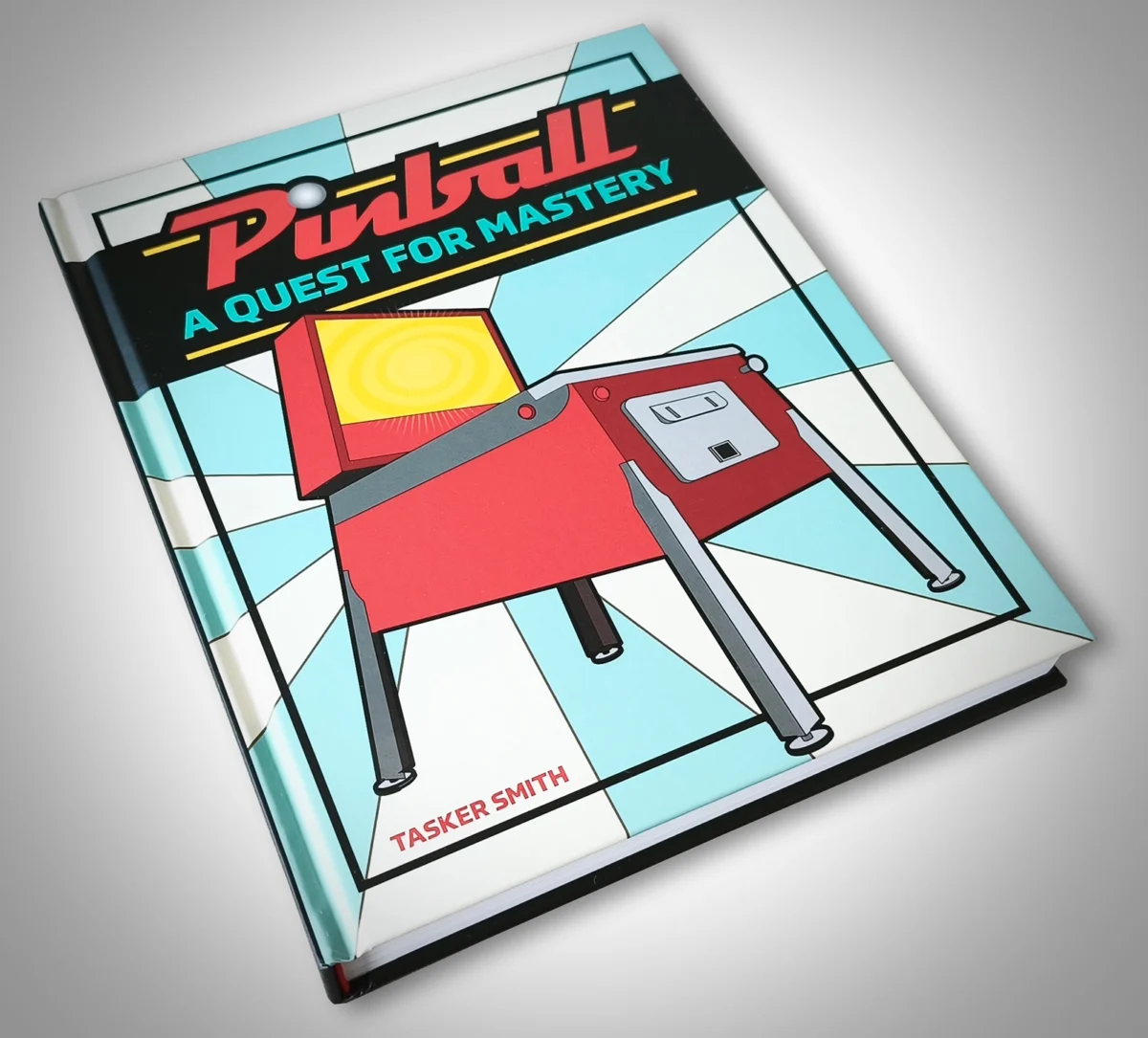
The release of Pinball: A Quest for Mastery on July 28, 2024, marks a significant addition to the niche yet growing literature dedicated to the sport of pinball. Authored by Tasker Smith, a Technical Educator at Boston University, the 256-page hardback volume published by Schiffer Publishing serves as both a historical retrospective and a technical manual for players seeking to elevate their performance from casual engagement to competitive mastery. As the global pinball community experiences a resurgence in popularity, evidenced by the proliferation of regional leagues and high-stakes international tournaments, this publication addresses a clear demand for structured, high-level instruction.

The Evolution of Pinball: A Historical Context
To understand modern gameplay, Smith begins with a comprehensive, albeit traditional, chronological survey of the machine’s origins. While industry veterans like designer Pat Lawlor have frequently remarked on the ubiquity of "bagatelle" narratives, Smith effectively establishes the technological lineage that separates antique mechanical curiosities from the sophisticated computing platforms of today.
The progression is traced from the rudimentary 18th-century table games to the pivotal 19th-century patent of the spring-loaded plunger by Montague Redmond. This innovation fundamentally changed the player’s interaction with the machine, transitioning the game from a passive amusement to one involving active skill. The narrative arc continues through the post-World War II era, highlighting the introduction of player-operated flippers in Gottlieb’s 1947 Humpty Dumpty model—a development that remains the single most important mechanical shift in the game’s history. Smith tracks the subsequent technological leaps: the transition from illuminated backglass scoring to electromechanical score reels, the introduction of gas plasma displays, and finally, the contemporary era of high-definition LCD panels that allow for deep, narrative-driven rule sets.

Technical Foundations and Ball Control Mechanics
At its core, the text serves as an educational bridge between the novice player and the seasoned competitor. Part One of the book focuses on the mechanics of the machine, stripping away the mystery surrounding complex playfields. Smith provides a methodical breakdown of how points are accumulated, the role of credits, and the function of various playfield components. For the reader, this section serves as a diagnostic tool, teaching them to view a pinball machine not as a random series of events, but as a predictable set of physical interactions.
The discourse on ball control is particularly granular. Smith categorizes various techniques used to manage velocity and trajectory, acknowledging that the playfield contains both "friendly" elements that assist in stabilization and chaotic features that introduce unpredictable motion. While the book utilizes illustrative diagrams to explain complex concepts such as spin, bounce, and momentum, the complexity of these movements underscores the inherent difficulty of mastering a physical game in a digital age. The absence of video accompaniment is notable, as the concepts of "dead passes," "post passes," and "cradle separation" often require visual motion to fully grasp; however, the text compensates with precise, technical descriptions of the physics involved.

Competitive Infrastructure and Tournament Dynamics
Part Two of the book shifts the focus from individual play to the competitive arena. Smith draws heavily from his personal experience within the New England Pinball League, providing an objective overview of how local leagues and global tournaments are structured. This section acts as a handbook for those transitioning from home play to competitive environments, detailing the etiquette of tournament participation—an essential element of a culture that relies on mutual respect and sportsmanship.
Beyond mere rules, Smith introduces the concept of professional preparation. He outlines the necessity of logistical readiness: understanding machine-specific rulesets, identifying potential modifications that might affect ball behavior, and developing a "game plan" before the start of each session. This section is particularly pertinent given the professionalization of the sport, where players are increasingly treating pinball as a rigorous discipline rather than a pastime.

The Psychology of the Flow State
The most innovative section of the book is Part Three, which investigates the intersection of human psychology and arcade gameplay. Smith explores the "flow state"—a psychological concept popularized by Mihaly Csikszentmihalyi, characterized by complete immersion and focus. For a pinball player, this state is the difference between a high-scoring run and a quick drain.
Smith breaks down the conditions required to trigger this state: the elimination of external distractions, the regulation of emotional responses to "drains" or "stuck balls," and the maintenance of physical energy. By integrating principles of sports psychology, the author provides actionable advice on nutrition, hydration, and mental conditioning. This analysis elevates the text, positioning it as a manual for human performance rather than just a guide to toy machines.

Broader Impact and Industry Implications
The publication of Pinball: A Quest for Mastery coincides with a broader trend in the hobbyist market: the shift toward educational resources. With the International Flipper Pinball Association (IFPA) reporting an ever-increasing number of sanctioned events worldwide, the demand for literature that moves beyond "how-to" to "how-to-master" is evident.
By categorizing the game’s various facets—history, mechanics, competition, and psychology—Smith has created a comprehensive reference work that is likely to become a staple in the libraries of serious enthusiasts. The appendices, which list major pinball museums, international hotspots, and essential online resources, further cement the book’s value as a foundational document for the modern pinball community.

Availability and Future Events
The book is currently available in the United States through Schiffer Books, priced at $34.99. The distribution strategy includes a phased rollout, with international availability expanding throughout the latter half of 2024. For UK-based enthusiasts, the publication is available via retailers such as the PaperBack Shop, often at localized pricing models.
Tasker Smith is scheduled to appear at the upcoming Pinball Expo, held in Schaumburg, Illinois, from October 14th to 17th. This event, which attracts thousands of designers, collectors, and competitive players, will serve as a primary forum for the author to engage with his audience and conduct book signings.

As pinball continues to bridge the gap between retro-nostalgia and modern competitive sports, works like Pinball: A Quest for Mastery provide the necessary intellectual scaffolding for the next generation of players. By emphasizing that mastery is a result of both mechanical understanding and internal discipline, Smith provides a roadmap that is as relevant to the casual player at a local bar as it is to the professional competitor at the world championships. The book’s structured approach and professional tone ensure that it will remain a relevant, authoritative source for years to come.